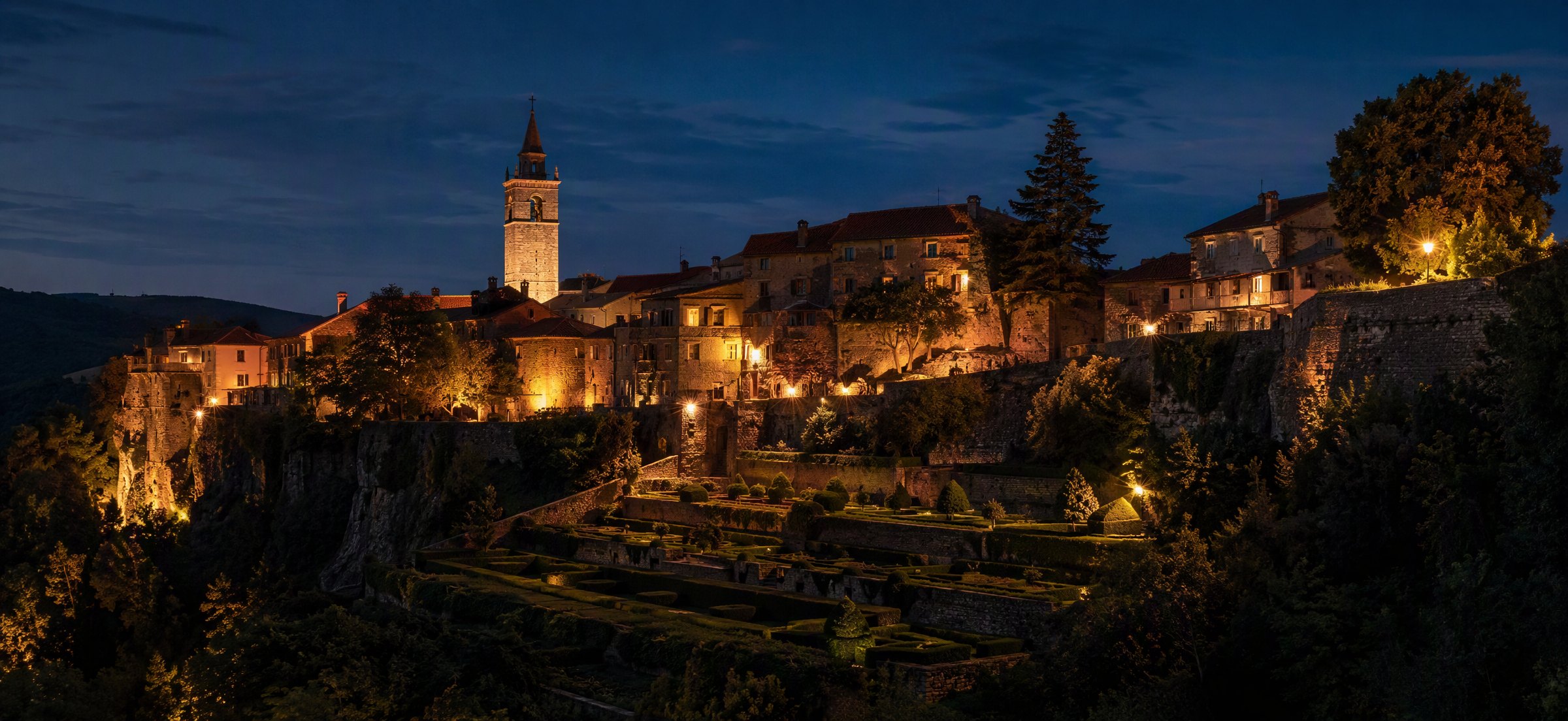
GORICA.NET / THE KARST / HERITAGE
Architecture & Heritage
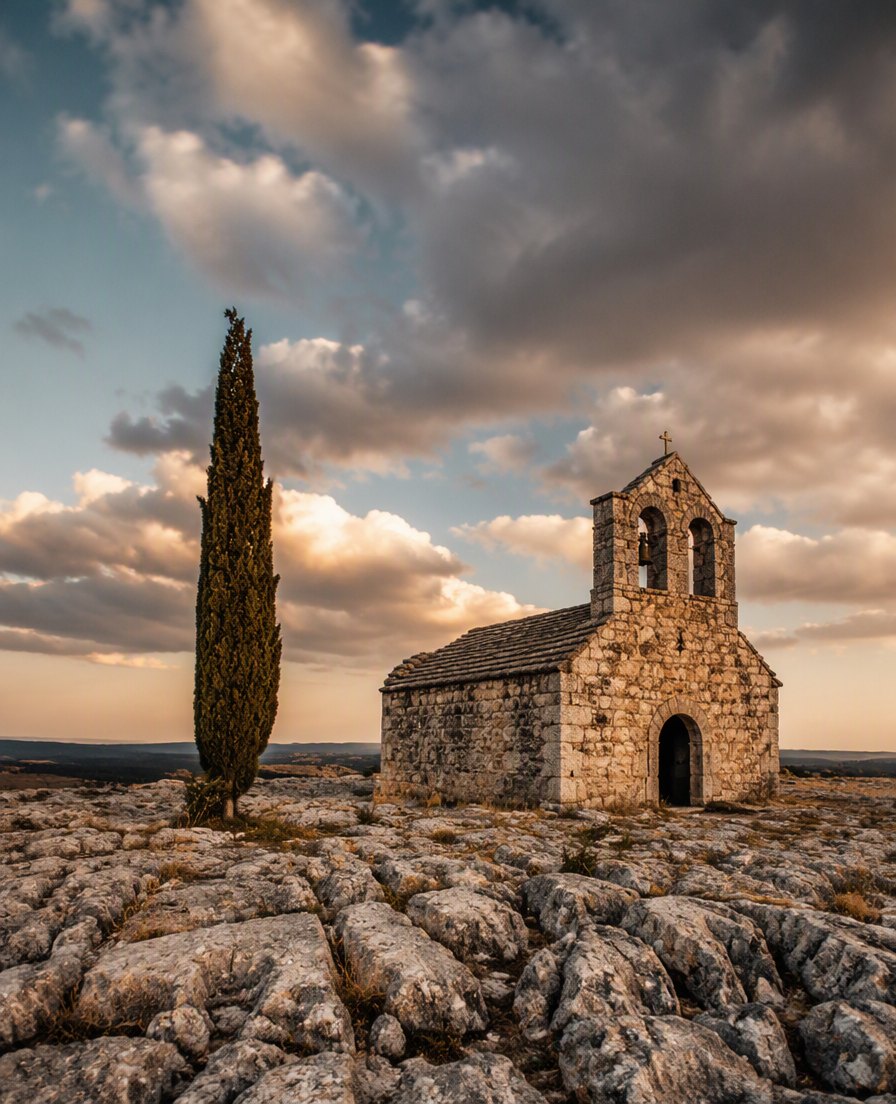
On the Karst, people didn't import beauty — they stacked it, one limestone block at a time.
ŠTANJEL · SINCE 13TH C.
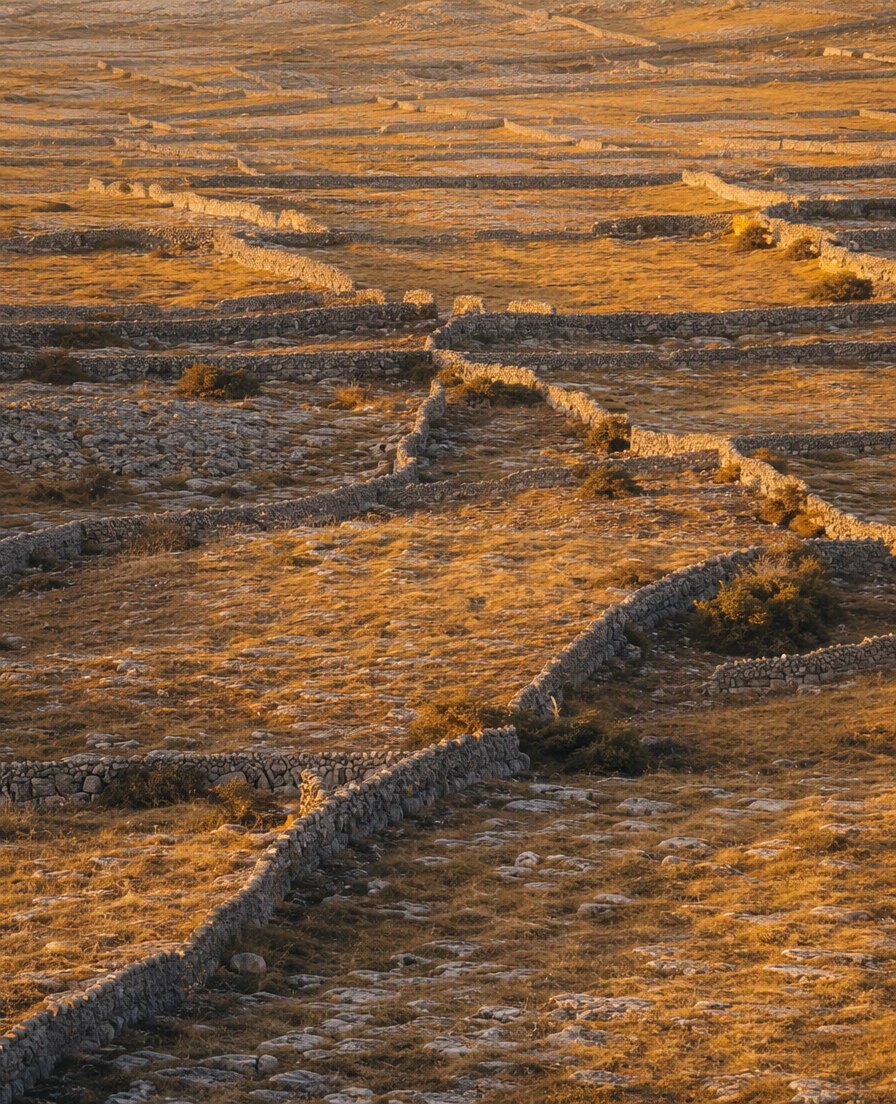
1,000+ KM DRY-STONE WALLS
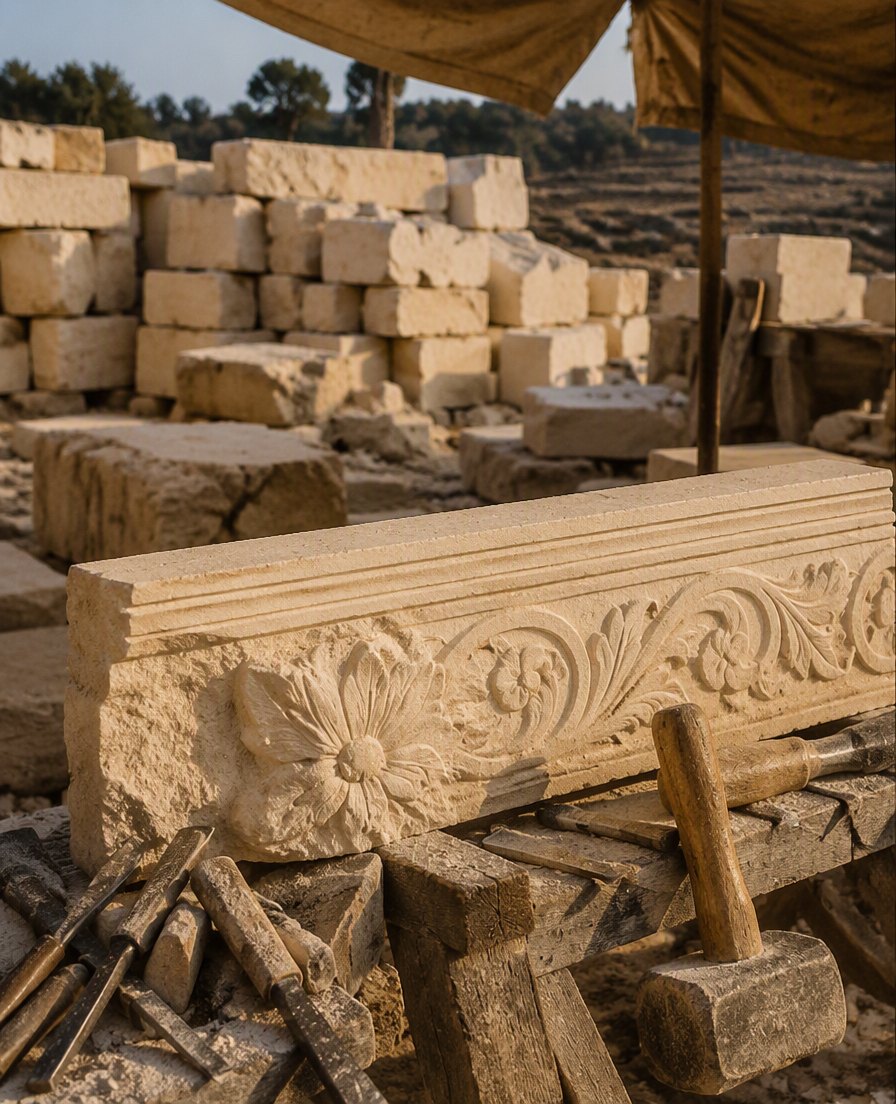
UNESCO CRAFT HERITAGE
01 — The Jewel
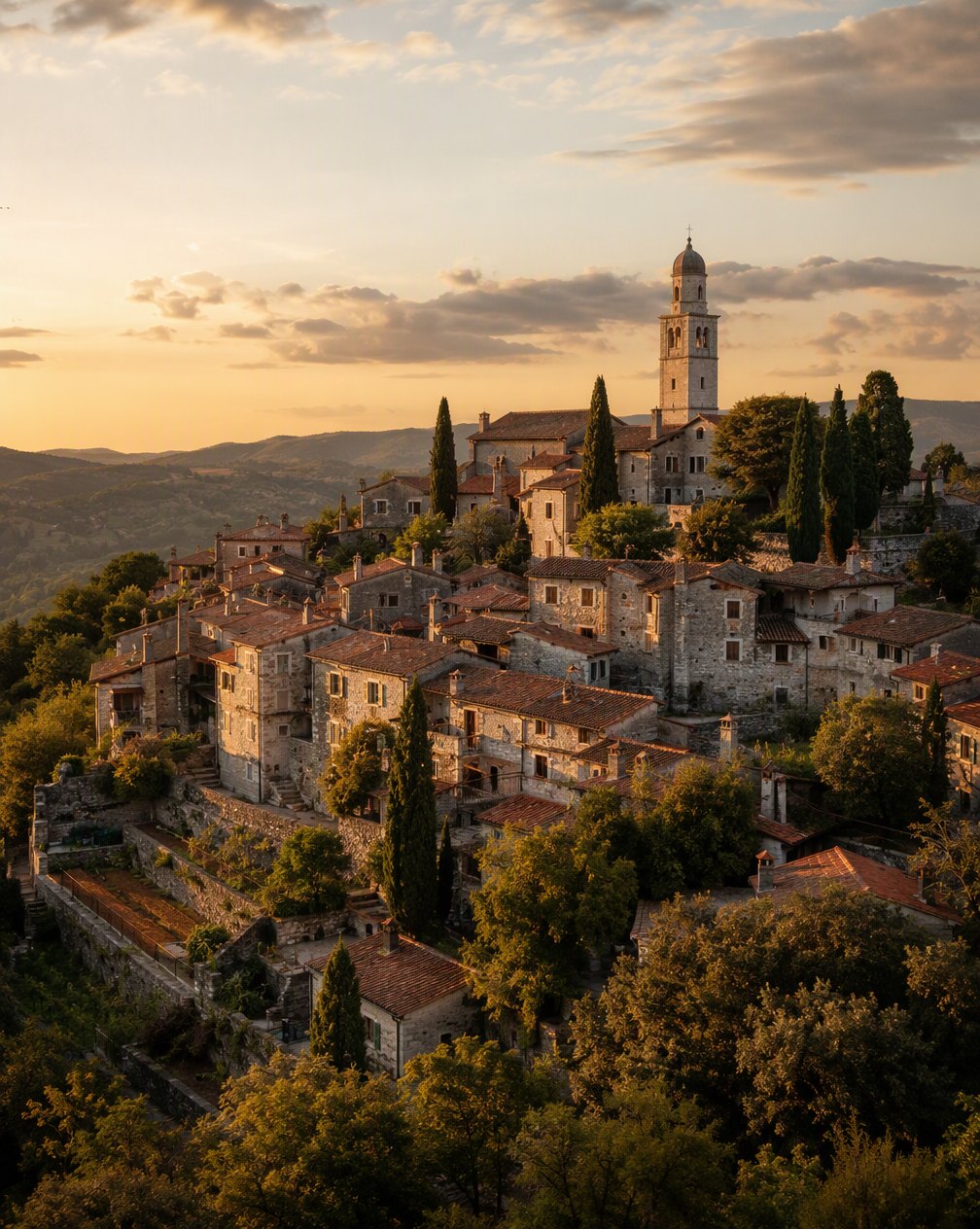
A village poured down a hill.
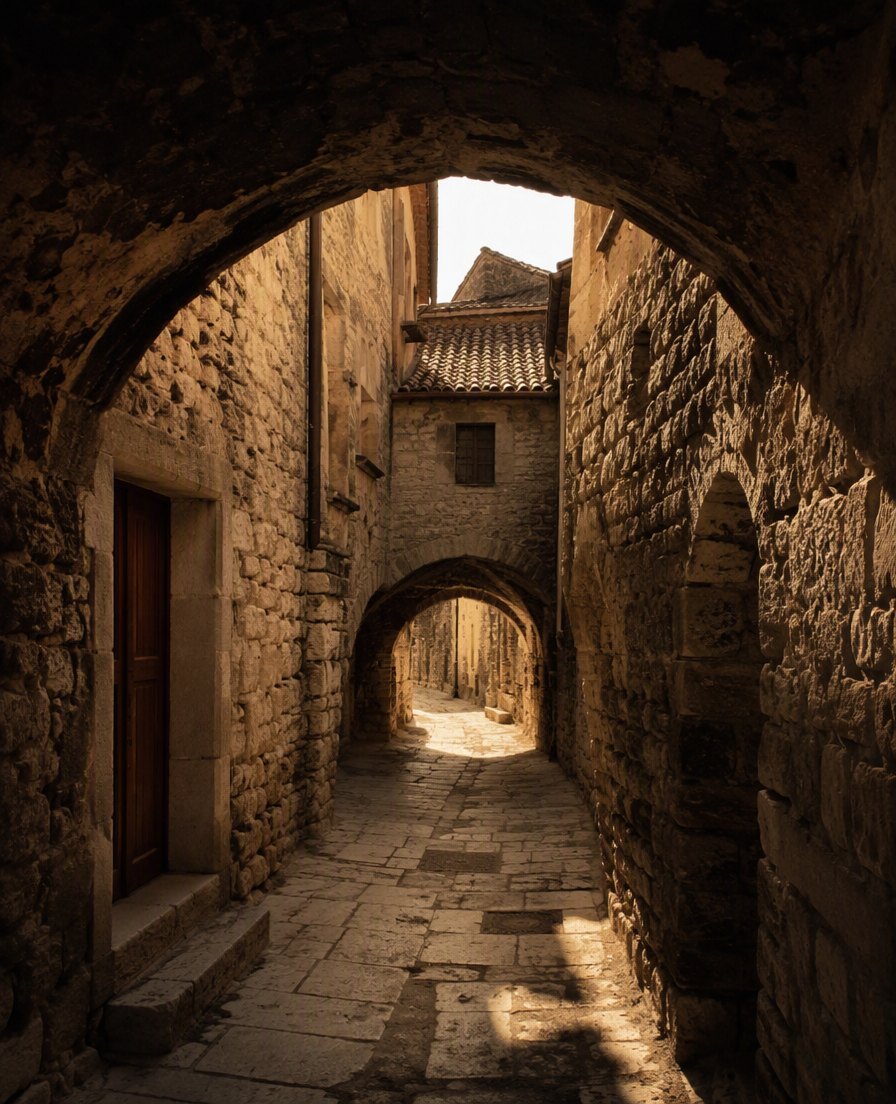
Štanjel rises in terraces of pale limestone — houses stacked on houses, lanes curling toward a castle that once guarded the plateau's edge. It was built for defense and for the wind. In the 1920s and 30s, architect Max Fabiani gave the medieval village a modern heartbeat: restored walls, new waterworks, and a garden the Karst had never seen.
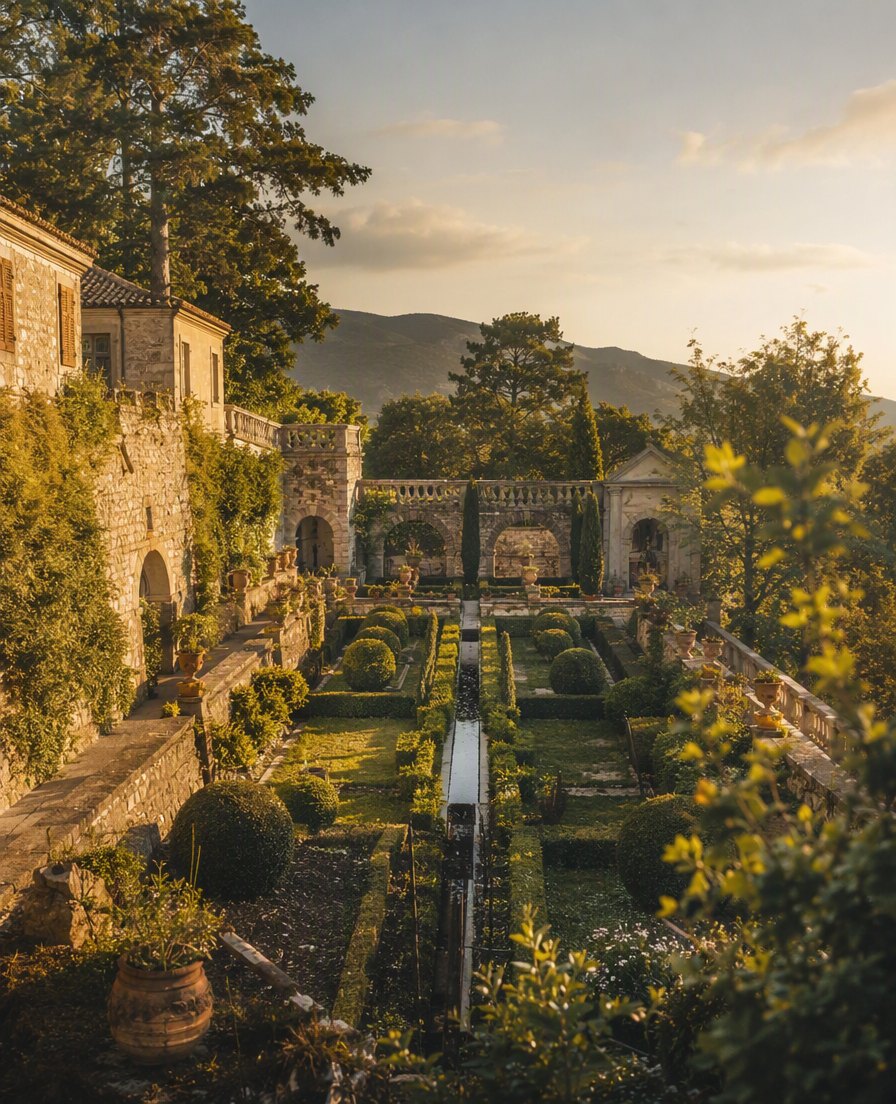
The Karst’s drawing room.
Below the village, Fabiani shaped the Ferrari Garden — geometric Renaissance terraces where water runs in stone channels, topiary holds strict lines, and a stone arch loggia frames the whole plateau. Part garden, part engineering, entirely Karst.

03 — Time
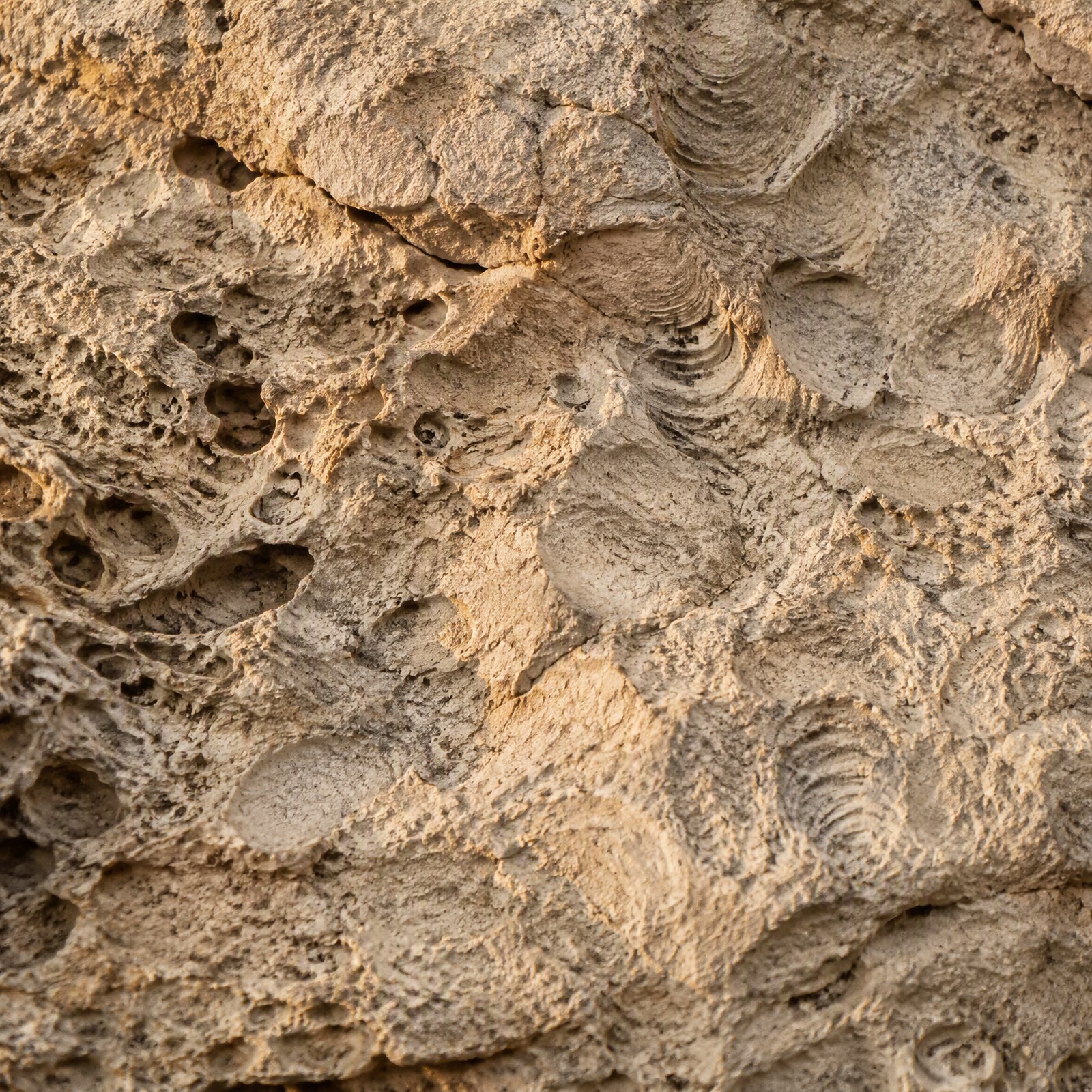
Drag along the line — eight hundred years of stacking stone.