A City Born from a Peace Treaty
Nova Gorica is Slovenia's youngest city, and it began writing its history in the turbulent post-war years. Its story started on 10 February 1947, when the Paris Peace Treaty was signed, awarding the town of Gorizia to Italy while most of the surrounding Goriška hinterland — including Solkan, Šempeter and many other settlements — went to the newly formed Socialist Federal Republic of Yugoslavia.
This arbitrary division cut deeply into people's lives. The Goriška region, the Lower Vipava Valley and the Soča region lost their natural centre — the town that had served for centuries as the administrative, economic, cultural and educational hub of the area. The Slovene-speaking population on the Yugoslav side of the border was left without hospitals, courts, secondary schools, libraries and other key institutions that had until then been concentrated in Gorizia.
"The decision to build a new city defined the entire post-war period. Nova Gorica did not arise by a natural path, but was a political decision of the highest Yugoslav authorities."
The first calls for a new administrative centre for the Goriška area emerged at the peace conference in Paris itself, but the actual decisions were made only in the spring of 1947. Miha Marinko, then prime minister of the People's Republic of Slovenia, brought to Ljubljana in April 1947 the resolution of the Politburo of the Central Committee of the Communist Party of Yugoslavia, which gave the green light to build an entirely new socialist city. The minister of construction, Ivan Maček, was put in charge of carrying it out.
1947
Year construction began
13th
Largest city in Slovenia
~36,000
Inhabitants today
The name "Nova Gorica" first officially appeared on 7 November 1949 as part of the local people's committee of Solkan, but it was established as an independent town and municipality only on 19 April 1952, under the law dividing the People's Republic of Slovenia into towns and districts.
Youth Brigades and the Birth of a Socialist City
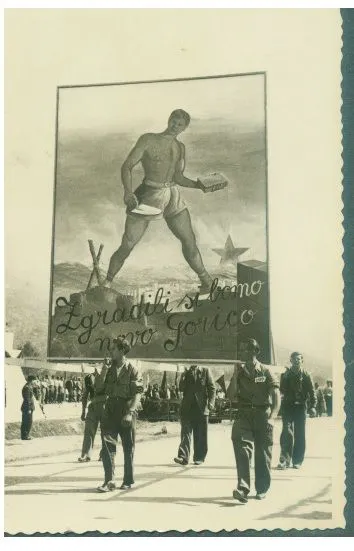
Construction of Nova Gorica officially began as a federal youth work action on 3 December 1947, when brigade members started the preparatory works. The first work shift, which lasted until 30 January 1948, involved 654 brigadiers from various republics of the then Yugoslavia.
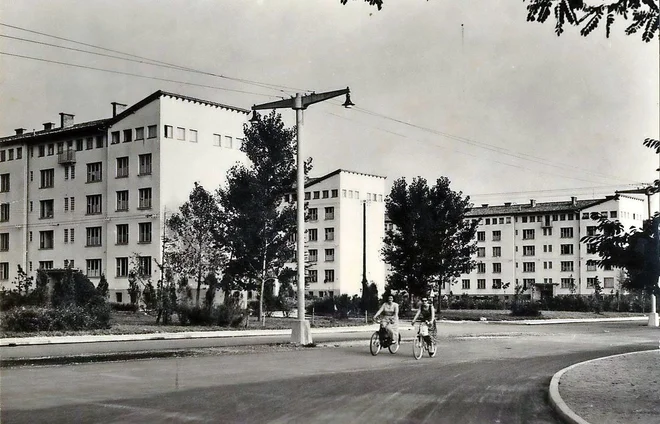
The official start date of construction, however, is considered to be 13 June 1948, when the foundation stone of the first six residential blocks was laid — the so-called "Russian blocks", built on the model of those the Red Army was erecting in East Germany. They were named after Yugoslav national heroes, among them the "Lojze Spomar" block and the "Ivo Lola Ribar" block.
3 December 1947
The youth work brigades begin preparatory works for the construction of Nova Gorica.
13 June 1948
Official start of construction — the foundation stone of the first residential blocks is laid.
9 February – 12 April 1948
Second brigade shift — three brigades of young people from the Littoral: Oton Župančič, Jože Srebrnič and Ivan Cankar.
Mid-June 1948
The fourth and largest shift — 17 brigades of students, pupils and apprentices from all over Yugoslavia.
End of 1950
Five residential blocks completed, four more in the final stage of construction.
In total, 25 youth work brigades with as many as 5,194 brigadiers from every republic of the former Yugoslavia took part in the construction. After the brigades departed and the young people returned to their schools and universities, the work was taken over by front brigades.
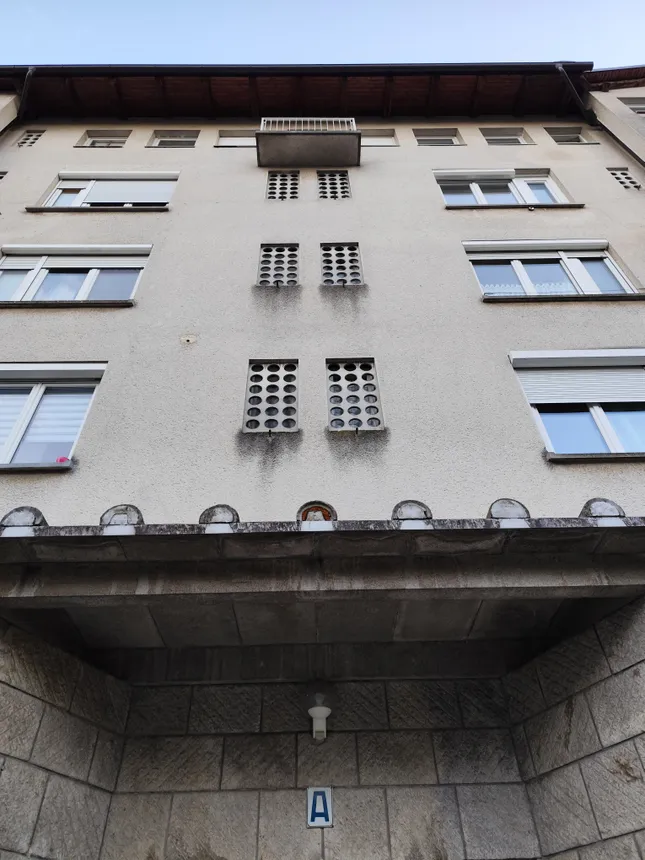
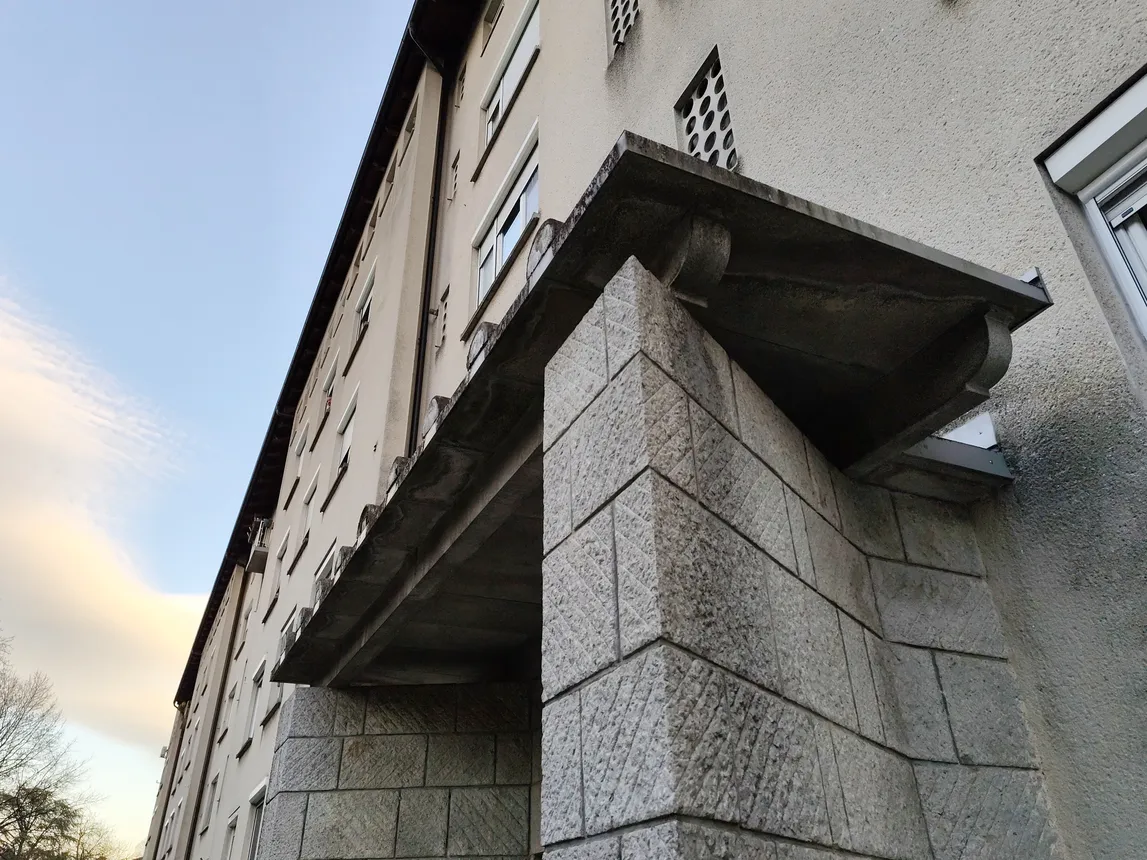
The brigadiers carried out heavy physical labour: regulating and deepening the Koren stream, excavating and laying out the main thoroughfare — the Magistrala — building the Solkan–Šempeter bypass road, and laying the foundations for the municipal building and the road bridge over the Koren. Alongside the youth brigades, construction, joinery, carpentry and other companies also worked on the site. Despite shortages of building materials, labour and money, effective political propaganda and the genuine enthusiasm of young people kept the construction moving forward.
The emerging city soon attracted, just after the Second World War, many residents from all over the former Yugoslavia. Many adapted life in the blocks to suit themselves — building sheds beside the residential blocks and turning the green spaces into vegetable gardens. Nova Gorica grew quickly, but never quite according to Ravnikar's original plan.
“"We built New Gorica!" — this was the rallying cry of a generation that believed in a better future and in the power of socialist construction.
Edvard Ravnikar: Visionary of a Modern City
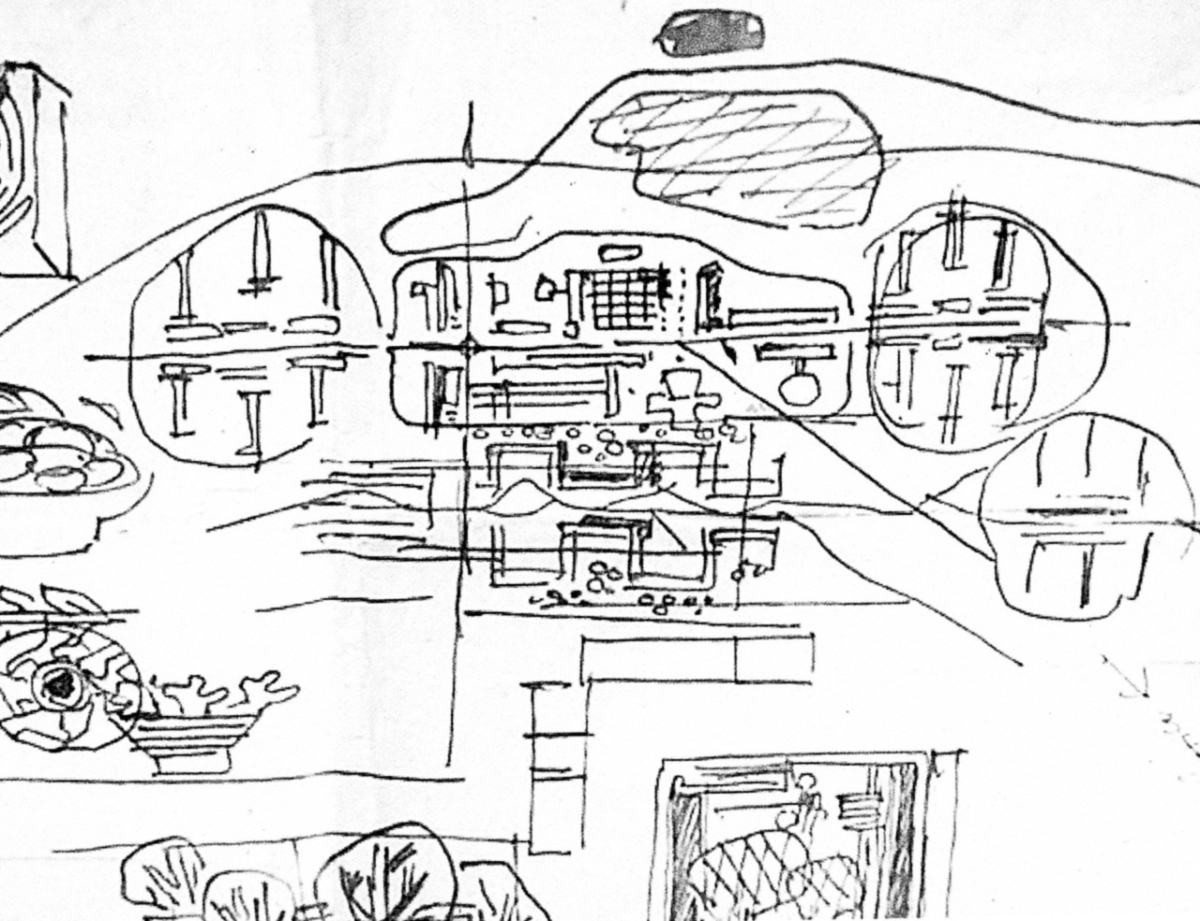
When the decision to build the new city was made, the authorities turned to the architecture professor Edvard Ravnikar (1907–1993), an already established architect and urban planner, a student of Jože Plečnik and a collaborator of the famous Le Corbusier. In 1947 Ravnikar was given the task of designing an entirely new city on the green meadows beside the Koren stream.
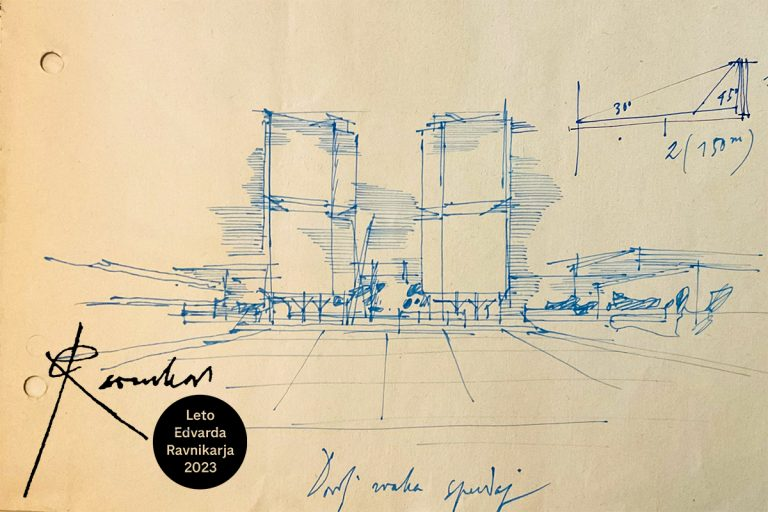
Ravnikar designed the city on a site that contained the Gorizia cemetery(opened in 1880), the wet meadows along the Koren stream, a former brickworks and a railway station with its tracks. He drew on Le Corbusier's concept of the radiant city (ville radieuse) — blocks and towers set on broad green expanses. The conceptual design rested on a functionalist urban approach that sought to separate residential space, administrative functions and traffic connections.
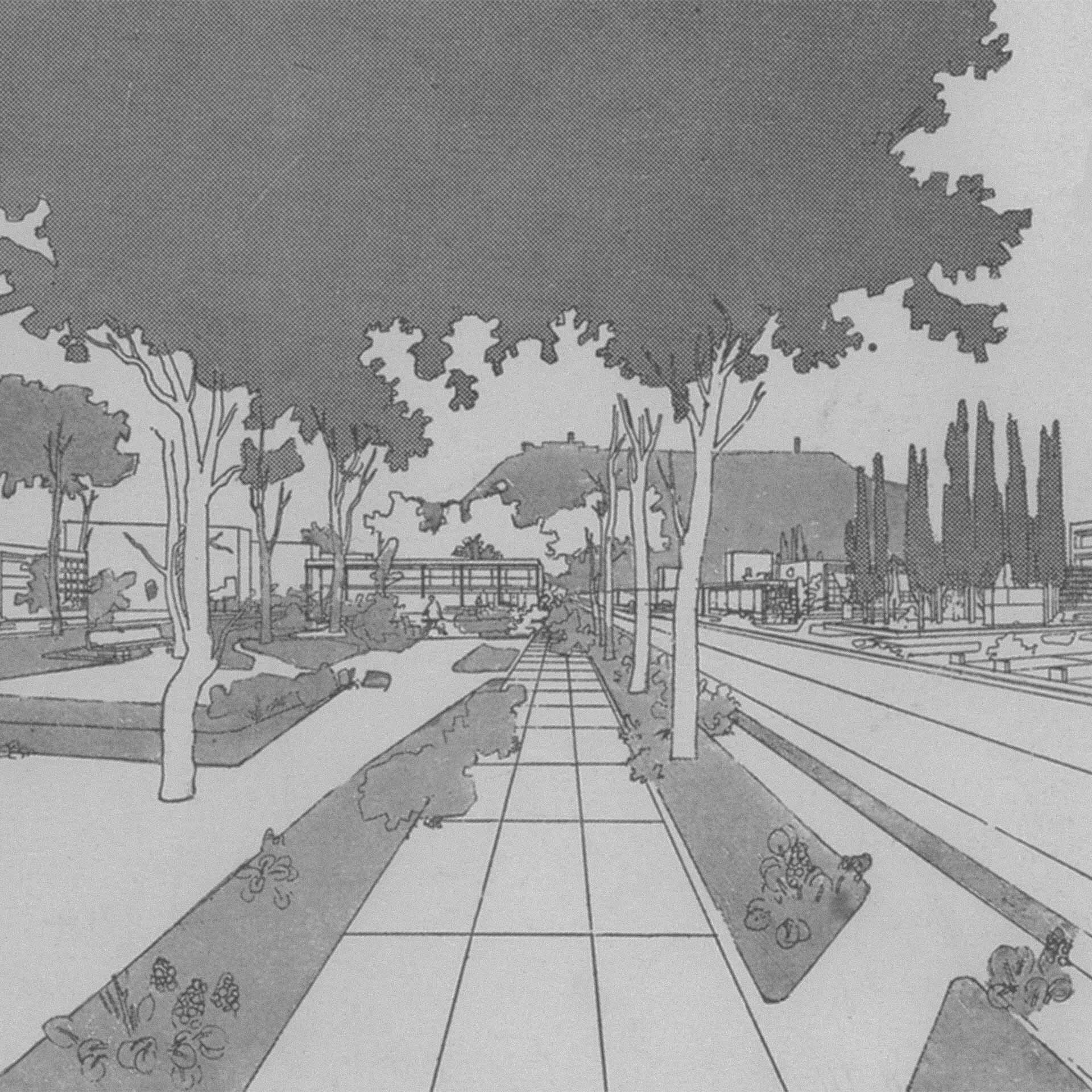
The city's main traffic axis, the Magistrala, was to run parallel to the railway line. Ravnikar's idea was for it to be planted with a four-row avenue of plane trees, which sadly was never realised. The Magistrala became the central artery of the city, around which all other traffic connections developed. At its southern end the oldest development was laid out — the so-called "Russian blocks" — while towards the north the city was to expand as a garden city with free-standing buildings on green surfaces.
"Settlements grow and move according to changing factors that cannot be fully and definitively fixed. In the face of concrete, intensive transformation, the urban planner's task is not to seek the final ideal form of a given settlement, but above all to regulate its development in its essential technical and other components."
Ravnikar believed that urbanism was not a "dead line on paper" but constant work — following change and making professional judgements as they arise. In his famous article "Nova Gorica after 35 years" (1984) he wrote that the building of Nova Gorica was "probably the most eloquent example of the fate of urbanism in Slovenia after the liberation", though his criticism was aimed above all at the "newly introduced abstract and technocratic office mentality", "conceited and ignorant pragmatism" and the "obligatory and sole valid advice of politicians on professional matters".
Unrealised Ideas and Reality
Although Nova Gorica was conceived as a city in greenery, many of Ravnikar's ideas were never realised. One of the most important unrealised concepts was the transverse axis — the eastern approach to the city, which was to run as an extension of the Kromberk road towards the west and cross the Magistrala at a right angle. Architect Strmecki's 1958 urban plan unfortunately replaced this transverse axis with Lenin (today Rejčeva) Street and a northern diagonal.
Nova Gorica also differs from many other Yugoslav cities in that it never had a central square or street named after Josip Broz Tito. However, since 1978 his name has been spelled out in stones on the nearby hill of Sabotin, which sparked much controversy in the early 21st century.
Despite being unfinished, Ravnikar's design gave the city a distinctive character. Nova Gorica is laid out as a park with large plantings of roses, with numerous trees and shrubs planted between the residential blocks. The city carries the nickname "city of roses" or "garden-type city". The year 2023 was dedicated entirely to Edvard Ravnikar — marked as "Ravnikar Year".
“"The life of a city is eternal metabolism, or it is nothing at all."
Europe Square: Symbol of Division and Unity
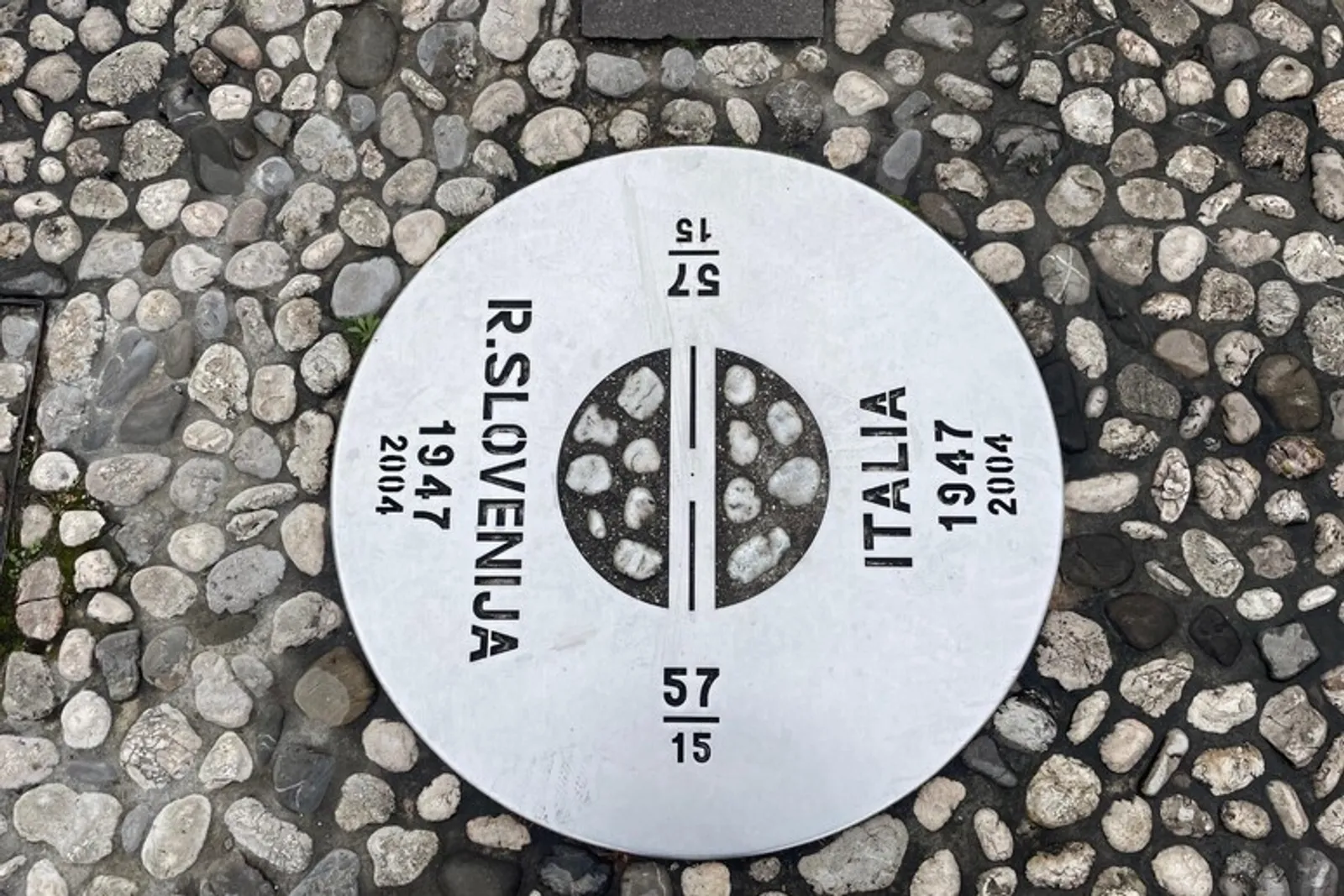
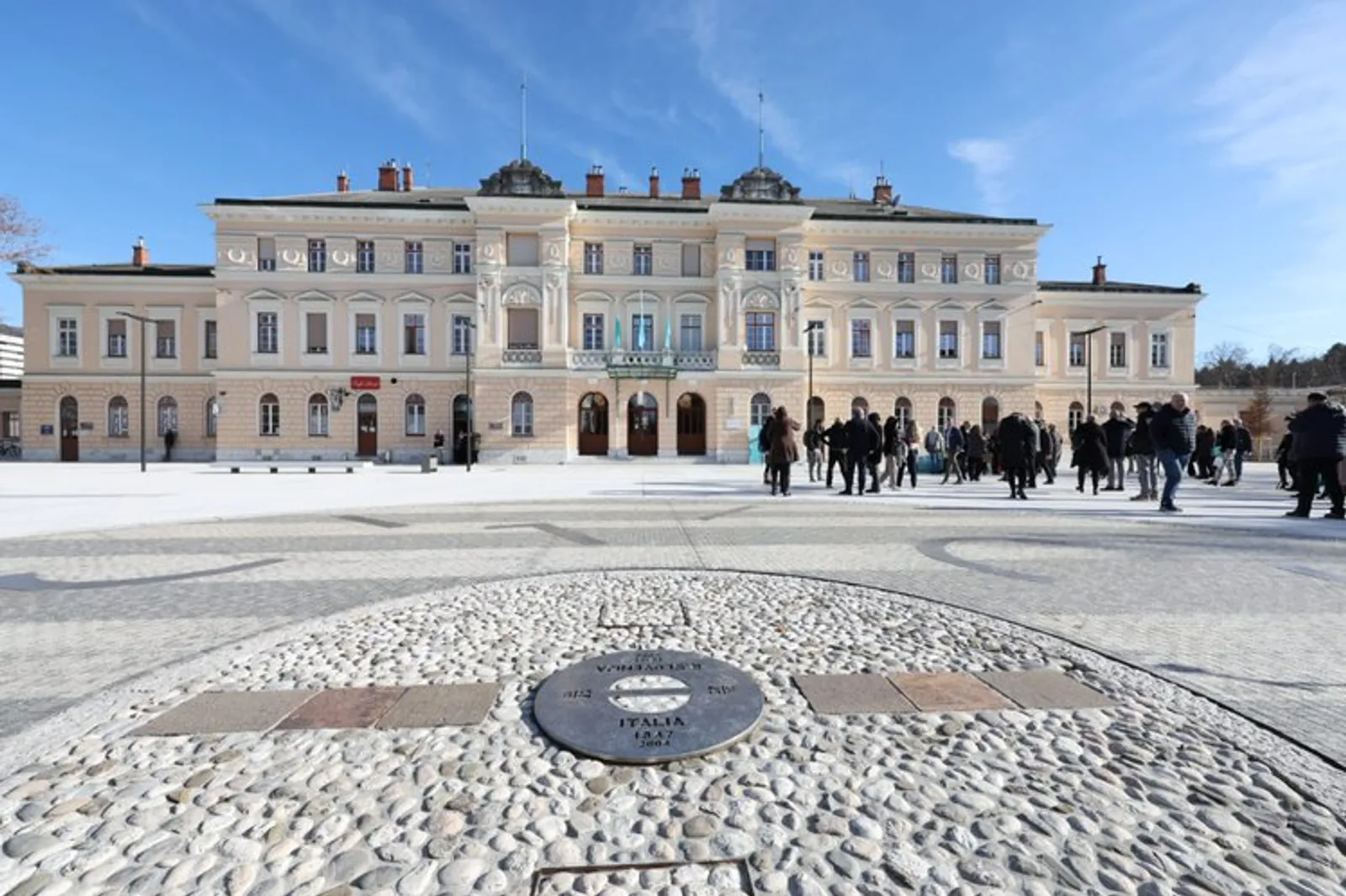
One of Nova Gorica's best-known landmarks is Europe Square (known in Italy as Piazza della Transalpina), which lies exactly on the border between Slovenia and Italy. Over the decades this square has become a powerful symbol — first of division, and today of unity and borderless cooperation.
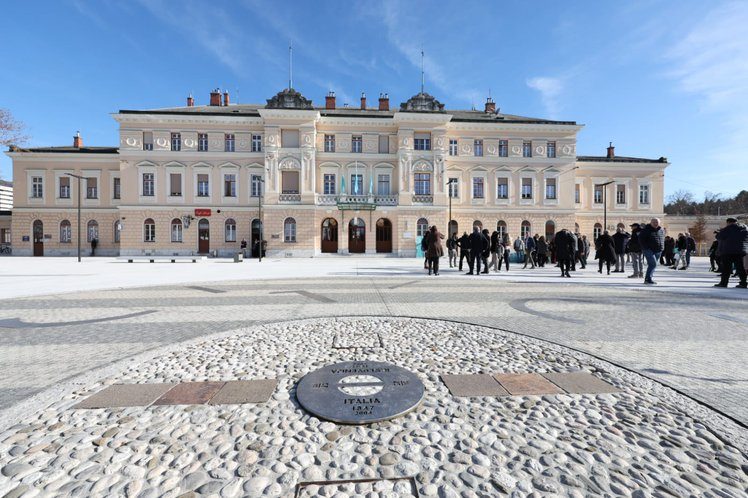
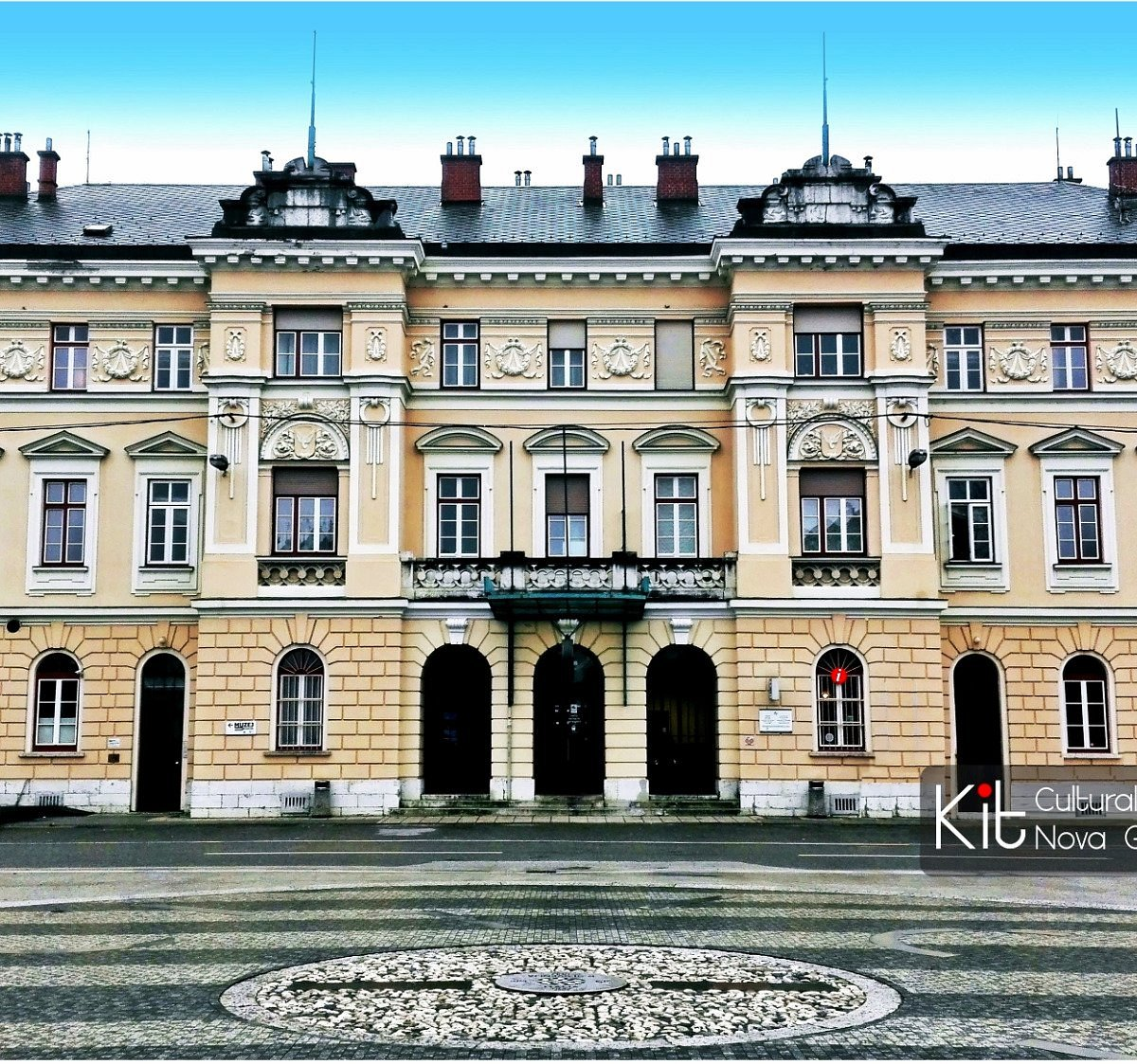
The railway station on the square — Nova Gorica — is the oldest public building in the Nova Gorica city complex. It was built in 1906 in the characteristic Austro-Hungarian Art Nouveau style, at the opening of the Bohinj railway that connected Trieste with Jesenice and Central Europe. The opening was attended by Archduke Franz Ferdinand himself, who was assassinated in Sarajevo eight years later. At the time the station was known as Gorizia Montesanto and served as the northern terminus of the Gorizia tram network (1909–1935).
When the new state border between Italy and Yugoslavia cut through the town of Gorizia in 1947, this square underwent its most dramatic transformation. The border ran just west of the station, leaving the eastern half of the square (with the railway station) in Yugoslavia and the western half in Italy. The area was divided by a fence, the so-called "Gorizia Wall" (muro goriziano). This division cut deeply into the daily lives of residents, who were strongly attached to Gorizia as their natural centre.
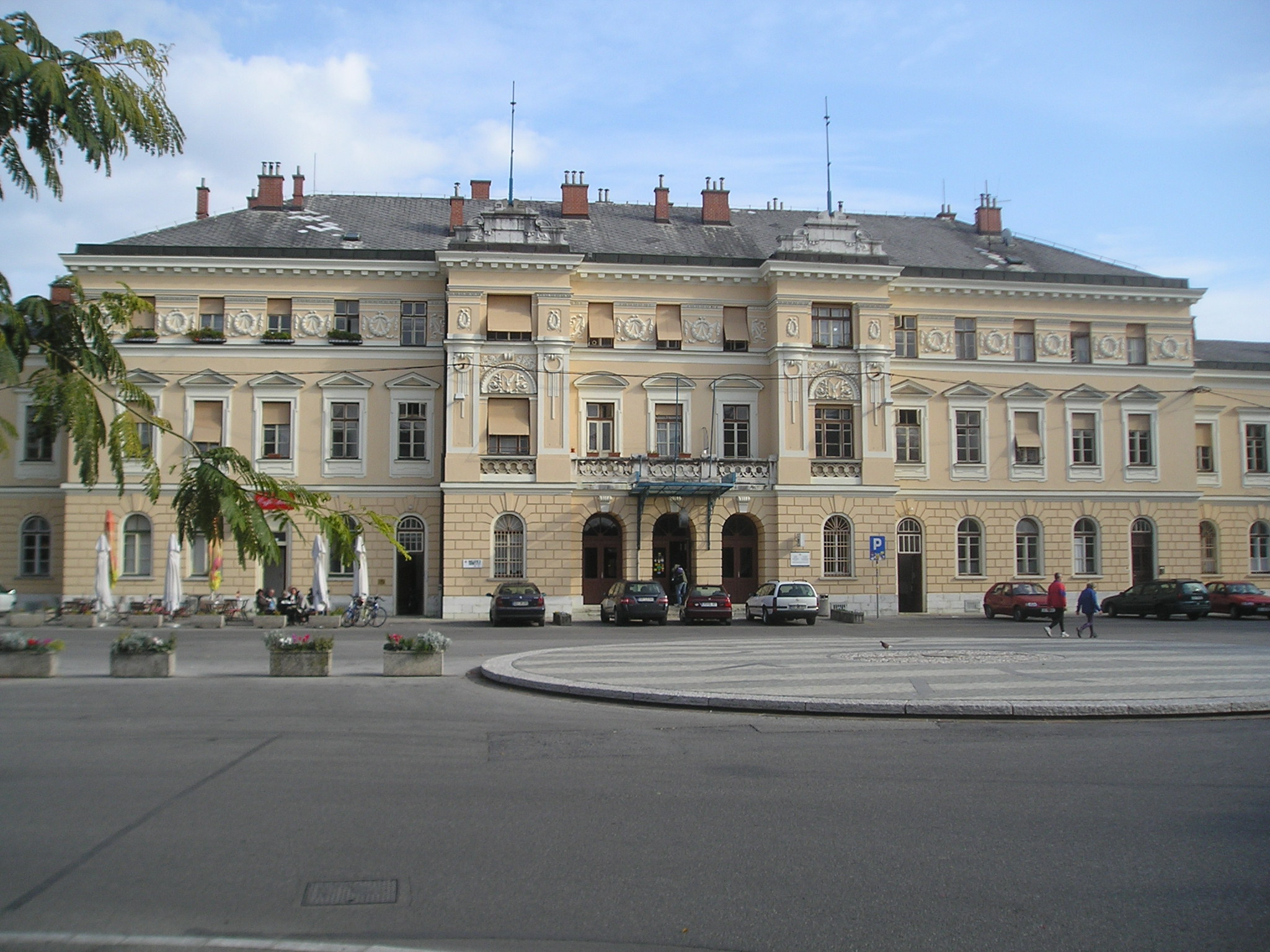
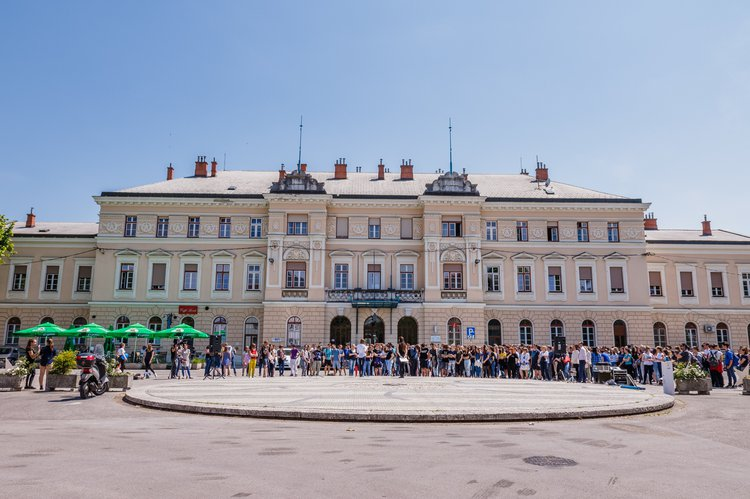
Between 1947 and 1955 the border was largely impassable, preventing many people from keeping in touch with relatives and friends. Only after 1955 did the border gradually open, but people had to use passes — special permits to cross the border at designated points. This regime lasted until 21 December 2007, when Slovenia joined the Schengen Area and the border became freely passable.
1906
Opening of the Gorizia Montesanto railway station on the Bohinj railway.
1947
The new state border cuts the square in half — the "Gorizia Wall" is created.
2004
Slovenia joins the EU — the central celebration is held on the square and the border fence is removed.
2007
Slovenia joins the Schengen Area — free movement across the square.
2024
Major renovation of the square as part of the preparations for European Capital of Culture 2025.
On the square the border is marked on the ground by a white line, alongside which flower beds are arranged. At its centre stands the "Mosaic of the New Europe", created in 2004 by the artist Franc Vecchiet when Slovenia joined the European Union. In 2024 the mosaic was even printed on an Italian postage stamp. The Italian name of the square — Transalpina — comes from the name of the railway line that the Italians (incorrectly) call the Transalpina. After the border fence fell, Slovenia proposed the name "Square of United Europe", but this proposal was not adopted. Since 2007 it has officially been called Europe Square.
“"More than 20 years ago there was still a border here. In 2004 the border fell — just like the Berlin Wall. And this became one city — the twin city of Nova Gorica and Gorizia."
GO! 2025: The First Borderless European Capital of Culture
On 8 February 2025, Nova Gorica and neighbouring Italian Gorizia symbolically opened their doors as the first borderless European Capital of Culture in the history of this European Union initiative. Under the slogan "GO! BORDERLESS", the two cities presented a vision in which culture erases borders and unites the citizens of both sides of the former Iron Curtain.
The candidacy of Nova Gorica together with Gorizia was unique from the very start. As the first cross-border candidacy in the history of the programme, it highlighted the advantage arising from the exceptional position of two cities that had been separated by a state border for almost eighty years, yet had always remained urbanly connected. The two cities are linked by many shared stories, a common history and close daily contact between their residents.
They received the title on 18 December 2020, when the European Commission's selection committee chose the Nova Gorica candidacy from among four Slovenian finalists (Nova Gorica/Gorizia, Ljubljana, Piran and Ptuj). The opening ceremony was held at several locations in both cities under high protocol patronage — the gathering was addressed by Nataša Pirc Musar, President of the Republic of Slovenia, and Sergio Mattarella, President of the Italian Republic, with European commissioners, ministers and many guests from across Europe also present.
18 Dec 2020
Named ECoC 2025
8 Feb 2025
Official opening
50,000+
Visitors at the opening
The ECoC District: Heart of Borderless Culture
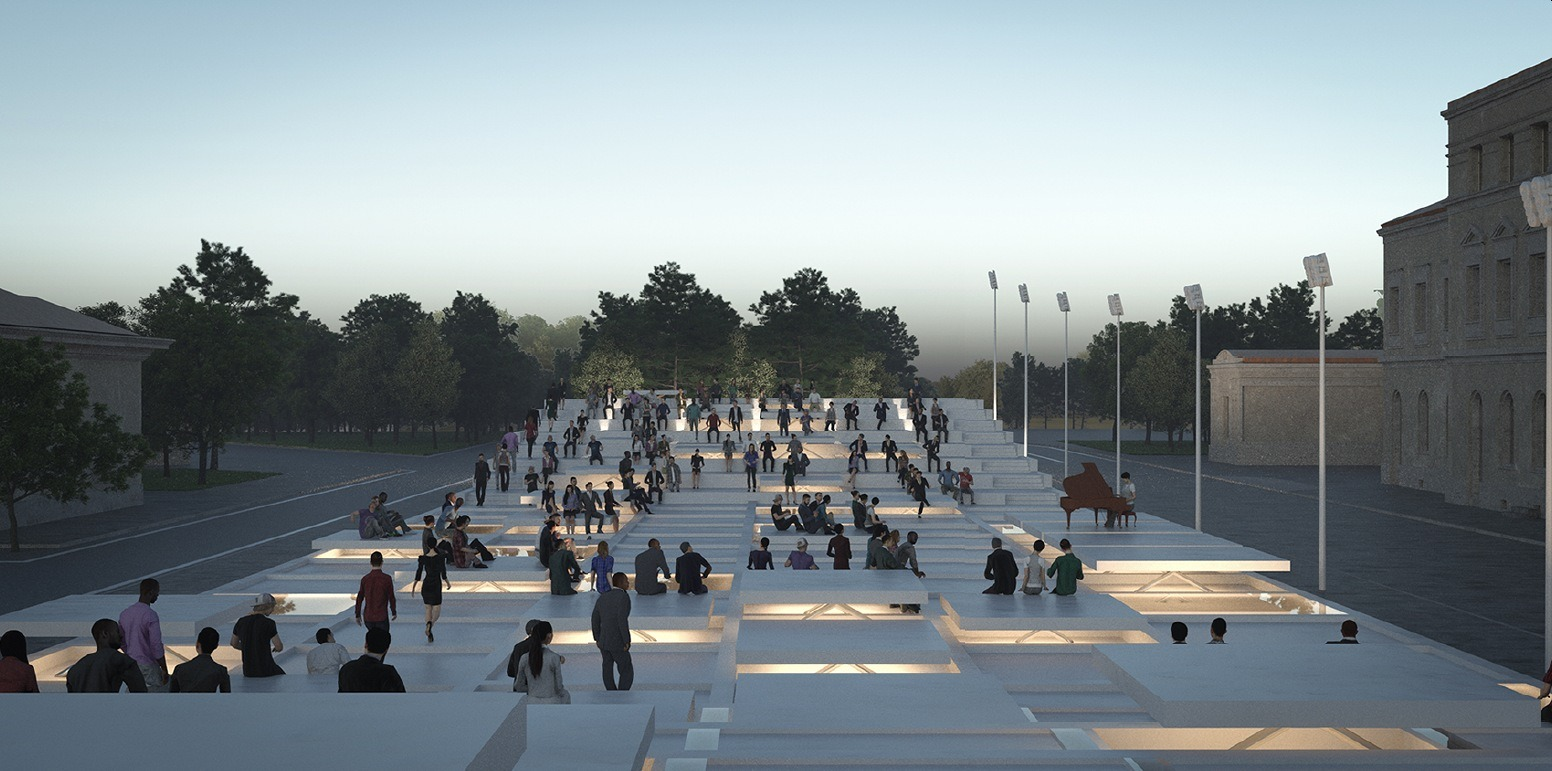
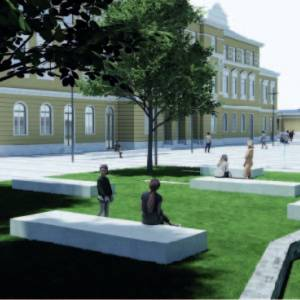
The centre of the year-long programme is the ECoC District — a kilometre-long cross-border strip between the former customs houses that encompasses Europe Square, the renovated railway station, EPIC (the European Platform for the Interpretation of the 20th Century), housed in a renovated former railway warehouse, Super8 (a cultural centre), a basketball court in the jungle, tree platforms, urban meadows and many other green areas. This space has become the true "living room of both cities".
Programme Highlights
The GO! 2025 programme comprised more than 400 events on both sides of the border. Among the key highlights were: "From Station to Station" — a symbolic cross-border procession from the Gorizia to the Nova Gorica railway station, an artistic spectacle directed by Neda Rusjan Bric; the international contemporary arts festival R.o.R; the theatrical saga Dodekalogija directed by Tomi Janežič; the project "Borderless Body" in the Solkan quarry; and the project "Benedetti Life" by the world-renowned fashion designer Adela Paškvanijevič Benedetti, which explores the path from destruction to paradise.
A special place in the programme belongs to EPIC (the European Platform for the Interpretation of the 20th Century) — an interpretation centre dealing with the history of the border and the complex history of the 20th century. With its permanent exhibition "City on the Border", prepared by Dr Kaja Širok and her team, the centre places the Goriška region in a broader European context. EPIC is set in renovated railway warehouses right next to the border and is one of the flagship projects of the entire capital of culture.
"Nova Gorica and Gorizia have become a symbol the European Commission likes to boast about — an example of successful cross-border cooperation and unity that inspires all of Europe."
The closing of ECoC 2025 will take place between 29 November and 5 December 2025with a series of final events, including the festive switching-on of the holiday lights, the expert symposium "ECoC after the ECoC", and the Borderless Party, where the teams from Nova Gorica and Gorizia will pass the "baton" to the next capitals of culture — Trenčín in Slovakia and Oulu in Finland.

A City That Never Stops Creating
The history of Nova Gorica is the story of a city created on a drawing boardthat, over the decades, found a life of its own. From the youth brigades who "broke new ground" on the Solkan field, to the modern city that boasts the title of European Capital of Culture — Nova Gorica has overcome every challenge brought by its extraordinary history.
Its strength lies precisely in the paradox: a city that arose from division is today a symbol of unity. A city that was conceived as a "shop window of socialism" is today a bridge between cultures and nations. The border that once separated now unites — Europe Square has become a place of encounter, creativity and mutual understanding.
Nova Gorica remains a city of "eternal metabolism", as Edvard Ravnikar would say. Each generation brings new layers of development, new challenges and new opportunities. From the Russian blocks to the modern ECoC District, from the youth brigades to international cultural festivals — this is the story of a city that never stops creating.
“"Nova Gorica is not a dead line on paper. Nova Gorica is constant work, following change, ongoing professional judgement, and on that basis, political decision-making as well."
City of roses. City of the border. City of culture.
Nova Gorica.