Sveta Gora
A sacred pilgrimage destination for over five centuries. Discover spiritual heritage, panoramic Alpine views, and centuries of faith at this mountaintop sanctuary.
682m
Elevation
1539
First Apparition
1717
Canonical Coronation
1907
Basilica Title
1928
Rebuilt
A Historic Pilgrimage Destination
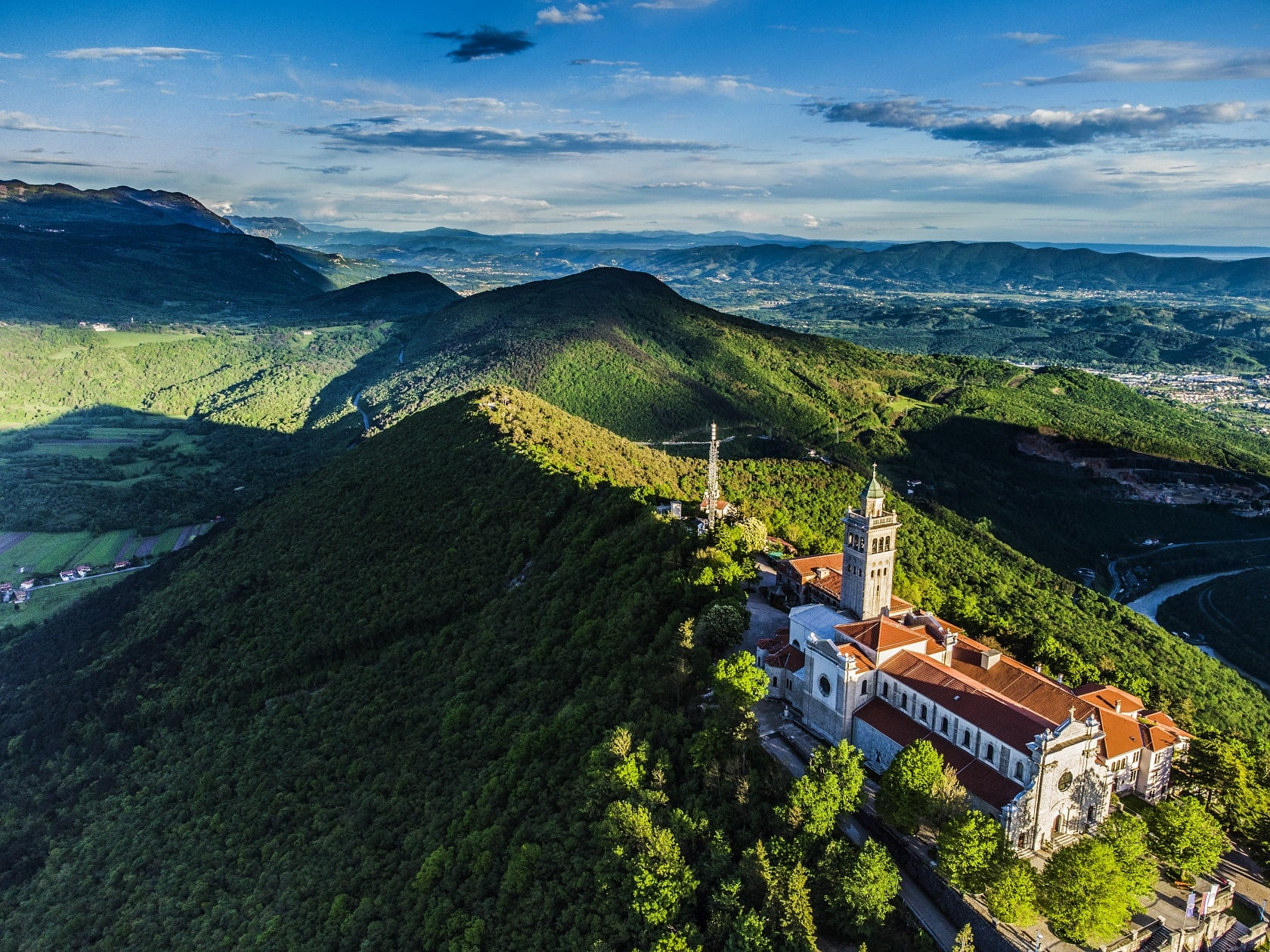
Sveta Gora, or Holy Mountain, has been a revered pilgrimage site for over five centuries, standing as the most important pilgrimage center in western Slovenia. Rising 682 meters above the Soča Valley on Skalnica Hill, this sacred destination has drawn countless pilgrims seeking spiritual solace and breathtaking views.
The pilgrimage tradition began in June 1539, when, according to local tradition, a young shepherdess named Urška Ferligoj from Grgar witnessed a miraculous apparition of the Virgin Mary holding the Child Jesus. The Virgin commanded Urška to tell the people to build a church on the hill and pray for mercy. When local authorities initially disbelieved her story and had her jailed, legend says the Virgin helped the girl break out of jail, proving the apparition was genuine.
This divine encounter transformed the mountain into a place of worship, and word of the miraculous site spread throughout the region. During excavation for the new church's foundations, workers discovered a stone slab decorated with ornaments and the Hail Mary prayer—evidence of a 14th-century church that had previously stood on the site, believed to have been destroyed during Turkish incursions in 1470.
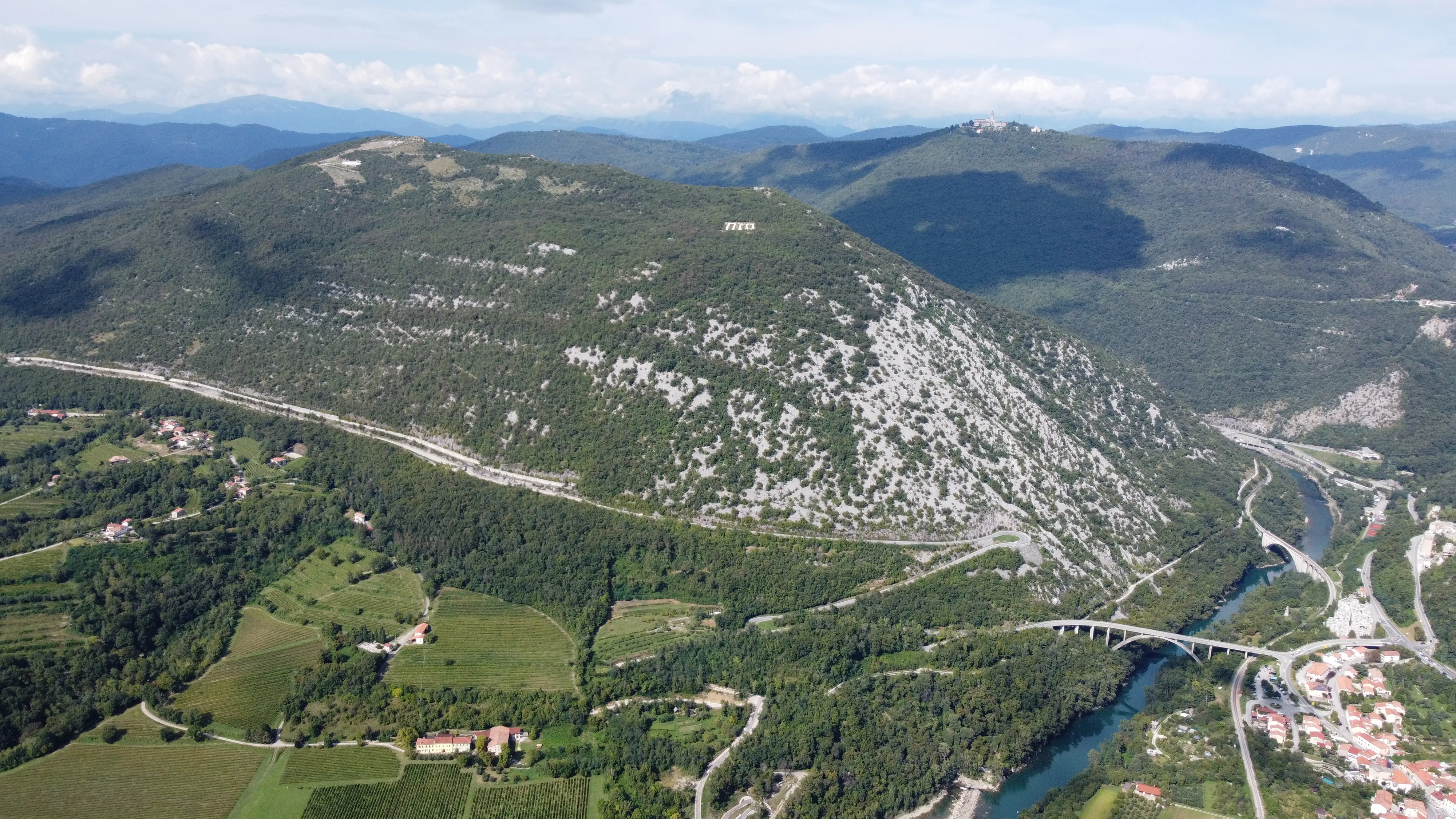
Aerial view of Sveta Gora perched atop Skalnica Hill, overlooking the Soča Valley
The Miraculous Image & the Basilica
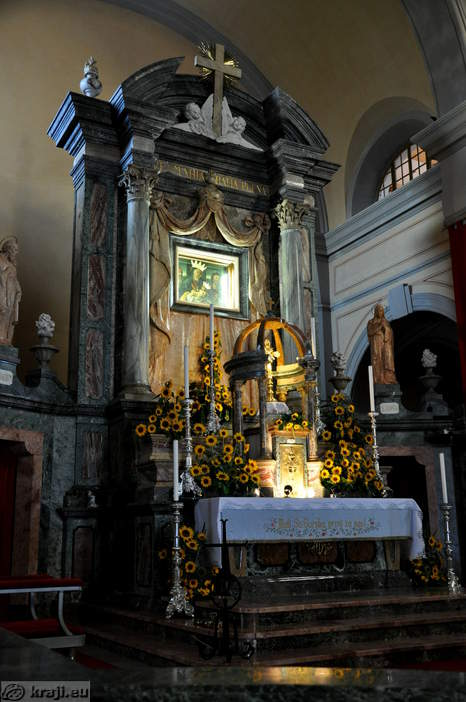
The main altar featuring the miraculous image of the Queen of Sveta Gora
The Painting by Palma the Elder
In 1544, the Patriarch of Aquileia, Marino Grimani, gifted the newly built church a miraculous image of the Mother of God, painted by the renowned Venetian artist Jacob Palma the Elder (also known as Palma Vecchio). This precious artwork became the spiritual centerpiece of the sanctuary and remains one of its greatest treasures.
The image of the Virgin Mary of Sveta Gora was the second outside of Italy to be canonically crowned by the Vatican Cathedral Chapter in 1717—an honor given only to images of the Virgin that had been venerated for a long time and were known for their miraculous intercessions. Because of this coronation, the faithful regard St. Mary of Sveta Gora as a Queen, a belief that played a key role in the 1793 decision to return the image to Sveta Gora after its removal.
In 1907, Pope Pius X granted the rebuilt church the prestigious title of basilica, cementing its status as one of Europe's important religious sanctuaries. The current structure, built between 1924 and 1928, was constructed in the Neo-Baroque style, inspired by the Basilica in Aquileia, after the original church was completely destroyed during World War I.
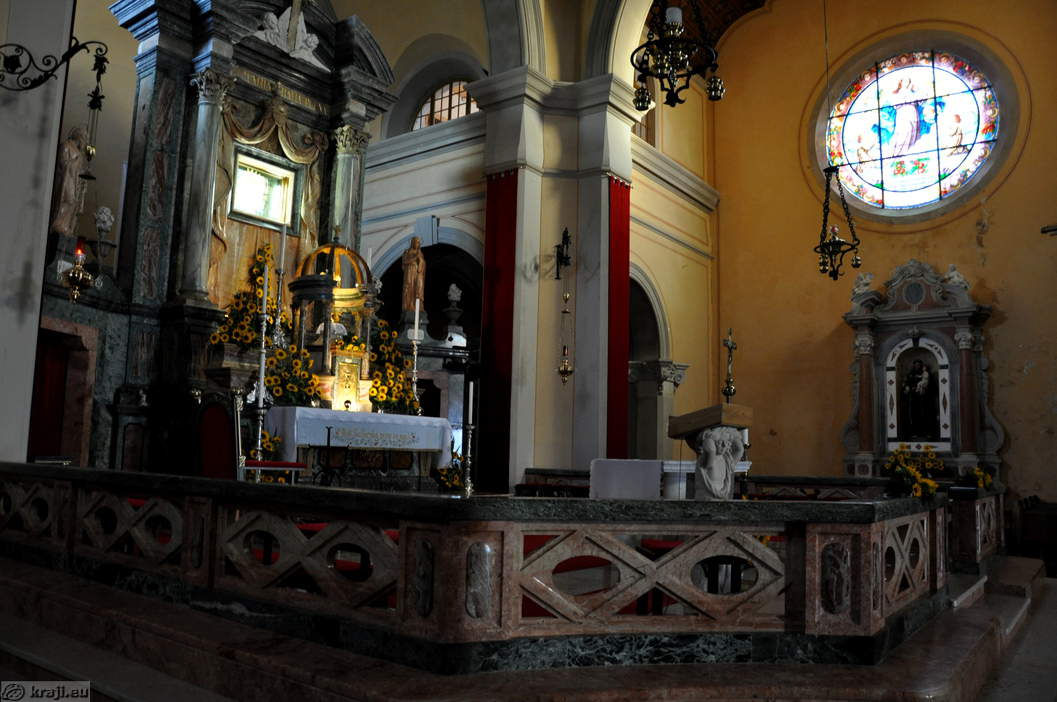
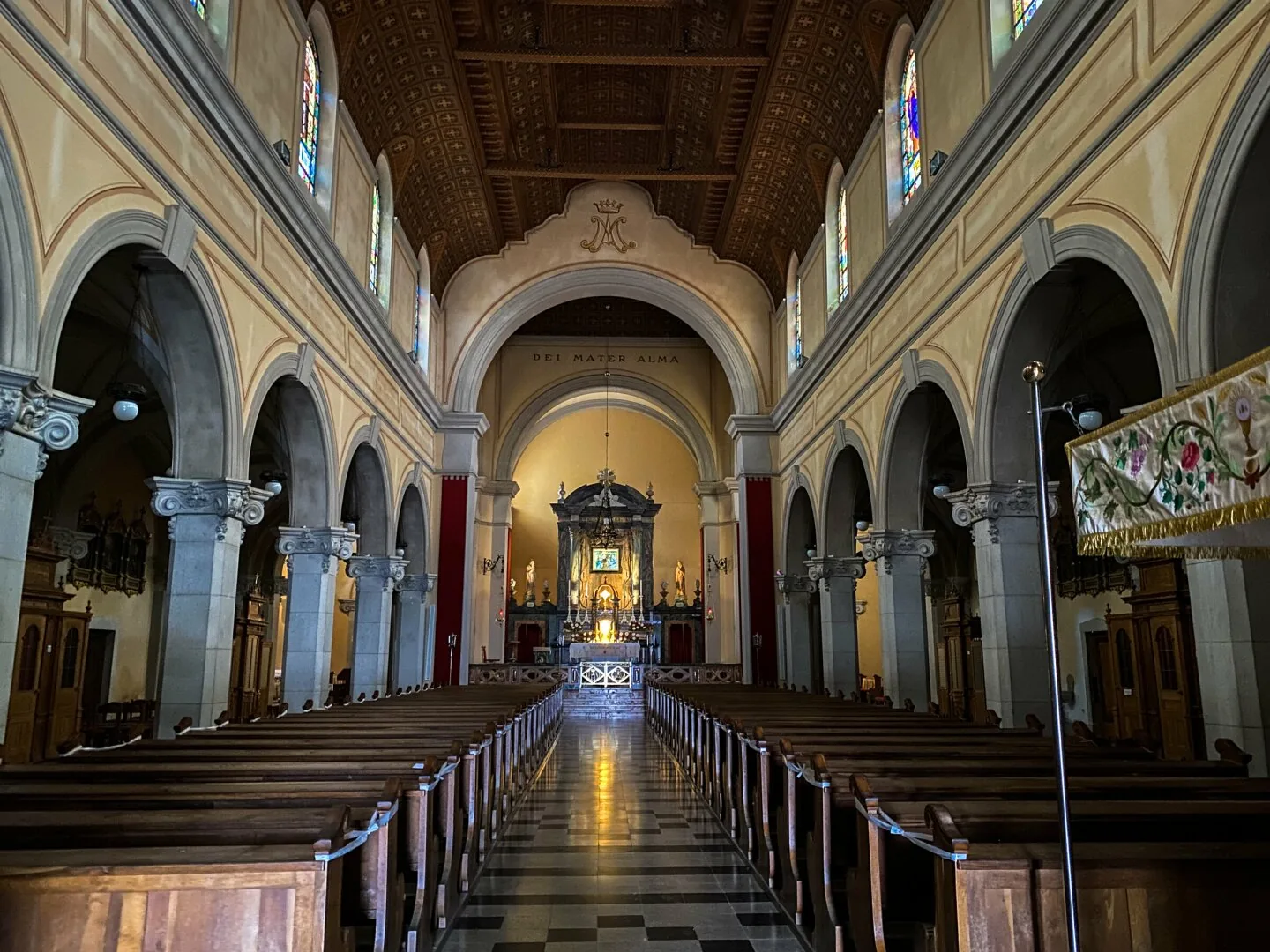
Basilica interior with ornate altars and stained glass
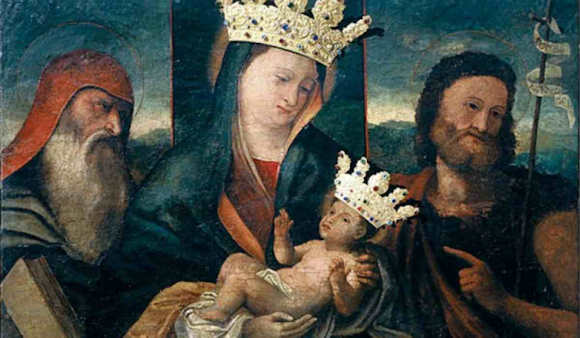
The miraculous crowned image of the Virgin Mary
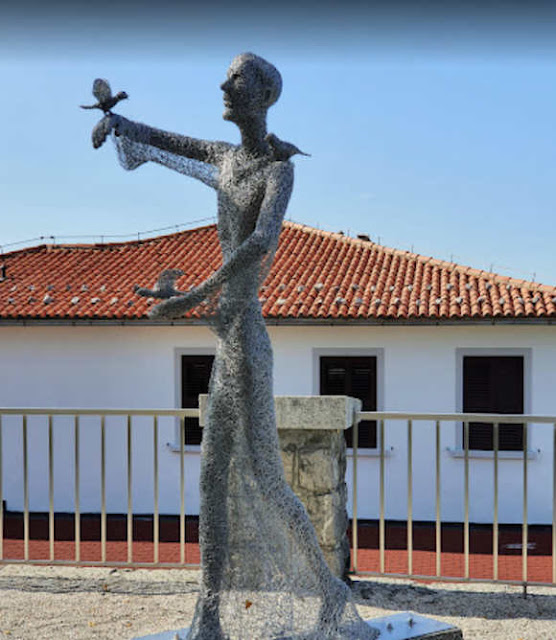
Modern statue of Urška Ferligoj, the shepherdess who saw the apparition
The Basilica of the Assumption
The crowning jewel of Sveta Gora is the magnificent Basilica of the Assumption of Mary, a stunning example of Neo-Baroque architecture that dominates the summit. The current church was constructed between 1924 and 1928, replacing earlier structures that had been destroyed during World War I artillery bombardments.
Designed under the inspiration of the ancient Basilica of Aquileia, the structure features an elegant façade, a soaring 50-meter-high bell tower, and a cruciform plan that maximizes the dramatic interior space. The bell tower holds four large bells—the heaviest weighing an impressive 4,335 kilograms—and five smaller ones that mark the time with their resonant chimes.
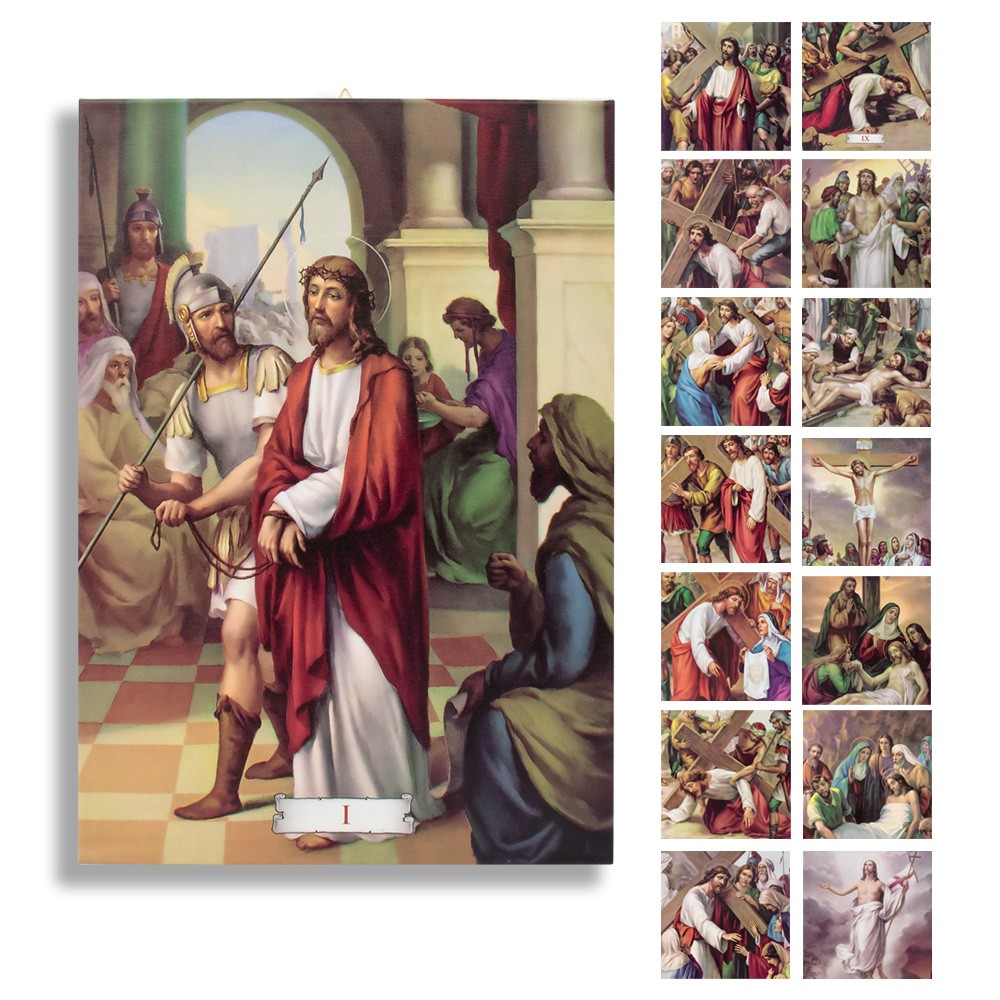
The interior is adorned with precious frescoes, intricate stuccowork, and ornate altars that showcase exceptional craftsmanship. In addition to the remarkable Marian images, visitors can admire the intricately carved ceiling, the Stations of the Cross, and beautiful stained glass windows that bathe the sanctuary in colorful light. The basilica's acoustics are renowned, making it a favored venue for sacred music concerts and liturgical performances.
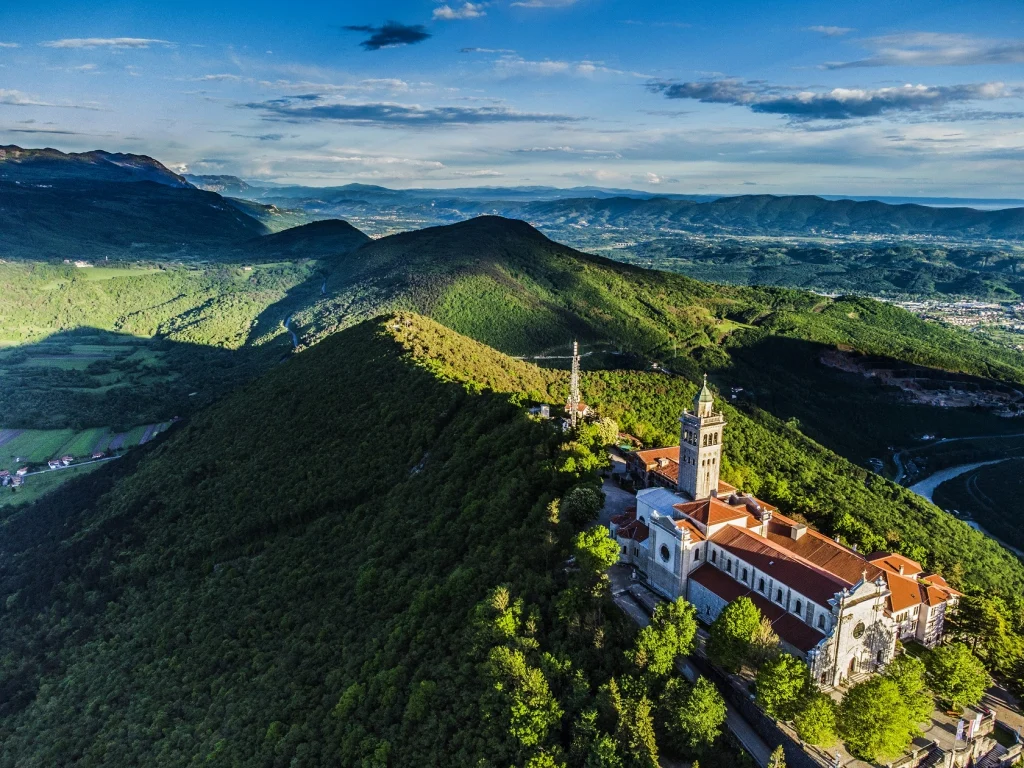
The basilica and monastery complex with the Soča Valley below
A Journey Through Time
14th Century
A church stands on Skalnica Hill, serving the local community until it is destroyed during Turkish incursions around 1470.
1539
Urška Ferligoj, a shepherdess from Grgar, experiences a Marian apparition on a Saturday in June. The Virgin Mary asks her to tell the people to build a church on the hill.
1540
Secular authorities grant permission for the church to be built. During foundation excavation, a stone slab with the Hail Mary prayer from the earlier 14th-century church is discovered.
1544
The church is consecrated by the deputy of the Patriarch of Aquileia, who gifts a miraculous painting of the Mother of God by Jacob Palma the Elder.
1565
The spiritual care of the site is entrusted to the Franciscan friars, refugees from Bosnia, who establish a monastery on the mountain.
1717
The image of the Virgin Mary is canonically crowned by the Vatican Cathedral Chapter—the second image outside Italy to receive this honor.
1786
Emperor Joseph II abolishes the pilgrimage route as part of his reforms. The Franciscans are forced to leave, and the church and monastery are sold at auction.
1793
The miraculous image is returned to Sveta Gora after its removal, and pilgrimages gradually increase again.
1901
The Franciscans return to Sveta Gora after more than a century of absence, helping the pilgrimage route reclaim its former reputation.
1907
Pope Pius X grants the church the prestigious title of Basilica, recognizing its significance as a pilgrimage destination.
1915–1917
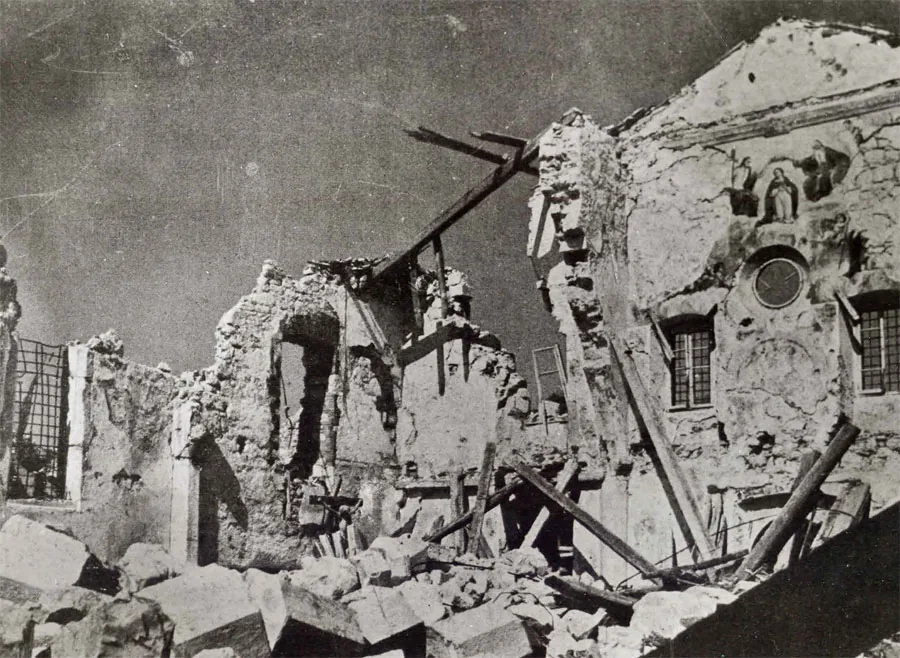
World War I devastates the site. The basilica is reduced to ruins during the Isonzo Front battles. The statue of the Virgin only survived because it had been removed beforehand.
1924–1928
The current Neo-Baroque basilica and Franciscan monastery are rebuilt, inspired by the Basilica of Aquileia. Italian-speaking Franciscans repopulated the monastery.
1943–1945
During World War II, the historic statue is evacuated again, and the monastery complex is briefly used as a German fort. A Partisan bombing raid is canceled at the last minute due to bad weather.
1996
The Marian Museum opens in the monastery, housing a fascinating collection of religious artifacts that reflect the rich and often turbulent history of the pilgrimage site.
2006
Sveta Gora becomes an independent settlement when its territory is administratively separated from Solkan and Grgar.
2025
The Goriška Camino (Iter Goritiense) is inaugurated, connecting Aquileia and Sveta Gora as part of the European Capital of Culture program.
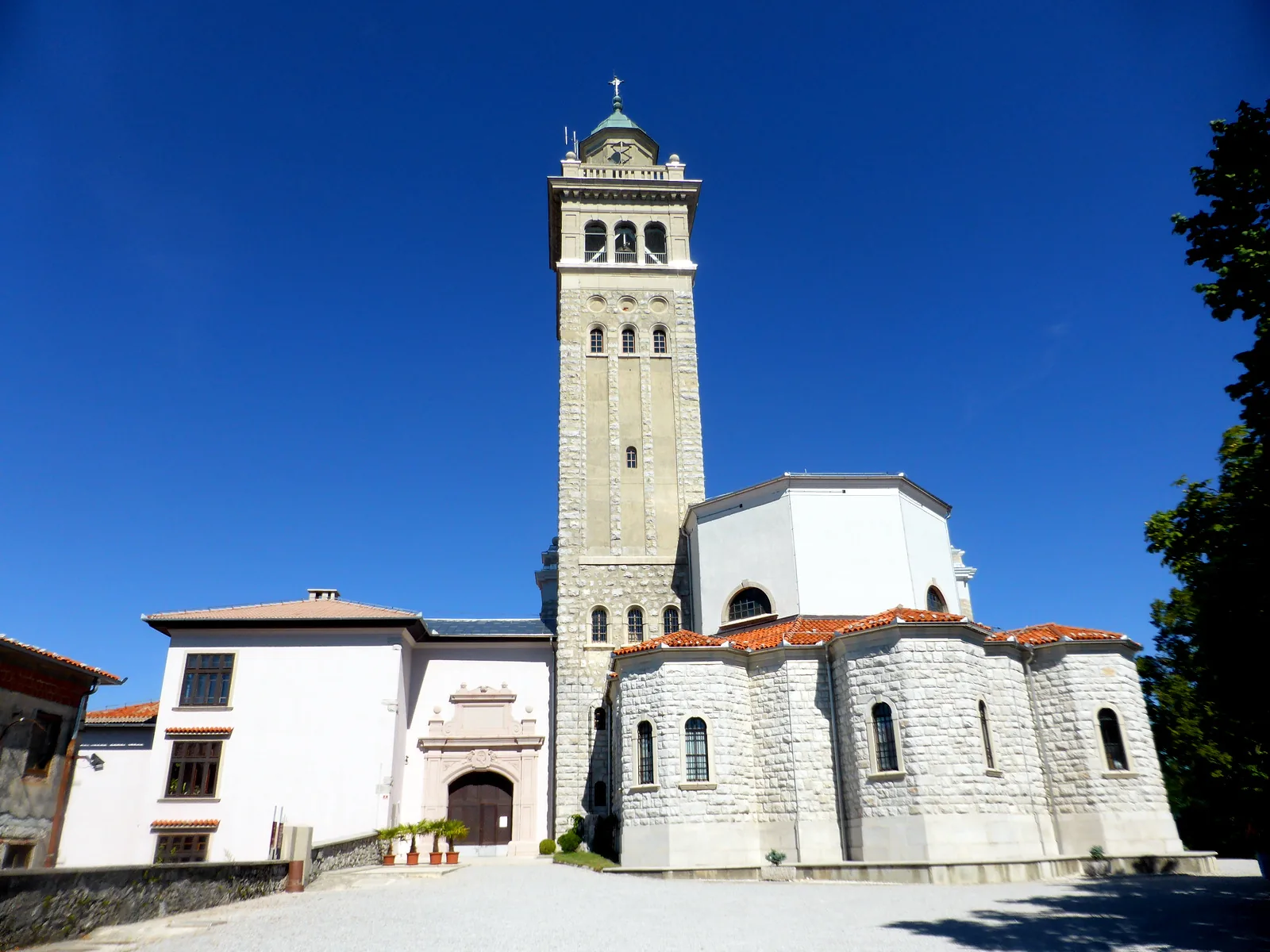
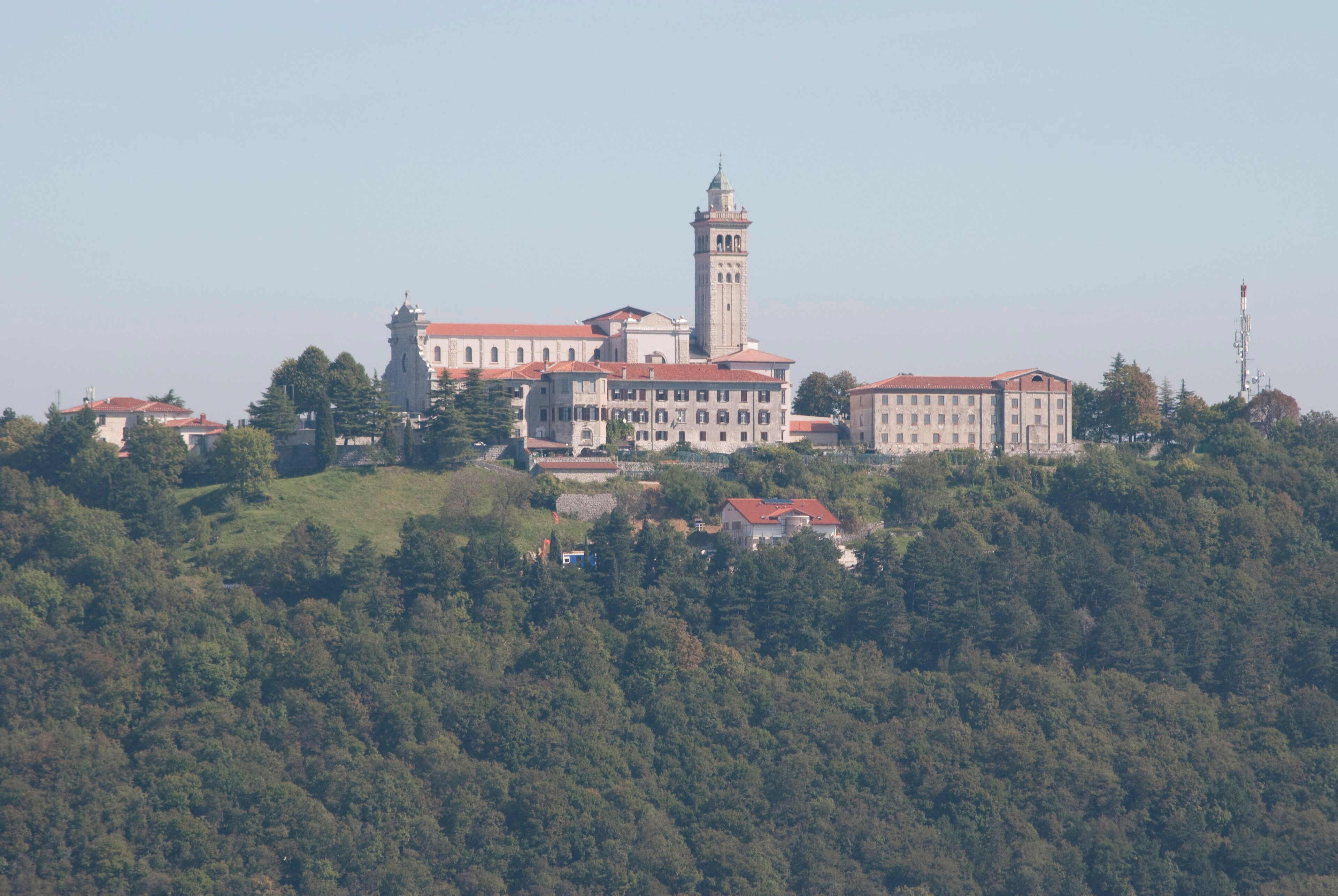
Historic view of the monastery complex perched on the hillside
The Franciscan Monastery
The Franciscan monastery adjacent to the basilica has been the spiritual heart of Sveta Gora for nearly three centuries, though the friars' presence has been interrupted by war and political upheaval. The pilgrimage church was first put into the care of the Franciscans in 1565, when refugee friars from Bosnia established the community.
In 1786, in the aftermath of reforms instituted by Emperor Joseph II, the pilgrimage route was abolished and the monks forced to leave. It was soon restored, but the Franciscans returned to Sveta Gora only in 1901. They helped the pilgrimage route reclaim its former reputation, but their work was cut short by World War I that turned the pilgrimage site into a ruin and forced the Franciscans to flee again.
Ever since its post-war restoration, when it was first repopulated with Italian Franciscans, the Franciscan monastery on Sveta Gora has remained the heart of this popular pilgrimage site. Today, it is once again home to Slovenian-speaking Franciscans who continue to welcome pilgrims and visitors of all backgrounds, offering spiritual guidance, conducting tours, and maintaining the sacred atmosphere that makes Sveta Gora such a special place.
The Marian Museum
Since 1996, the Franciscan monastery has been home to the Marian Museum, an engaging collection of religious artifacts that reflects the rich and often turbulent history of the pilgrimage site. The museum offers visitors a fascinating journey through centuries of devotion, art, and local heritage.
The museum's collection includes sacred art, liturgical vestments, historical documents, and archaeological finds that illuminate the mountain's long history as a place of worship. Particularly significant are the numerous ex-voto offerings—paintings, sculptures, and objects left by pilgrims in gratitude for answered prayers or miraculous interventions. These artifacts provide a poignant testament to the personal stories of devotion that have unfolded on this mountain over the centuries.
The monastery also houses a historic library containing rare manuscripts and incunabula, preserving the intellectual and spiritual heritage of the Franciscan tradition. The friars who reside here serve as guardians of the site's religious and cultural heritage, maintaining traditions of hospitality and scholarship that have defined Sveta Gora for generations.
The monastery and basilica visible from the surrounding valley
Preserved WWI heritage in the forests of Sveta Gora
Witness to the Isonzo Front
Sveta Gora's strategic position made it a crucial observation point during the First World War, placing it directly in the path of the Isonzo Front—the series of twelve battles fought between Italian and Austro-Hungarian forces along the Soča River between May 1915 and October 1917. The mountain offered unparalleled views of the entire valley, making it invaluable for military commanders on both sides.
The original sanctuary was heavily damaged during the conflict, with artillery shelling destroying much of the historic structure. The basilica and monastery that visitors see today are the result of painstaking post-war reconstruction between 1924 and 1928. The miraculous statue of the Virgin Mary only survived the war because it had been removed from the premises before the fighting began.
The surrounding hillsides still contain remnants of trenches, tunnels, and bunkers that once housed soldiers from both armies. Today, these historical elements have been thoughtfully preserved as part of the outdoor museum that encompasses the entire mountain. A particularly popular attraction is the marked 260-meter-long underground tunnel beneath the summit, partially equipped with a steel cable for visitors. Information panels along the pilgrimage paths explain the military history, ensuring that visitors understand the dual nature of Sveta Gora as both a sacred site and a witness to some of the most brutal fighting of the Great War.
World War I on Sveta Gora
- ✦Strategic importance: Unparalleled observation point over the Soča Valley
- ✦Isonzo Front: 12 battles fought between June 1915 and October 1917
- ✦Destruction: Original basilica reduced to ruins by artillery bombardment
- ✦Preserved heritage: Trenches, tunnels, caverns, and bunkers remain visible
- ✦Underground tunnel: 260-meter-long passage beneath the summit
- ✦Walk of Peace: Sveta Gora is part of the cross-border heritage trail
Spectacular Alpine Vistas
The panoramic views from Sveta Gora are nothing short of spectacular, offering one of the most comprehensive vantage points in the entire Julian Alps region. On a clear day, visitors can see across the entire Soča Valley, with its emerald river winding through the landscape below.
To the north, the majestic Julian Alps rise in dramatic peaks, including Triglav, Slovenia's highest mountain. To the south, the view extends across the Friuli plain in Italy, all the way to the Adriatic Sea. The sunset view from the summit is particularly renowned, as the fading light paints the mountain ranges in shades of gold, rose, and violet.
Several well-maintained viewing platforms and terraces provide perfect spots for photography, contemplation, or simply soaking in the magnificent scenery. The changing seasons bring different aspects of the landscape into focus—winter snows create a pristine alpine wonderland, spring brings wildflowers to the meadows, summer offers lush greenery, and autumn paints the forests in brilliant colors. These vistas alone would justify the journey to Sveta Gora, but combined with the spiritual and historical significance of the site, they create an unforgettable experience.
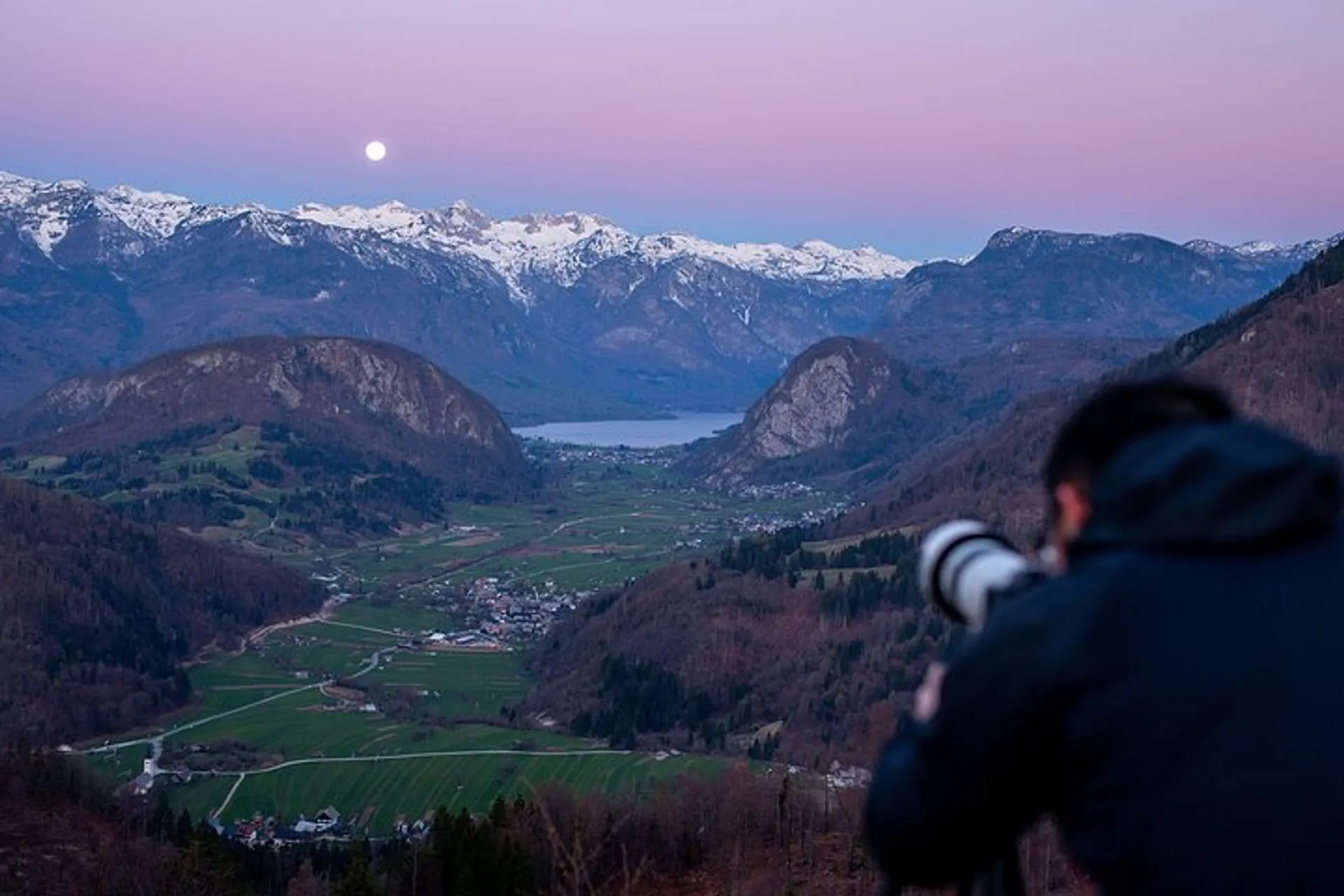
The basilica complex with the Soča Valley and distant mountains
Hiking & Pilgrimage Trails
From gentle walks around the hilltop to long-distance adventures that stretch across borders, the area around Sveta Gora offers a rich mix of trails suited to every explorer. Whether you're drawn by history, nature, or spiritual reflection, each path reveals something unique.
Iter Goritiense (Goriška Camino)
82 km | 4 stages
A cross-border pilgrimage route connecting Aquileia (Italy) and Sveta Gora, marked with Solomon's Knot symbol. The final stage includes the ascent from Solkan to the summit.
Path of the Three Sanctuaries
34 km
Connects three pilgrimage sites into a unique triangle: Sveta Gora, Marijino Celje on the Kanalski Kolovrat ridge, and Castelmonte (Stara Gora) above Cividale in Italy.
Urška's Trail
Circular trail
A thematic trail from Grgar to Sveta Gora, dedicated to Urška Ferligoj. Follows the path of the legendary shepherdess who witnessed the Marian apparition in 1539.
Trail of Saint Martin
260 km total
Part of the wider European St. Martin's Route from Hungary to France. This trail encircles the Vipava Valley and extends to Aquileia, also passing over Sveta Gora.
Trench and Cavern Trail
Varies
A historical route focused on WWI remains of the Isonzo Front. Leads through military tunnels and caverns, including the longest 260-meter tunnel equipped with a steel cable.
Old Pilgrimage Path
From Solkan
A classic footpath from Solkan that winds along the slope, avoiding the main asphalt road. Along the way are the Stations of the Cross, accompanying pilgrims to the basilica.
The Goriška Camino (Iter Goritiense) — Four Stages
- ✦Stage 1: Aquileia → Sagrado (28 km, 7h) — Flat terrain through Roman heritage
- ✦Stage 2: Sagrado → Mirenski Grad (24 km, 6h) — Through the rugged Kras region
- ✦Stage 3: Mirenski Grad → Gorizia (13 km, 4h) — Cross-border city exploration
- ✦Stage 4: Gorizia → Nova Gorica → Sveta Gora (17 km, 6h) — The final ascent to Holy Mountain
"Sveta Gora draws believers, non-believers and people of all faiths alike, because for many it's a symbol of peace and of the bonds and friendship among all people of good will."
— Father Bogdan Knavs, Guardian of the Franciscan Monastery of Sveta Gora
The Chapel of Apparitions
At the very site where Urška Ferligoj witnessed the apparition in 1539 stands the Chapel of Apparitions, a sacred space that marks the precise location of the divine encounter. Here, the Virgin Mary did not require prayers for a specific intention; rather, she asked that a church be built on this spot where people could pray for whatever they needed.
Unlike many Marian apparition sites where specific requests were made, the message at Sveta Gora was one of universal compassion—a place where all prayers would be heard. This inclusive message has contributed to Sveta Gora's enduring appeal across centuries, denominations, and national boundaries.
Sveta Gora became a place of miracles and healing, and over the centuries saw millions of pilgrims pass by and thousands come seeking cure for innumerable conditions. The Chapel of Apparitions remains one of the most visited spots on the mountain, where visitors pause for quiet reflection and prayer.
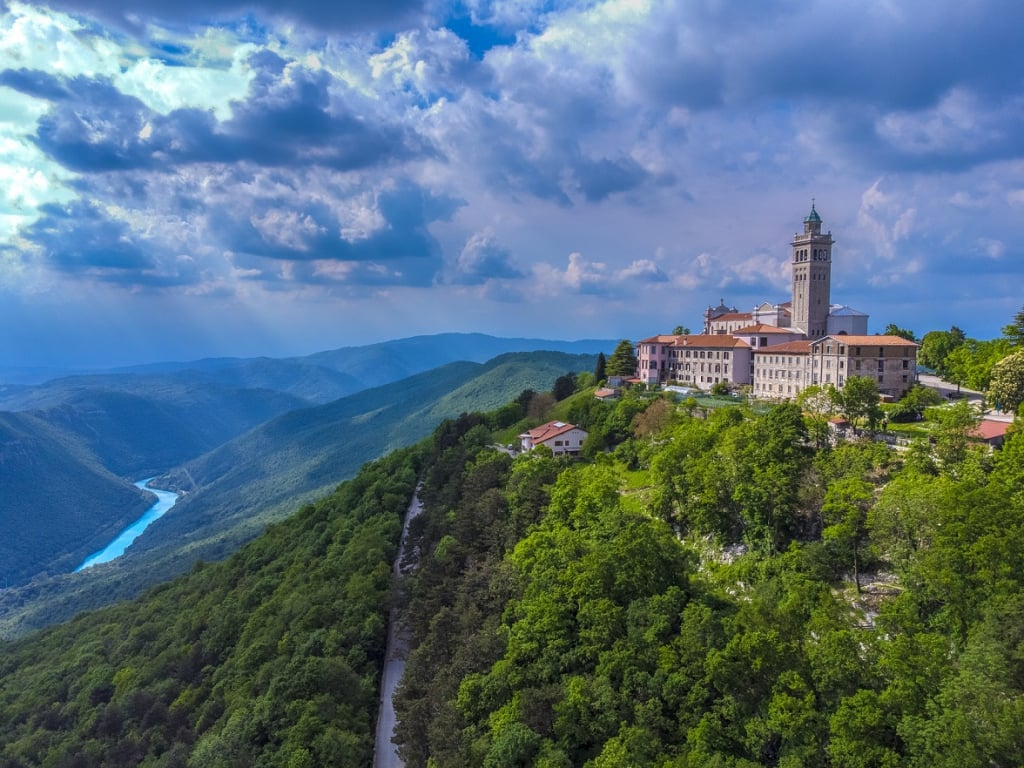
The sanctuary perched on its forested hilltop, visible from miles around
Plan Your Visit
Sveta Gora welcomes visitors of all faiths and backgrounds, offering a profound experience that transcends religious boundaries. Whether you come as a pilgrim, a history enthusiast, a nature lover, or a curious traveler, Sveta Gora offers an experience that will remain with you long after you descend the mountain.
Getting There
Easily accessible by car from Solkan. A well-maintained asphalt road leads to a parking area near the summit. The drive from Nova Gorica takes about 15 minutes.
Walking Routes
Traditionalists recommend walking the final segment of the pilgrimage path. Multiple hiking trails lead to the summit, including the historic Stations of the Cross route.
Basilica & Museum
Open daily with mass celebrated regularly. The Marian Museum showcases religious artifacts and the history of the pilgrimage site. Guided tours available by arrangement.
Amenities
A restaurant on the summit offers traditional Slovenian dishes and refreshments with panoramic views. Accommodation is available at the Peace and Well-being Center for up to 100 guests.
Visitor Information
- ✦Location: Sveta Gora, Municipality of Nova Gorica, western Slovenia
- ✦Elevation: 682 meters (2,234 feet) above sea level
- ✦Distance from Nova Gorica: Approximately 6 km (15-minute drive)
- ✦Distance from Trieste: Short drive across the border
- ✦Distance from Ljubljana: Approximately 1 hour by car
- ✦Distance from Venice: Approximately 1.5 hours
- ✦Best time to visit: Year-round; spring and autumn offer ideal hiking weather
- ✦Special events: Easter, Pentecost, and the Feast of the Assumption (August 15)
- ✦Pilgrimage season: Between Christmas and 10 January, over 5,000 visitors arrive
- ✦Accommodation: Rooms at B&B, Peace and Well-being Center, Youth Center Tau
"A longing for transcendence and inner peace is what hiking and Sveta Gora have in common."
— Father Bogdan Knavs
Sveta Gora in 2025 & Beyond
As Nova Gorica and Gorizia joined together as the first cross-border European Capital of Culture 2025, Sveta Gora has taken on renewed significance as a symbol of unity and reconciliation. The inauguration of the Goriška Camino (Iter Goritiense) has brought fresh attention to this ancient pilgrimage site, connecting it with Aquileia through an 82-kilometer trail that transcends borders.
The Camino's three thematic segments—Roots, Wounds, and Rebirth—reflect the historical and spiritual heritage of the Goriška region. The roots lie in Aquileia, the birthplace of Christianity in the region. The wounds are found in Kras, devastated by World War I. The rebirth is represented by Gorizia and Nova Gorica working together as one Capital of Culture.
The renovated hostel on Sveta Gora now provides accommodation for 28 people, along with a new canteen and lecture room, making it an ideal base to explore the area's impressive natural beauty and many sights. As Father Knavs notes, the site attracts "believers, non-believers and people of all faiths alike, because for many it's a symbol of peace."
The monastery and basilica standing as beacons of peace above the valley
Sveta Gora in Images
Experience Sveta Gora
Embark on a spiritual journey to one of Slovenia's most sacred sites. Walk ancient pilgrimage paths, admire Baroque architecture, and discover panoramic Alpine views that have inspired pilgrims for over five centuries.