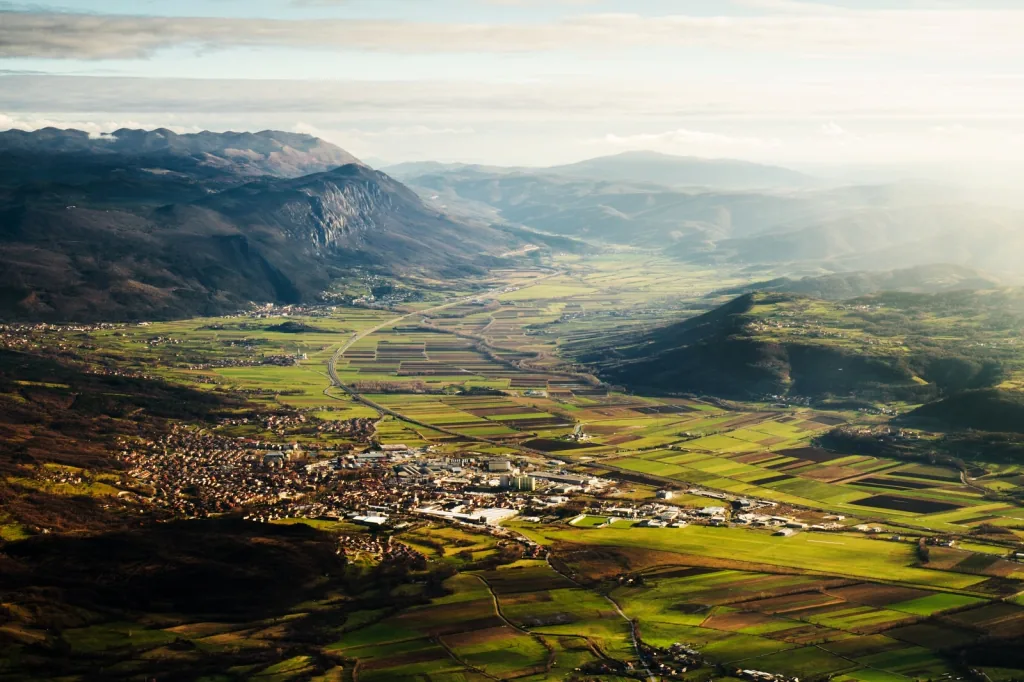
The Best Hiking Trails Around Nova Gorica
Discover breathtaking trails in the heart of the Goriška region — from sacred peaks and border ridges to vineyard hills and peaceful urban forests.
7
Featured Trails
5
Long-Distance Routes
360°
Panoramic Views
Border
Ridge Walks
Why Hike Around Nova Gorica?
Nestled between the emerald Soča River and the rolling vineyards of the Vipava Valley, Nova Gorica serves as the perfect gateway to some of Slovenia's most diverse and captivating hiking terrain. This unique region where the Alps meet the Mediterranean offers an extraordinary variety of trails that wind through karst landscapes, vineyard-covered hills, ancient forests, and historic World War I sites.
Whether you're seeking a gentle family stroll through wine country, a challenging ridge traverse with panoramic Alpine views, or a poignant journey through history along the Walk of Peace, the trails around Nova Gorica deliver unforgettable experiences. The region's mild Mediterranean climate means the hiking season extends nearly year-round, with spring wildflowers and autumn grape harvests adding seasonal magic to every step.
European Capital of Culture 2025
Nova Gorica and Gorizia (Italy) are jointly celebrating as the European Capital of Culture 2025. This cross-border celebration has brought renewed attention to the region's hiking trails, including the newly established Goriška Camino pilgrimage route connecting Aquileia to Sveta Gora.
Sveta Gora (Holy Mountain)
Pilgrimage, history, and 360° views
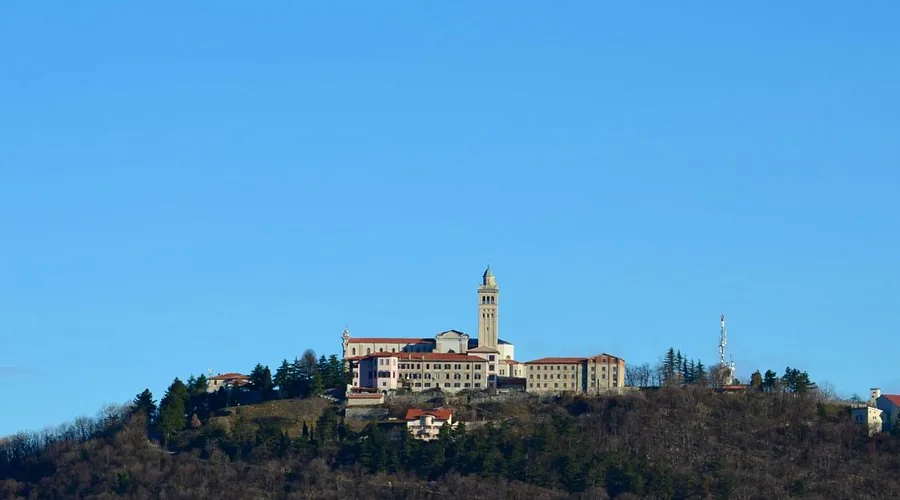
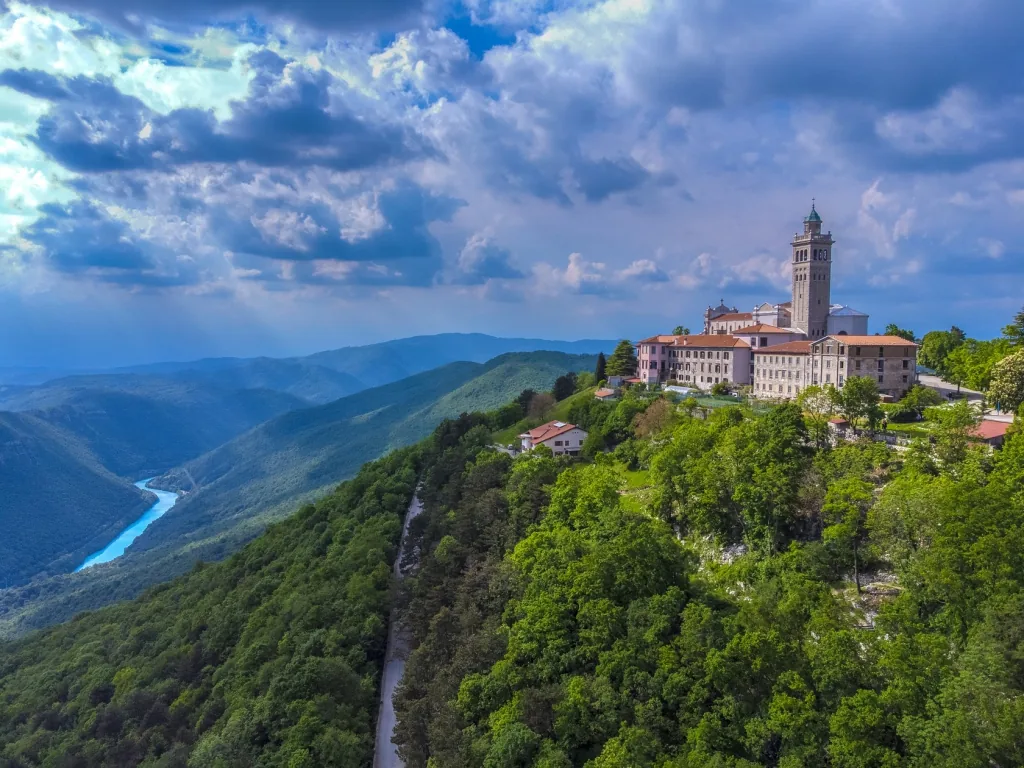
Rising prominently above the Soča Valley, Sveta Gora (Holy Mountain) has been one of Slovenia's most important pilgrimage destinations for nearly 500 years. At 682 meters, this limestone hill offers one of the most spectacular panoramic views in the entire Goriška region, stretching from the Julian Alps to the Adriatic Sea. Several marked trails lead to the summit, ranging from moderate forest paths to historically significant routes. The summit features the magnificent Basilica of the Queen of Sveta Gora, a Franciscan monastery with a rich library, and the tomb of the last French King Charles X. On clear days, the viewpoint offers an incredible 360-degree vista encompassing Triglav, the Soča Valley, the Friuli Plain, and the Gulf of Trieste.
Trail Highlights
- The Trench Trail: a fascinating WWI route through preserved Austro-Hungarian trenches and caverns, including a 260-meter-long underground tunnel
- The Old Pilgrimage Path: a classic footpath from Solkan winding along the slope with Stations of the Cross
- Ursula's Trail: a circular thematic trail from Grgar dedicated to Urška Ferligoj, who experienced a Marian apparition here in 1539
Mt. Sabotin - Park of Peace
Where the Alps meet the Adriatic
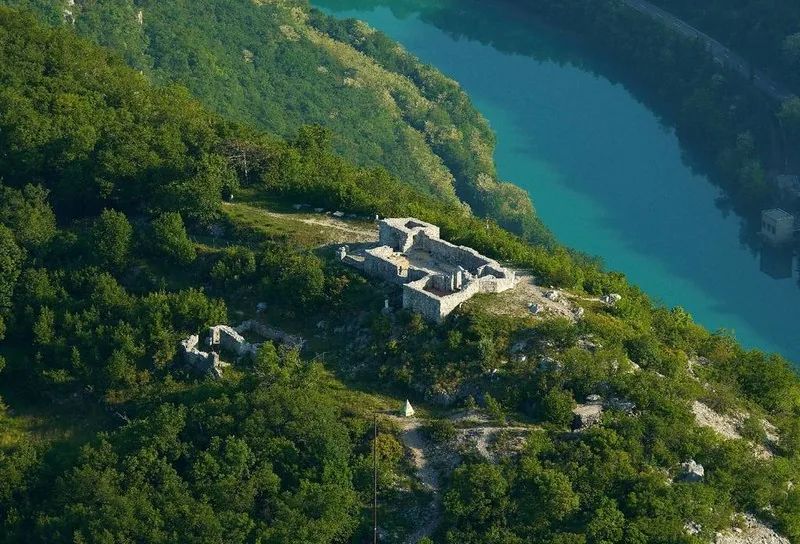
Mount Sabotin (609m) stands as a powerful symbol of peace and reconciliation. This strategically important hill was fiercely contested during World War I's Isonzo Front, changing hands between Austro-Hungarian and Italian forces. Today, the entire mountain has been transformed into the Sabotin Park of Peace, an outdoor museum that preserves the memory of war while celebrating cross-border friendship between Slovenia and Italy. The circular trail to Sabotin offers an unforgettable combination of natural beauty and living history. As you ascend through the forested slopes, you'll encounter remarkably preserved WWI military caverns, trenches, and command posts. The Visitor Centre at the summit features a multimedia museum, and guided tours take you deep into the mountain's tunnel network.
Trail Highlights
- Explore the extensive cave system with a flashlight
- Visit the ruins of the 14th-century Church of St. Valentine
- Walk along the ridge that forms the Slovenia-Italy border
- Enjoy panoramic views of Nova Gorica, Gorizia, and the Alps
Skozno Natural Stone Bridge
A natural window over the Vipava Valley
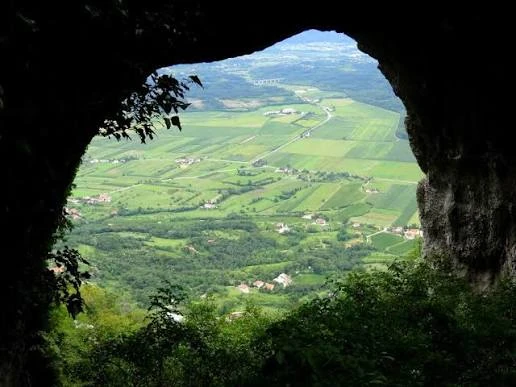
The Skozno Natural Bridge is one of the most remarkable karst formations in western Slovenia. This window-shaped natural arch, measuring 10 meters high and 15 meters wide, was carved by the waters of Lijak Creek over millennia. The result is a breathtaking natural frame that perfectly captures the stunning panorama of the Vipava Valley, the Friuli Plain, and a sliver of the Adriatic Sea in the distance. Starting from the cemetery parking in Šmihel, the well-marked trail ascends through mixed forest along the edge of the Trnovo Forest Plateau. The route passes the famous Lijak paragliding take-off site, where you can watch pilots soar into the thermals. After reaching the natural bridge, the trail continues through the forest to the cottage settlement of Trpinovšče before descending back to the starting point.
Trail Highlights
- Perfect for families and beginner hikers
- Unique geological features including the natural bridge and nearby cave
- Spectacular views of the Vipava Valley
- Watch paragliders taking off from Lijak
- Rich WWI history - General Borojevič reportedly used Skozno as an observation point
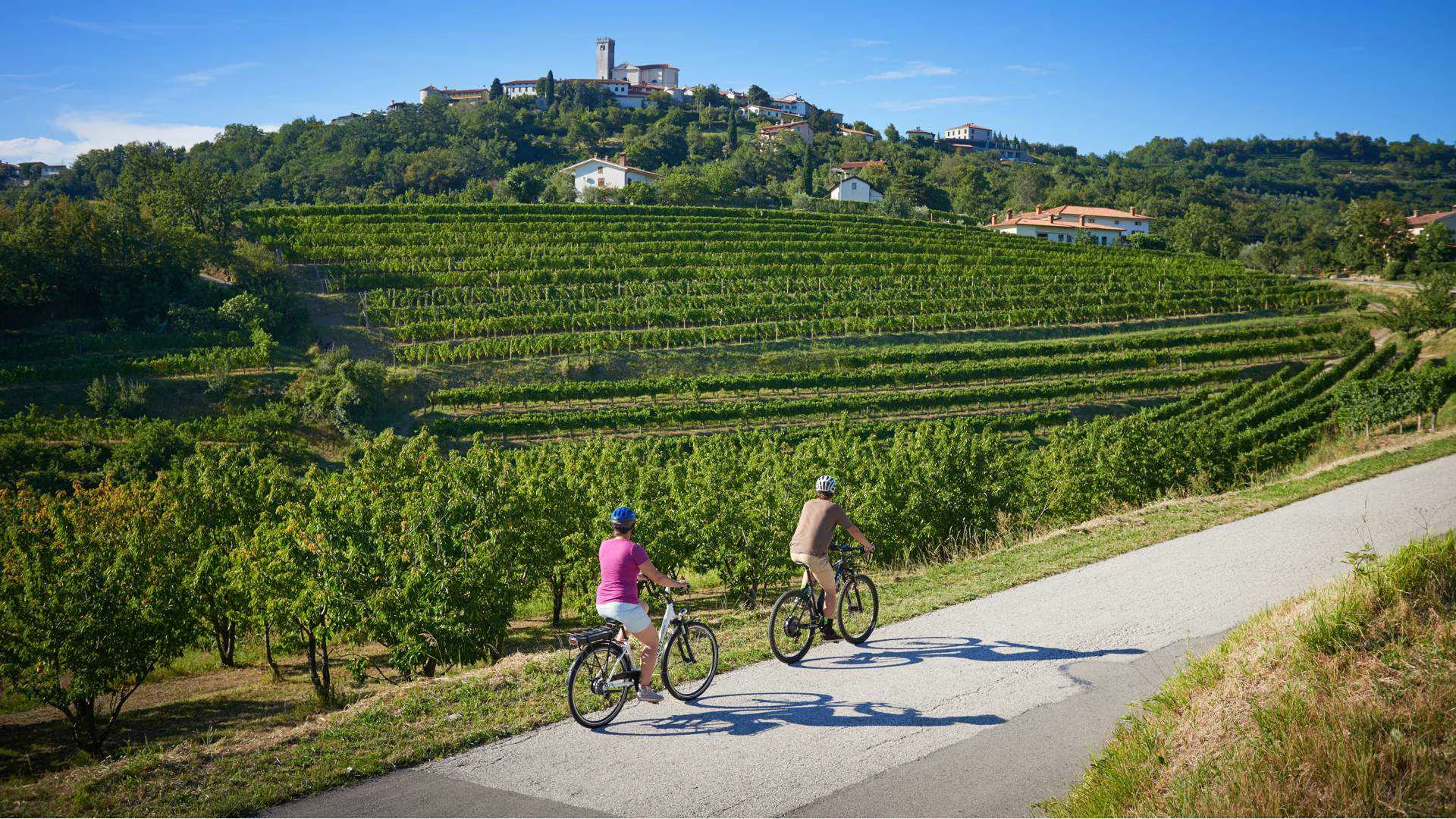
Goriška Brda Wine Hills
The Tuscany of Slovenia
Often called "The Tuscany of Slovenia," the Goriška Brda region is a sun-drenched landscape of rolling hills covered in vineyards, orchards, and charming medieval villages. This is Slovenia's premier wine region, and hiking here combines outdoor adventure with exceptional culinary experiences. The mild Mediterranean climate makes Brda a year-round hiking destination. No visit to Brda is complete without experiencing the local cuisine. The region is famous for wines like Rebula (Ribolla), Pinot Grigio, and Sauvignon. Along the trails, you'll find traditional farm inns (osmice) where you can sample local cheeses, cured meats, and freshly baked bread.
Trail Highlights
- Gonjače View Tower Trail (9.5 km): a circular route from Dobrovo Castle to the 23-meter observation tower with 144 steps
- Šmartno Circular Trail: explore the fortified medieval village and the charming Brda House Museum
- Cherry Trails: eight marked trails named after cherry varieties, each offering unique paths through colorful nature
- Alpe Adria Trail Stage: the famous long-distance trail passes through Brda, connecting the Austrian Alps to the Adriatic
Trnovo Forest Plateau
Karst wilderness above the Vipava Valley
The Trnovo Forest (Trnovski gozd) is a vast karst plateau that rises dramatically above the Vipava Valley. As one of the first mountain groups of the Dinaric Alps, this heavily forested wilderness offers some of the most rewarding hiking in western Slovenia. The plateau's southern edge drops steeply toward the valley, creating a spectacular panoramic rim with views stretching from the Julian Alps to the Adriatic Sea. The Trnovo Forest is rich in karst phenomena, including the famous Otlica Natural Window, ice caves that maintain freezing temperatures even in summer, and the mysterious Wild Lake (Divje Jezero) near Idrija. The area is also a paradise for botanists, with numerous endemic alpine plants flourishing on the grassy meadows.
Trail Highlights
- Poldanovec (1,299m): the most dramatic viewpoint in Trnovo Forest, featuring sheer cliffs above the Trebuša Valley
- Veliki Golak (1,495m): the highest peak in the range, offering a true 360-degree panorama
- Čaven (1,242m): a popular destination with a mountain hut, accessible from Predmeja and Lokve
- Kovk (962m): a grassy summit at the eastern edge, ideal for a shorter family hike from Col village
- Mala Lazna: a beautiful clearing deep in the forest with unique flora
Panovec Forest & Kostanjevica
380 hectares of nature on the city doorstep
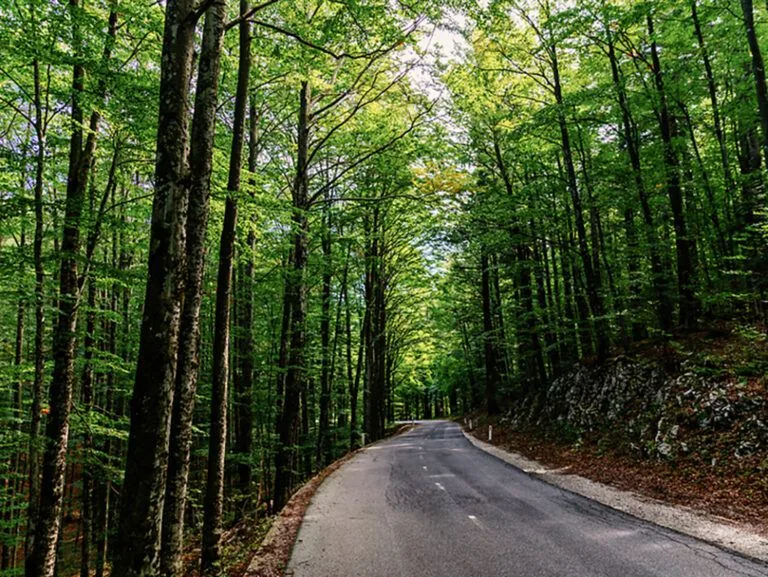
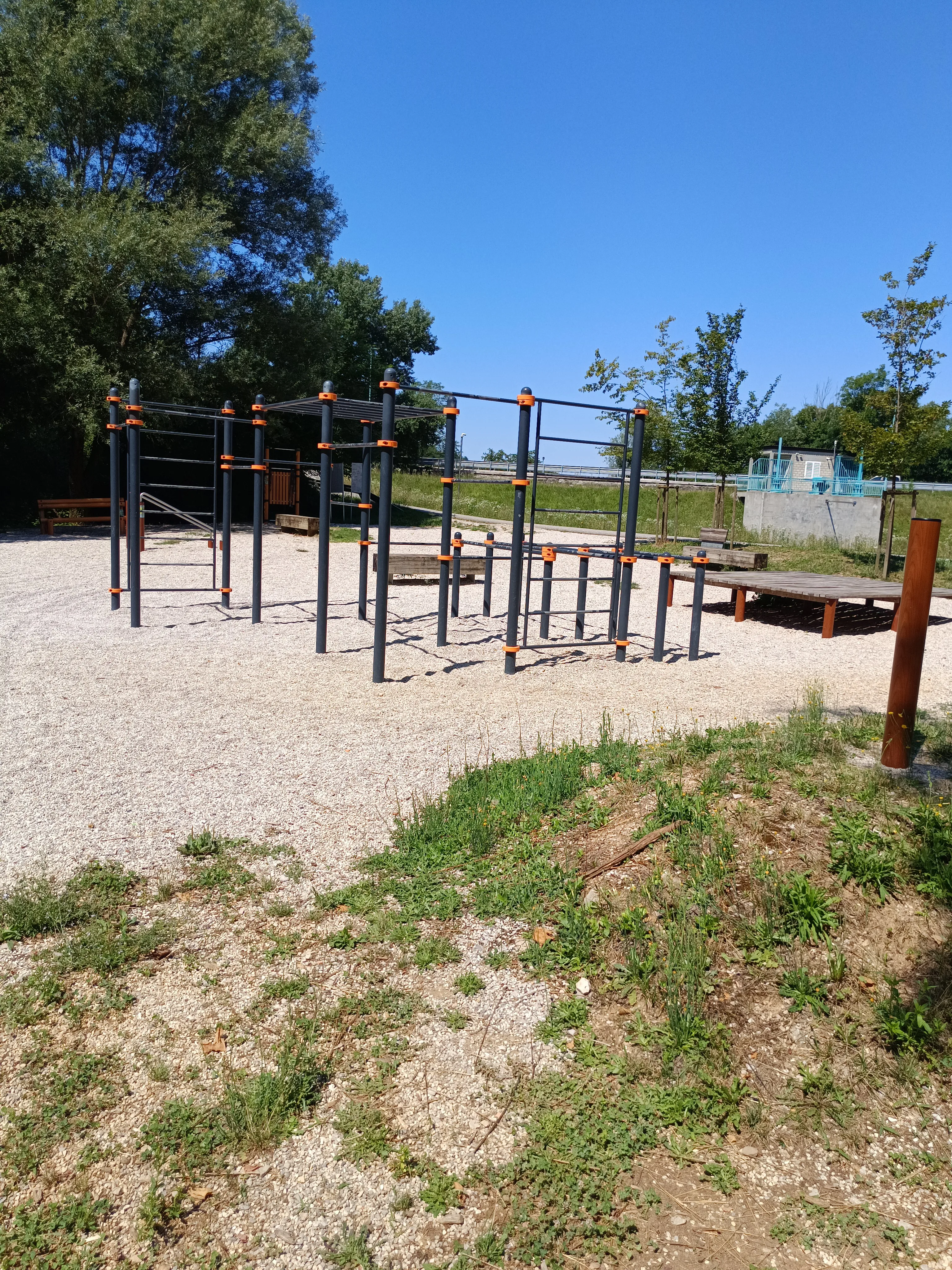
Just steps from Nova Gorica's city center lies Panovec, a 380-hectare urban forest that serves as the city's green lung. This easily accessible natural area is perfect for a morning jog, a family hike, or a peaceful walk under the canopy of diverse tree species. Declared a natural monument in 1985, Panovec is home to the rare Italian agile frog and numerous bird species. The Panovec circular trail begins at the Koren Stream parking area and winds through the forest on well-maintained gravel paths. The route passes a fitness trail, jogging track, and forest learning trail before ascending gently to Kostanjevica Monastery. The monastery, perched on a hill overlooking Nova Gorica, houses the Bourbon Tomb, a rich library with precious manuscripts, and beautiful gardens.
Trail Highlights
- Accessible directly from the city center
- Minimal elevation gain - suitable for all ages
- Combine nature with cultural heritage at Kostanjevica
- Multiple access points and well-marked paths
- Beautiful in all seasons
Cerje Peace Monument & Educational Trail
Slovenia's largest monument and a family-friendly trail
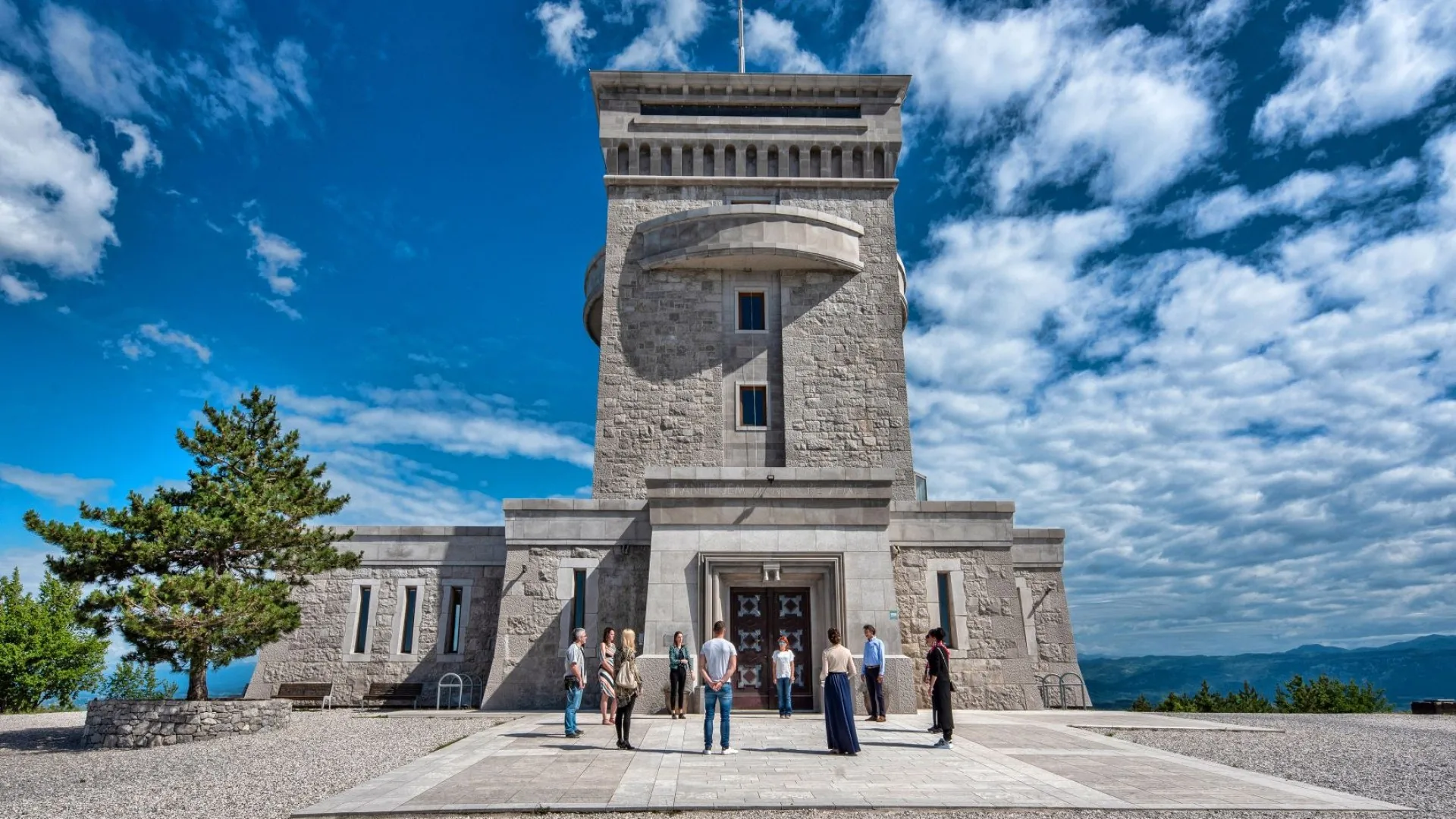
The Cerje Peace Monument stands as the largest monument in Slovenia, a 25-meter stone tower perched on the edge of the Karst plateau at 343 meters above sea level. Built to honor defenders of Slovenian territory throughout history, the monument also serves as an observation tower offering spectacular views of the northern Adriatic, Friuli, the Dolomites, Vipava Valley, and the Julian Alps. The 3-kilometer educational trail leading to the monument was created by students of Nova Gorica Secondary School. It is designed as a family-friendly nature walk where visitors can learn about native and invasive plant species, including those with medicinal properties and others that are poisonous. Cerje is also a key waypoint on the Walk of Peace from the Alps to the Adriatic, a long-distance trail connecting WWI heritage sites.
Trail Highlights
- Climb Slovenia's largest monument for panoramic views
- Family-friendly educational trail with botanical information boards
- Key waypoint on the Walk of Peace from the Alps to the Adriatic
- Visitor Center with comprehensive trail information
Trail Gallery
View through the Skozno Natural Bridge window
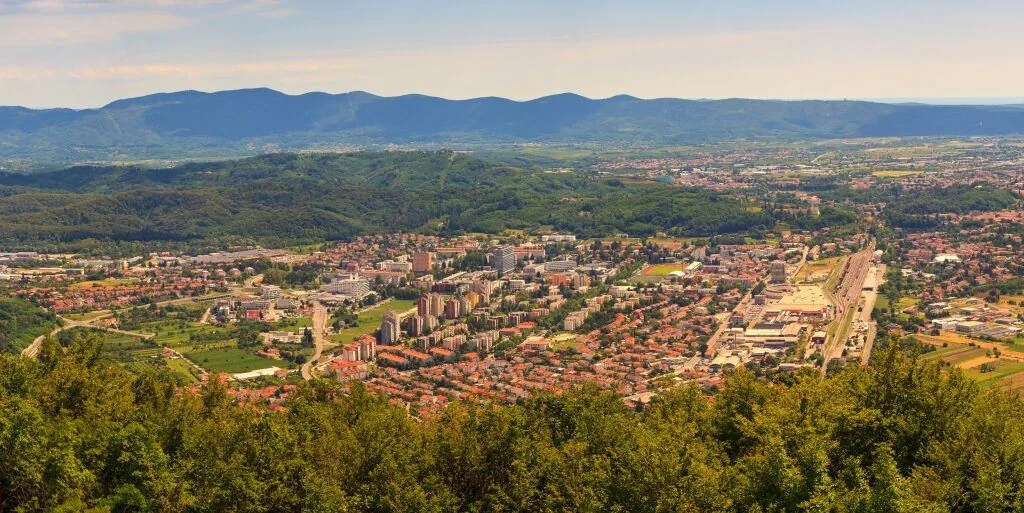
Panoramic view of Nova Gorica from surrounding hills
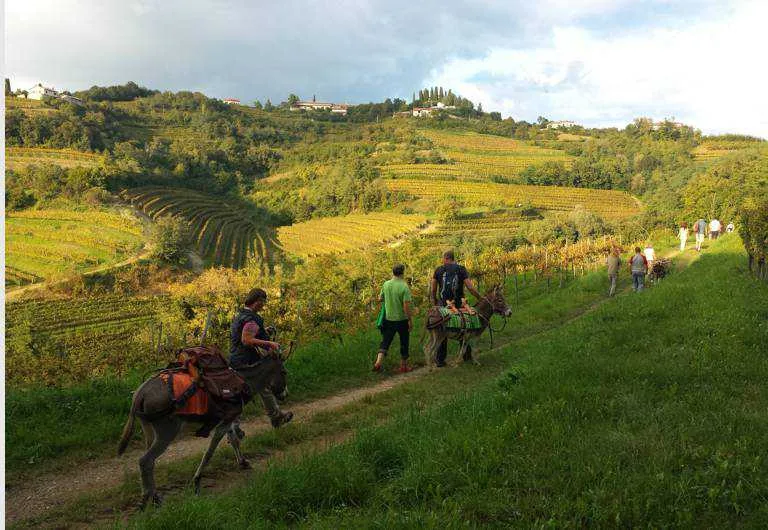
Hiking through the vineyard trails of Goriška Brda
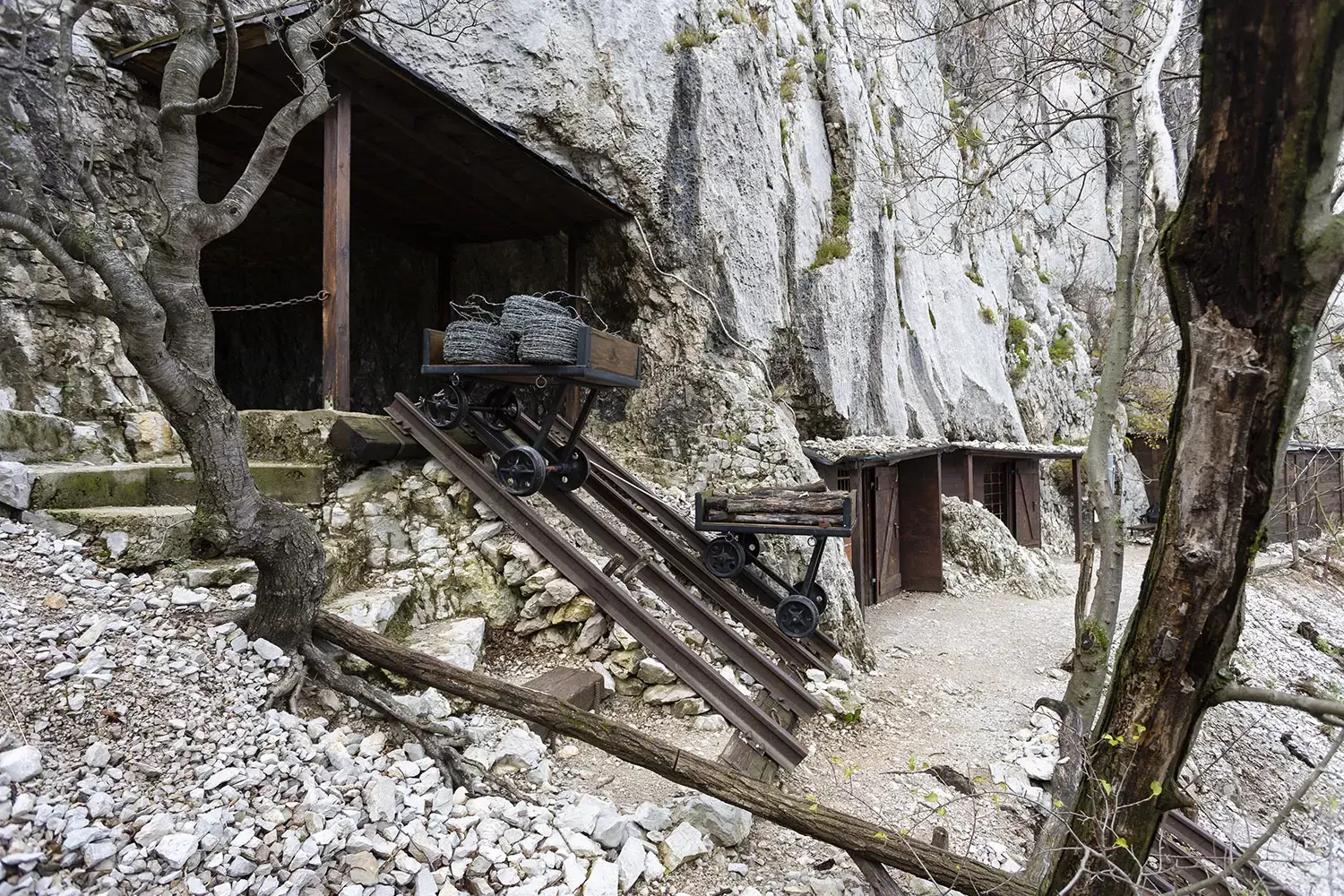
WWI military caverns at Sabotin Park of Peace
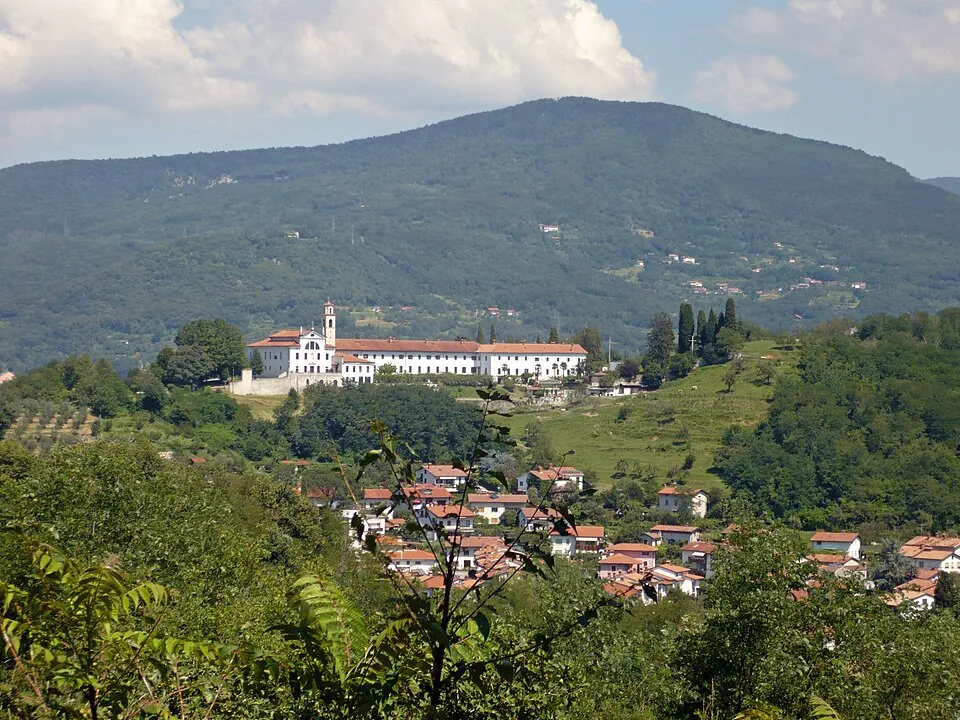
Kostanjevica Monastery overlooking the valley
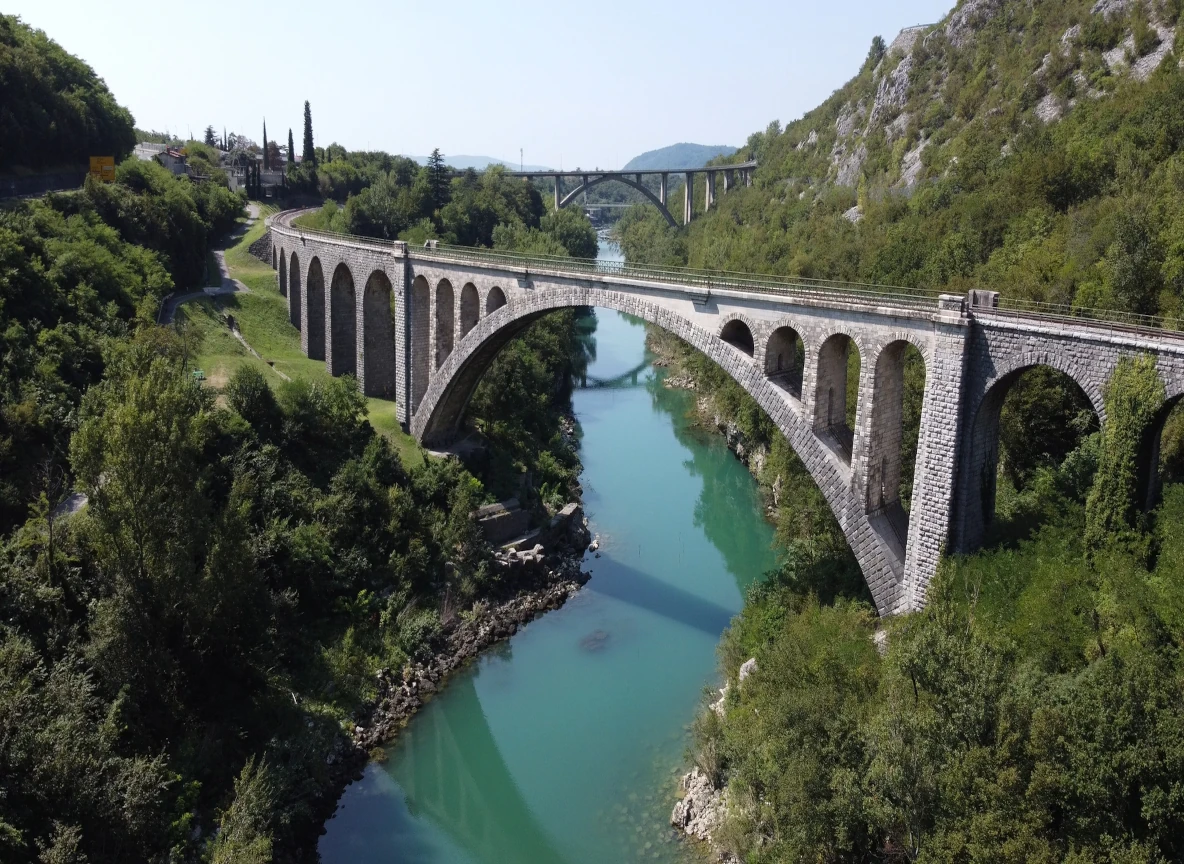
The historic Solkan Bridge over the emerald Soča River
Long-Distance Trails Through the Region
For adventurous hikers, Nova Gorica serves as a key waypoint on several major long-distance hiking routes that span multiple countries and landscapes.
Goriška Camino (Iter Goritiense)
A newly established cross-border pilgrimage route connecting the UNESCO World Heritage site of Aquileia in Italy with the sacred peak of Sveta Gora. The trail crosses the border multiple times, passing through the Kras region, Miren Castle, Gorizia, and Nova Gorica before the final challenging ascent to Sveta Gora. The route is marked with the Solomon's Knot symbol and divided into four stages.
Walk of Peace (Pot Miru)
This long-distance trail follows the entire length of the WWI Isonzo Front, from Log pod Mangartom in the Julian Alps to the Adriatic Sea. The route passes through Nova Gorica, connecting key heritage sites including Sabotin, Sveta Gora, Kolovrat, and Kobarid. It's a powerful journey through history, offering insights into one of the most brutal campaigns of World War I.
Alpe Adria Trail
One of Europe's most celebrated long-distance trails, the Alpe Adria Trail connects Carinthia (Austria), Slovenia, and Friuli-Venezia Giulia (Italy). The route passes through the Brda region, where hikers can enjoy the "Tuscany of Slovenia" and its exceptional wine and culinary offerings. Each stage is designed to end in a village with accommodation and restaurants.
Juliana Trail
This long-distance circular trail around the Julian Alps connects major attractions including Bled, Bohinj, Soča Valley, and Nova Gorica. Stage 20 connects Šmartno in Brda over Sabotin to Solkan, offering one of the most scenic descents on the entire trail with views of the Soča Valley and Vipava Valley.
St. Martin's Trail (Pot Sv. Martina)
This circular trail encircles the entire Vipava Valley, connecting pilgrimage sites and following the European St. Martin's Route from Szombathely (Hungary) to Tours (France). The trail passes over Sveta Gora and overlaps with parts of the Goriška Camino, offering a unique spiritual and hiking experience.
Practical Hiking Tips
What to Bring
- Sturdy hiking boots (essential for karst terrain)
- Flashlight/headlamp (for cave exploration on Sabotin)
- Plenty of water (karst areas have limited water sources)
- Sun protection (vineyard trails offer little shade)
- Layered clothing (mountain weather changes quickly)
Best Time to Visit
- Spring (April-June): Wildflowers bloom, mild temperatures
- Autumn (September-November): Grape harvest season, beautiful colors
- Summer: Start early to avoid midday heat, especially in Brda
- Winter: Lower trails accessible year-round; snow possible on Trnovo Forest
Food & Drink
- Traditional farm inns (osmice) in Brda for wine tasting
- Mountain huts on Čaven and in Trnovo Forest
- The Sabotin Visitor Centre restaurant for local specialties
- Nova Gorica city center for diverse dining options
Getting There
- Car recommended for most trailheads
- Nova Gorica train station for arrival by rail
- Bus connections to Solkan, Šempeter, and Lokve
- Ljubljana Jože Pučnik Airport (100 km) or Trieste Airport (45 km)
Trail Locations
Explore the hiking trail locations around Nova Gorica. The city serves as an ideal base for accessing all the trails featured in this guide.
Hit the Trails Today
From sacred peaks and border ridges to vineyard hills and urban forests, Nova Gorica offers hiking experiences for every level. Lace up your boots and discover the natural beauty of the Goriška region.