A Hidden Gem Reopens
One of Slovenia's most extraordinary secrets
Tucked away on the sun-drenched slopes of Rafut Hill in Nova Gorica lies one of Slovenia\'s most extraordinary secrets — a restored early-20th-century park surrounding a magnificent Neo-Oriental villa, built by the court architect to the King of Egypt himself. After more than twenty years hidden from public view, this botanical treasure has reopened its gates, revealing a world where Mediterranean and Middle Eastern flora flourish side by side in a uniquely protected microclimate.
The Story of Rafut Park
From firewood hill to Neo-Oriental estate
The name "Rafut" itself carries echoes of a bygone era — most likely derived from the German word "Raffholz" (meaning "fallen branches"), as the inhabitants of Gorizia once gathered firewood from the nearby Panovec Forest and transported it past this very hill to the town below. The park was originally landscaped in the second half of the 19th century, when the first rare and exotic plant species were introduced to the approximately 3-hectare grounds on Rafut Hill.
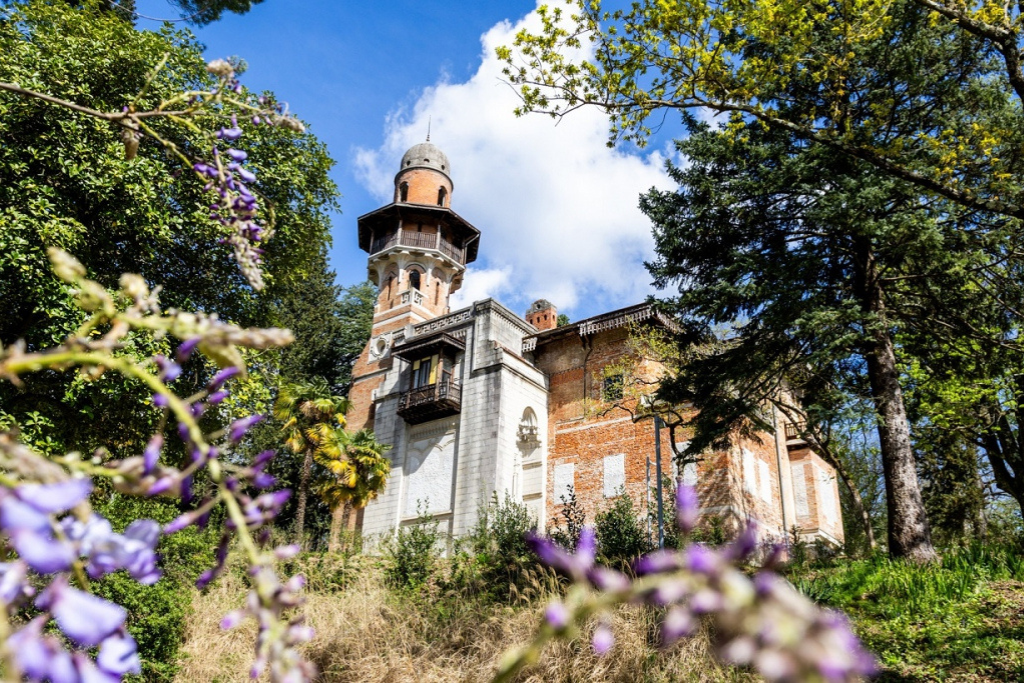
The park\'s destiny took an extraordinary turn in 1907, when the eastern portion was acquired by Anton Laščak (better known internationally by his Italian name, Antonio Lasciac) — a Gorizia-born architect who had risen to become the court architect to the King of Egypt. Between 1909 and 1914, Laščak completely remodelled the estate, constructing an unusual villa in a striking Neo-Oriental style that remains unique not only in Slovenia but across much of Europe.
Laščak designed the surrounding park as a true botanical garden, leveraging the site\'s unique natural advantages. Sheltered from the freezing Burja wind by the surrounding hills, blessed with fertile flysch soil and fed by natural water streams, the park\'s microclimate allowed delicate Middle Eastern and subtropical flora to thrive on Slovenian soil. At its peak, the garden contained an astonishing 500 species of trees and shrubs from 114 different genera, many brought directly from Egypt.
Despite its magnificence, Laščak himself barely lived in the villa. Damaged shortly after the outbreak of the First World War, the property was eventually taken over by the regional Institute for Health Protection after the Second World War. While the institute maintained the park with care — earning it designation as a national natural monument in 1954 — the villa\'s original architecture was significantly compromised by adaptations. When the institute finally relocated in 2003, both the villa and park were left to the mercy of time, gradually decaying behind locked gates.
"The neglected Rafut Park marked the point where two worlds once clashed — yet today, this border flows like watercolour, so that Slovenia gradually merges into Italy."
— Reflections on Rafut's unique cross-border location
Rebirth and Restoration
A new life for the European Capital of Culture 2025
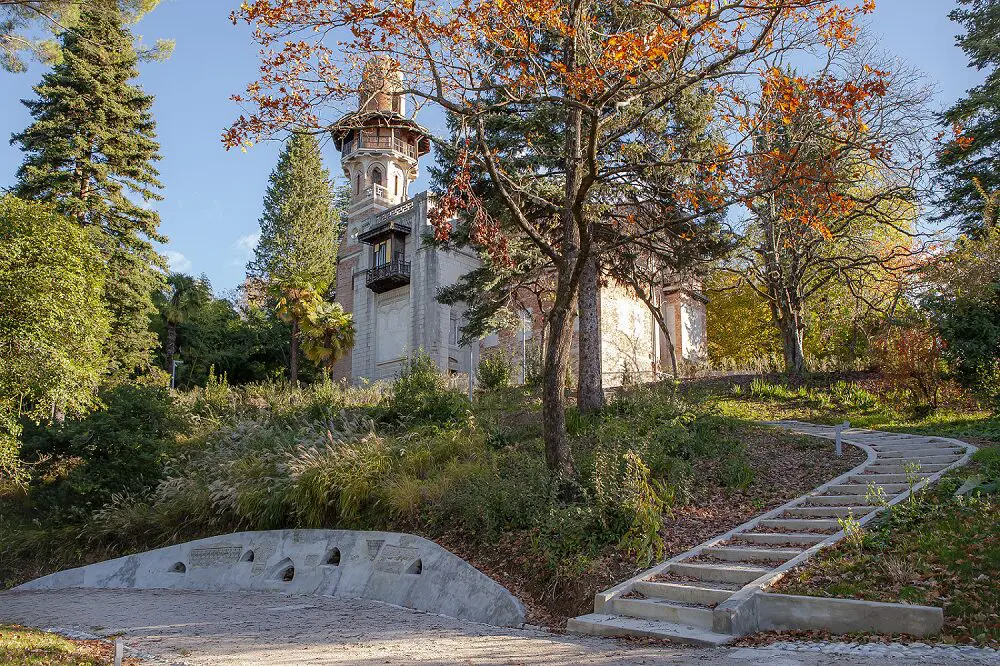
The turning point came in 2023, when an extensive restoration project returned the park to its former glory, timed perfectly for the European Capital of Culture 2025 celebrations shared between Nova Gorica and Gorizia. The renovation was meticulous: a circular walking path was installed, new viewing platforms were constructed, and additional benches were placed throughout the grounds. Invasive plant species that had overgrown the original planting scheme were carefully removed, allowing the historic botanical collection to breathe once more.
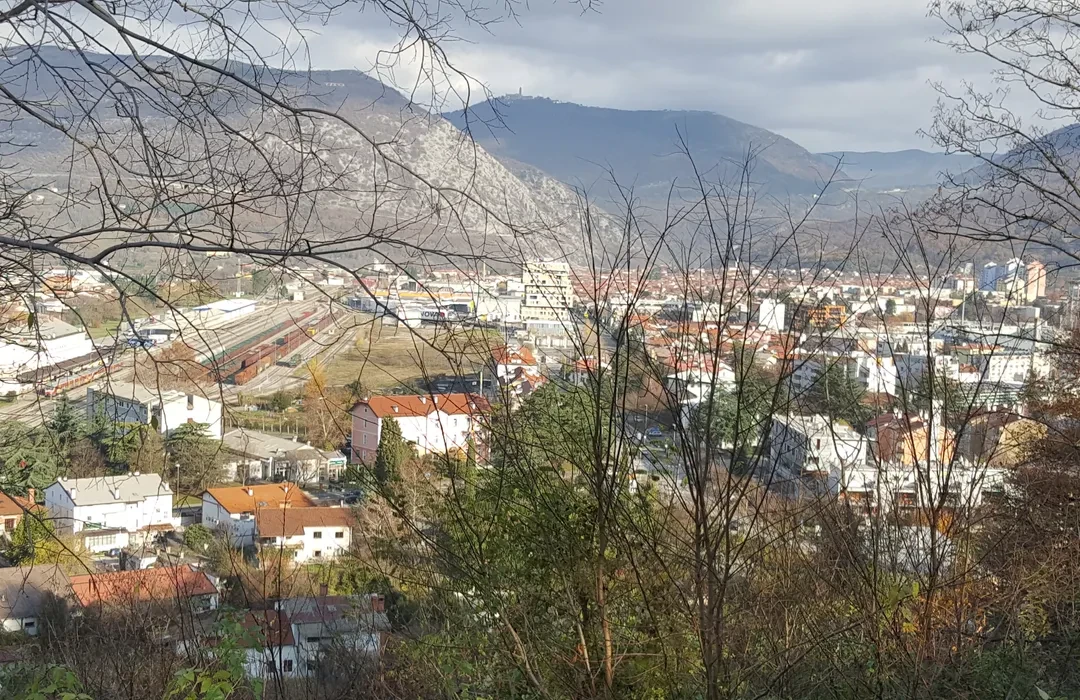
From the newly created viewpoint, visitors can now enjoy open views towards Gorizia Castle across the border in Italy — a symbolic visual reconnection of the park with its historic setting. While the villa itself awaits a full €5.2 million restoration (planned to eventually house a state-of-the-art Natura 2000 interpretation centre by 2028), the magnificent park surrounding it is fully open to the public and completely free to visit.
What Makes Rafut Park Special
Botany, architecture, and interactive soundscapes
Rafut Park distills several remarkable experiences into one compact estate: a uniquely exotic plant collection, Slovenia\'s only Neo-Oriental villa, and an innovative musical installation that turns the woodland itself into an orchestra.
140+ Plant Species
Exotic trees and shrubs from around the world, including rare specimens found nowhere else in Slovenia.
Neo-Oriental Villa
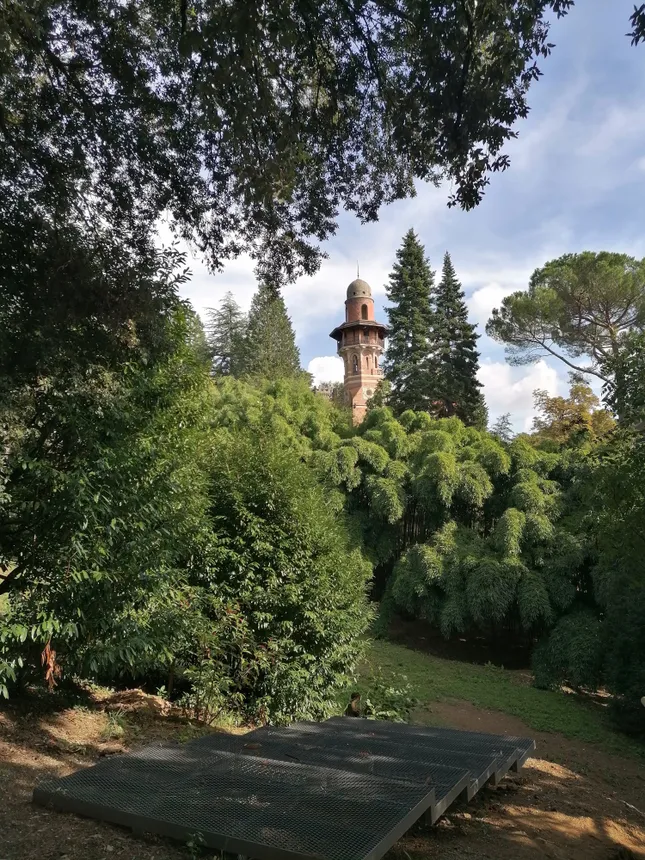
Slovenia's only example of Neo-Islamic architecture, with a distinctive 28-metre minaret-like tower.
Symfo Soundscape
An interactive musical experience by the Dresden Symphony Orchestra via a dedicated mobile app.
A Living Botanical Museum
Mediterranean and subtropical flora in a protected microclimate
Today, Rafut Park harbours over 140 plant species from across the globe, many of which survive here thanks to the exceptional microclimate. The collection reads like a botanical who\'s-who of Mediterranean and subtropical flora: towering cypresses and false cypresses, majestic cedars, giant sequoias, and a thriving bamboo grove that transports visitors to another continent entirely. Laurel trees, cherry laurels, and rhododendrons have grown to the dimensions of mighty trees here — conditions so favourable that these typically modest shrubs reach arboreal proportions.
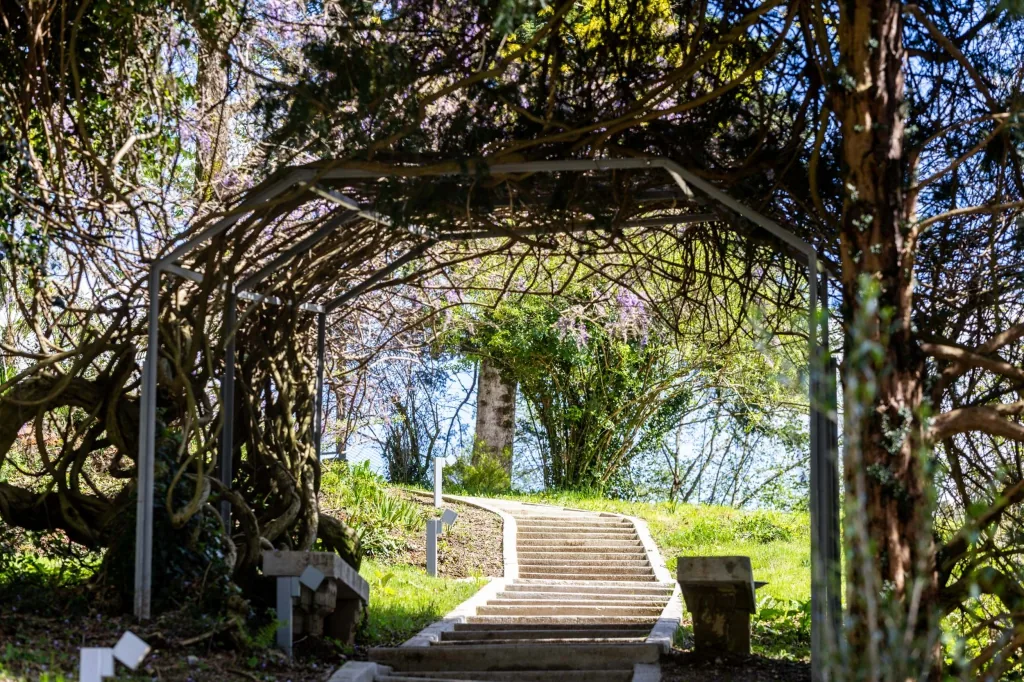
The undisputed crown jewel of the collection is the cork oak (Quercus suber), recognised as the oldest living specimen of its kind in Slovenia. Equally enchanting is the spectacular wisteria pergola that bursts into cascades of fragrant lavender and white blossoms each spring, creating a natural cathedral of flowers. Throughout the park, bilingual informational plaques detail the history of the site, its botanical species, and the fascinating stories of the "Aleksandrinke" — local women from the Goriška region who travelled to Egypt to work as nannies for the wealthy elite that Laščak himself designed palaces for.
The Rafut Experience
Seven narrative points and a tree orchestra
A visit to Rafut Park is designed as a journey of discovery. The circular walking path guides visitors through seven narrative points, each revealing a different facet of the estate\'s rich heritage. From the stylistically fascinating gatehouse — which feels more like the entrance to a Cairo palace than a Slovenian park — the path winds gradually uphill, passing through the wisteria pergola, the villa courtyard, and finally to the panoramic belvedere overlooking Gorizia and the surrounding countryside.
For those seeking an even more immersive experience, the Symfo mobile app — created by the Dresden Symphony Orchestra in collaboration with the European Capital of Culture 2025 team — transforms the park into an interactive soundscape. As visitors move through the grounds, scanning QR codes along the paths, the "tree orchestra" performs a unique forest symphony, with each section of the park contributing its own musical voice.
📋 Practical Information
- Address:
- Kostanjeviška cesta 16–18, 5000 Nova Gorica
- Admission:
- Free of charge
- Guided Tours:
- Available via TIC Nova Gorica (advance booking required)
- Parking:
- No parking at the park. Use public parking in Rožna Dolina, Nova Gorica, or Gorizia
| Period | Hours |
|---|---|
| April – May | 7:00 am – 7:00 pm |
| June – August | 6:00 am – 9:00 pm |
| September – October | 7:00 am – 7:00 pm |
| November – March | 8:00 am – 5:00 pm |
Rafut Park opening hours throughout the year.
How to Get There
On foot, by bike, bus, or car
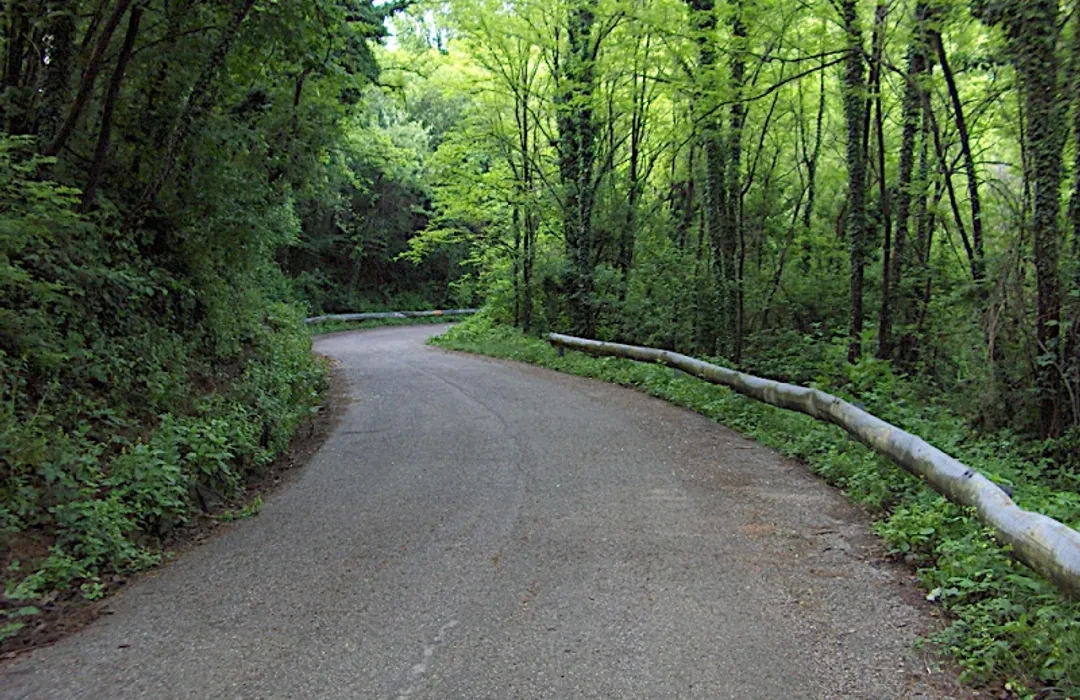
- On foot: Via the scenic path for cyclists and walkers along the railway line from Nova Gorica or Rožna Dolina, or over Kostanjevica Hill past the monastery.
- By bicycle: The same railway-side path offers a pleasant, mostly flat ride to the park entrance.
- By bus: Take the cross-border circular line (INT 2) or the Hop-on, Hop-off tourist bus — alight at the "Rafut Park" stop.
- By car: Park in nearby Rožna Dolina or in central Nova Gorica and walk (approximately 15–20 minutes). Note: There is no parking directly at the park gates.
Safety note: Please walk only on marked paths, avoid sheltering under trees during storms, and take special care when walking in steeper areas of the park.
A Must-Visit Hidden Gem
A place where history, architecture, and nature converge
Rafut Park represents something truly rare — a place where world history, architectural brilliance, botanical excellence, and cross-border cultural cooperation converge in a single, serene setting. Whether you are a passionate gardener marvelling at exotic species found nowhere else in Slovenia, an architecture enthusiast drawn to the unique Neo-Oriental villa, a history buff intrigued by the remarkable life of Anton Laščak, or simply a traveller seeking peaceful natural beauty with panoramic views, Rafut Park delivers an experience that lingers long after you leave.
In a Europe where true hidden gems are increasingly rare, Rafut Park stands as a testament to what restoration vision and cultural investment can achieve. Best of all, this slice of paradise is entirely free to explore — an invitation that no visitor to Nova Gorica should refuse.
Sources & References
Further reading and official resources
- Rafut Park Official Website — rafutskipark.si
- Culture.si — Rafut Park
- GO! 2025 European Capital of Culture — Park Vila Rafut
- Kongres Magazine — Special Venues: Park Vila Rafut
- Vipava Travel — Kostanjevica Monastery and Rafut Park
- Vipava Valley Official Tourist Portal
- Tanya.guide — Villa Rafut Nova Gorica Guide
- Archive of Nova Gorica — Rafut Park and Laščak Villa