Traveling Triskell
An Evening of Irish Folk Music with Celtic Pixie
Aug 30 - Aug 30, 2026
19:30
Piazza Vittoria, Gorizia
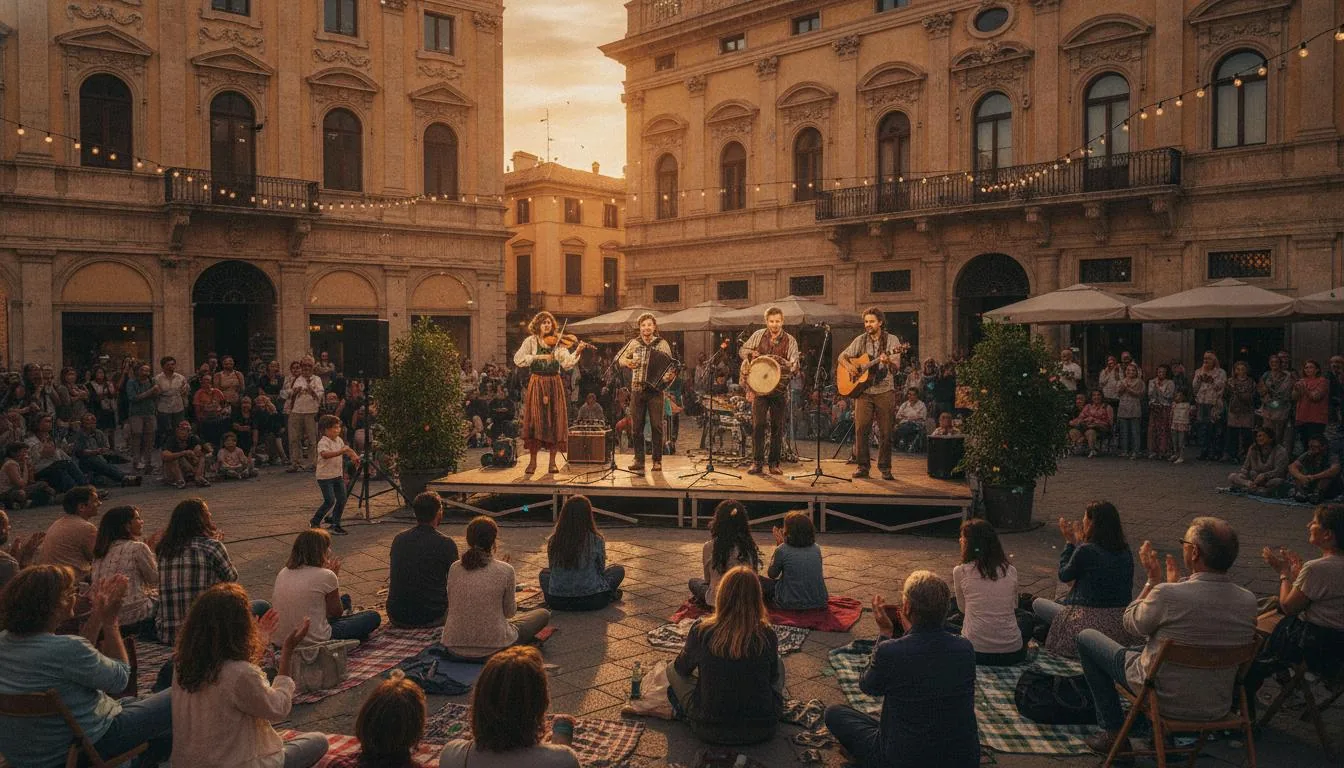
Experience the magical finale of the Traveling Triskell as Celtic Pixie — one of Northeast Italy's most beloved Celtic folk bands — takes the stage in the heart of Gorizia's historic Piazza Vittoria. This special concert brings the spirit of the 26th Triskell International Celtic Music Festival from Trieste to Gorizia, closing the 54th World Folklore Festival with an unforgettable evening of lively Irish melodies, traditional jigs, and foot-stomping reels.
About Celtic Pixie
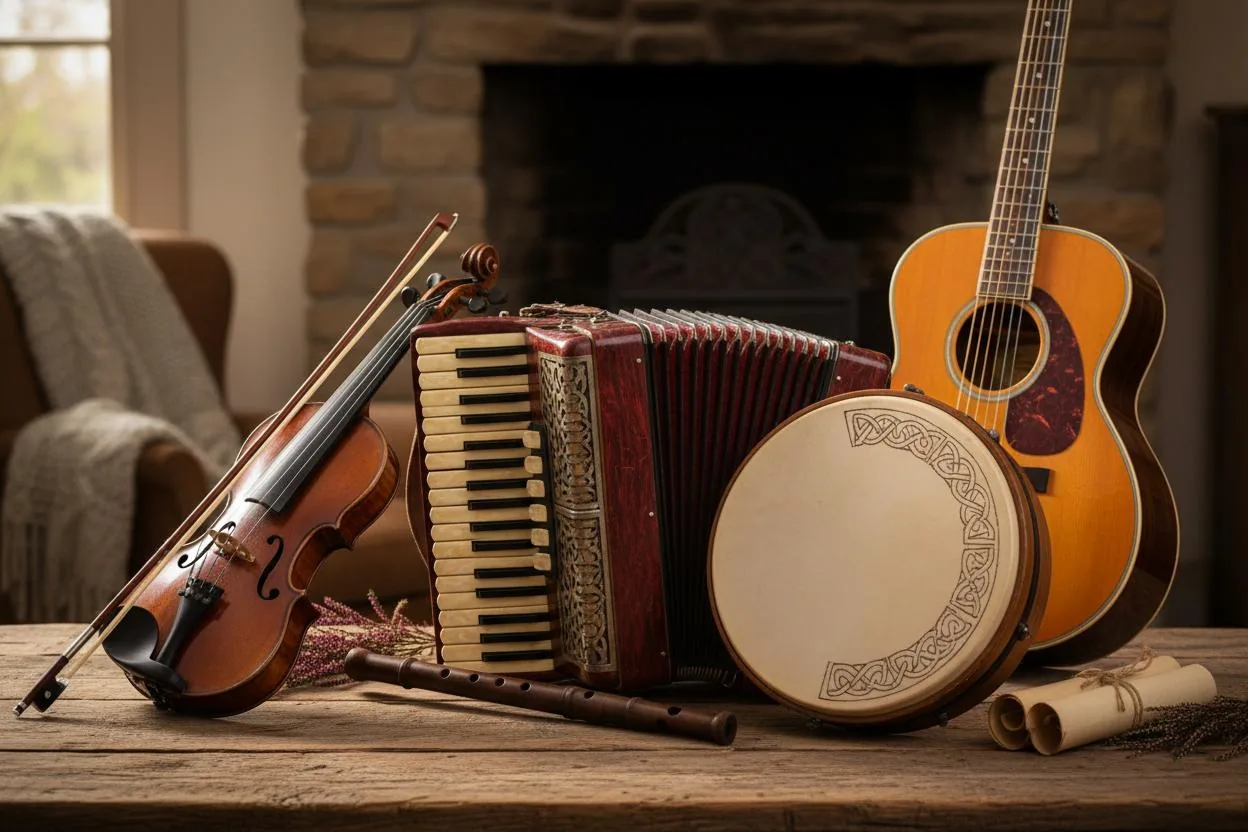 The traditional Celtic instruments that define Celtic Pixie's distinctive sound
Celtic Pixie is a six-piece Celtic folk band hailing from Pordenone, in the heart of Italy's Friuli Venezia Giulia region. Formed in 2012, the band has spent over a decade crafting a distinctive sound that blends traditional Irish, Scottish, Breton, and Galician folk music with their own original compositions. Their name evokes the mischievous sprites of Devon folklore — a fitting tribute to the playful, spirited energy they bring to every performance.
The group's repertoire draws from the rich musical traditions of the so-called "Celtic areas" — Ireland, Brittany, Scotland, and Galicia — performed on acoustic instruments to preserve the most authentic and popular sounds. Over the years, Celtic Pixie has developed a well-defined sonic identity, writing many original pieces in the traditional style that have become fan favorites at festivals and venues across Italy and beyond.
Band Members
The bodhran, played by Gigi Vecchione, is a traditional Irish frame drum — one of the most recognizable percussion instruments in Celtic music. Dating back centuries in Ireland, this goatskin drum provides the driving heartbeat of Celtic folk sessions, its rhythmic patterns instantly evoking the atmosphere of an Irish pub. Combined with the soaring fiddle, the lyrical accordion, and the ethereal flute, Celtic Pixie's instrumentation captures the full spectrum of Celtic folk tradition.
Discography
Over a Decade of Music & Festivals
Since their formation, Celtic Pixie has performed at numerous prestigious festivals and venues throughout Italy, including Folkest (one of Italy's oldest world music festivals, founded in 1979), Friuli DOC, Paesi Aperti, and multiple appearances at the Triskell Celtic Festival in Trieste. The band has also performed at literary presentations alongside renowned authors like Mauro Corona, Paolo Rumiz, and Mauro "Lampo" Olivotto, as well as at theater productions and cultural events.
Beyond the stage, Celtic Pixie has contributed their musical talents to charitable organizations including Emergency, VIP Claunando, and ADMO, demonstrating their commitment to using music as a force for good. Their long-standing collaboration with the ETNOS Association of Gorizia — the organizers of the World Folklore Festival — makes this Traveling Triskell performance a particularly meaningful homecoming.
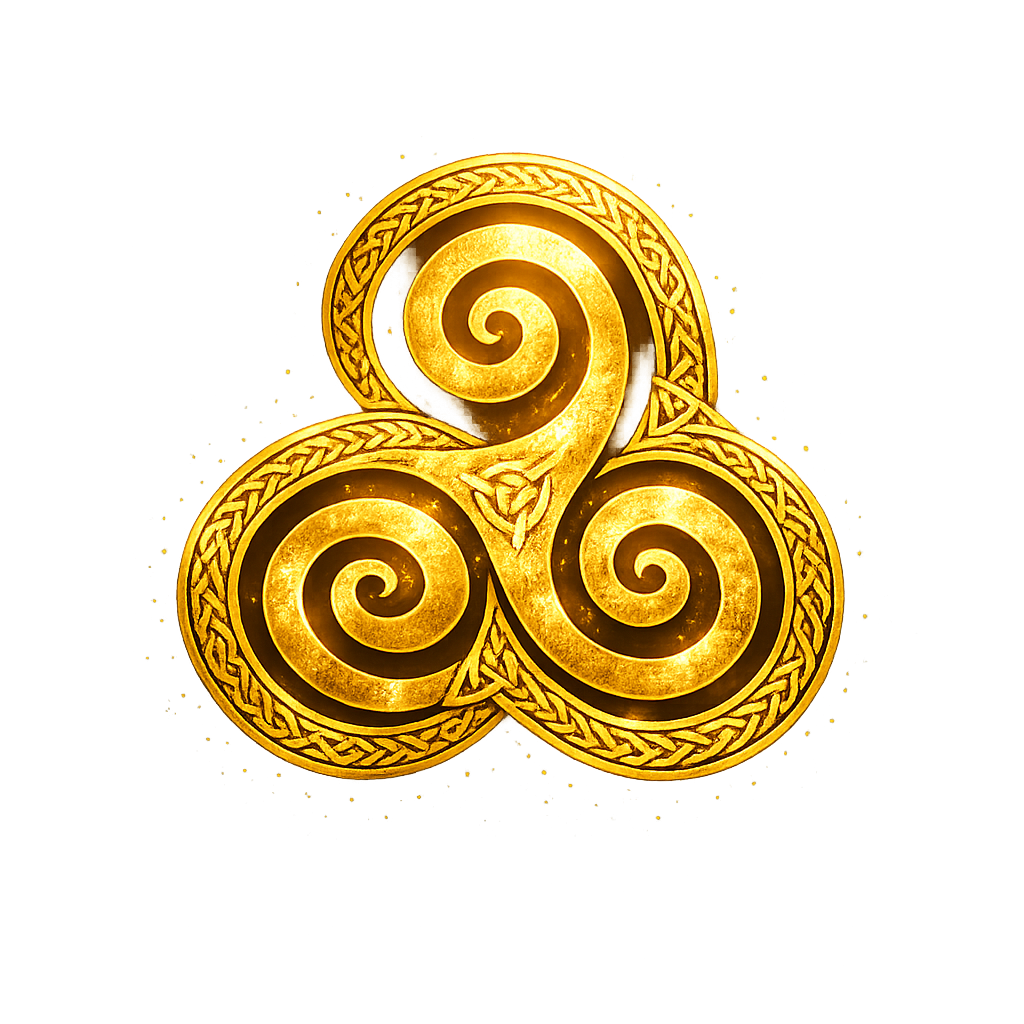
The Triskell — An Ancient Symbol of Celtic Culture
The Triskell (also spelled Triskele or Triskelion) is one of the oldest and most enduring symbols in European history. Consisting of three interlocking spirals radiating from a common center, this ancient motif predates even Celtic civilization — the oldest known examples, found at the Newgrange passage tomb in Ireland, are over 5,000 years old, older than Stonehenge and the pyramids of Giza.
The name derives from the Greek "tri" (three) and "skelos" (legs) — literally, "three legs." In Celtic culture, the Triskell came to represent the sacred principles of motion, cycles, and interconnectedness. Its three spirals symbolize many triplicities: birth-life-death, past-present-future, earth-sea-sky, and body-mind-soul. The symbol's dynamic, spiraling form suggests perpetual movement — the eternal cycle of life, nature, and time.
Today, the Triskell remains a powerful emblem of Celtic identity, adorning jewelry, artwork, and cultural festivals across Europe. The Triskell International Festival of Trieste, now in its 26th edition, takes its name from this ancient symbol — celebrating the living legacy of Celtic music, dance, and culture in the heart of the Mediterranean.
Two Festivals, One Unforgettable Evening
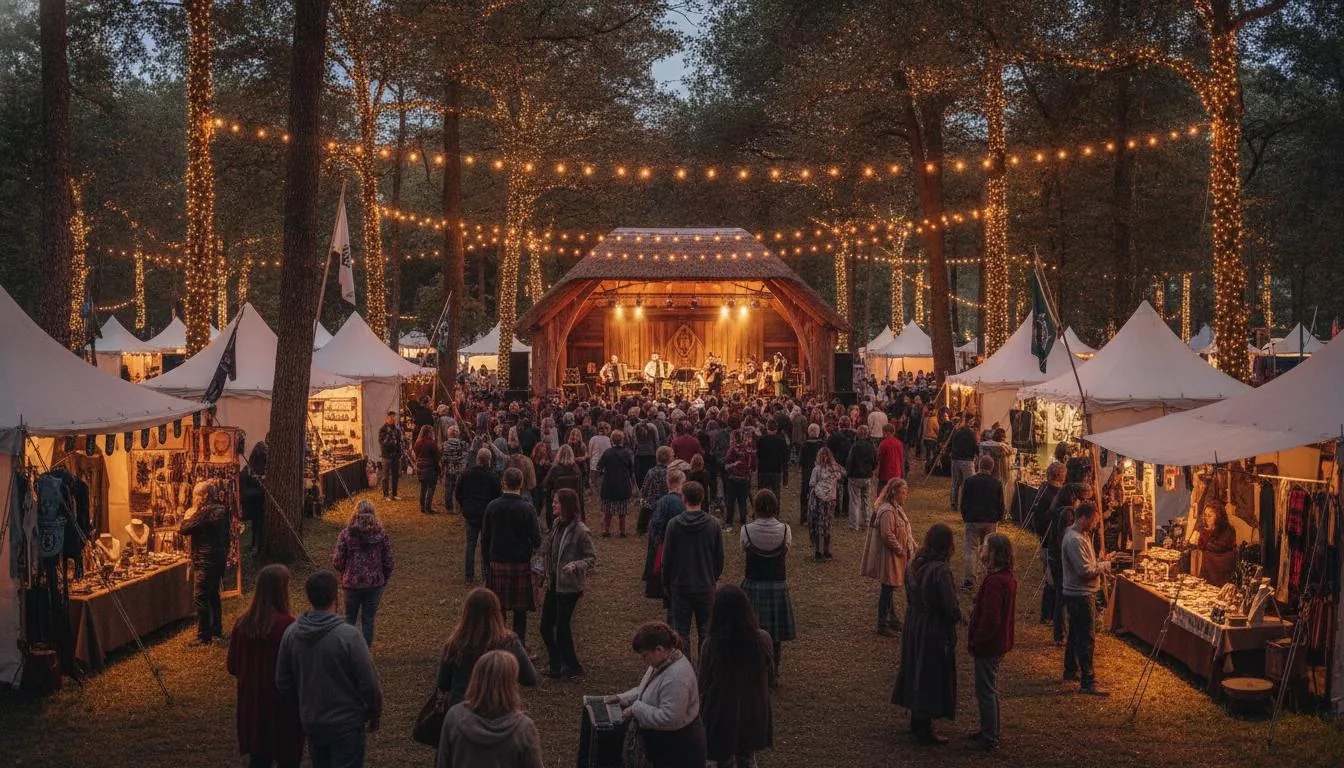 The magical atmosphere of Triskell Celtic Festival — music, crafts, and Celtic culture under the stars
Triskell Celtic Festival — Trieste
The Most Important Celtic Cultural Event in Northeastern Italy
The 26th International Festival of Celtic Music and Culture takes place annually at the Boschetto del Ferdinandeo in Trieste, transforming the wooded park into a vibrant Celtic village for twelve days each June. With free admission concerts, Irish dance performances, craft markets, workshops, and historical re-enactments, Triskell attracts over 50,000 visitors from across Italy, Slovenia, and Europe.
The festival is part of ECQUE (European Celtic Quality Events) — a consortium of Italy's premier Celtic festivals that promotes the highest standards in Celtic cultural programming. The seven founding festivals represent six Italian regions and collectively draw an estimated 250,000–300,000 participants annually, making Italy one of Europe's most vibrant centers for Celtic culture.
Traveling Triskell is the festival's itinerant outreach program, bringing selected performances to communities beyond Trieste. This concert in Gorizia represents the ninth and final Traveling Triskell event of the 2026 season — a special collaboration with ETNOS and the World Folklore Festival.
World Folklore Festival — Gorizia Castle
54 Years of Celebrating Global Folk Traditions
The World Folklore Festival "Gorizia Castle", organized by the ETNOS Association, is one of Italy's most historic folk festivals. Founded in 1969 as a qualifying competition for Italian and European folk groups, it has since expanded to reach a truly global dimension, hosting folk dance and music ensembles from every corner of the world.
The 54th edition runs from August 26–30, 2026, featuring stage performances by international folk groups, the 49th International Congress of Popular Traditions, the 58th International Folklore Parade, and the prestigious Folklore Oscars awards ceremony. The festival's theme celebrates cross-border cooperation — perfectly aligned with the spirit of the GO! 2025 European Capital of Culture.
Celtic Pixie's performance on August 30th serves as the grand finale of both the Traveling Triskell series and the World Folklore Festival, uniting two of the region's most important cultural events in a single, magical evening.
The Venue — Piazza Vittoria, Gorizia
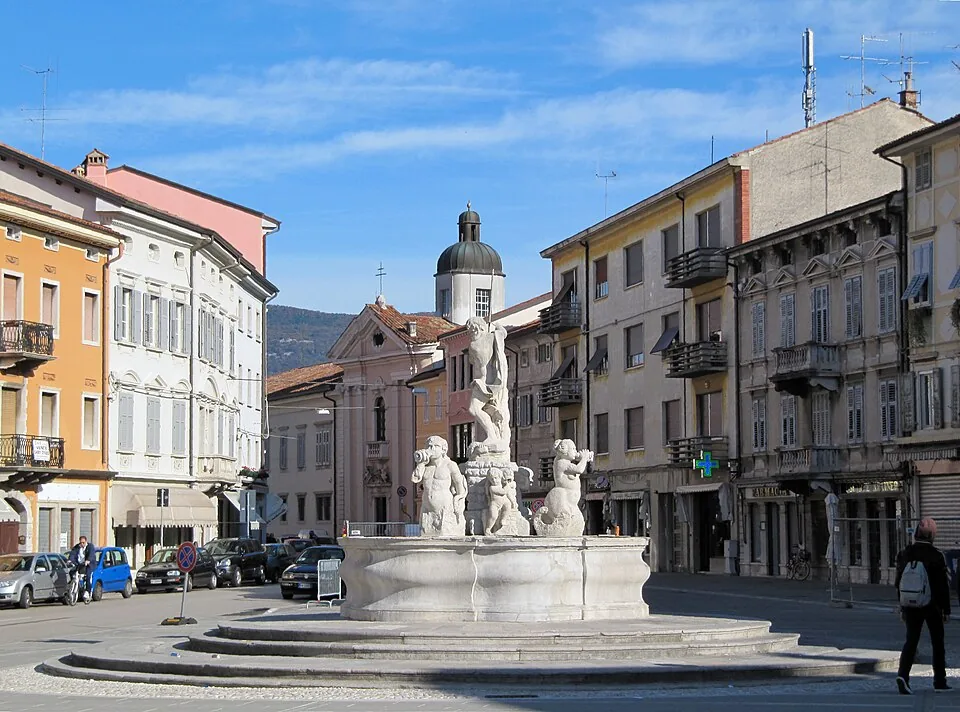 Piazza Vittoria — Gorizia's magnificent Baroque heart, home to the Neptune Fountain and Church of St. Ignatius
Piazza Vittoria is the beating heart of Gorizia — a magnificent Baroque square that has served as the city's living room for centuries. Originally a meadow called Travnik, the square was transformed in the 16th century as the city expanded at the foot of Gorizia Hill. Today, it stands as one of the most beautiful examples of Austro-Italian Baroque urban design in the region.
Dominating the square is the magnificent Church of St. Ignatius (Chiesa di Sant'Ignazio), built by the Jesuits between 1654 and 1767. Designed by the Innsbruck-born architect and painter Christoph Taucher, the church is renowned for its distinctive onion-shaped domes — a hallmark of Central European Baroque architecture rarely found in Italy. The facade features statues of St. Ignatius, St. John the Baptist, and St. Joseph, while the interior boasts spectacular marble altars, carved wooden furnishings from the 17th century, and the breathtaking fresco "Glory of St. Ignatius".
At the center of the square stands the elegant Neptune Fountain, created in 1756 by sculptor Marco Chiereghin based on a design by Nicolò Pacassi — the same architect who designed Vienna's Schönbrunn Palace. The fountain depicts Neptune surrounded by tritons and cherubs, a reminder of Gorizia's long history under the Austrian Empire. During World War I, the fountain was one of the few drinking water sources for the population, and the statue still bears the scars of shrapnel damage from wartime bombing.
Venue Highlights
- Central Location: The heart of Gorizia, surrounded by historic cafes and restaurants
- Free Admission: Open to everyone, no ticket required
- Step-free Access: Fully accessible for wheelchair users
- Historic Atmosphere: 18th-century Baroque architecture provides a stunning backdrop
- Nearby Amenities: Restaurants, bars, and public facilities nearby
- Cross-Border Connection: Just a short walk from Nova Gorica, Slovenia
Did you know? The renowned adventurer Giacomo Casanova stayed at Casa Torriana on Piazza Vittoria in 1773. One can only imagine the conversations he overheard while strolling among the market stalls of what was then one of the Habsburg Empire's most elegant provincial cities.
GO! 2025 — A Borderless European Capital of Culture
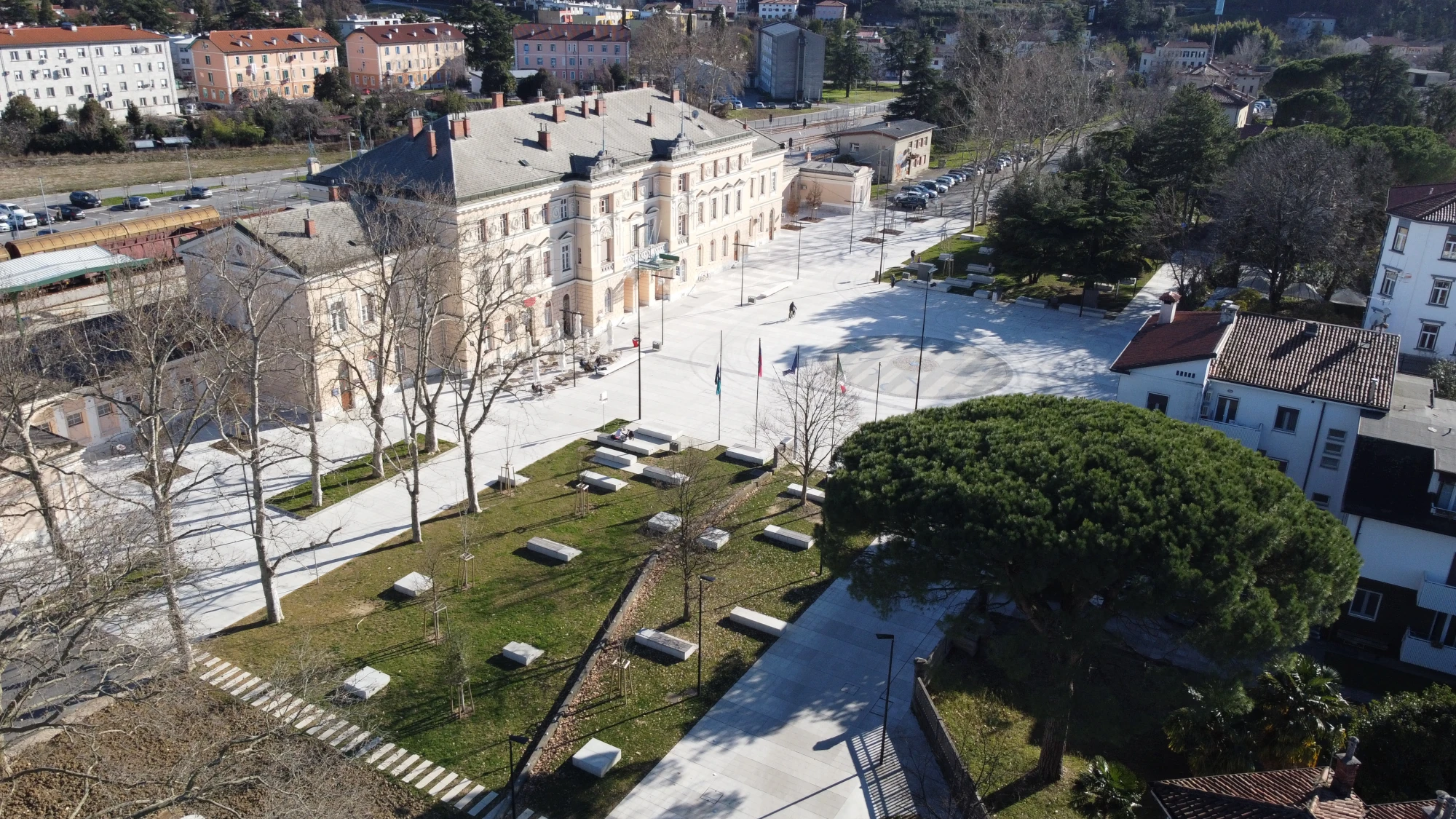 The Europe Square (Trg Evrope / Piazza Transalpina) connecting Nova Gorica and Gorizia — symbol of cross-border unity
The Traveling Triskell concert takes place in the wake of a historic cultural milestone: GO! 2025, the first-ever cross-border European Capital of Culture, jointly held by Nova Gorica (Slovenia) and Gorizia (Italy). From February 8 to December 5, 2025, these two cities — separated by a border drawn after World War II — came together to celebrate their shared heritage through over 1,600 events, attracting more than 1.5 million visitors.
The GO! 2025 program explored four powerful themes: War and Peace, Creating the New, Smugglers, and Very Green. Through exhibitions, concerts, theater performances, and community projects, the initiative demonstrated how culture can erase borders and heal historical divisions. The project injected over EUR 216 million into the region, created new cultural infrastructure like the EPICenter, and boosted tourism by 33%.
The Traveling Triskell embodies the enduring legacy of GO! 2025 — a celebration of music that transcends borders, bringing together Italian and Slovenian communities in the shared space of Piazza Vittoria. As Mayor Rodolfo Ziberna of Gorizia said at the closing ceremony: "Culture is the most powerful instrument you can have for integration."
Practical Information
When
Sunday, August 30, 2026
Concert starts at 7:30 PM
Duration: approximately 90 minutes
Where
Piazza Vittoria
Gorizia, Italy
Step-free access available
Admission
Free Entry
No reservation required
Open to all ages
Getting There
Gorizia is easily accessible from Nova Gorica by foot via Transalpina/Europe Square
Public transport: Bus connections from both cities
Parking available nearby
What to Bring
A blanket or chair for seating (optional)
Comfortable clothing
Your dancing shoes — this is foot-stomping music!
More Info
Organizers: ETNOS Association & Triskell Festival
Part of: GO! 2025 European Capital of Culture
Why You Shouldn't Miss This Event
A Rare Cross-Border Collaboration
This concert unites the Triskell Celtic Festival from Trieste with the World Folklore Festival from Gorizia — two of the region's most prestigious cultural institutions — in a single evening. It's a perfect example of the cross-border cooperation that defined GO! 2025.
World-Class Celtic Music
Celtic Pixie brings over a decade of festival experience and three acclaimed albums of original Celtic folk music. Their lively jigs, soulful ballads, and infectious energy will have you tapping your feet and clapping along in no time.
A Magical Setting
Piazza Vittoria is one of Gorizia's most beautiful squares — a Baroque masterpiece surrounded by historic architecture, open-air cafes, and the stunning Neptune Fountain. As the sun sets and the music begins, the atmosphere becomes truly enchanting.
Free & Accessible
The concert is completely free and open to everyone — families, music lovers, tourists, and locals alike. With step-free access and a central location, it's an inclusive cultural experience for the entire community.
Part of a Historic Legacy
By attending, you become part of the continuing story of GO! 2025 — the first cross-border European Capital of Culture. This event demonstrates that the spirit of "Go Borderless" lives on, building bridges between communities through the universal language of music.
Explore More in the Region
Make the most of your visit to Gorizia by exploring the rich cultural and natural heritage of this unique cross-border region:
Gorizia Castle
Just steps from Piazza Vittoria, this medieval castle offers panoramic views of both Gorizia and Nova Gorica.
Europe Square (Transalpina / Trg Evrope)
Stand with one foot in Italy and one in Slovenia at this symbolic cross-border square.
Soča Valley
Just 30 minutes away — discover the emerald-green river, outdoor adventures, and WWI history.
Brda / Collio Wine Region
World-class wines, rolling hills, and charming villages straddling the border.
Triskell Celtic Festival — Trieste
Experience the full 12-day festival (June 17-28, 2026) at the Boschetto del Ferdinandeo.
EPICenter — Nova Gorica
Visit the new cultural hub exploring the history and future of cross-border cooperation.