Imagine entering an art gallery where the first thing you do is reach out and touch the artwork. At the Tactile Gallery in Nova Gorica, touching is not just allowed — it is encouraged. This groundbreaking exhibition, titled "The Art Beyond the Visible" (Umetnost onkraj vidnega), is the first of its kind in Slovenia, offering visitors a revolutionary way to experience art through the universal language of touch.
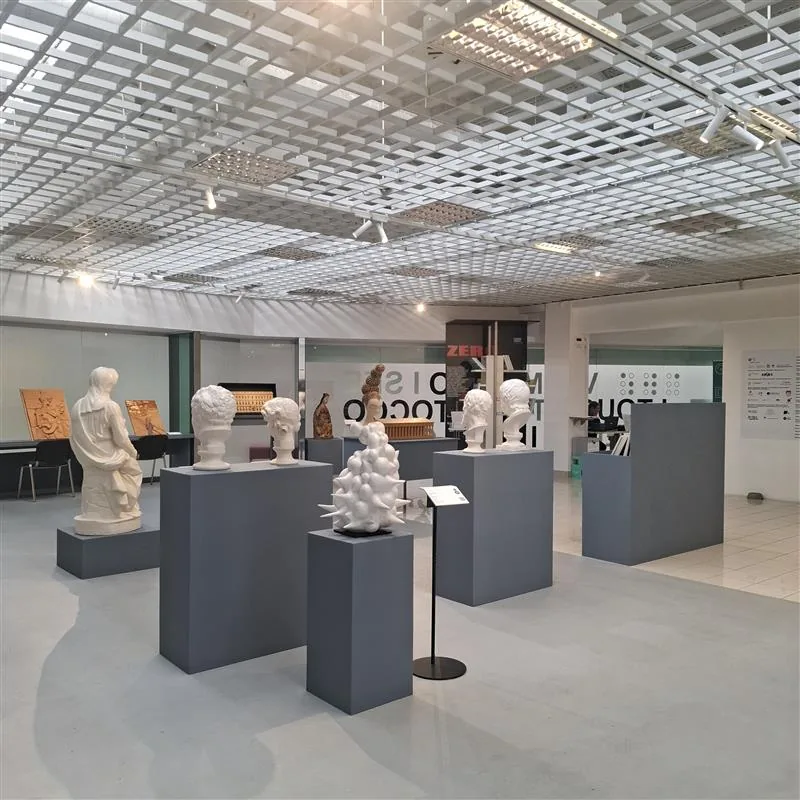
The Tactile Gallery invites visitors to experience art through touch
Opened on 21 March 2025 in the Mercator Centre in Kromberk, the Tactile Gallery is a flagship project of the European Capital of Culture GO! 2025 programme. The gallery represents a decade of development and collaboration between cultural institutions, artists, educators, and the blind and visually impaired community. It challenges the traditional museum paradigm by creating a space where art becomes a fully multisensory experience — one that can be touched, felt, and experienced by everyone, regardless of visual ability.
Grand Opening Ceremony
The gallery was officially inaugurated on Friday, 21 March 2025 at 17:00, with a ceremony that reflected the inclusive spirit of the project. Distinguished guests from across Slovenia, Italy, and beyond gathered to celebrate this pioneering cultural initiative.
Opening Addresses by
- Vladimir Peruničič — Director, Nova Gorica Regional Museum
- Igor Miljavec — President, Inter-Municipal Association of the Blind & Visually Impaired Nova Gorica
- Mija Lorbek — Director, GO! 2025
- David Kožuh — Project Manager & Curator
Keynote Speaker
Dr. Asta Vrečko, Minister of Culture of Slovenia, delivered the keynote address, emphasizing that "the greatest victory of art and culture is when it crosses walls and goes among people, creating new worlds, insights, and communities between them."
The greatest victory of art and culture is when it crosses walls and goes among people and creates new worlds, insights and communities between them. Our job is to create opportunities for accessibility.
— Dr. Asta Vrečko, Minister of Culture
The opening was enriched by a deeply moving artistic programme featuring performers who have transcended their own visual limitations to pursue their dreams. Zara Smrtnik, a blind student, delivered a powerful vocal performance; Jana Führer, a blind dancer, enchanted the audience in a duet with professional dancer Igor Sviderski; and Mila Vučko, also blind, shared her musical gift through the flute. Their performances embodied the very essence of the gallery's message: that art knows no boundaries.
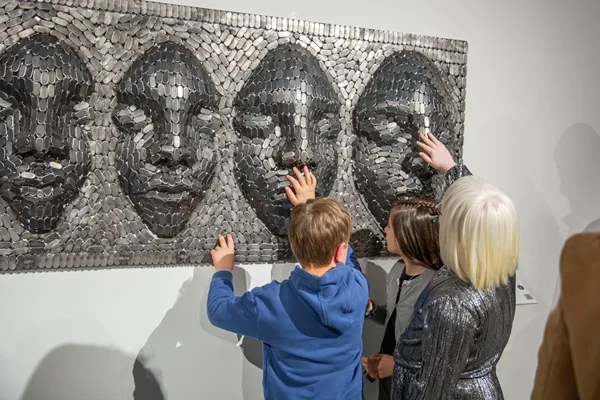
Visitors exploring tactile artworks during the opening ceremony
Two Worlds, One Gallery
The exhibition is thoughtfully divided into two complementary thematic sections, each offering a unique perspective on tactile art:
Part I: The World That Exists
This section presents tactile interpretations of masterpieces from ancient Greece to modernity. Visitors can journey through art history by touching faithful replicas and adaptations of renowned works. Eight exhibits were borrowed from the prestigious Omero State Tactile Museum in Ancona, and three from the Anteros Museum in Bologna — both leading institutions in Italy for tactile art conversion.
The section also features remarkable collaborations with Slovenian institutions, including a tactile interpretation of Avgust Černigoj's graphic work translated into relief-fired ceramics by students of the Academy of Fine Arts and Design, University of Ljubljana. Other highlights include a stone copy of the Rusjan Monument and a tactile model of the iconic Solkan Bridge.
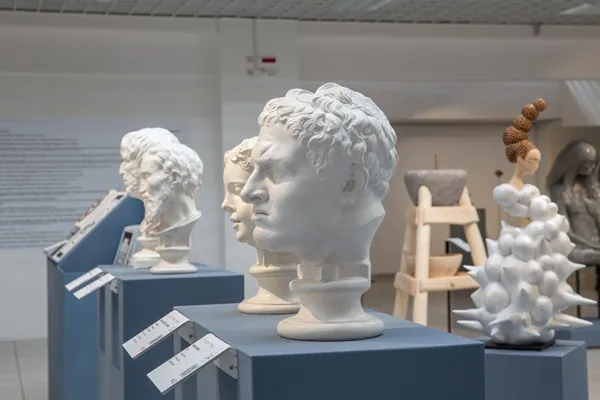
Classical tactile sculptures invite close exploration
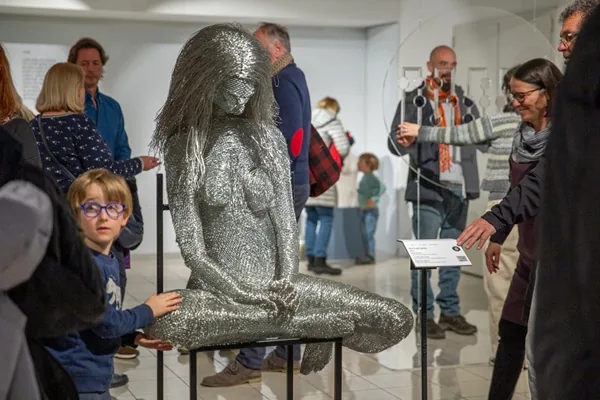
Contemporary tactile sculpture in the experimental section
Part II: The World in the Making
This experimental section showcases 17 original works created specifically for tactile experience by artists from Slovenia, Italy, and Croatia. The creation process was itself a work of art — artists underwent tiflopedagogical training, participated in guided tours with blind and visually impaired individuals, and adapted their creative processes to design works meant to be touched.
The materials are wonderfully diverse — from metal, stone, and wood to ceramics, plastics, and rubber. As Dragan Abram, president of KUD Artes, noted: "I was really surprised to find that if a person has a sense of art, whether he is blind, visually impaired or sighted, he perceives it exactly the same."
Featured Artworks & Highlights
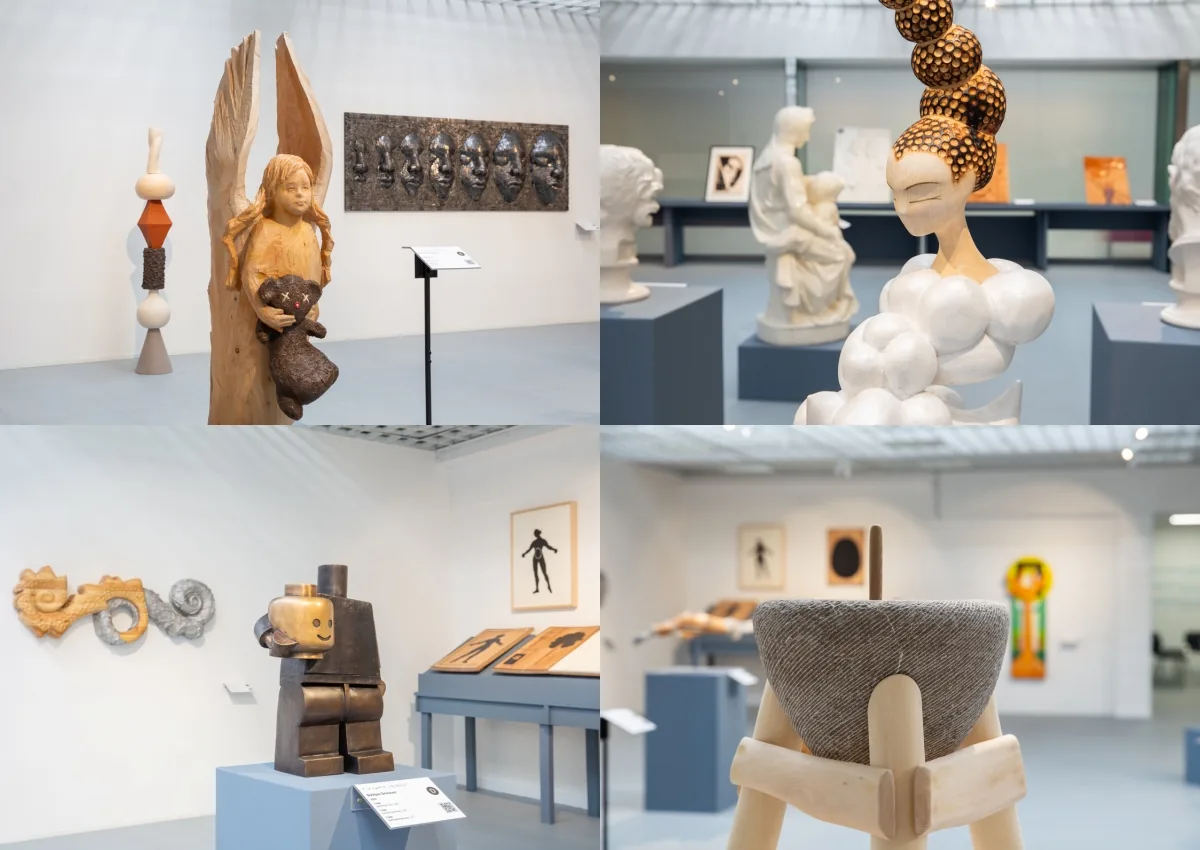
A selection of the diverse artworks on display, ranging from classical interpretations to contemporary tactile sculptures
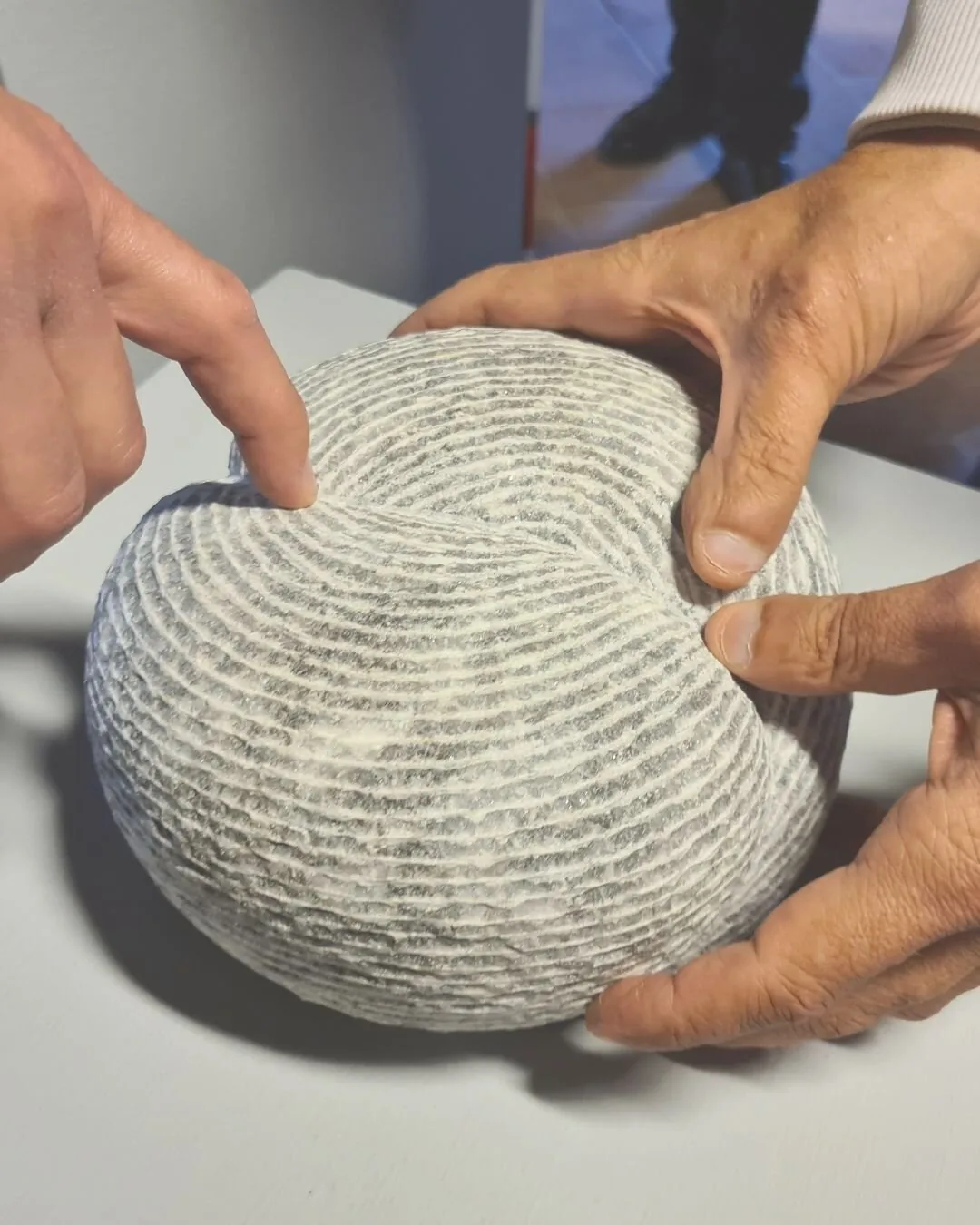
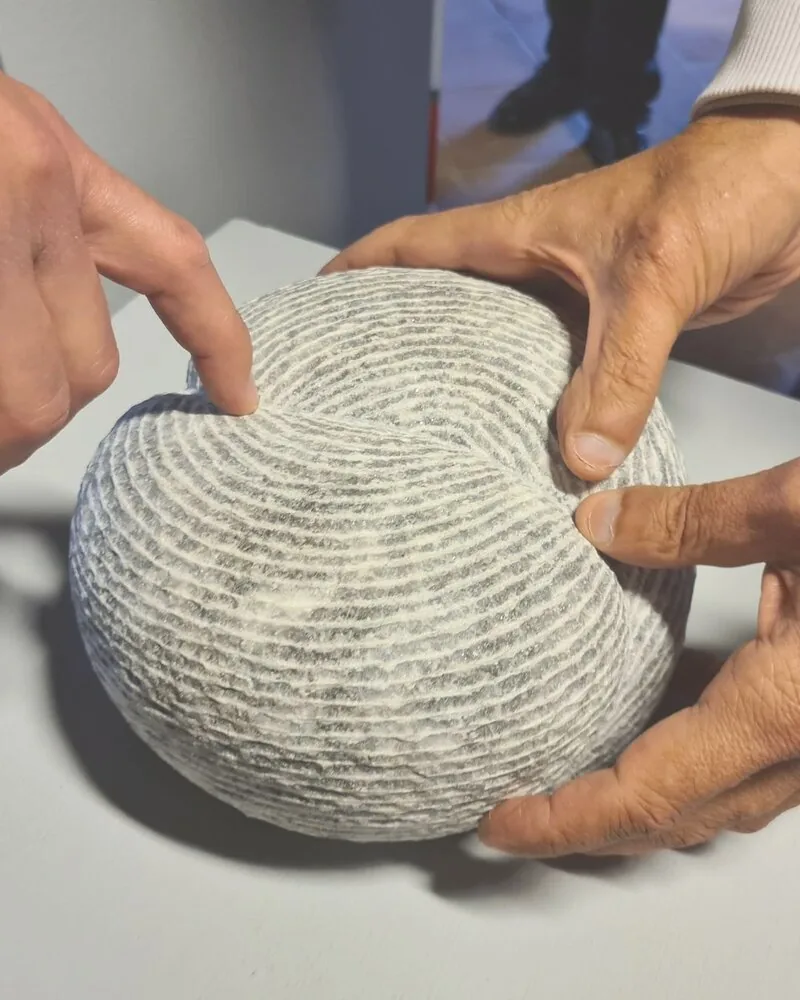
Visitors exploring a tactile stone sphere, experiencing art through the sense of touch
Young visitors engaging with a tactile mosaic artwork at the gallery
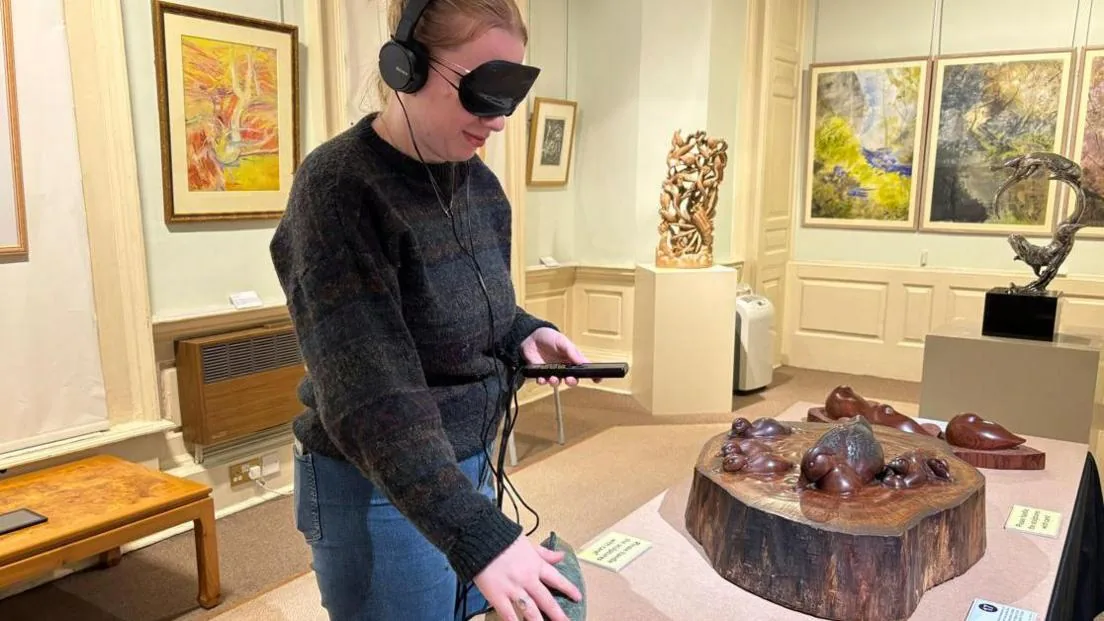
A visitor experiencing art through touch at a tactile exhibition
Notable Works in the Collection
- Tactile painting "Meeting" by Tone Kralj — adaptation by Kristina Naglost, winner of the Valvasor Award 2021
- Ceramic reliefs of Černigoj's graphics — created by ALUO Ljubljana students under mentors Boštjan Drinovec and Kristina Rutar
- Stone copy of the Rusjan Monument — by student Tjaša Cigoj
- Tactile model of Solkan Bridge — by students of the Forestry and Wood Technology School in Postojna
- Tactile mosaic from Basilica of Aquileia — in cooperation with Gruppo mosaicisti Ravenna
- Relief of "Ovčice (Sheep)" by Rihard Jakopič — created at ALUO's Department of Restoration
- 3D version of "The Coffee Drinker" by Ivana Kobilca — in collaboration with the National Gallery of Slovenia
- Copy of Messerschmidt's "Head" — produced with Palazzo Coronini Cronberg Foundation
Accessibility & Inclusive Design
The Tactile Gallery was designed from the ground up with universal accessibility as its guiding principle. The exhibition space is virtually free of architectural barriers, offers parking for people with disabilities, and provides an equal experience for all visitors.
The gallery features audio descriptions in Slovenian, Italian, and English, as well as sign language interpretation in all three languages. Each artwork is accompanied by a QR code that links to detailed audio descriptions. The exhibition catalogue is available in all three languages, equipped with QR codes for audio content. A dedicated website and trained guides further enrich the visitor experience.
Nova Gorica has a strategic accessibility plan and is an example of good practice for Slovenia. 25 years ago, when I started leading the association, we only dreamed of it. Today we have a professional team, including a typhlopedagogue, and it is with great pleasure and pride that we are opening an exhibition that is friendly to all vulnerable groups.
— Igor Miljavec, President of Inter-Municipal Association of the Blind & Visually Impaired Nova Gorica
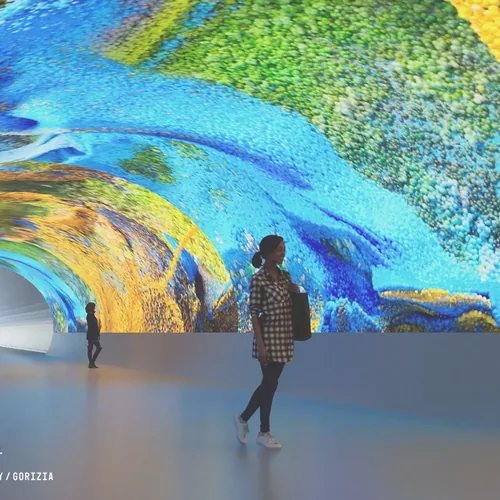
A flagship project of GO! 2025 — European Capital of Culture
A Collaborative Masterpiece
This ambitious project is the result of an extraordinary collaboration between numerous institutions across Slovenia, Italy, and beyond. The project brought together museums, universities, schools, associations, and artists in a shared vision of making art truly accessible to everyone.
Key Partners
Participating Universities & Schools
All four Slovenian universities contributed to the project, along with several secondary schools. Students from the Academy of Arts of the University of Nova Gorica created a documentary video about the project, subtitled and with sign language and audio descriptions. Students of Inclusive Pedagogy at the University of Primorska, under mentor Prof. Dr. Mateja Maljevac, prepared texts for audio descriptions of all works. An inclusive educational programme was developed in collaboration with San Jose State University (USA) and the Faculty of Education in Maribor.
Art Beyond the Visible transcends the mere removal of physical barriers. It invites all visitors to experience art on a deeper, more personal level by engaging their sense of touch, thereby fostering a space that is welcoming to everyone.
— David Kožuh, Curator & Project Initiator
Plan Your Visit
Opening Hours
Monday – Saturday
10:00 – 13:00
13:30 – 18:00
Closed on Sundays
Exhibition runs: 21 March 2025 – 31 December 2026
Location
Mercator Center Nova Gorica
Industrijska cesta 6
5000 Nova Gorica (Kromberk)
The venue is fully accessible, with disabled parking available.
Admission Prices
| Category | Price |
|---|---|
| Adults | 4 € |
| Schoolchildren, High School Students, Students | 2 € |
| Groups, Pensioners | 3 € |
| Family Ticket | 8 € |
Education & Community Impact
Beyond being an exhibition, the Tactile Gallery serves as an educational centre dedicated to accessibility in the arts. The project included comprehensive tiflopedagogical training for students, artists, curators, and other professionals, creating a lasting impact that extends far beyond the gallery walls.
A visitor using audio guidance while exploring tactile art
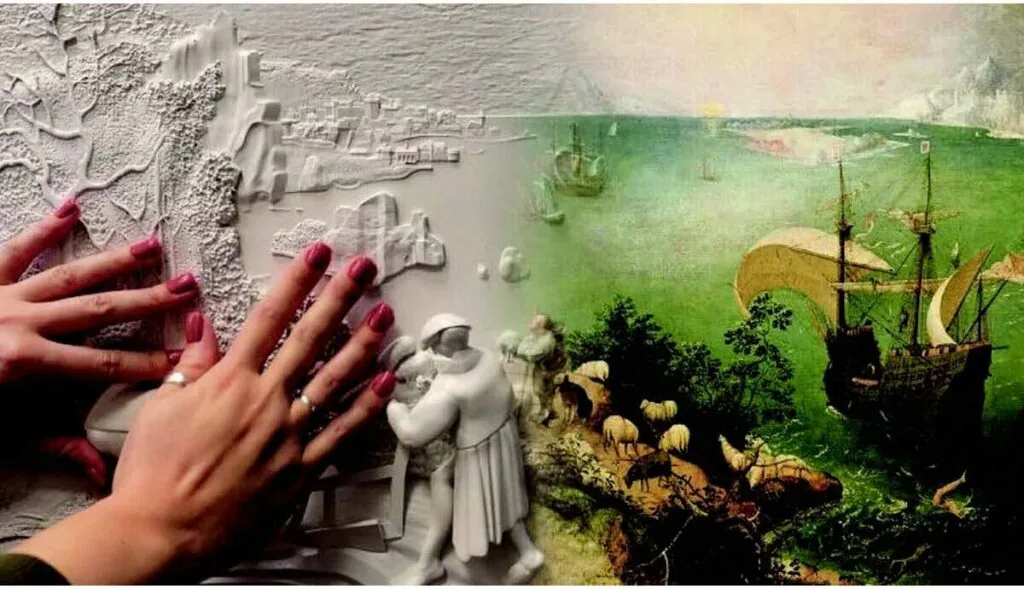
Close-up of hands exploring a tactile relief artwork
The exhibition has an important educational function, taking not only people with visual impairments but also school-age children on a journey through art history. Through touch, young visitors can learn about individual artistic periods in an immersive, memorable way. The gallery also serves as a platform for new forms of collaboration, proving that through education and collective effort, sustainable solutions for accessibility can be developed.
Being able to enjoy art is not a given. However, the content of the tactile gallery should not be limited to vulnerable groups. We can all learn a lot from them — how to feel things in a different way and how to go beyond your limits.
— Mija Lorbek, Director of GO! 2025
About GO! 2025
The Tactile Gallery is one of the flagship projects of GO! 2025 — European Capital of Culture, a year-long celebration of the twin cities of Nova Gorica (Slovenia) and Gorizia (Italy). As the first cross-border European Capital of Culture, GO! 2025 explores themes of connection, accessibility, and shared cultural heritage.
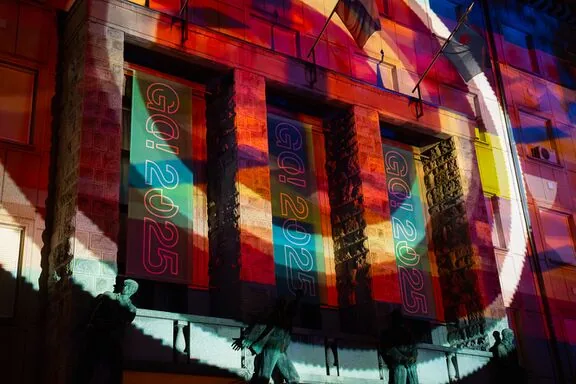
Nova Gorica – Gorizia, European Capital of Culture 2025
The Tactile Gallery exemplifies the programme's commitment to creating culture that is inclusive, accessible, and meaningful for all. It sets a precedent for future endeavours aimed at making art universally accessible, not only in Slovenia but across Europe.