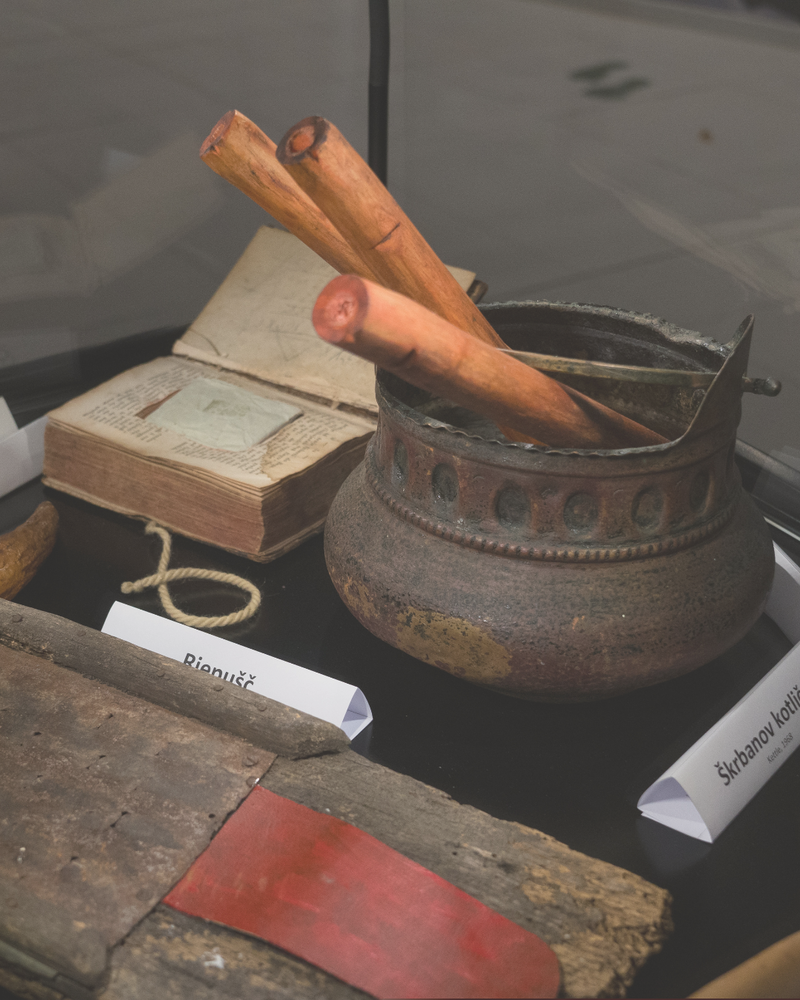
As part of the GO! 2025 European Capital of Culture official programme, Dvorec Vogrsko (Vogrsko Manor) hosts a remarkable permanent ethnological exhibition — "Skrivna modrost" (Secret Wisdom) — featuring the lifelong collection of Pavel Medvešček – Klančar (1933–2020). This extraordinary exhibition offers visitors a rare and intimate window into Slovenia's ancient folk traditions, preserved for centuries in the remote mountain valleys of the country's western regions.
The exhibition opened on 23 April 2025 at 18:00 and will remain accessible to the public until 30 August 2026. It represents one of the most significant ethnological presentations within the GO! 2025 programme, bringing together more than 500 meticulously preserved artefacts collected across five decades of dedicated fieldwork. Each object tells a story of resilience, spiritual depth, and profound connection with the natural world.
Pavel Medvešček – Klančar
A Lifetime of Discovery (1933–2020)
Pavel Medvešček – Klančar was born in 1933 in Anhovo, a small town on the banks of the emerald-green Soča River. After studying applied graphics at the Ljubljana School of Arts and Crafts (graduating in 1955), he worked as an art teacher in Vipava, Kojsko, and Deskle. In 1961, he began his career as a conservator of folk heritage at the Institute for the Protection of Cultural Heritage in Gorica, dedicating more than five decades to exploring, documenting, and preserving the cultural legacy of western Slovenia.
Medvešček was not only an accomplished painter, graphic artist, and illustrator — he was also a prolific writer and ethnologist. His artistic and professional paths intertwined: his sensitivity to the natural and cultural landscape of Primorska informed both his artwork and his ethnographic research. He was a founding member of the Society of Visual Artists of Northern Primorska (DLUSP) and a member of the international art group 2 x GO.
Major Publications by Pavel Medvešček
- "Na rdečem oblaku vinograd rase" (1990) — a collection of Slovene folktales
- "Skrivnost in svetost kamna" (1992) — tales of magical objects and sacred signs
- "Let v lunino senco" (2006) — narratives of old beliefs, inspiring two acclaimed documentaries
- "Staroverstvo in staroverci" (2014) — catalogue of the ethnological collection
- "Iz nevidne strani neba" (2015) — his magnum opus revealing the secrets of the Staroverci
For his extraordinary life's work, Medvešček received the prestigious Bevk Award (1988) and the Štreklj Award for ethnology (2015). His legacy lives on through his extensive body of work, which continues to inspire researchers, artists, and spiritual seekers from around the world.
The Staroverci
Slovenia's Ancient Wisdom Keepers
The Staroverci (Old Believers) were communities that persevered in the upper-western part of Slovenia — particularly in the Soča Valley, Čepovan, Cerkno Hills, Idrija, and Brkini — long into the 20th century. Living in hard-to-reach, impoverished mountain areas, they maintained a deeply personal connection with nature and preserved an ancient spiritual tradition they simply called "naša vera" — "our faith". Their very existence remained largely hidden from mainstream society until Medvešček's painstaking research brought their story to light.
Their worldview was rooted in the profound belief that nature holds sacred, healing, and protective powers. They venerated specific natural sites: caves, hilltops, streams, ancient trees, and distinctive rocks. Their cosmology recognised multiple worlds — from the Earth shared by people, animals, and plants, through realms of wind and water spirits, to the upper world ruled by Nikrmana, the supreme deity. This complex spiritual framework governed every aspect of their daily lives, from agriculture and healing to social relations and rites of passage.
The Earth belongs to people, animals and plants, and the spirits are overflying it all... The water flows and water is flowing. When a person jumps in, the person just jumps in, and in the name of all gods...
— Janez Jug, Široka njiva, 1965
recorded by Pavel Medvešček
The Staroverci way of life encompassed a rich tapestry of practices: natural healing and herbal medicine, passed down through generations of wise women and men; divination and fortune-telling practices that read signs from nature; protective rituals and sacred objects that safeguarded homes and families; and the ceremonial preparation of motnik, a ritual wine central to their communal gatherings. Above all, they maintained a profound respect for the cycles of nature, living in harmony with the land that sustained them.
Because their practices were persecuted by the dominant Christian society, the Staroverci maintained strict secrecy, preserving their traditions within tightly knit, intimate communities. As Medvešček himself noted, they lived outwardly as Christians while inwardly guarding their ancestral wisdom — a dual existence that allowed their ancient faith to survive centuries of suppression. The objects in this exhibition are tangible evidence of this remarkable cultural resilience.
The Exhibition
Over 500 Artefacts of Living Heritage
Secret Wisdom displays more than 500 ethnological objects that Medvešček collected over fifty years of fieldwork in the most remote and difficult-to-traverse areas of western Slovenia. These preserved items are physical testimonies of the Staroverci lifestyle — objects that sustained daily life, spiritual practice, and cultural identity in isolation and hardship. Each piece was carefully selected and documented, with Medvešček recording the stories and rituals associated with every item directly from the Staroverci elders who had inherited them.
Visitors can explore artefacts spanning multiple categories of Staroverci life and practice:
| Category | Description |
|---|---|
| Dehnar's Objects | Items belonging to the dehnar — the spiritual leader and central figure of Staroverci communities, responsible for rituals and healing |
| Protective Amulets | Sacred objects carried or worn for protection against evil forces, misfortune, and illness |
| Healing Tools | Implements used for traditional medicine, herbal preparation, and therapeutic rituals |
| Divination Objects | Tools for fortune-telling, reading signs from nature, and communicating with the spirit world |
| Black Magic Items | Objects associated with črna vahta (black vigil) practices — defensive and transformative rituals |
| Motnik Production | Equipment for making the ceremonial ritual wine central to Staroverci communal gatherings |
The exhibition is curated by Daša Medvešček, Pavel's granddaughter, who continues his mission of preserving and sharing this invaluable heritage. The display cases are specially crafted from wood from the Karst fire site, adding another layer of regional significance to the presentation. This thoughtful curation ensures that the exhibition is not merely a static display, but a living connection to the traditions it represents.
Dvorec Vogrsko
A Noble Setting for Ancient Wisdom
The exhibition finds its home in Dvorec Vogrsko (also known as Božičev dvorec), a magnificent manor house in the Vipava Valley. Built on the foundations of a Renaissance castle from 1524 and rebuilt before 1764 by the noble Božič family, the manor exemplifies the Venetian villa style with its elegant three-wing layout and ornate Baroque chapel dedicated to St. Roch and St. Barbara. The building's architectural beauty provides a fitting backdrop for the ancient treasures it now houses.
The manor's storied history — from a noble residence to WWI military quarters, from near-destruction in WWII to careful restoration beginning in 1969 — mirrors the resilience of the Staroverci culture it now guards. Having served various purposes over the centuries, Dvorec Vogrsko today stands as a vibrant cultural venue, making it the perfect guardian for Medvešček's precious collection. The synergy between the historic manor and the ancient artefacts creates an atmosphere of deep reverence and timelessness.
Getting There
Address: Vogrsko 46, Volčja Draga, Slovenia
The manor is located in the Municipality of Renče-Vogrsko, approximately 15 minutes by car from Nova Gorica. Follow the road toward the Vipava Valley and look for signs for Vogrsko.
Legacy and Significance
Connecting past wisdom with present understanding
"Comparable to indigenous cultures worldwide"
As Neda Rusjan Bric, artistic advisor for GO! 2025, observed: "When we spoke with experts, they confirmed this is comparable to indigenous cultures worldwide — from North and South American Indians to the Celts. Everywhere, something existed before."
Secret Wisdom is more than a display of historical artefacts — it is a bridge between past and present, reminding us that living in harmony with nature holds knowledge we urgently need today. In an era of environmental crisis and spiritual searching, the Staroverci tradition offers profound insights into sustainable living, community bonds, and our relationship with the natural world. Their wisdom was not written in books but embedded in daily practices, in the objects they crafted, and in the landscapes they inhabited.
Pavel Medvešček's lifelong dedication ensured that the Staroverci legacy survived into the 21st century, preserving not just objects, but an entire worldview that continues to resonate with contemporary seekers of wisdom. His work stands as a testament to the power of patient, respectful ethnography — approaching traditional cultures not as relics to be catalogued, but as living systems of knowledge deserving of deep understanding and preservation.
Don't miss this extraordinary opportunity to connect with Slovenia's ancient spiritual heritage during the GO! 2025 European Capital of Culture celebrations. Secret Wisdom invites you to step into a world where nature speaks, objects hold power, and ancient wisdom awaits discovery.
Plan Your Visit
Practical information for visitors
Opening Hours
- Saturdays: 13:00 – 17:00
- Sundays & Public Holidays: 10:00 – 18:00
Admission & Services
- General Admission: Free
- Guided Tours: Available for groups by prior arrangement (paid service)
- Accessibility: The manor grounds are accessible; some areas may have limited wheelchair access because of its historic architecture
- Photography: Non-flash photography is permitted for personal use
🇪🇺 This exhibition is co-financed by the European Union as part of the GO! 2025 Nova Gorica – Gorizia European Capital of Culture programme.