Misliti glasbo / Thinking Music — Photography Exhibition
Galerija GONG · GO! 2025
Sep 9 - Oct 15, 2026
Galerija GONG, Kidričeva ulica 20, Nova Gorica
On Wednesday, 9 September 2026, at seven in the evening, Gallery GONG opened its doors on Kidričeva ulica 20 in Nova Gorica for Misliti glasbo — Thinking Music — a group photography exhibition on view until 15 October 2026.
The show brings together three established music photographers: the Italian author Luca Alfonso d'Agostino and the locally rooted creators Jernej Humar and Žiga Koritnik, all of them working the border area between the two Goricas. Curated by Nataša Kovšca, founder and director of the gallery, the exhibition presents new works the three have made over recent years at music festivals on both sides of the border.
The opening evening belonged as much to the region's music community as to its photography scene: all three authors attended the vernissage, and the frames — concert stages, backstage corridors, musicians' portraits — drew a steady stream of visitors into the white cube. Fittingly for a city that spent 2025 as half of Europe's first cross-border Capital of Culture, the exhibition speaks three languages at once: its title travels between Slovenian, Italian and English, and the event is carried in the continuing programme of GO! 2025, whose afterglow still shapes the cultural calendar on both sides of the erased border.
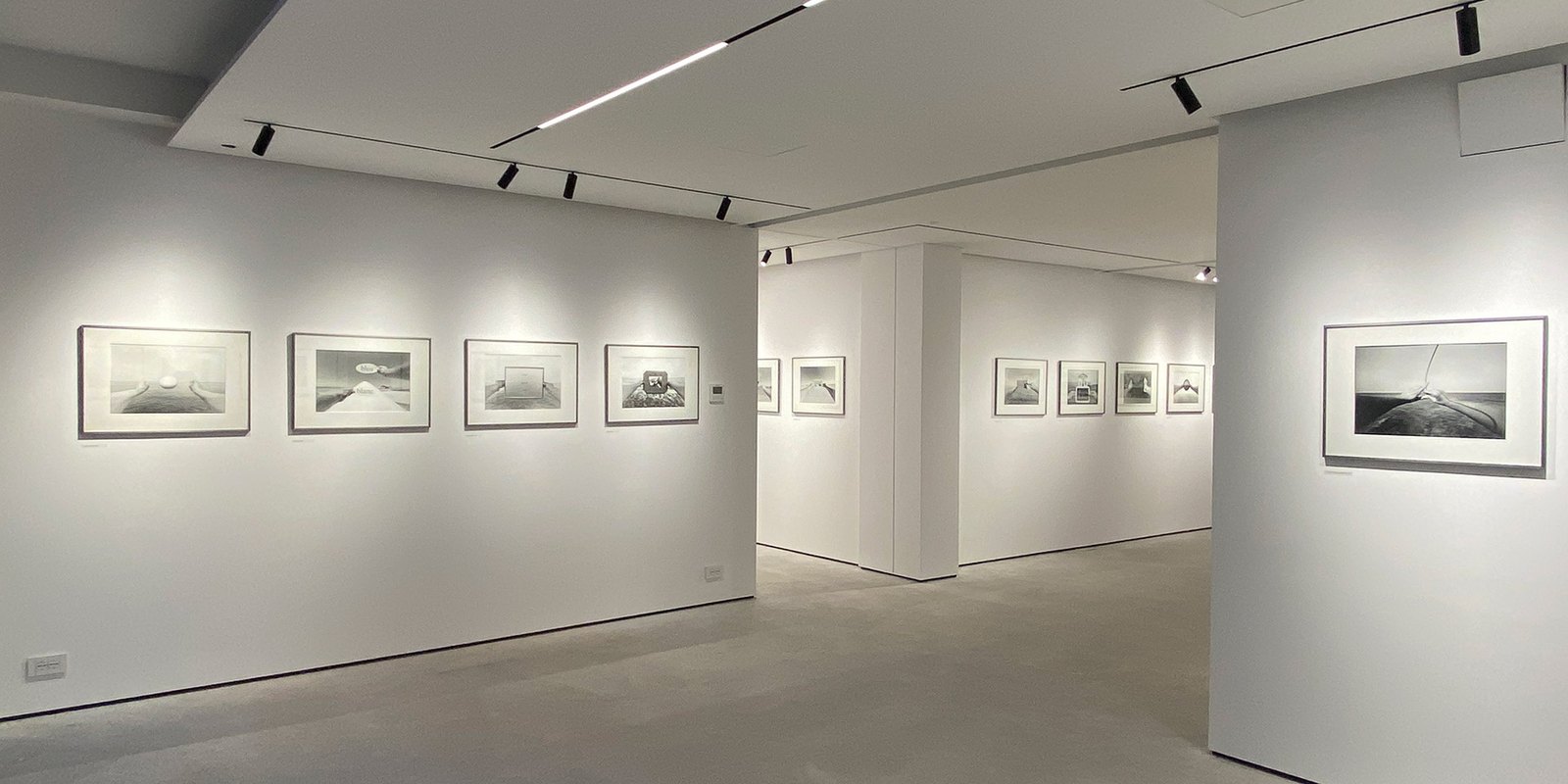
The white cube of Gallery GONG on Kidričeva ulica 20 · Photo: Galerija GONG
What Does It Mean to Think Music?
Music understood as freedom of expression, improvisation and spontaneity — photography as its visual parallel.
The curatorial premise of the exhibition
The exhibition investigates the relationship between music and visual expression through the photographic lens. Its three authors come from different cultural environments, yet they are bound by the same subject — a passion for music, above all jazz and the contemporary, experimental forms that escape classical categories.
The curatorial text makes a precise claim about craft: reportage photography of this kind demands not only mastery of photographic rules and the expressive power of the image, but also deep concentration, openness and an almost intuitive capacity to react to fleeting moments — the same qualities that improvisation demands of a musician.
What hangs on the walls is correspondingly wider than the stage. The images read music from several perspectives at once: the energy of live performance and improvisation, the intense communication between stage and audience, the undocumented life backstage, and — most quietly — intimate, psychologically layered portraits born of the photographers' personal closeness to the musicians. The common denominator of all three oeuvres is the ability to merge completely with the event — to carry the charged atmosphere and the felt sense of rhythm and sound onto the flat surface of a photograph. That is the "thinking" of the title: a music you do not hear, but see.
Three Lenses, One Stage
Each author arrived at music photography by a different road — one through the newsrooms and festival pits of Friuli Venezia Giulia, one through the documentary school of Prague, one through four decades of jazz festivals from Ljubljana to Skopje and New York. Together they form a small cross-border atlas of the scene: where one favours the dynamics of the concert event, another lingers in the half-light of the backstage, and the third distils a musician into a single psychological portrait.
 Slovenia
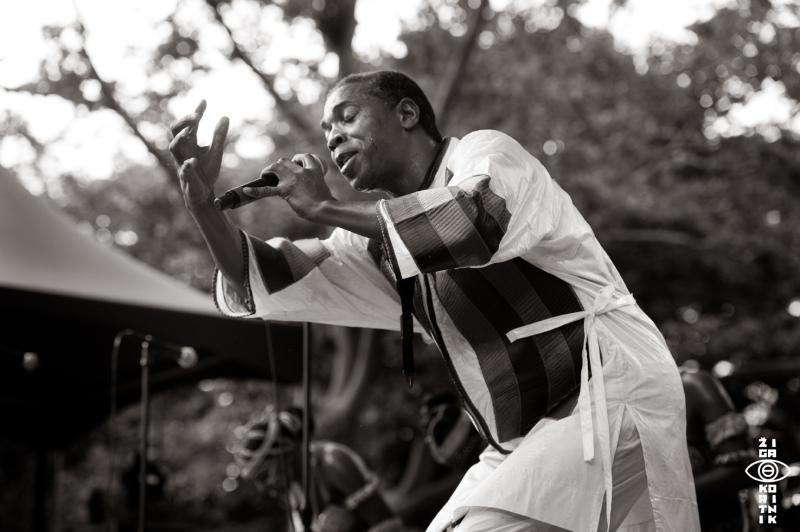
Žiga Koritnik
The veteran of the jazz pit — Ljubljana
Born in 1964, Koritnik has been photographing musicians since 1987 and is the dean of Slovenian jazz photography. Based in Ljubljana, he is a fixture of the Ljubljana Jazz Festival, the Druga godba festival and Cankarjev dom, and since 1996 he has served as resident photographer of the Skopje Jazz Festival, which publishes an annual calendar of his images; in 2001 he spent seven weeks in New York documenting the Vision Festival. His photographs have appeared in Time Out, Jazz Times, Jazziz, Downbeat and the Village Voice, and on records for labels such as Tzadik, Intuition and Leo Records.
He self-published the photobook Jazzy-ga! in 1996, has worked as a TV and film cameraman for Televizija Slovenija since 1989, and counts more than sixty solo and forty group exhibitions across Europe, the United States and Asia.
AT GONG — new festival works of recent years: stage, backstage and the portrait as a form of listening.
 Italy
Italy
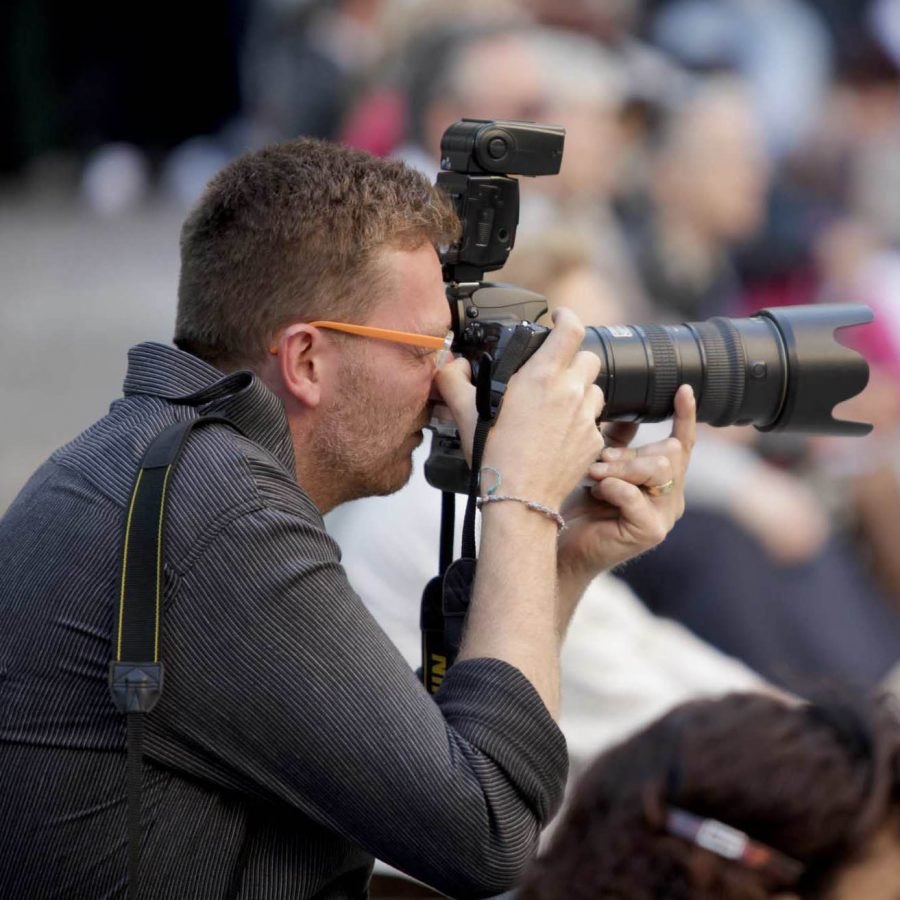
Luca Alfonso d'Agostino
The chronicler of Friulian stages — Monfalcone
Born in Milan in 1968 and raised in Monfalcone — twenty kilometres from the gallery, on the Italian side of the border — d'Agostino has worked as a professional photographer since 1984 and as a journalist since 1989, becoming the visual chronicler of the region's music life: Udin&Jazz, Gorizia Jazz, Trieste Jazz, Sacile and the Jazz&Wine of Peace festival in Cormons, just across the former border. He is the official photographer of Mittelfest in Cividale del Friuli and has coordinated the photography team of the Rototom Sunsplash festival for over a decade.
His images illustrate records for ECM, Cam Jazz, Enja and Universal, and appear in Musica Jazz, Corriere della Sera, Il Sole 24 Ore and L'Espresso; in 2019 he co-founded the Associazione Fotografi Italiani di Jazz, the national association of Italian jazz photographers.
AT GONG — the Italian eye in the trio: decades of jazz seen from the photo pit, from Gorizia to Benicàssim.
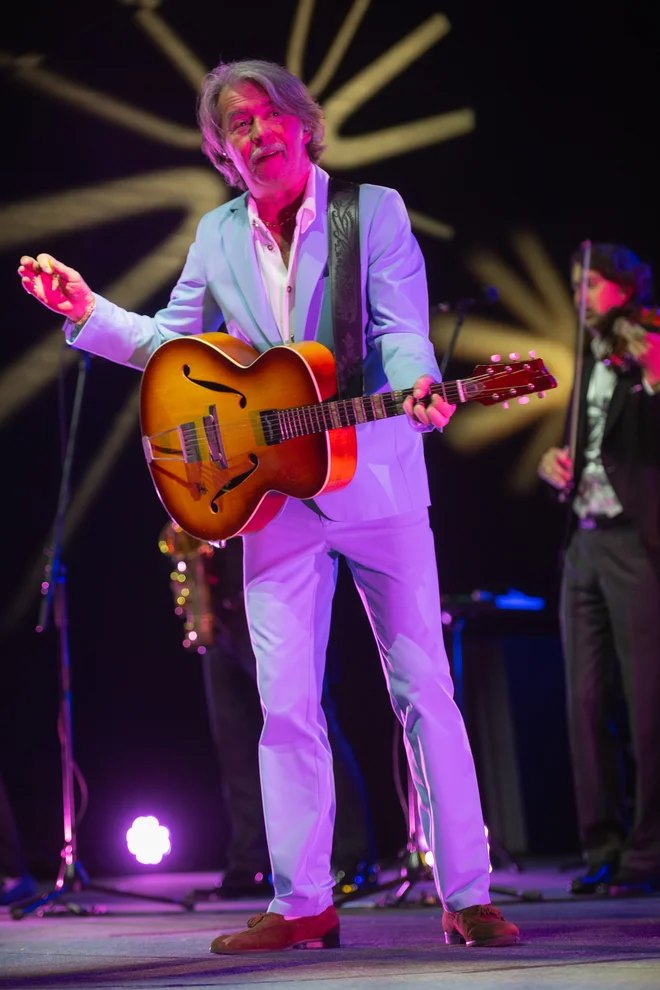 Slovenia
Jernej Humar
The documentarian — Nova Gorica
Born in 1975 in Šempeter pri Gorici, a few kilometres from the gallery, Humar first enrolled in mechanical engineering before passing the entrance exam, in 1997, for the photography department of Prague's Academy of Performing Arts, Film and Television (FAMU), where he studied documentary photography. He graduated with honours in 2002 with the series Brezdomci (Homeless), mentored by the great Czech documentary photographer Viktor Kolář, after taking third prize at the Emzin photography competition in 2000 for his cycle Subway.
He lives and works in Nova Gorica, exhibiting at home and abroad, and is a constant presence at the region's concerts and festivals. For Thinking Music he focused his selection on the dynamics of the concert event itself — the surge and release of live performance.
AT GONG — the hometown perspective: the concert as pure motion, caught from inside the crowd.
A Borderless Frame
Thinking Music does not happen in a vacuum — it sits inside the continuing programme of GO! 2025, the first cross-border European Capital of Culture in the history of the initiative, in which Slovenian Nova Gorica invited neighbouring Italian Gorizia to share a single title under the slogan "GO! Borderless". The pairing is poetic: Nova Gorica was built from scratch after the Second World War, when the new border split it from Gorizia, the thousand-year-old town on the other side. The title year opened on 8 February 2025 at five venues across both cities, before a crowd of around 50,000.
An exhibition in which an Italian photographer from Monfalcone hangs beside two Slovenians from the Goriška region is that project in miniature. The works were made at festivals on both sides of a frontier that today exists mainly as a line of paving stones in Europe Square; the artists' common language is jazz — a music built, like the GO! 2025 programme itself, on listening across divides. That the show still runs in the autumn of 2026, months after the official title year closed, is a sign of how deeply the cross-border calendar has taken root.
2 cities, 1 title
Nova Gorica (SI) + Gorizia (IT) — the first borderless European Capital of Culture
1,600+
Events held on both sides of the border during the title year
1.5 M+
Visitors counted across the GO! 2025 programme
8 Feb 2025
Opening ceremony, staged at five venues in two countries at once
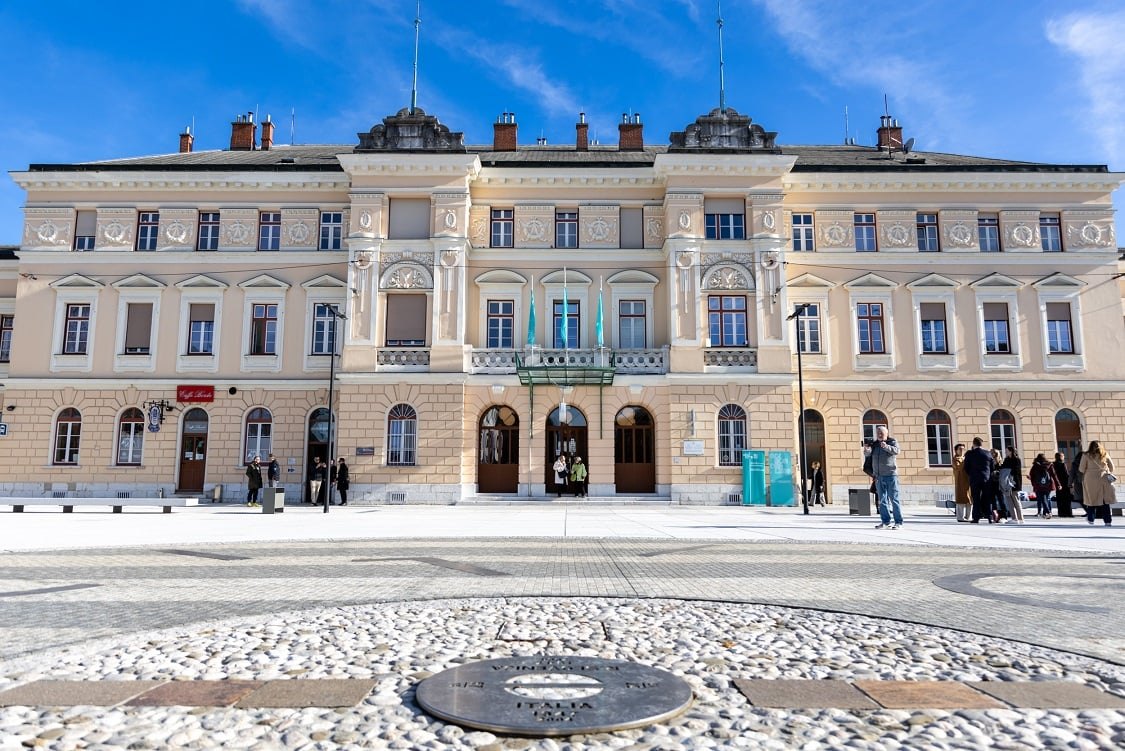
Europe Square, where the two Goricas meet — the border once ran through this pavement
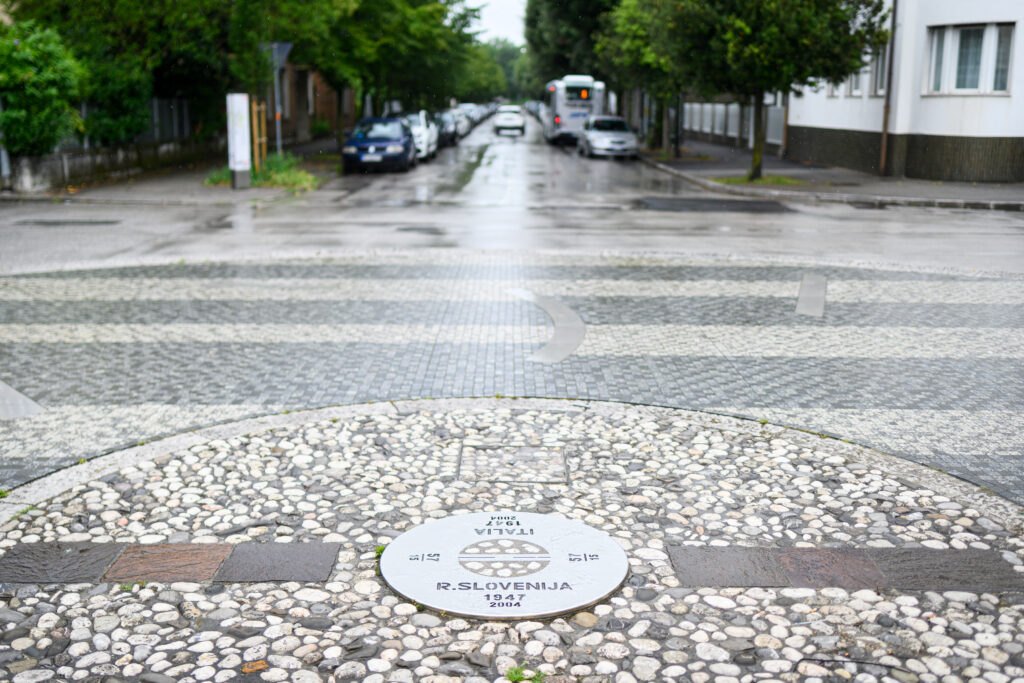
The 1947 border line, marked in stone on a street between Nova Gorica and Gorizia
The Venue — Galerija GONG
Gallery GONG, at Kidričeva ulica 20 in the centre of Nova Gorica, is an independent art gallery founded and directed by curator Nataša Kovšca, and has become one of the city's most consistent platforms for contemporary photography. Its recent seasons read like a cross-border diary: the gallery hosted the travelling project Made in Maribor, Novi Sad, Nova Gorica / Gorizia during the title year, co-curated with the Maribor Art Gallery and Gorizia's provincial museums, and co-produced Mejnosti / Borderlines, an international exhibition of fourteen photographers from Slovenia, Italy and Austria, with Ljubljana's Photon Gallery.
Thinking Music extends that line exactly: a regional institution using the Capital of Culture's momentum to stage work that is local in address and European in scope. With the show running until 15 October 2026, the gallery's modest white rooms remain one of the quietest — and most musical — places in the two Goricas this autumn.
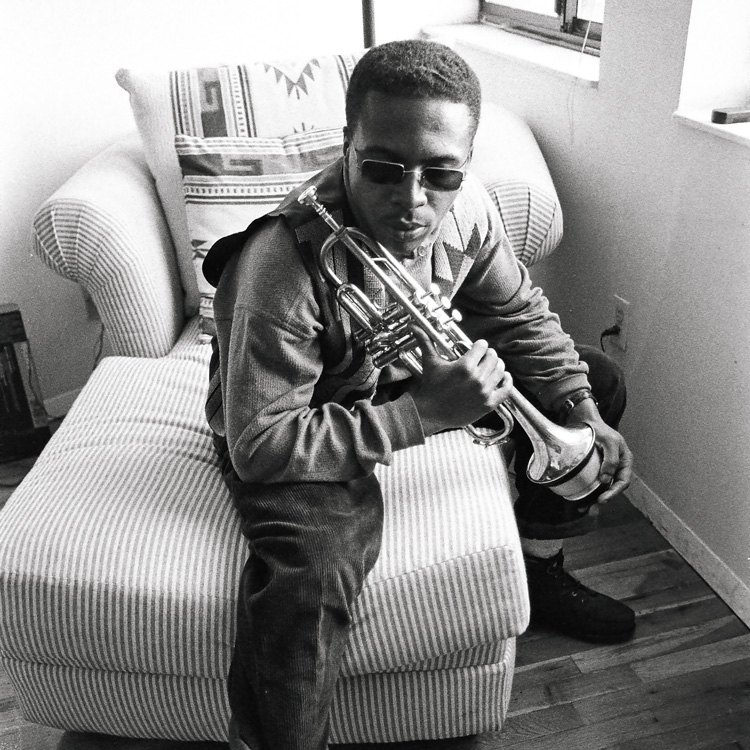
From the world of "Thinking Music" — Ssirus W. Pakzad with his trumpet · Photo © Žiga Koritnik / Jazz Festival Ljubljana
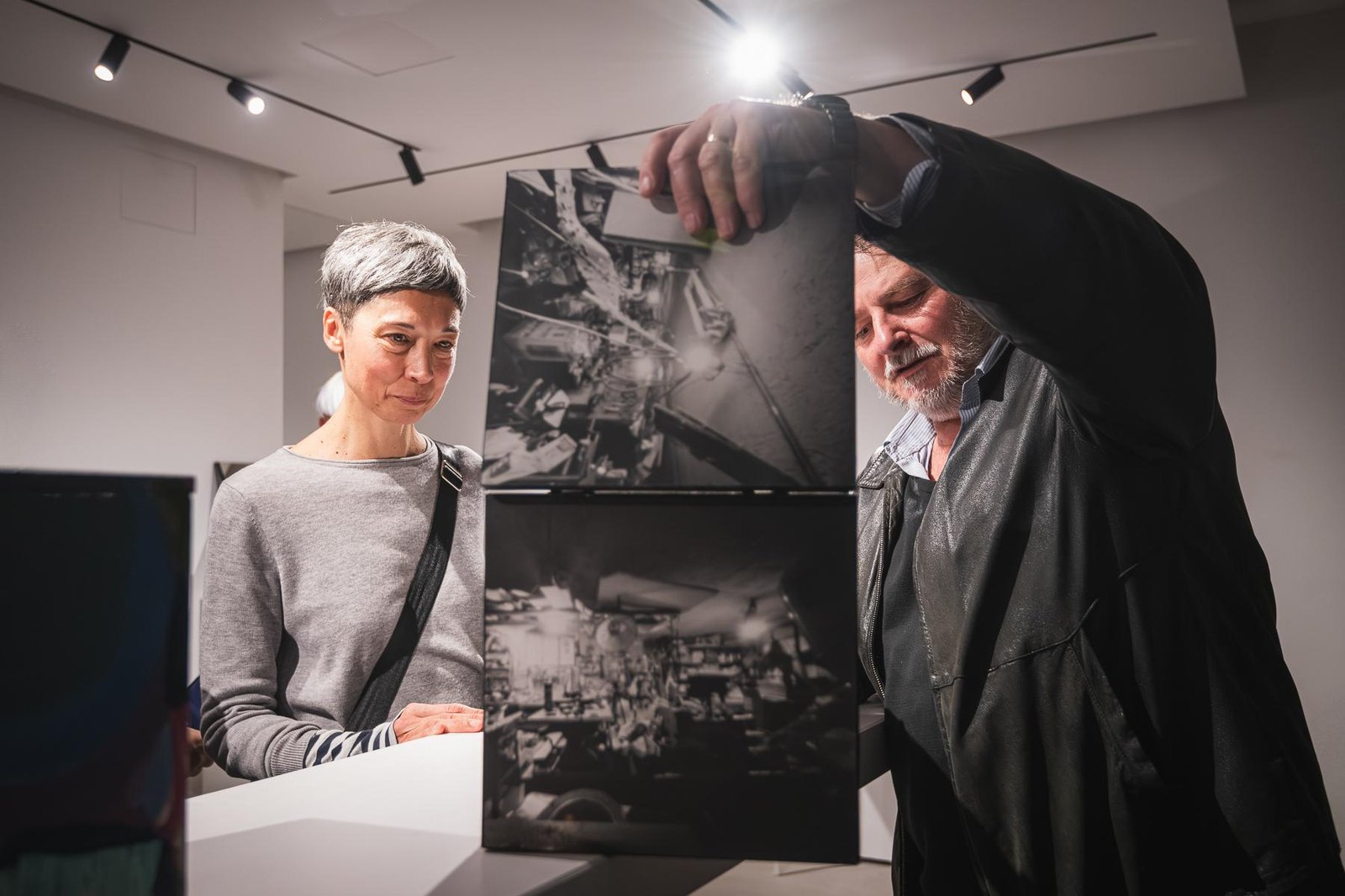
Visitors with photographic prints inside Gallery GONG · Photo: Maribor Art Gallery (UGM)
On view until 15 October 2026
Exhibition
Misliti glasbo / Thinking Music
Luca Alfonso d'Agostino · Jernej Humar · Žiga Koritnik
Curator: Nataša Kovšca
Venue
Galerija GONG / Galleria GONG
Kidričeva ulica 20
5000 Nova Gorica, Slovenia
Opening hours
Wed–Thu 16:00–19:00
Fri 12:00–16:00
Sat 10:00–13:00
Tags
Don't Miss This Event
Join us for Misliti glasbo / Thinking Music — Photography Exhibition. Experience the vibrant culture and community of Nova Gorica.