Exhibition Point de Vue
/ Gledišče
Four artists, one place, a European pulse.
About the Exhibition
Where contemporary creativity meets centuries of European heritage.
In the old castle of the Attems family in Vipavski Križ, uninhabited since 1864 when a fierce bora wind tore off its roof, four extraordinary artists come together with their works in one of the most evocative exhibitions of the GO! 2025 European Capital of Culture programme. Opened on 27 May 2025, the exhibition Point de Vue (Gledišče in Slovenian) transforms the castle's historic ruins into a living gallery where contemporary art meets centuries of European heritage.
The title Point de Vue carries a beautiful double meaning: from the castle hilltop, one can see far across the surrounding landscape — the stunning Vipava Valley with its vineyards and rolling hills — while simultaneously offering a "point of view" from each individual artist. The exhibition invites visitors to explore different perspectives on place, identity, and Europeanness through the lens of four remarkable creative voices.
Project curator Klavdija Figelj envisioned this project as a way to breathe new life into the abandoned castle walls. By connecting four artists who are each deeply rooted in this place yet simultaneously carry a strong European dimension, the exhibition creates a dialogue between local heritage and universal artistic expression that resonates far beyond the castle walls.
Vipavski Križ Castle
A frontier fortress with a dramatic story written by wind, war, and baroque culture.
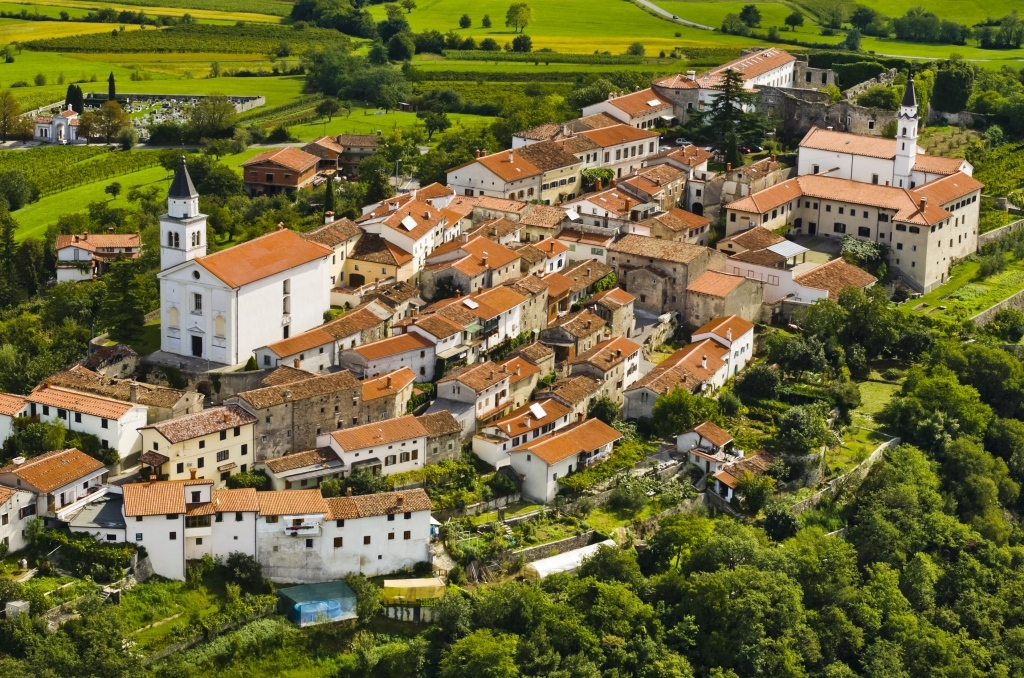
Vipavski Križ is one of Slovenia's most captivating historic towns — a picturesque settlement perched proudly on a hill near Ajdovščina in the heart of the Vipava Valley. First mentioned in written records in the 13th century, the town owes its distinctive character to its dramatic history as a frontier fortress.
The castle itself was erected by the last Count of Gorizia at the end of the15th century, when fortifications were commissioned to protect the settlement from Ottoman raids. The fortified settlement flourished, and by the beginning of the 16th century, Vipavski Križ was granted market rights and town privileges by the Emperor — becoming what was once thesmallest town in the Habsburg monarchy.
In 1605, the castle was purchased by the influential Attems family, ushering in the town's golden age of spiritual and cultural progress. The Attems brought Capuchin monks to the town, built a monastery, and transformed Vipavski Križ into a vibrant centre of baroque culture. The famous baroque preacher and author Janez Svetokriški (Tobia Lionelli) lived and worked here, creating his legendary five-tome collection of sermons that remain part of the monastery's precious library.
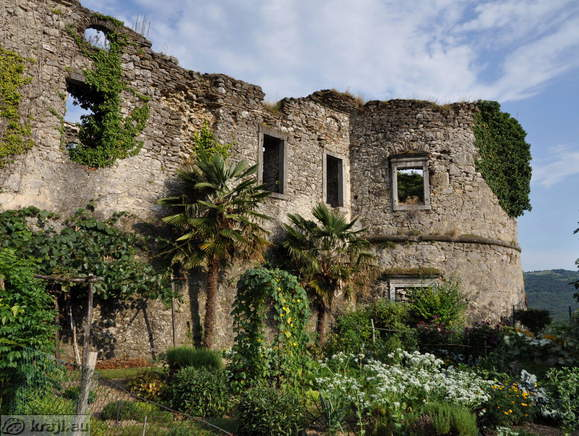
Tragedy struck in 1864, when the legendary Vipava bora wind — known to reach speeds of over 200 km/h — tore the roof from the castle. Since that fateful day, the castle has remained uninhabited, its weathered stone walls standing as silent witnesses to centuries of European history. Today, these atmospheric ruins provide an extraordinary backdrop for contemporary art.
Four Creative Voices
A sculptor, a blind photographer, an installation artist, and a master painter — united by place and European vision.

Marko Pogačnik
Born in Kranj, Slovenia, Marko Pogačnik is an internationally renowned sculptor and conceptual artist. A founding member of the legendary OHO art group (1965–1971), he was appointed UNESCO Artist for Peace in 2016. His public monument "Hologram of Europe" stands in Ljubljana, and he has created site-specific works across the world.
Evgen Bavčar
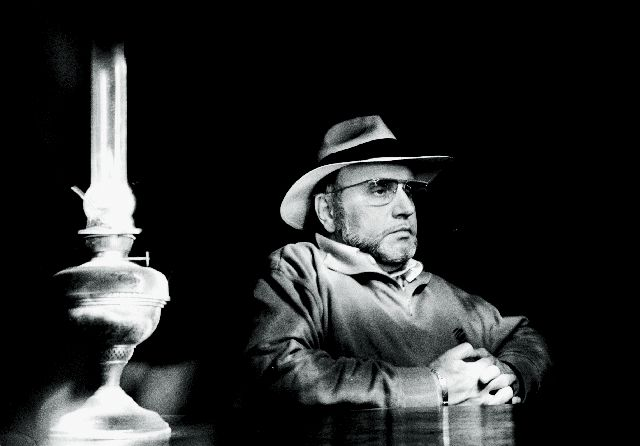
Born in Lokavec near Ajdovščina, Evgen Bavčar lost his sight completely at age 11. He went on to earn a PhD in Philosophy and Aesthetics from the Sorbonne in Paris and became the official photographer of the Month of Photography in Paris in 1988. His photography is based on darkness, not light: images first exist in his mind before being realised through a unique collaborative process.
Annibel Cunoldi Attems
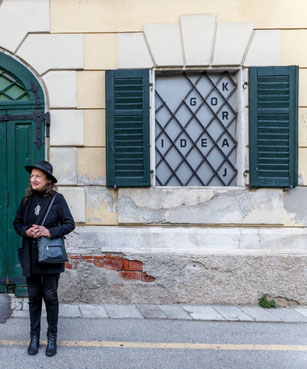
Born in Gorizia and active internationally, Annibel Cunoldi Attems intertwines language, space, and memory in her work. After studying art in Paris and completing a degree in German language and literature, she launched her career in the 1970s. Since 1990 she has lived and worked in Berlin, where her practice expanded into photography, objects, and text-based installations shown at venues such as the Akademie der Künste and the Neue Nationalgalerie.
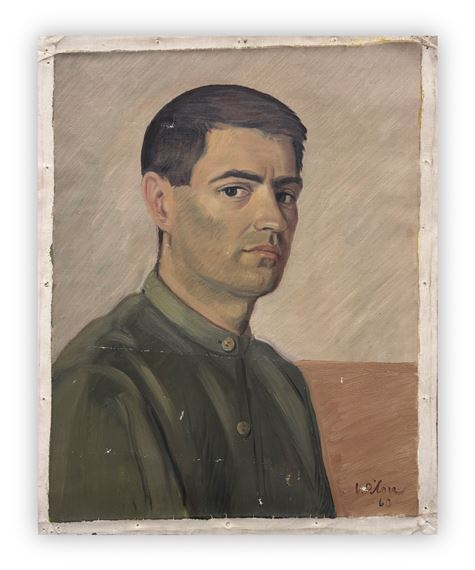
Veno Pilon
One of the most important masters of Slovenian Expressionist painting, Veno Pilon was born in Ajdovščina. His life reads like a 20th-century European saga: conscription, capture and imprisonment in Russia during World War I, experiencing the October Revolution, and art studies in Prague, Florence, and Vienna. In 1928 he settled permanently in Paris, where he moved from painting to photography, documenting the artistic atmosphere of Montparnasse.
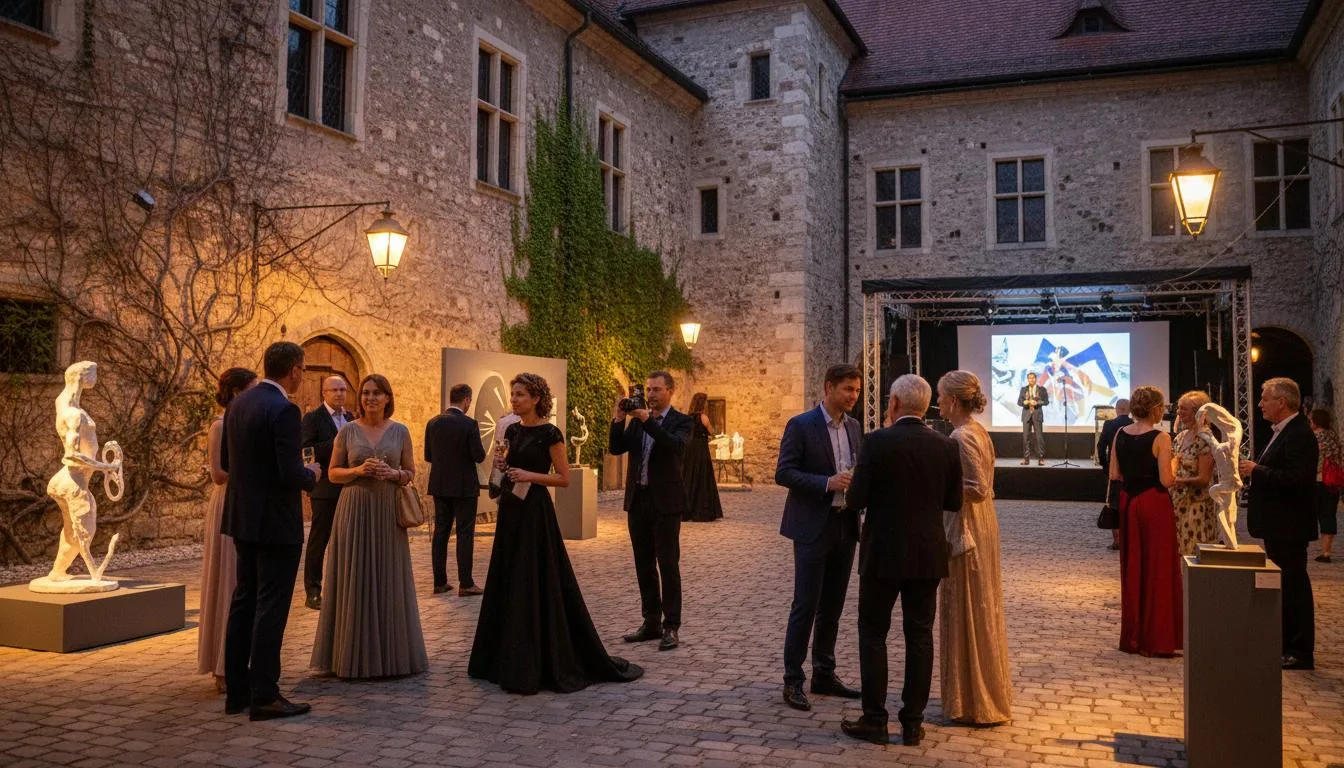
Opening Ceremony
The opening of Point de Vue on 27 May 2025 was a landmark cultural event in the Vipava Valley. The ceremony featured speeches from distinguished guests:
- Matjaž Bajc — Deputy Mayor of the Municipality of Ajdovščina
- Mija Lorbek — CEO of GO! 2025
- Tina Ponebšek — CEO of Pilon Gallery
- Klavdija Figelj — GO! 2025 project curator
Three of the four artists (Pogačnik, Bavčar, and Cunoldi Attems) were present at the opening, while Veno Pilon's spirit was felt through the animation that illuminated the castle walls — a magical moment that merged past and present in a celebration of borderless culture.
About GO! 2025
GO! 2025 represents a historic first: the first ever borderless European Capital of Culture, jointly held by Nova Gorica (Slovenia) and Gorizia (Italy). Under the slogan "Go! Borderless", the programme explores the concept of borders from multiple dimensions — celebrating the shared heritage, culture, and future of these two intertwined cities.
The year-long programme features over 800 events spanning exhibitions, parades, opera, dance, music, theatre, and cultural conferences. Running from 8 February to 31 December 2025, GO! 2025 is not merely a cultural festival but a laboratory for the future of Europe — demonstrating how culture can heal historical divisions and build new cross-border identities.
Other notable projects include the EPICentre (a cross-border participatory space exploring 20th-century history), the Borderless Body dance ensemble, the main exhibition dedicated to world-renowned painter Zoran Mušič, and the R.o.R Festival of contemporary intermedia art.
Visitor Information
Dates
27 May 2025 – 31 December 2026
Venue
Grad Vipavski Križ (Attems Castle)
Vipavski Križ 6a, 5270 Ajdovščina
Admission
Free and open to the public
Curator
Klavdija Figelj
Organisers
GO! 2025 European Capital of Culture
Pilon Gallery Ajdovščina
How to Get There
Vipavski Križ is located in the Vipava Valley, approximately 10 km from Ajdovščinaand 30 km from Nova Gorica. The castle sits at the top of the historic hill town. There is a parking area at the base of the hill, and visitors can walk up through the charming medieval streets.
Opening Hours
The exhibition is open at all times and is completely free — visitors are welcome to explore the castle ruins and artworks during daylight hours.
What to See Nearby
- Capuchin Monastery — a precious library with manuscripts and artworks (guided tours by appointment)
- Parish Church of St Cross — ornate baroque interior with intricate carvings
- Castle Cellar — hosts cultural events and wine tastings
- Zelèn Wine Festival — annual June celebration of local wines
- Pilon Gallery Ajdovščina — permanent collection of Veno Pilon's works
Moments & Views
Vipavski Križ Castle
Castle courtyard
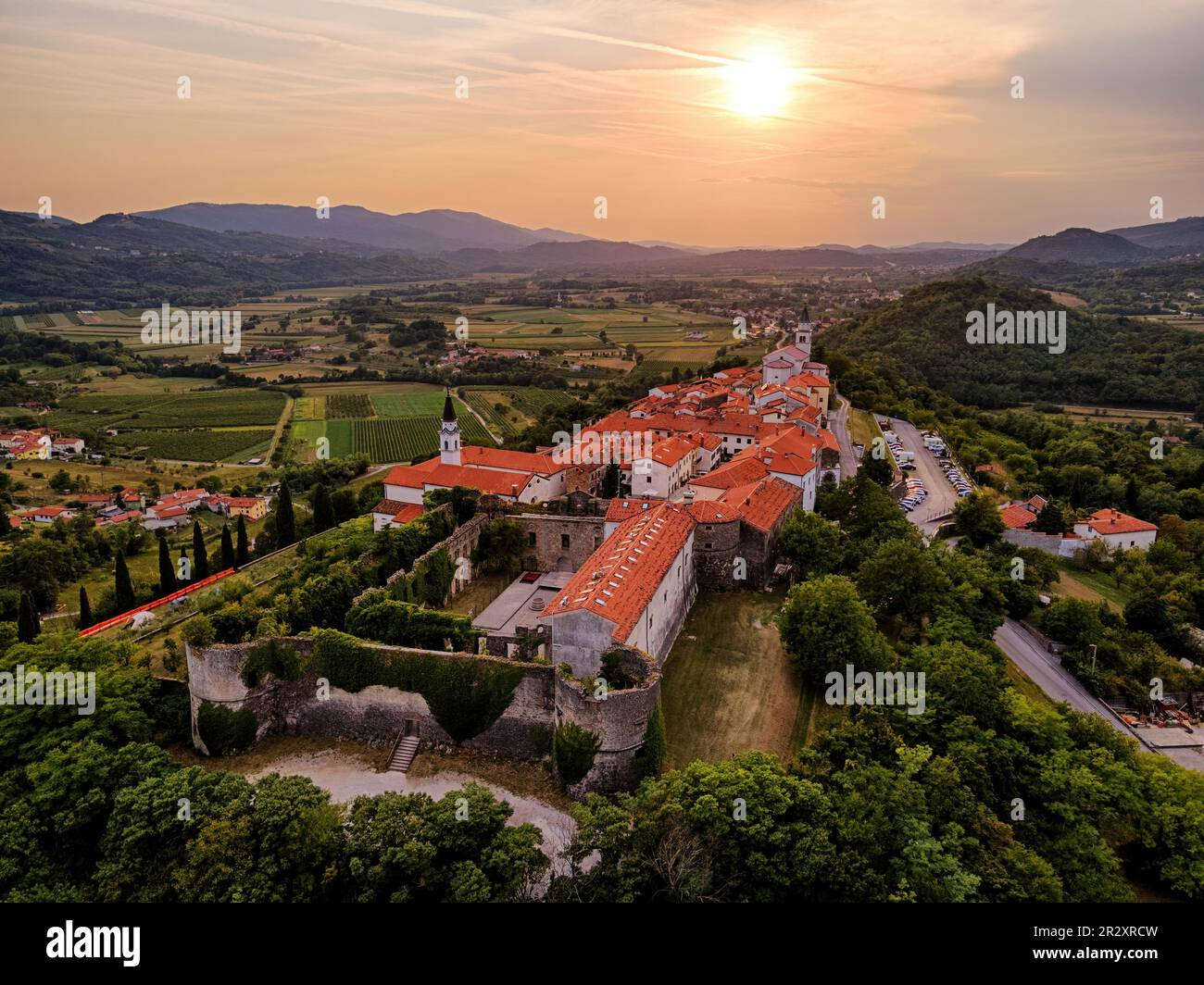
Sunset over the town
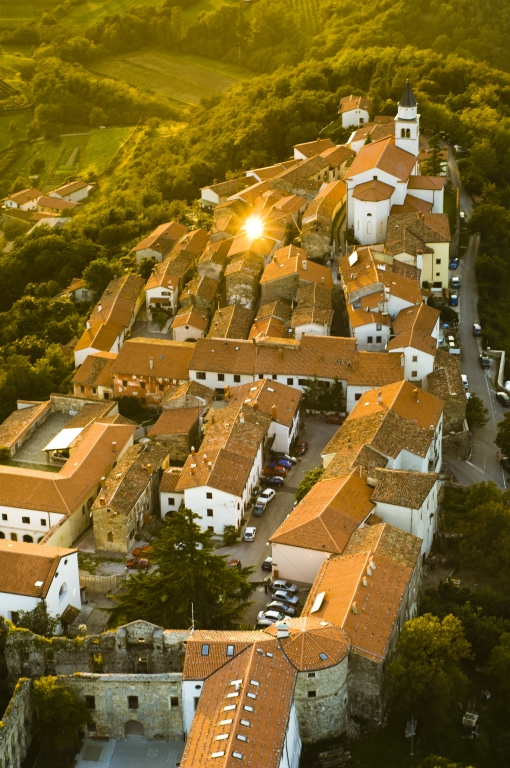
Vipava Valley landscape
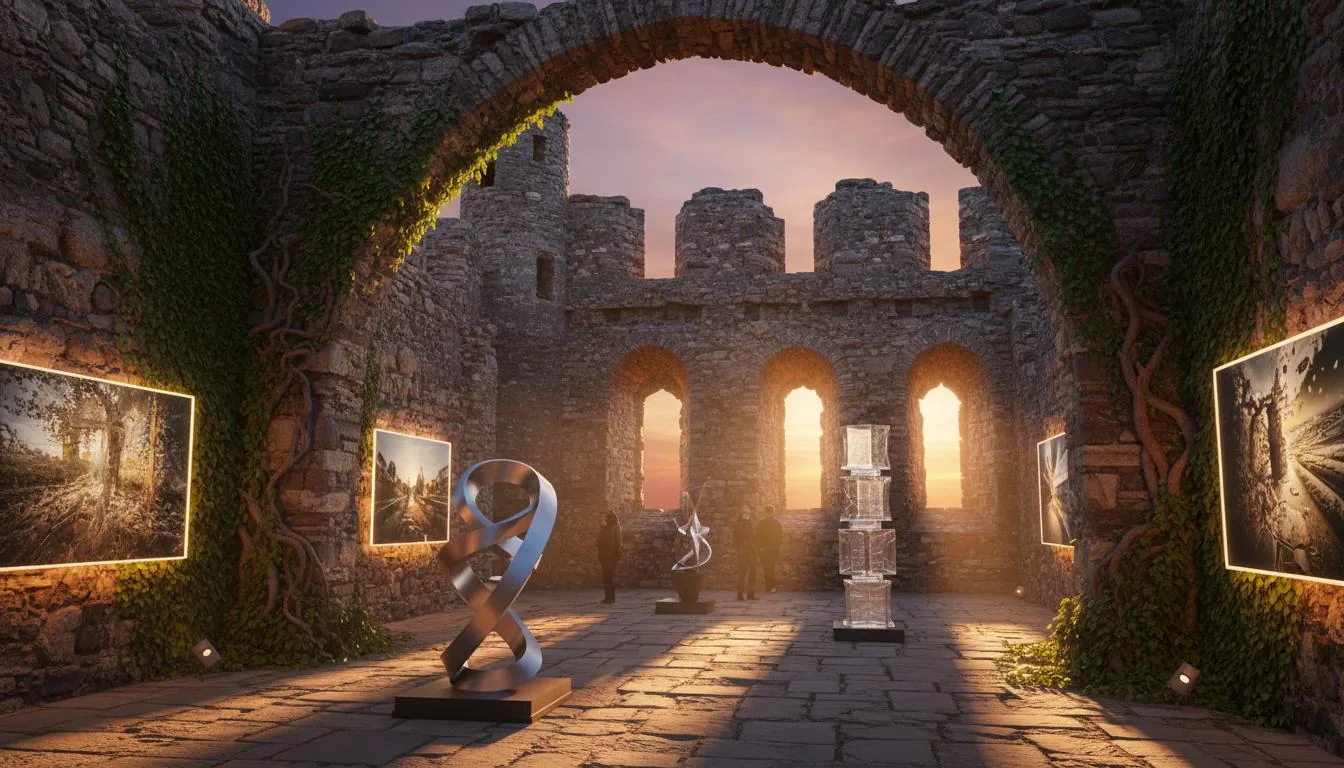
Exhibition atmosphere
Opening night
Point de Vue / Gledišče — A Living Symbol
The exhibition Point de Vue is far more than an art installation in a historic setting. It is a living symbol of what GO! 2025 represents: the power of culture to transform abandoned spaces, to bridge past and future, and to connect local identity with European consciousness.
Standing in the castle ruins, surrounded by artworks that speak of vision, memory, and place, visitors are invited to look outward across the Vipava Valley and inward toward their own perspective. The name itself —Point de Vue / Gledišče — encapsulates this dual invitation: to see the view, and to consider the viewpoint.
In a Europe where borders remain a contested reality, this exhibition in a ruined castle on a Slovenian hilltop offers a quiet but powerful message: that art can transform emptiness into meaning, that abandoned places can be reborn, and that four different artistic voices can create a harmony that transcends time, place, and individual perspective.