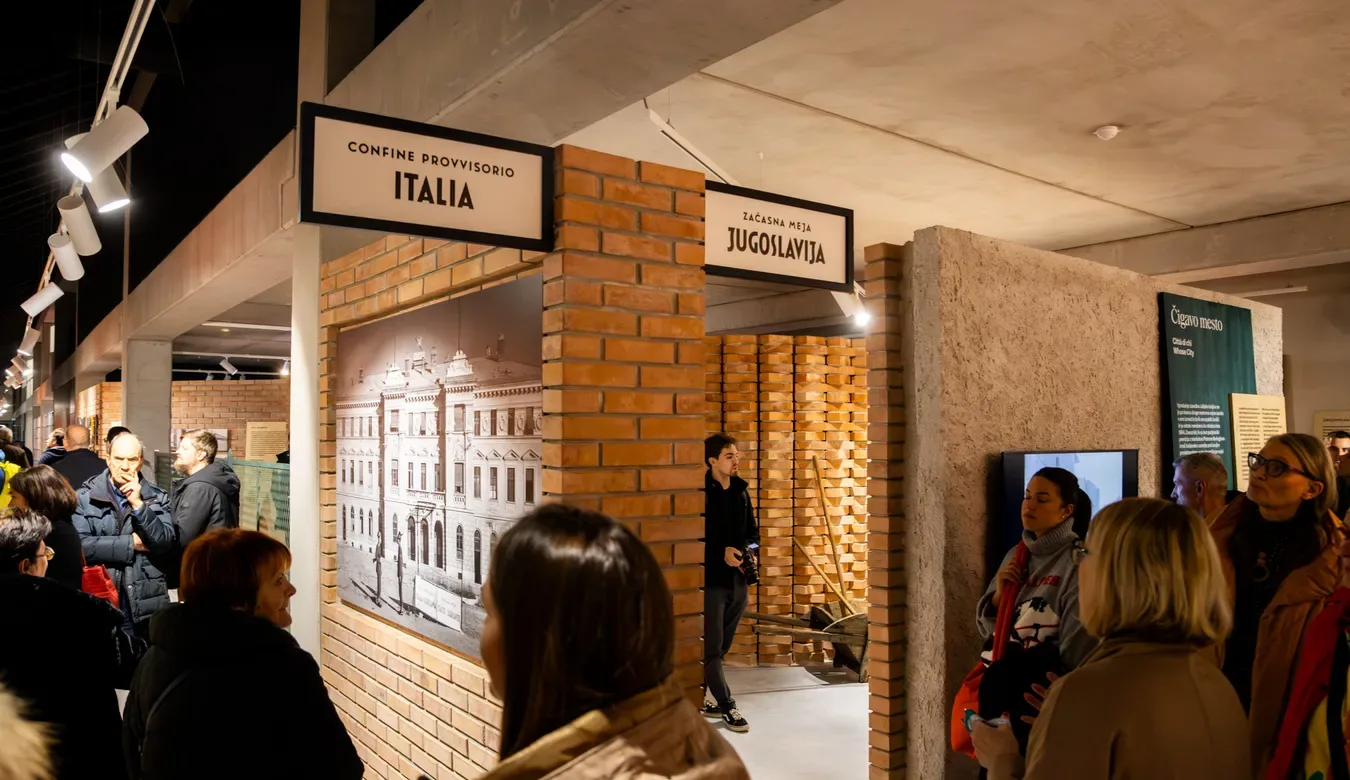
The opening of the "City on the Border" exhibition at EPIC, November 26, 2025. Visitors explore the immersive exhibition space in the former railway warehouse. © Municipality of Nova Gorica
City on the Border (Mesto na meji) is a groundbreaking permanent exhibition curated by Dr. Kaja Širok, presenting the complex history of the Goriška region through the personal and collective stories of its inhabitants. Located at the EPIC Interpretation Centre (European Platform for the Interpretation of the 20th Century) in Nova Gorica, this exhibition offers a deeply human and emotional perspective on the events that shaped this unique borderland before, during, and after the two world wars.
Quick Information
Location: EPICenter, Kolodvorska pot 10, 5000 Nova Gorica, Slovenia
Opening Date: November 26, 2025
Curator: Dr. Kaja Širok (historian, former director of GO! 2025, and ICOM Executive Board member)
Part of: European Capital of Culture 2025 Nova Gorica – Gorizia (GO! 2025)
Exhibition Area: 550 m² in a renovated former railway freight warehouse
About EPIC: A Cross-Border Cultural Hub
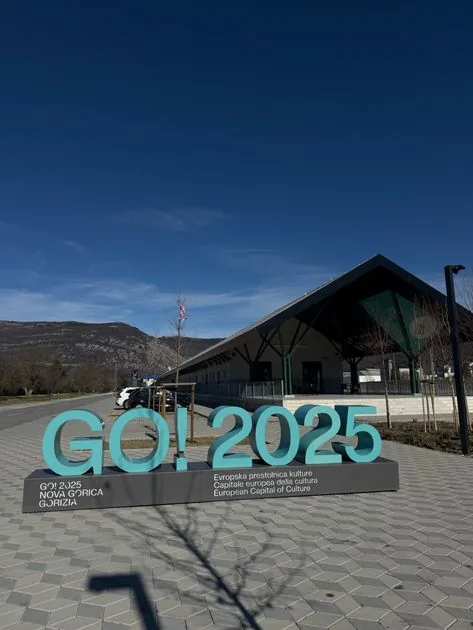
The EPIC centre, located in the renovated former Slovenian Railways warehouse at Kolodvorska pot 10, Nova Gorica. The GO! 2025 European Capital of Culture sign marks this cultural landmark.
EPIC (European Platform for the Interpretation of the 20th Century) is one of the most important flagship projects of the European Capital of Culture 2025 Nova Gorica – Gorizia. This cross-border participatory project is dedicated to the interpretation, study, exchange of views, and understanding of 20th-century history. It addresses historical and cultural challenges while encouraging collaboration and open dialogue between communities on both sides of the border.
The EPIC Interpretation Centre is housed in a thoughtfully renovated former railway freight warehouse located right next to the historic Nova Gorica railway station, just steps from Europe Square (Piazza della Transalpina) – the symbolic heart of the cross-border city. The building's transformation from an industrial storage facility into a vibrant cultural centre represents a powerful metaphor: just as goods once flowed through this warehouse, stories and memories now flow through its exhibition spaces.
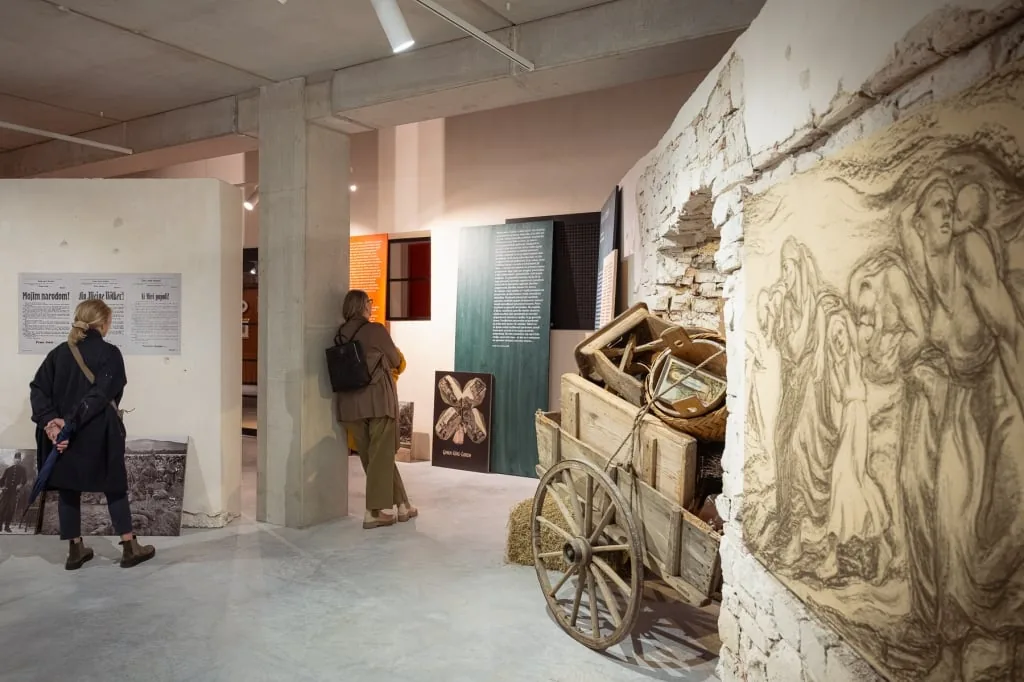
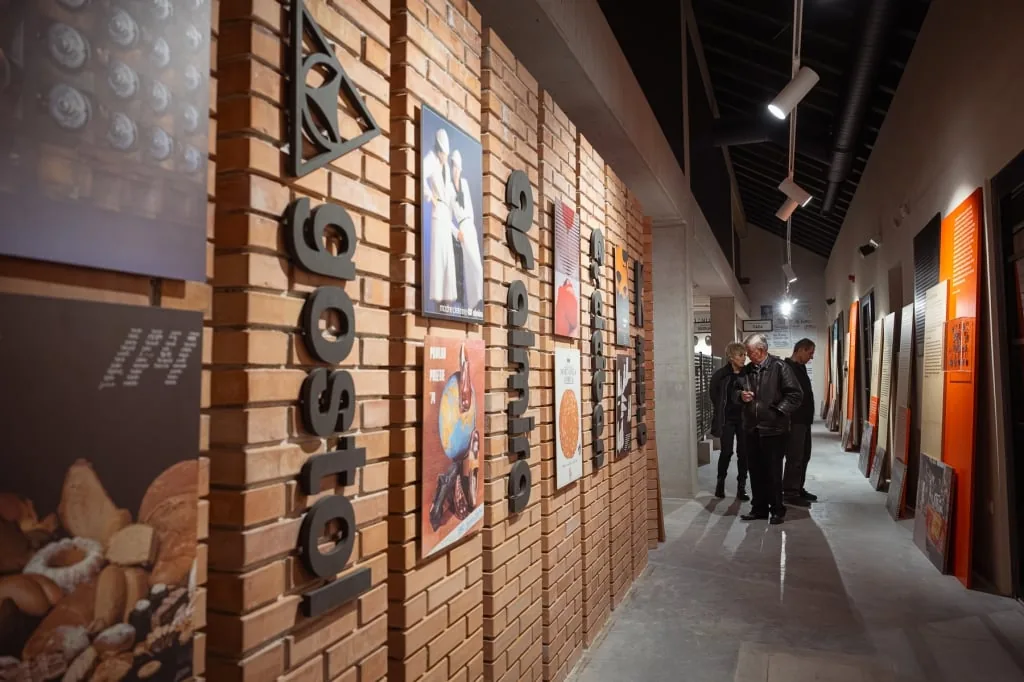
Interior views of the EPIC exhibition space, where original artifacts, archival photographs, and immersive installations bring the region's history to life. © Vipava Valley Tourism
The centre features a multifunctional hall with nearly 200 seats for conferences and events, a gallery for temporary exhibitions, the permanent "City on the Border" exhibition, and the EPIC Café – a unique gathering space where visitors can reflect on their experience. The renovation encompassed 2,340 m² of interior space and more than 3,200 m² of outdoor areas, with a total investment of €6.38 million, co-financed by the EU, the Slovenian state, and the Municipality of Nova Gorica.
The Exhibition: Seven Periods of a Turbulent Century
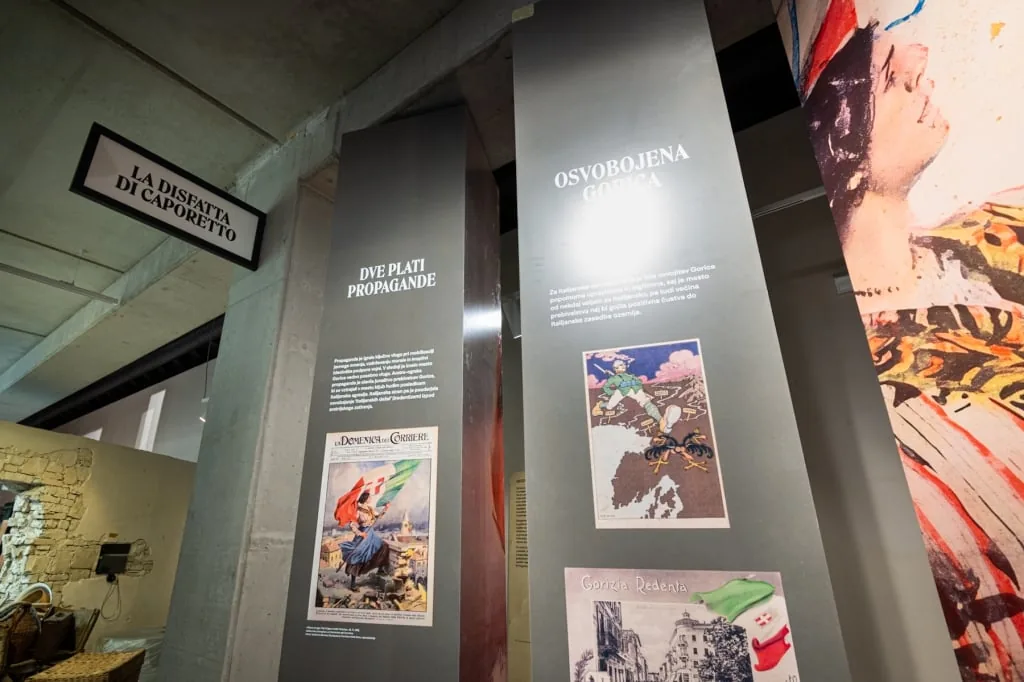
Detailed exhibition displays featuring archival documents, propaganda materials, and personal stories from both sides of the Italy–Yugoslavia border. © Vipava Valley Tourism
The "City on the Border" exhibition is conceived as a dynamic, non-linear journey through seven historical periods of the turbulent 20th century. Rather than presenting a single, conclusive narrative, the exhibition remains open to reinterpretation and expansion – reflecting the living, evolving nature of history itself. The architectural design, developed by Svet vmes with visual design by AA + Studio Kruh, does not function as a neutral backdrop but as an active medium of historical storytelling.
The exhibition concept draws directly from the typology of the warehouse as a space of accumulation, transience, and flow. The former storage of goods is translated into a repository of stories, materials, and historical traces. Through a carefully curated selection of materials, light, sound, and media, historical content is embedded in the space itself. Photographs, film footage, audiovisual projections, interactive elements, and numerous original artifacts – alongside others recreated from archival sources – are not treated as standalone exhibits, but as integral components of a holistic spatial composition.
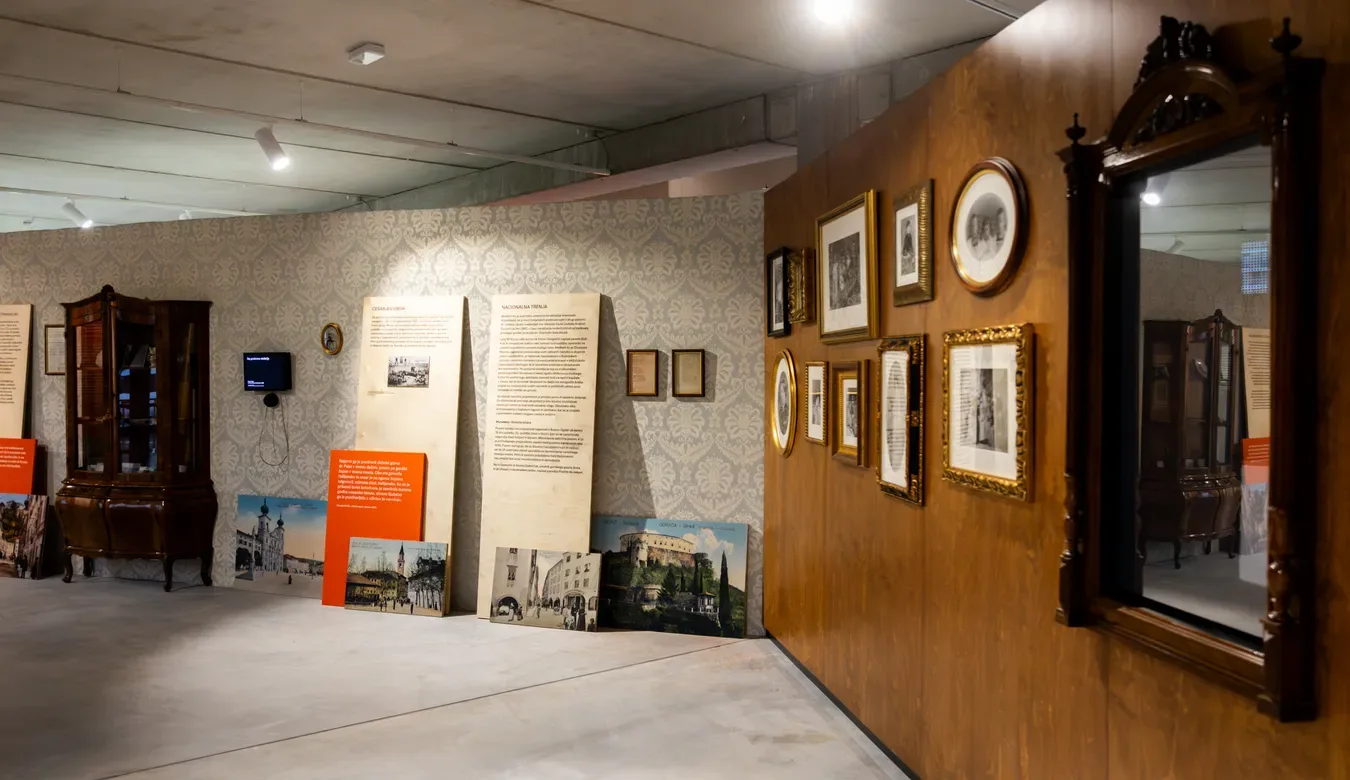
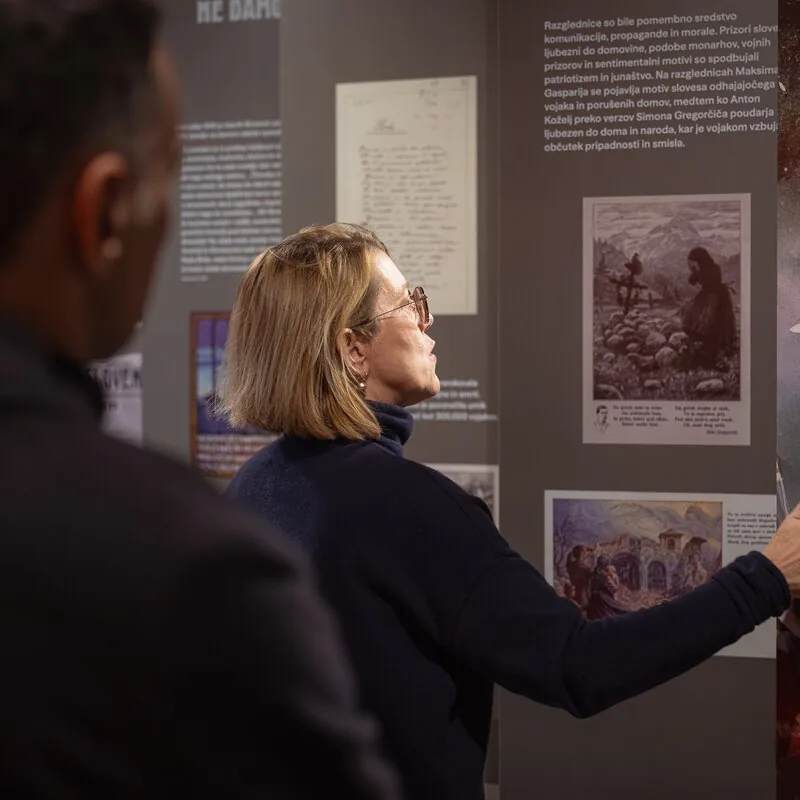
Left: The exhibition's domestic interior section recreates the atmosphere of family life in the Goriška region. Right: A visitor explores the detailed historical panels and personal stories. © Municipality of Nova Gorica / GO! 2025
Key Themes and Narratives
The exhibition presents a multi-layered interpretation of history that moves beyond traditional national narratives. It explores themes of identity, borders, and shared heritage, offering visitors a human and emotional perspective on the events that shaped the region. Key historical moments are spatially juxtaposed, enabling the simultaneous perception of different perspectives and experiences of life along the border.
The linear flow of the exhibition is occasionally interrupted by smaller, introspective "spaces within spaces" that function as acoustic, lighting, and sensory niches. These haptically rich environments shift the visitor's understanding of history from a discursive to an experiential level. The stylistically distinctive typography used for prominent texts is designed in the spirit of the respective historical periods, adding another layer of immersive storytelling.
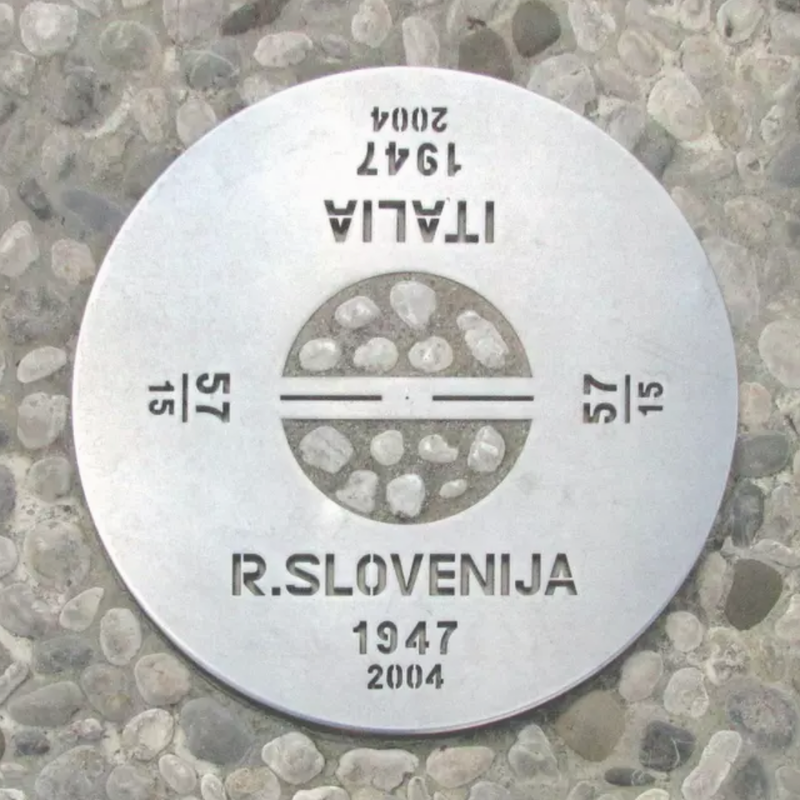
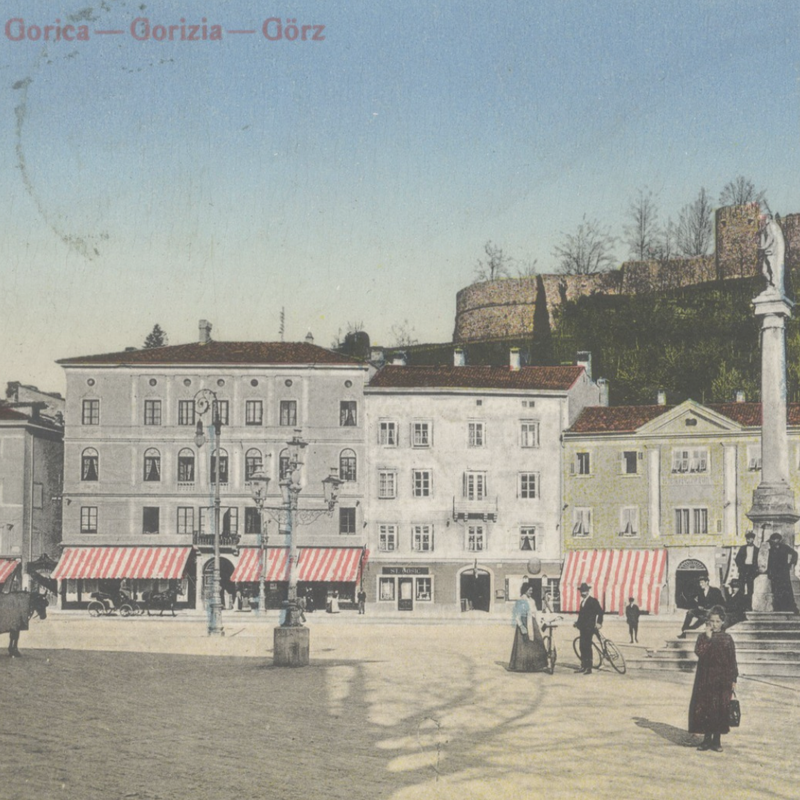
Left: The border marker between Italy and the Republic of Slovenia (1947–2004) at Europe Square. Right: A historical postcard of Gorizia (Gorizia – Görz), showing the multi-layered identity of the region.
A Participatory Museum Experience
What sets this exhibition apart is its participatory approach. The final section of the exhibition actively invites visitors to contribute by sharing their own reflections, personal items, and stories, thus co-creating a living cultural memory of Goriška. This approach embodies EPIC's mission to promote dialogue on identity and common heritage, with local people actively involved in shaping its content.
Dr. Kaja Širok: The Vision Behind the Exhibition
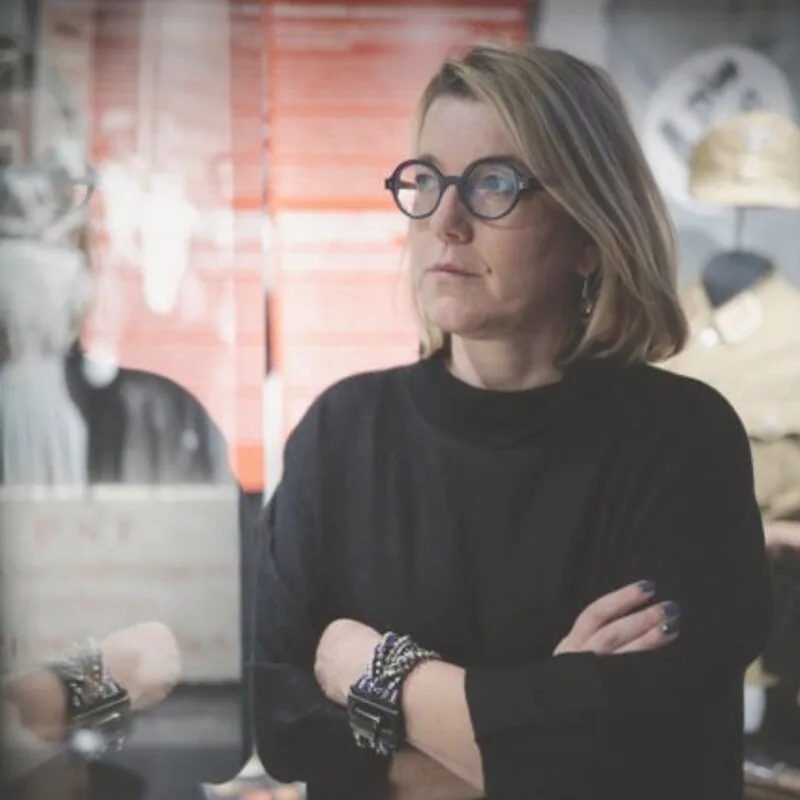
Dr. Kaja Širok, curator of the EPIC project and the "City on the Border" exhibition. © Uroš Hočevar (Delo)
The exhibition is the brainchild of Dr. Kaja Širok, one of Slovenia's most distinguished historians and museologists. Her extensive credentials include:
Academic Background
PhD in Cultural History from the University of Nova Gorica (2009), with research focused on contested memories and identity-making in the border area between Italy and Slovenia.
Professional Roles
Research fellow at the Faculty of Arts, University of Ljubljana; former director of the National Museum of Contemporary History of Slovenia (2011–2021); director of GO! 2025 (2022).
International Recognition
Member of the ICOM Executive Board since 2022; President of ICOM Slovenia; member of the Academic Committee of the House of European History in Brussels; board member of ETHCOM and ICMEMO.
Government Service
State Secretary for Culture in the Slovenian Prime Minister's Office (2022–2024), where she championed participatory, responsible, and inclusive cultural environments.
Dr. Širok's work focuses on museums and memory studies, with special attention to the creation of national historical narratives related to identity formation, contested memories, revisionism, and reinterpretations of history. Her vision for EPIC was to create not just a museum, but a space for social change – a participatory environment where history is not merely displayed but continuously co-created by the community.
- Dr. Kaja Širok, ICOM Executive Board
The exhibition was developed in collaboration with a distinguished team including historian Dr. Marko Klavora, Italian historian Dr. Alessandro Cattunar, and documentary filmmaker Anja Medved. The architectural design was prepared by Svet vmes (Ana Kreč, Jure Hrovat, Žan Majetič), with exhibition graphic design by Anja Delbello, Aljaž Vesel (AA), and Gregor Makovec (Studio Kruh).
The Historical Context: A Region Defined by Borders
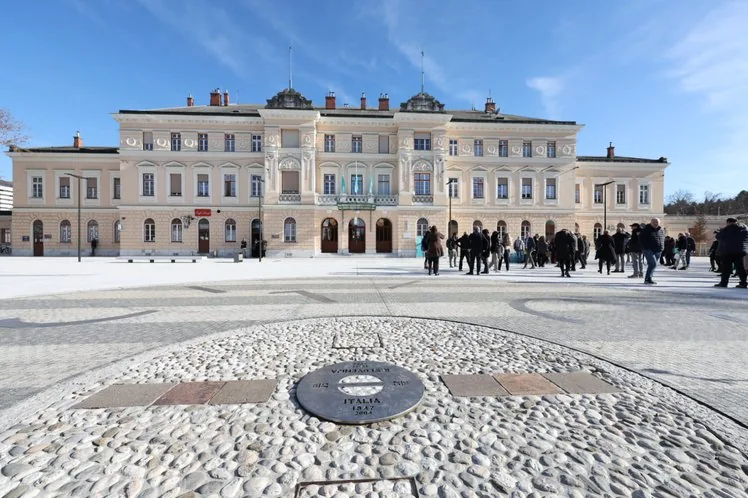
The renovated Europe Square (Piazza della Transalpina) with the historic Nova Gorica railway station and the border marker between Italy and Slovenia. © EGTC GO
To fully appreciate the "City on the Border" exhibition, one must understand the unique historical context of the Gorizia region. The Goriška region has been a historical intersection of cultures, languages, and identities for centuries, experiencing the full weight of European geopolitical upheavals.
A Timeline of Transformation
The region's history stretches back to the Patriarchs of Aquileia and the Counts of Gorizia in the 11th century, followed by four centuries of Habsburg rule (from the 15th century), a brief Napoleonic interlude (1809–1813), and annexation to Italy after World War I under the Treaty of Rapallo (1920).
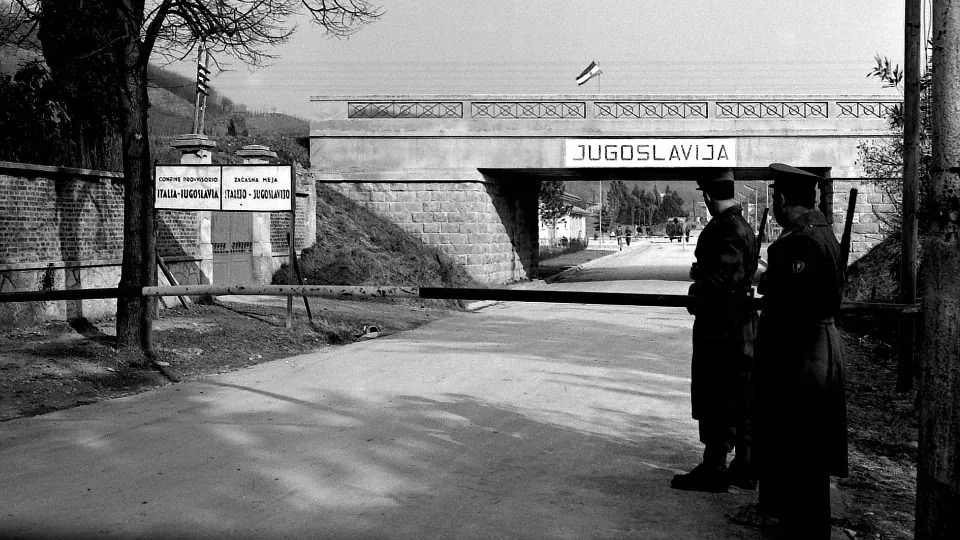
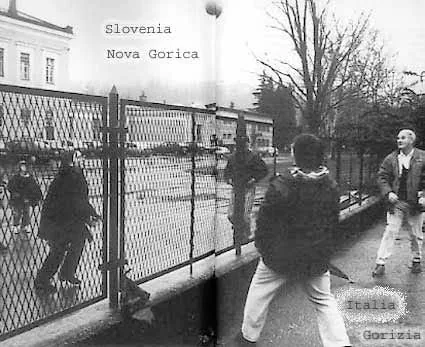
Left: A historical border crossing between Italy and Yugoslavia, with guards at the barrier. Right: The "Gorizia Wall" – the border fence that once divided Europe Square, separating families and communities. © Museum of Gorizia / Medium
The most dramatic transformation came after World War II. The Paris Peace Treaty of February 10, 1947 awarded the town of Gorizia to Italy while most of the surrounding Goriška hinterland – including Solkan, Šempeter, and many other settlements – went to the newly formed Socialist Federal Republic of Yugoslavia. This arbitrary division cut deeply into people's lives, separating families, friends, and communities.
With Gorizia now on the "other side" of the border, construction of a new city called Nova Gorica began in 1948. It was an ideological project as much as an urban development – a triumphal socialist statement overseen by the Yugoslav authorities. Between 1947 and 1955, the border was largely impassable. Even after it gradually opened, people needed special passes to cross. This regime lasted until December 21, 2007, when Slovenia joined the Schengen Area and the border became freely passable.
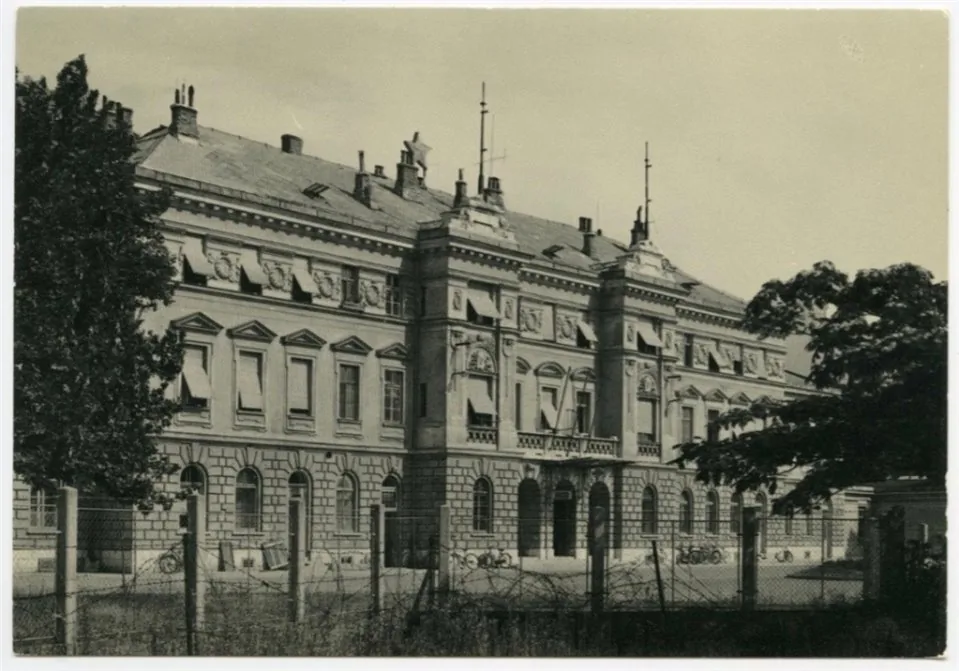
The Gorizia Montesanto railway station (now Nova Gorica railway station) with the provisional border sign between Italy and Yugoslavia in the post-war period. © Fondazione Carigo
Visit Information
Opening Hours
Closed on Mondays and public holidays.
For organised groups, visits outside opening hours are possible by prior arrangement: epic@go2025.eu
Admission
| Category | Price |
|---|---|
| Adults | €8 |
| Students, pupils | €5 |
| Seniors | €5 |
| Family ticket (2 adults + 2 children) | €18 |
| Guided tour (Slovenian/Italian/English) | Additional €3–5 |
| FREE ENTRY: First Sunday of each month, Slovenian Cultural Holiday (Feb 8), Europe Day (May 9), Museum Night (Jun 20), Happy Day of Culture (Dec 3). Also free for preschool children, unemployed, disabled persons and companions, ICOM/ICOMOS/SMD members, press, and licensed guides. | |
Guided Tours Schedule
Guided tours are led by Dr. Kaja Širok herself, offering visitors unparalleled insight into the exhibition's creation and themes. The number of places is limited – advance registration is recommended at epic@go2025.eu.
Thursday
14:00 - Slovenian
16:00 - Slovenian
Friday
11:00 - Slovenian
13:30 - Italian
15:30 - Slovenian
Saturday
10:30 - Slovenian
12:30 - English
14:30 - Italian
16:30 - Slovenian
Sunday
10:30 - Slovenian
12:30 - Slovenian
14:30 - Italian
16:30 - Slovenian
Getting There
EPIC is located at Kolodvorska pot 10, Nova Gorica, right next to the Nova Gorica railway station and Europe Square – the symbolic meeting point of Slovenia and Italy. The centre is easily accessible:
By Train
Nova Gorica railway station is directly adjacent to EPIC. Regular connections from Ljubljana, Sežana, and across the border from Gorizia.
By Car
Parking is available in the vicinity. From the A34 motorway, take the Nova Gorica exit and follow signs to the city centre/railway station.
On Foot
From Europe Square/Trg Evrope, EPIC is just a 2-minute walk along Kolodvorska pot. The centre is fully accessible for people with mobility impairments.
Cross-Border Access
From Gorizia, Italy, simply walk across Europe Square (Piazza della Transalpina) – the open border makes EPIC easily accessible from both cities.
Why Visit City on the Border?
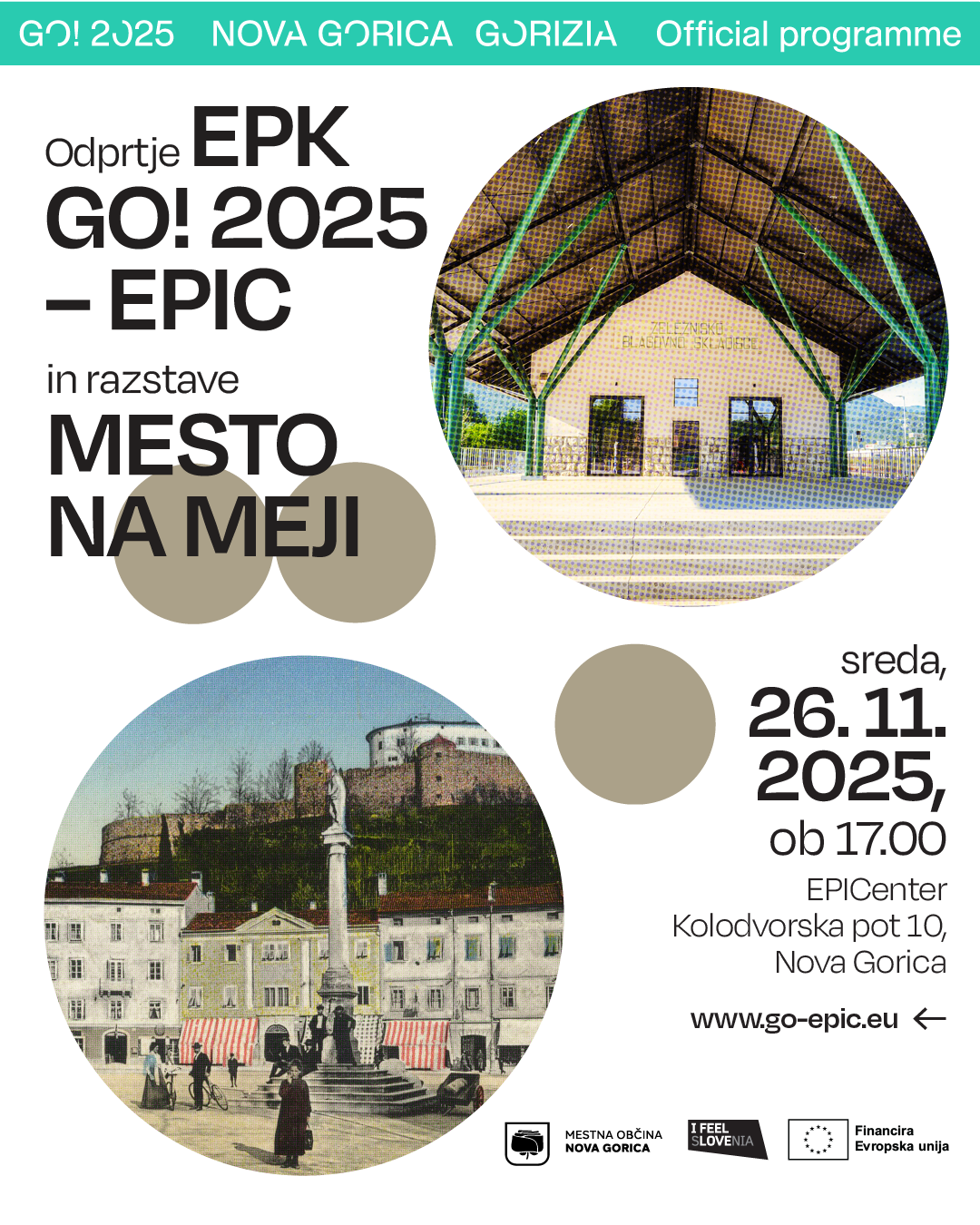
The official opening poster for EPIC and the "City on the Border" exhibition, November 26, 2025. © GO! 2025
The "City on the Border" exhibition at EPIC is more than a museum visit – it is an immersive journey into the soul of a region that has experienced some of the most significant events of modern European history. Here's why it deserves a place on your itinerary:
A Unique Historical Perspective: The exhibition presents history through the eyes of those who lived it – ordinary people whose lives were shaped by war, displacement, border changes, and political upheaval. This bottom-up approach offers a refreshing alternative to traditional top-down historical narratives.
An Architectural Achievement: The transformation of a former railway warehouse into a world-class interpretation centre is itself a story worth experiencing. The building's industrial heritage is preserved and celebrated, creating a powerful link between the region's economic past and its cultural future.
A Symbol of European Unity: EPIC stands as a testament to what can be achieved when former adversaries choose cooperation over division. As the first cross-border European Capital of Culture, Nova Gorica and Gorizia are showing Europe that borders can be bridges.
An Active Participant in History: Unlike traditional museums where visitors are passive observers, EPIC invites you to become part of the story. By sharing your own reflections and stories, you contribute to a living archive of cultural memory.
Expert-Led Tours: The opportunity to experience guided tours led by Dr. Kaja Širok herself – one of Europe's leading museum professionals – is a rare privilege that adds extraordinary depth to the visit.
Plan Your Visit to EPIC
Address: Kolodvorska pot 10, 5000 Nova Gorica, Slovenia
Website: www.go-epic.eu
Email: epic@go2025.eu
Tel: +386 (0)5 330 10 00
The exhibition is part of the official programme of the European Capital of Culture 2025 Nova Gorica – Gorizia. The project is co-financed by the Republic of Slovenia and the European Union from the European Regional Development Fund.
This article was created as part of the Visit Nova Gorica tourism portal. For more events and attractions in the region, explore our Events & Festivals section.