45th International Violin Competition RODOLFO LIPIZER PRIZE
Sep 5 - Sep 13, 2026
Kulturni center Lojze Bratuž, GORIZIA
About the Competition
The Rodolfo Lipizer International Violin Competition stands as one of the most prestigious and enduring violin competitions in the world, held annually in Gorizia, Italy — a city steeped in musical heritage at the crossroads of Italian, Slovenian, and Austro-Hungarian cultural traditions. Founded in 1982 and named after the celebrated Gorizian violinist, composer, conductor, and pedagogue Rodolfo Lipizer (1895–1974), the competition has for over four decades served as a vital launchpad for young violinists seeking international recognition. The 45th edition of this storied competition will take place from 5 to 13 September 2026, once again welcoming extraordinary young talent from across the globe to the Kulturni center Lojze Bratuž theatre (Teatro Lojze Bratuž) in Gorizia.
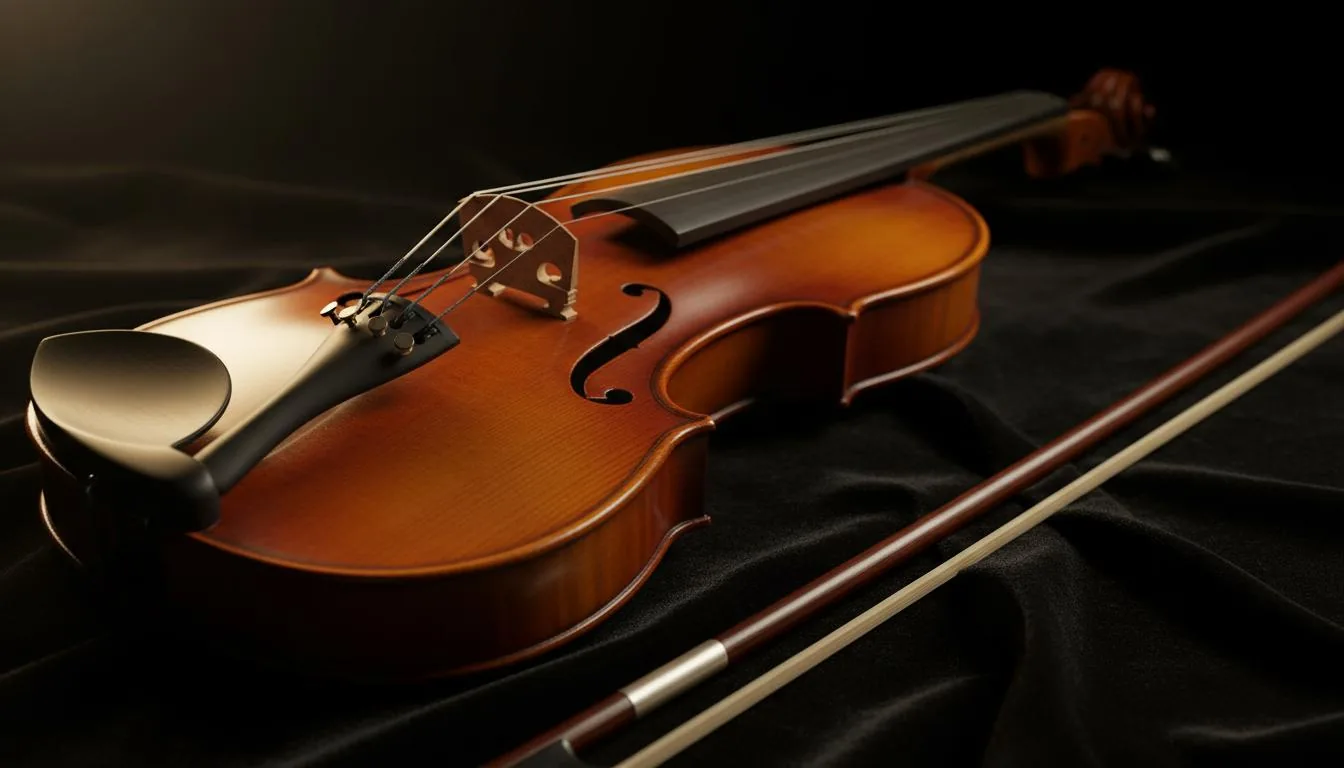
A beautiful antique violin on dark velvet with warm golden light — representing the artistry of the Lipizer Competition
The competition is organized by the Associazione Culturale "Maestro Rodolfo Lipizer" ONLUS, a non-profit cultural association dedicated to preserving and promoting Lipizer's musical legacy. Under the leadership of its founder, Professor Lorenzo Qualli, the competition has maintained an unwavering commitment to artistic excellence, attracting violinists of all nationalities who must be born after a specific date (typically setting the maximum age at 32 years). The competition operates under the high patronage of UNESCO, the Italian Ministry of Foreign Affairs, and the Italian Ministry of Culture, and receives support from the Autonomous Region of Friuli Venezia Giulia, the Municipality of Gorizia, and the Fondazione Cassa di Risparmio di Gorizia (CARIGO). Since 1985, the competition has been a proud member of the World Federation of International Music Competitions (WFIMC) based in Geneva, placing it among the most internationally recognized musical competitions alongside the Queen Elisabeth Competition, the Tchaikovsky Competition, and the Chopin Competition.
What distinguishes the Lipizer Competition from many other contests is its rigorous three-round structure that thoroughly tests competitors across a comprehensive repertoire spanning Baroque to contemporary music, its requirement that contestants master Lipizer's own technically demanding compositions for solo violin, and its unique tradition of commissioning a new composition each year specifically for the competition — written by the president of the previous year's jury. This ensures that every edition presents fresh artistic challenges and contributes new works to the violin repertoire. The competition also provides free streaming broadcasts of all rounds via its official YouTube channel, making it accessible to a global audience, while the final stages are broadcast on RAI (Italian Radiotelevision Network), further amplifying its reach and prestige.
Rodolfo Lipizer — The Man Behind the Prize
Early Life and Musical Formation (1895–1920)
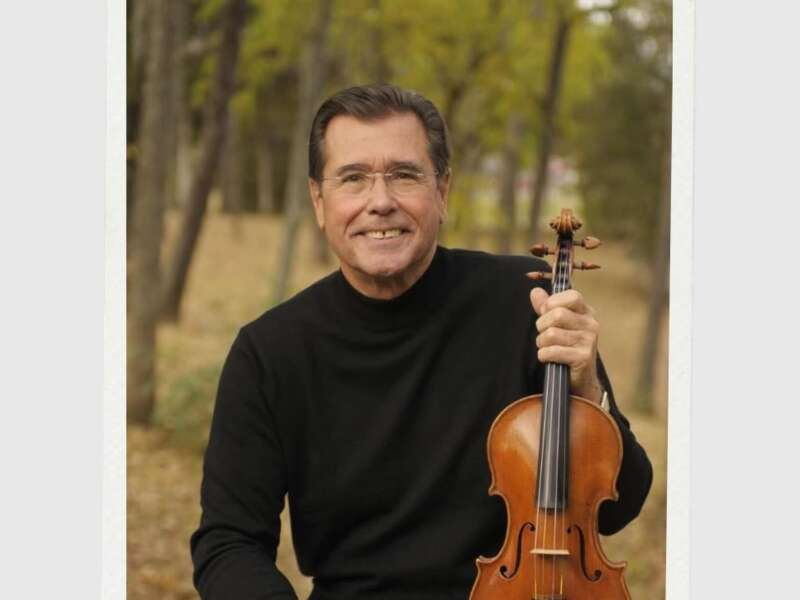
Rodolfo Lipizer — portrait of the renowned Gorizian violinist, composer, and pedagogue (1895–1974)
Rodolfo Lipizer was born on January 16, 1895, in Gorizia, then part of the Austro-Hungarian Empire, into a family with deep musical roots. His maternal great-grandfather, Antonio Pelizon (1763–1850), was a renowned luthier whose violins were described by the famous musicologist Wilhelm Joseph von Lütgendorff as "real works of art" dating back to the Amati school despite their originality. This lineage of musical craftsmanship profoundly shaped Lipizer's destiny. After completing his diploma at the KK Staatsoberrealschule (the imperial state school) in Gorizia, Lipizer received his foundational violin training from masters A. Lucarini and E. Bovi at the School of Music of Gorizia, a branch of the Trieste Conservatory.
The pivotal chapter of Lipizer's musical education unfolded in Vienna, the imperial capital that served as a crucible for artistic talent in the early 20th century. During the years 1914–1915, he attended the Staatliche Hochschule für Musik, first studying violin under Professor Hugo von Steiner (violist of the celebrated Rosé Quartet) and subsequently under Professor Gottfried Feist, himself a student of the legendary pedagogue Otakar Ševčík. In the winter semester of 1916–1917 and again in the summer semester of 1918, Lipizer expanded his intellectual horizons at the University of Vienna, attending courses in the Faculty of Philosophy and Musical Sciences under Guido Adler, one of the founders of Austrian historicist musicology, and Egon Wellesz, a favored pupil of Arnold Schoenberg. He completed these studies with honors, earning recognition for both his artistic and scholarly achievements.
Following the upheaval of World War I and the redrawing of borders, Gorizia became Italian territory in 1918. Lipizer returned home and, in 1920, revalidated his violin diploma at the Conservatorio "Giuseppe Verdi" in Milan. But his thirst for knowledge was not yet satisfied: in 1921, he returned to Vienna to attend masterclasses in violin and composition with J. Rudolf Marx and Eusebius Mandiczewski — the latter a close friend of Johannes Brahms — and in conducting under Franz Schalk, a disciple of Anton Bruckner, at the Academy for Music and Performing Arts (Academie für Musik und darstellende Kunst).
Career as Violinist, Conductor, and Pedagogue
With this formidable training combining the Italian and Viennese schools, Lipizer launched a distinguished career as both a solo violinist and chamber musician. In 1924, he founded the "Friends of Music" society ("Società Amici della Musica") in Gorizia, through which he organized and directed 17 concerts, bringing world-class music to his hometown. In 1927, he won a competition for the permanent conductor position of the Opatija Symphony Orchestra in present-day Croatia, where he conducted 28 concerts over the following years.
From 1930 to 1961, Lipizer served as director of the Municipal Institute of Music in Gorizia, a role in which he profoundly shaped the city's musical culture. He organized the "Musical Saturdays" concert series and founded the Gorizia Symphony Orchestra, which he conducted in performances with some of the era's most celebrated soloists, including Pina Carminelli, Gioconda De Vito, Albertina Ferrari, Carlo Vidusso, Aldo Priano, Nino Rossi, Jan Kubelík, Marcel Tyberg, Ornella Orlandini, Alessandro Costantinides, Giannino Carpi, Silvano Massoni, and Ezio Dal Pino. For thirteen consecutive years until his death, he served as president of the "C.A. Seghizzi" International Choral Singing Competition, and he held leadership positions in the National Union of Musicians and the Academy of Contemporary Music.
Lipizer's dedication to teaching was equally profound. Drawing upon his artistic formation and innate creative genius, he composed fundamental pedagogical works for the violin, most notably his magnum opus "La Tecnica Superiore del Violino" (The Advanced Violin Technique). Musicologists have acclaimed these studies as surpassing even the standard-bearers Otakar Ševčík and Carl Flesch in their technical consistency, while possessing "an authentic musical value, testimony of his artistic completeness." The Study No. 18 — Variations from this collection remains a cornerstone of the competition that bears his name, requiring contestants to demonstrate mastery of Lipizer's original bowings and fingerings.
Legacy and Death
Rodolfo Lipizer passed away in his beloved Gorizia on June 8, 1974, leaving behind a legacy that extends far beyond his compositions and performances. His daughter, Professor Elena Lipizer, and his descendants have remained deeply involved with the competition, offering special prizes in his memory. Lipizer's influence as a pedagogue also extended to unexpected spheres — among his students was Ljubka Šorli (1910–1993), the renowned Slovenian writer, poet, teacher, and anti-fascist, demonstrating the breadth of his cultural impact.
The competition founded in his honor eight years after his death has ensured that Lipizer's name continues to resonate in concert halls around the world. Winners of the first prize traditionally perform on Lipizer's own violin at the closing ceremony of the Finalists' Concert, creating a direct physical and spiritual connection between the maestro and each new generation of laureates.
Competition Structure and Format
The Three-Round System

Antique violin sheet music with a bow — representing Lipizer's "La Tecnica Superiore del Violino" and the competition's demanding repertoire
The Rodolfo Lipizer International Violin Competition employs a rigorous three-stage format designed to comprehensively evaluate every aspect of a violinist's artistry:
| Round | Name | Duration | Format | Key Requirements |
|---|---|---|---|---|
| First | Eliminatory (Eliminatorie) | ~15–20 min per competitor | Solo violin + piano | Lipizer Study No. 18 Variations; J.S. Bach solo work; Mozart concerto 1st movement; Sivori Caprice |
| Second | Semifinal (Semifinale) | 40–50 min per competitor | Solo + violin & piano | Paganini Caprice; Commissioned contemporary piece; Romantic/virtuoso sonata; Additional virtuoso piece |
| Third | Final (Finale) | ~30 min per finalist | Violin & orchestra | Romantic concerto; 20th-century/contemporary concerto; Virtuoso piece |
The first round (eliminatory) demands that competitors perform from memory (except for the sonata and the commissioned piece) and demonstrate technical command across Baroque, Classical, and virtuoso repertoire. All contestants must tackle Lipizer's Study No. 18 — Variations with the composer's original bowings and fingerings — a work that has been described as going beyond Ševčík and Flesch in technical demands. They must also perform a movement from a J.S. Bach Sonata or Partita (using Lipizer's own edition, faithfully reconstructed from the autograph manuscript), a first movement and cadenza from a Mozart concerto, and a Sivori Caprice.
The semifinal round expands the repertoire to include a Paganini Caprice for solo violin, the commissioned piece composed specifically for that year's competition, a romantic sonata and virtuoso piece (typically from the 19th century), and increasingly complex works that test the competitor's interpretive depth and stamina over a 40–50 minute program.
The final round is the crowning achievement, where up to six finalists perform with a full symphony orchestra. Traditionally, the competition has collaborated with distinguished orchestras such as the Filarmonica di Arad (Romania), the 'M. Lysenko' Symphony Orchestra of Lviv (Ukraine), and others. Each finalist performs a major Romantic concerto (such as Brahms, Tchaikovsky, Mendelssohn, or Sibelius), a 20th-century or contemporary concerto, and a virtuoso piece — demonstrating their ability to dialogue with a large ensemble and command the stage as a soloist.
The Annual Commissioned Composition
A defining feature of the Lipizer Competition is its commitment to new music. Each year, the president of the previous year's jury composes a new work specifically for the competition, ensuring that every edition introduces a fresh addition to the violin repertoire. Recent examples include:
| Year | Composer | Previous Role | Composition |
|---|---|---|---|
| 2025 | Mario Garuti | President of 2024 Jury | "Daphne Song" (Daphne pursued by Apollo) for violin and piano |
| 2023 | Daniele Zanettovich | President of 2022 Jury | "Variations sopra un Gloria" for solo violin |
| 2007 | Irma Ravinale | — | "Cadenza" for solo violin |
This tradition not only honors contemporary composition but also ensures that competitors must engage with living musical language, interpreting a work that has no established performance history — a true test of musicianship and creative imagination.
Jury Composition
The Lipizer Competition jury is international in composition, typically chaired by an Italian composer and comprising four internationally renowned violinists from different countries. This structure guarantees both musical authority and geographic neutrality. The 2025 (44th edition) jury, for example, was chaired by composer Fabio De Sanctis De Benedictis and included violinists Joshua Epstein (Israel), Marco Fornaciari (Italy), Madlèn Stokić-Vasiljević (Serbia), and Lana Trotovšek (Slovenia). Representatives of the Italian Ministry of Cultural Activities and the World Federation of International Music Competitions attend as observers, ensuring transparency and adherence to international standards.
Prize Structure and Career Opportunities
The competition awards six main prizes plus numerous special prizes donated by institutions, families, and individuals in memory of notable figures connected to Gorizia's musical life:
| Prize | Amount (Recent Editions) | Additional Benefits |
|---|---|---|
| 1st Prize — "Rodolfo Lipizer Prize" | €10,000–€15,000 | Violin from Cremona; concert engagements; silver medal from the President of the Italian Republic |
| 2nd Prize | €5,000–€8,000 | Concert engagements in Gorizia region |
| 3rd Prize | €3,000–€4,500 | Diploma |
| 4th Prize | €1,500–€2,500 | Diploma |
| 5th Prize | €1,000–€1,300 | Diploma |
| 6th Prize | €500–€700 | Diploma |
Beyond cash awards, winners receive significant career support, including concert engagements with the Cultural Association "R. Lipizer", the Associazione Giovanile Musicale (AGIMUS) of Padova, the Orchestra Cantelli of Milano, the Foundation Music Youth in Italy (FGMI) for concert tours in major Italian cities, and international opportunities such as automatic admission to the Dr. Luis Sigall International Competition in Viña del Mar, Chile. The first prize winner may also have the opportunity to record a CD, and traditionally performs on Lipizer's own violin.
The 44th Edition (2025) — A Recent Chapter
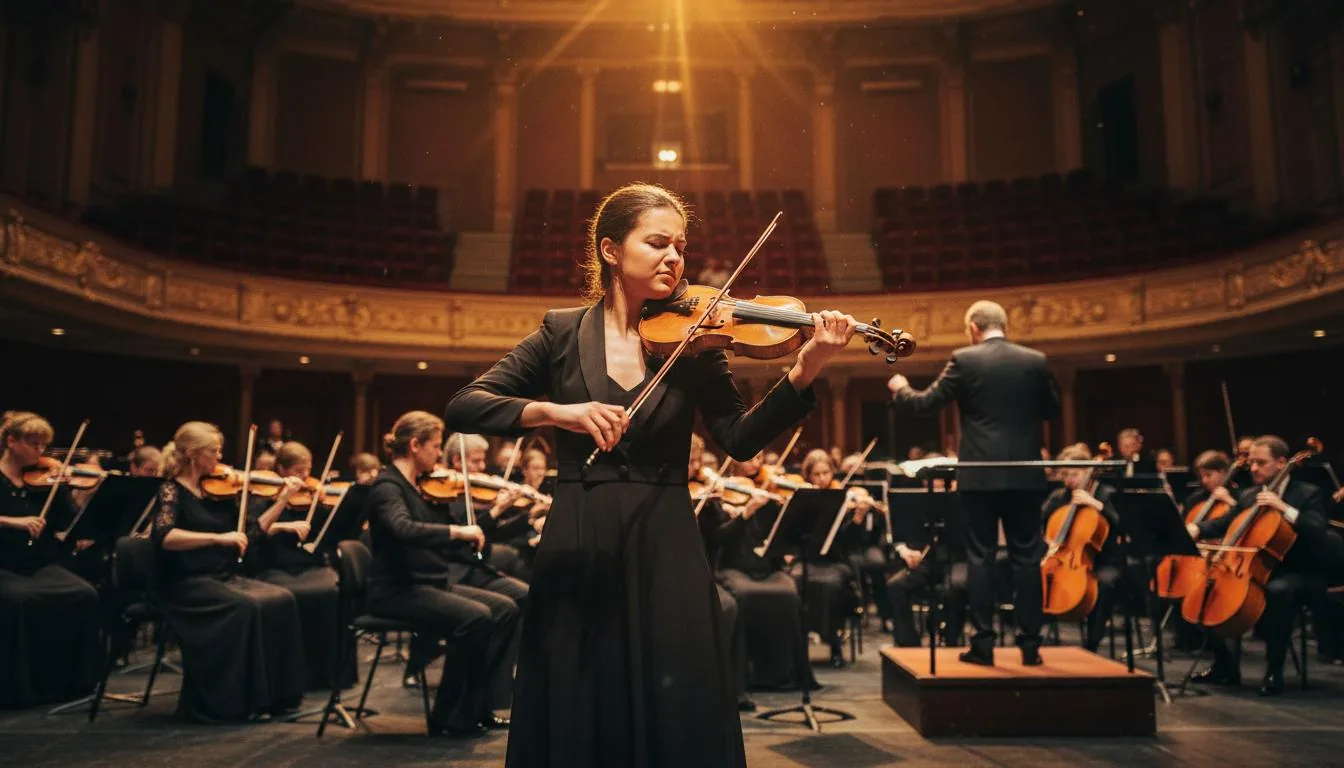
A violinist performing on stage with a symphony orchestra — capturing the intensity of the Lipizer Competition final round
The 44th Rodolfo Lipizer International Violin Competition took place from September 6 to 14, 2025, at the Teatro L. Bratuž in Gorizia, once again drawing violinists from across the world to this historic border city. The 2025 edition was particularly notable as it unfolded during the GO! 2025 European Capital of Culture year, adding special significance to an already prestigious event.
The 2025 Jury and Process
The competition was inaugurated on September 6, 2025, with a ceremony attended by the Mayor of Gorizia Rodolfo Ziberna, Regional Councilor Diego Bernardis, Deputy Police Chief Gaetano D'Agnese, competition founder Professor Lorenzo Qualli, and jury president Maestro Fabio De Sanctis De Benedictis. The jury comprised four distinguished violinists: Joshua Epstein (Israel), Marco Fornaciari (Italy), Madlèn Stokić-Vasiljević (Serbia), and Lana Trotovšek (Slovenia) — a geographic spread that underscored the competition's international character.
Seventeen competitors from multiple countries participated in the eliminatory rounds held on September 6–8. From these, thirteen were admitted to the semifinals (September 9–11), which featured the commissioned piece "Daphne Song" by Mario Garuti, alongside masterworks of the classical repertoire with piano accompaniment. The finals on September 12–13 saw six finalists perform with the Orchestra Filarmonica di Arad (Romania) under conductor Gian Luigi Zampieri.
Results — First Prize Not Awarded
In a decision that underscored the jury's commitment to maintaining the highest standards of excellence, the first prize was not awarded in the 44th edition. This practice, while rare, is not unprecedented in major international competitions and speaks to the rigor of the evaluation process:
| Rank | Name | Country | Prize |
|---|---|---|---|
| 1st | Not awarded | — | Non assegnato |
| 2nd | Sasha Parker | Great Britain | Second Prize + multiple special prizes |
| 3rd | Sora Sato-Mound | Canada/Japan | Third Prize + Bach revision prize |
| 4th | Zou Zhang | China | Fourth Prize |
| 5th | Ziwen Wang | China | Fifth Prize |
| 6th | Seonglan Hong | South Korea | Sixth Prize + best 19th-century sonata prize |
Special Prizes Awarded in 2025
The 44th edition featured an extraordinary array of special prizes that honored specific achievements and the memory of individuals connected to Gorizia's musical heritage:
| Special Prize | Donor | Recipient |
|---|---|---|
| Best performance of Lipizer Study No. 18 Variations (in memory of Elena Lipizer) | Liana Shamugia | Sasha Parker (UK) |
| Best interpreter of J.S. Bach Sonatas & Partitas | Prof. Yoshiaki Shibata (Japan) | Sasha Parker (UK) |
| Best interpreter adhering to Lipizer's Bach edition | Associazione Culturale Lipizer | Sora Sato-Mound (Canada) |
| Young deserving competitor (in memory of Alberto Qualli) | Qualli family | Daria Shibitkaia (Moldova) |
| Young deserving talent (in memory of Dr. Giorgio Gratton) | Gratton family | Piotr Stadnicki (Denmark) |
| Best interpreter of Daphne Song by Mario Garuti | LIONS "Maria Theresia Club" Gorizia | Sasha Parker (UK) |
| Best semifinalist with strong artistic temperament (in memory of Anna Piciulin Qualli) | Prof. Lorenzo Qualli | Sasha Parker (UK) |
| Best 19th-century sonata interpretation | Prof. Lorenzo Qualli | Seonglan Hong (South Korea) |
| Audience Prize (in memory of Gorizian musicians) | — | Sasha Parker (UK) |
Sasha Parker, a 19-year-old violinist studying at the Royal College of Music under Lutsia and Alina Ibragimova and previously at the Yehudi Menuhin School, emerged as the dominant figure of the competition. His haul of six prizes — including recognition for his interpretations of both Lipizer and Bach — marked him as an exceptional talent. The young British violinist, who has also won prizes at the Ilona Féher Violin Competition in Budapest and the Sevenoaks Young Musician of the Year Competition, performed Mendelssohn's Violin Concerto in E minor in the final, displaying what the Italian press described as "maturità interpretativa e rigore tecnico" (interpretive maturity and technical rigor).
The Gala Concert and Awards Ceremony on September 14, 2025, was attended by the Prefect of Gorizia Dr. Ester Fedullo, municipal and regional councilors, and representatives of the CARIGO Foundation. Professor Lorenzo Qualli delivered a moving address emphasizing his commitment to perpetuating the competition's musical and cultural mission. The evening concluded with the Concerto dei Laureati (Laureates' Concert), featuring works by Stravinsky, Sibelius, Beethoven, Bartók, and Mendelssohn — a fitting celebration of the competition's artistic ideals.
The 24th International Violin Conference — "Mitteleuropa"
Running parallel to the 44th competition, the 24th International Violin Conference was held on September 11, 2025, at Trgovski Dom in Gorizia, with the theme "Mitteleuropa: Musical and Cultural Paths" ("Mitteleuropa. Percorsi musicali e culturali"). The conference featured twelve speakers and was chaired by jury president Fabio De Sanctis De Benedictis and coordinated by Virginio Zoccatelli. This academic component — a tradition dating back to 1983 — enriches the competition with scholarly discourse on violin history, pedagogy, and repertoire, reinforcing Gorizia's status as a center of violin culture. The 2025 theme was particularly resonant given Gorizia's position at the historical crossroads of Central European cultures and its current role as European Capital of Culture.
Notable Past Winners — A Gallery of Stars
Over its four-decade history, the Rodolfo Lipizer International Violin Competition has launched the careers of numerous violinists who have gone on to achieve international stardom. The roll call of first prize winners reads like a who's who of contemporary violin virtuosity.
Complete List of First Prize Winners (1982–2024)
| Edition | Year | Winner | Country | Notable Career Highlights |
|---|---|---|---|---|
| I | 1982 | Hae-Sung Kang | South Korea | — |
| II | 1983 | Masayuki Kino | Japan | — |
| III | 1984 | No 1st prize | — | — |
| IV | 1985 | Alexandre Dubach | Switzerland | International soloist |
| V | 1986 | Maximilian Schöner | Austria | — |
| VI | 1987 | Kun Hu | China | — |
| VII | 1988 | Sergej Krylov | USSR (Russia) | Major international soloist; Music Director, Lithuanian Chamber Orchestra; Deutsche Grammophon artist |
| VIII | 1989 | Mieko Kanno | Japan | — |
| IX | 1990 | Liviu Daniel Prunaru | Romania | Concertmaster, Royal Concertgebouw Orchestra |
| X | 1991 | Anastasia Tchebotariova | Russia | — |
| XI | 1992 | Stefan Milenkovich | Yugoslavia (Serbia) | "Artist of the Century" (Serbia); performed for Reagan, Gorbachev, Pope John Paul II; 1,000th concert at age 16 |
| XII | 1993 | No 1st prize | — | — |
| XIII | 1994 | No 1st prize | — | — |
| XIV | 1995 | Kristóf Baráti | Hungary | Renowned soloist; regular appearances at major European concert halls; Bartók and Beethoven cycle recordings |
| XV | 1996 | Tanja Becker-Bender | Germany | Professor, Geneva Conservatory; international soloist |
| XVI | 1997 | Iana Deshkova | Bulgaria | — |
| XVII | 1998 | No 1st prize | — | — |
| XVIII | 1999 | Yi-Jia Susanne Hou | Canada | "Queen of the Violin"; extensive international career |
| XIX | 2000 | Baiba Skride | Latvia | Major international soloist; Berlin Philharmonic, Boston Symphony, Concertgebouw regular; Deutsche Grammophon artist |
| XX | 2001 | Keisuke Okazaki | Japan | — |
| XXI | 2002 | Sayako Kusaka | Japan | — |
| XXII | 2003 | Zhijiong Wang | China | — |
| XXIII | 2004 | Antal Szalai | Hungary | — |
| XXIV | 2005 | Roman Simović | Russia | Leader, London Symphony Orchestra; international soloist |
| XXV | 2006 | Amaury Coeytaux | France | Co-founder, Quatuor Ébène; Opus Klassik winner |
| XXVI | 2007 | Wonhyee Bae | South Korea | — |
| XXVII | 2008 | Artur Chermonov | Kyrgyzstan | — |
| XXVIII | 2009 | No 1st prize | — | — |
| XXIX | 2010 | No 1st prize | — | — |
| XXX | 2011 | Stefan Tarara | Germany | — |
| XXXI | 2012 | Ying Fu | China | — |
| XXXII | 2013 | Fedor Roudine | Russia | International soloist; pupil of Zakhar Bron; Queen Elisabeth Competition laureate |
| XXXIII | 2014 | No 1st prize | — | — |
| XXXIV | 2015 | Paolo Tagliamento | Italy | — |
| XXXV | 2016 | Olga Šroubková | Czech Republic | — |
| XXXVI | 2017 | Yang Jung Yoon | South Korea | — |
| XXXVII | 2018 | Matthew Hakkarainen | USA | — |
| XXXVIII | 2019 | No 1st prize | — | — |
| XXXIX | 2020 | Karen Su | China | — |
| XL | 2021 | No 1st prize | — | — |
| XLI | 2022 | Ruslan Talas | Kazakhstan | International soloist; pupil of Janine Jansen; multiple competition winner |
| XLII | 2023 | Ziling Guo | China | International soloist; pupil of Christoph Schickedanz; concert engagements across Europe |
| XLIII | 2024 | Aozhe Zhang | China | Rising international soloist |
Spotlight on Legendary Laureates
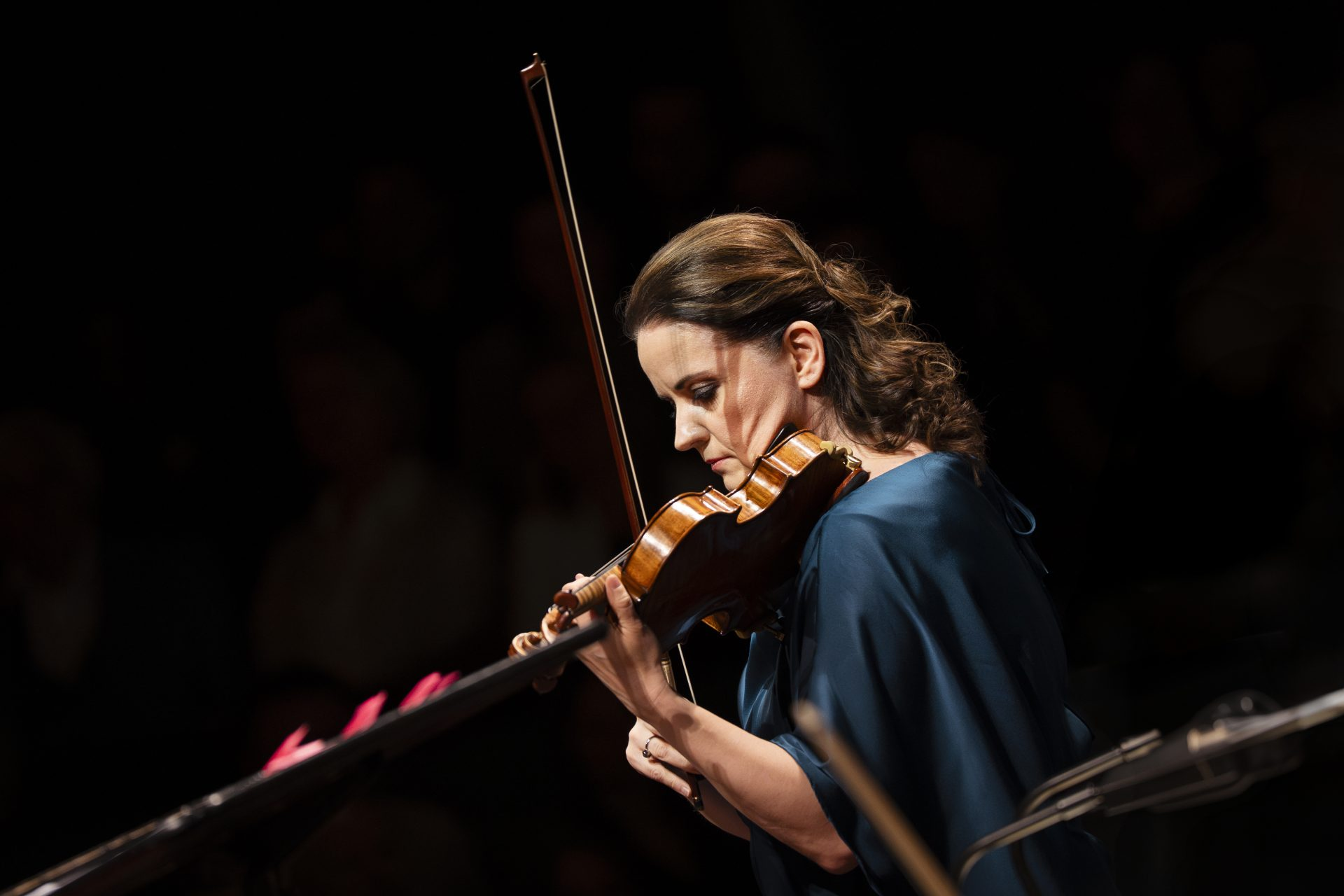
Baiba Skride (Winner, 2000)
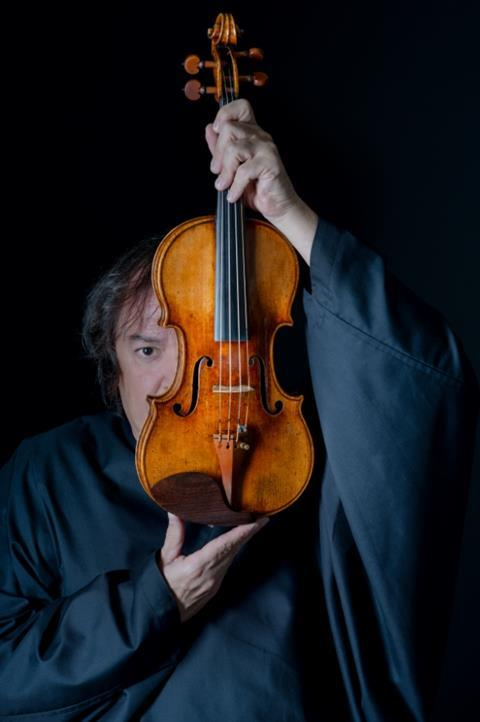
Sergej Krylov (Winner, 1989)
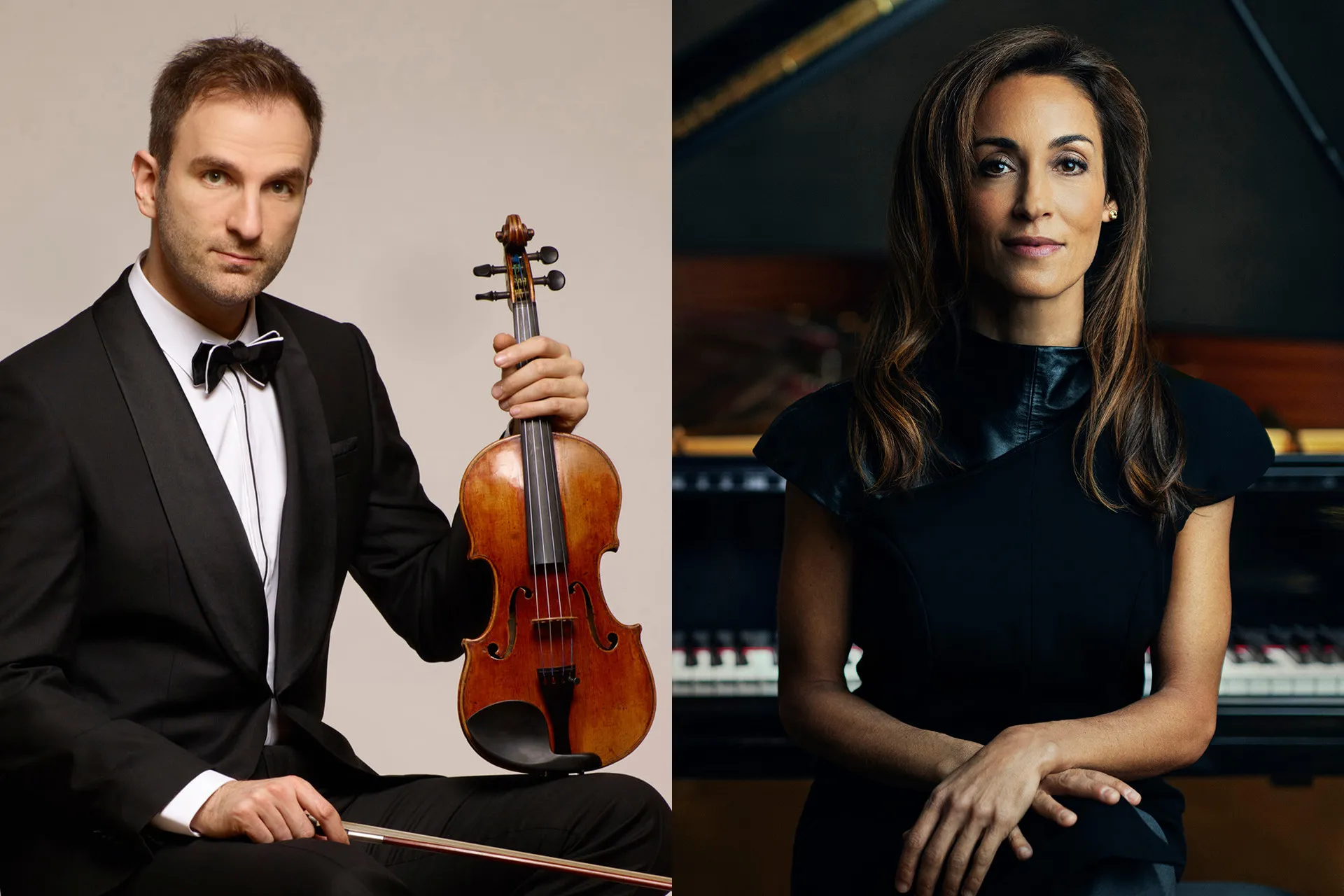
Stefan Milenkovich (Winner, 1993)
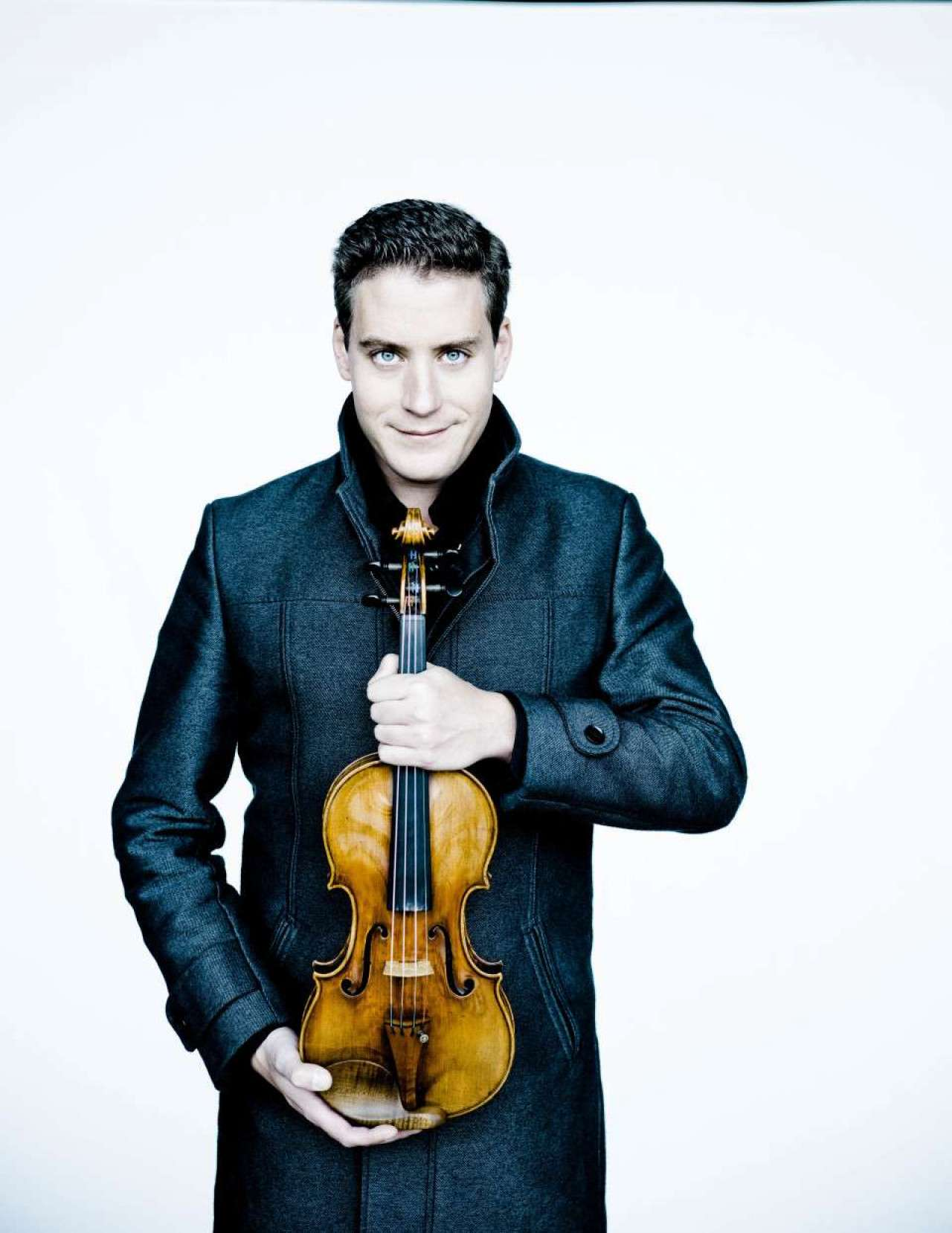
Kristóf Baráti (Winner, 1995)
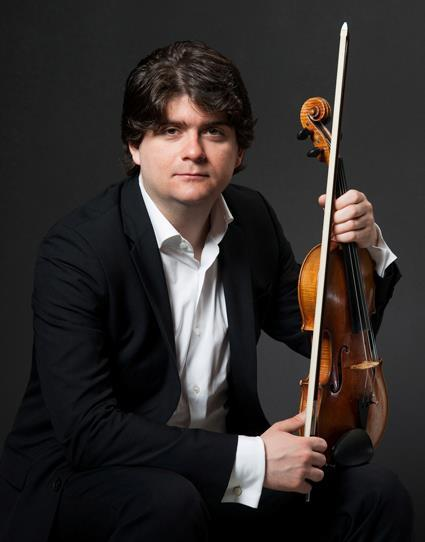
Fedor Roudine (Winner, 2013)
Baiba Skride (Winner, 2000) — The Latvian violinist has ascended to the absolute pinnacle of the classical music world. She performs regularly with the Berliner Philharmoniker, Gewandhausorchester Leipzig, Boston Symphony Orchestra, Chicago Symphony Orchestra, Concertgebouworkest, London Symphony Orchestra, and NHK Symphony Orchestra, collaborating with conductors including Andris Nelsons, Yannick Nézet-Séguin, and Marin Alsop. A Deutsche Grammophon recording artist, her 2025 release of the Shostakovich Violin Concertos with the Boston Symphony and Nelsons was nominated for an Opus Klassik Award. She plays the 'Yfrah Neaman' Stradivarius on loan from the Neaman family. Composers including Sofia Gubaidulina have written concertos specifically for her.
Sergej Krylov (Winner, 1989) — Born in Moscow in 1970 into a family of musicians, Krylov began violin at age five and gave his first concert after just one year. His victory at the Lipizer Competition launched a spectacular international career that included first prizes at the "Antonio Stradivari" Competition in Cremona and the Fritz Kreisler Competition in Vienna. Today, Krylov is one of the most sought-after violinists of his generation, having performed at the Berlin and Munich Philharmonie, Vienna Musikverein, Paris Radio France Auditorium, Tokyo Suntory Hall, Teatro Colón in Buenos Aires, Teatro La Fenice in Venice, and Teatro alla Scala in Milan. Since 2008, he has served as Music Director of the Lithuanian Chamber Orchestra, and his discography includes recordings for Deutsche Grammophon, EMI, and Melodiya. His friendship with Mstislav Rostropovich marked a particularly significant chapter in his artistic life.
Stefan Milenkovich (Winner, 1993) — Perhaps the most legendary figure in the competition's history, the Serbian violinist began playing at age three and gave his 1,000th concert at age 16 in Monterrey, Mexico. Before his 18th birthday, he had performed for U.S. President Ronald Reagan (age 10), Soviet leader Mikhail Gorbachev (age 11), and Pope John Paul II (age 14). His Lipizer victory was one of an astonishing string of competition wins that included prizes at the Yehudi Menuhin, Queen Elisabeth, Paganini, Indianapolis, Hannover, Tibor Varga, and Ludwig Spohr competitions. Named Serbia's "Artist of the Century" and recipient of the "Most Humane Person" award, Milenkovich has performed with the Berlin Symphony Orchestra, Helsinki Philharmonic, Utah Symphony, Orpheus Chamber Orchestra, and under conductors including Sir Neville Marriner and Plácido Domingo. He is currently Associate Professor of Violin at the University of Illinois and founded the Stefan Milenkovich International Music Institute in 2021.
Kristóf Baráti (Winner, 1995) — The Hungarian violinist has established himself as one of the most important violinists of his generation. A regular guest at major European concert halls and festivals, Baráti is particularly celebrated for his Bartók and Beethoven cycle recordings, which have earned critical acclaim worldwide. His deep musicality and technical mastery have made him a sought-after soloist and chamber musician across Europe and beyond.
Fedor Roudine (Winner, 2013) — The Russian violinist studied with Zakhar Bron at the Hochschule für Musik und Tanz Köln and has accumulated an extraordinary competition record, including first prizes at the Andrea Postacchini, Louis Spohr, and Yankelevich competitions, the Grand Prize at the Aram Khachaturian Competition, and a finalist position at the Montreal International Musical Competition. He was also a laureate of the Queen Elisabeth Competition.
The Venue — Kulturni center Lojze Bratuž (Teatro Lojze Bratuž)
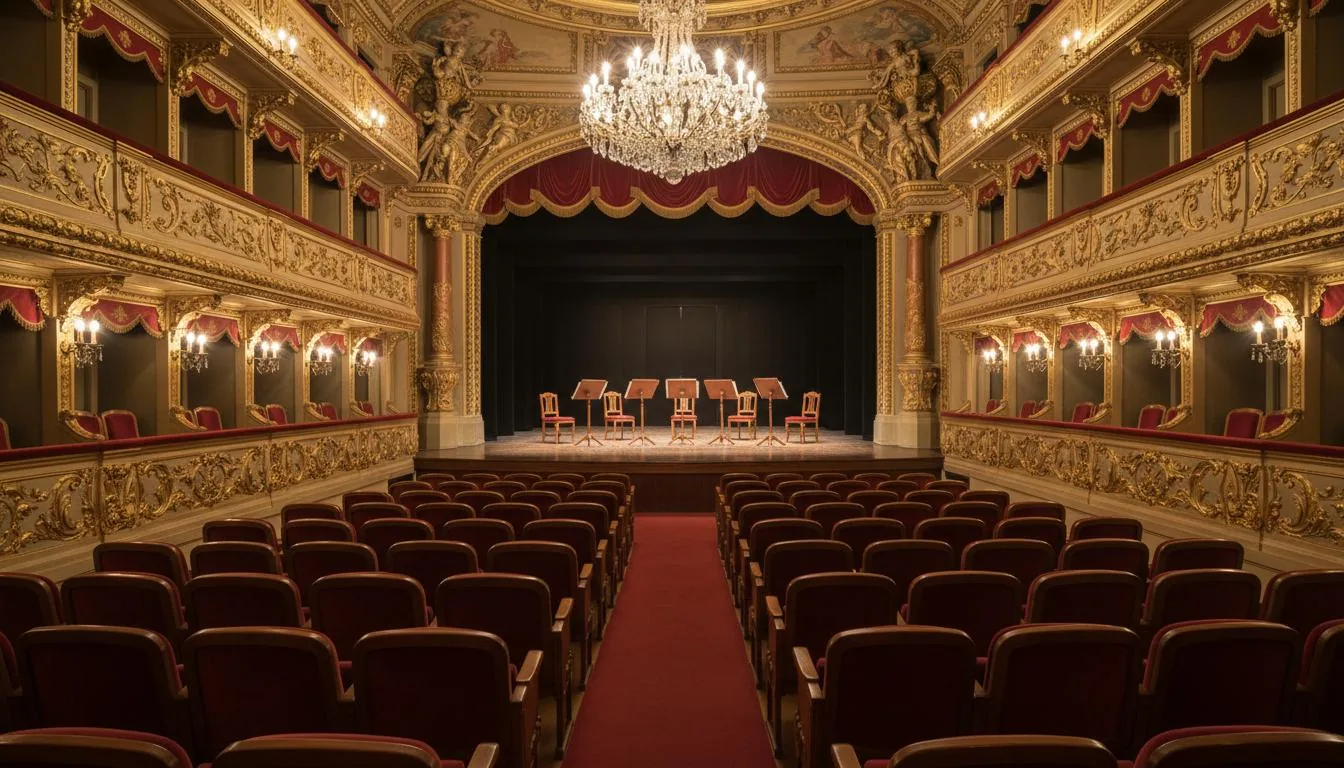
The elegant interior of a historic European theater — representing the Lipizer Competition venue in Gorizia
All auditions of the 45th Rodolfo Lipizer International Violin Competition — solo violin, violin and piano, and violin and orchestra — will take place at the Kulturni center Lojze Bratuž theatre, located at Viale XX Settembre, 85, 34170 Gorizia, Italy. This modern cultural center serves as the primary performing arts venue in Gorizia and has been the home of the Lipizer Competition for many years.
The theater is named after Lojze Bratuž (1902–1937), a Slovenian composer, conductor, and music educator from Gorizia who was an important figure in the region's musical life. The venue offers step-free wheelchair access and modern facilities suitable for international-level performances, including the orchestra finals that require a full-sized stage. Its central location in Gorizia makes it easily accessible for both competitors and audiences, and its association with the competition has made it synonymous with world-class violin performance in the region.
The theater's Sala Riunioni (Meeting Room) also serves as the gathering place for jury deliberations, where the international panel evaluates competitors and determines advancement through the rounds. All competition performances at the venue are open to the public free of charge (with the exception of the final Gala Concert), reflecting the competition's commitment to accessibility and community engagement.
The 45th Edition — What to Expect in 2026
Dates and Registration
The 45th Rodolfo Lipizer International Violin Competition will be held from 5 to 13 September 2026. The registration deadline for the 2026 edition is 30 April 2026. All applications and required documents can be submitted via email to lipizer@lipizer.it. The competition is open to violinists of any nationality born after a specified date (typically corresponding to a maximum age of approximately 32 years — for reference, the 2025 edition required competitors to be born after 14 September 1993).
What Competitors Will Face
The 45th edition will follow the competition's established three-round format:
- Eliminatory Round (September 5–6, 2026) — Competitors will perform Lipizer's Study No. 18 — Variations with original bowings and fingerings, a work by J.S. Bach (using Lipizer's edition), a first movement from a Mozart concerto, and a Sivori Caprice. The jury will select semifinalists and award special prizes for the best performances.
- Semifinal Round (September 8–9, 2026) — Semifinalists will perform a Paganini Caprice, the commissioned piece composed for the 2026 competition (written by a composer who served as jury president in 2025), a romantic sonata, and additional virtuoso repertoire with piano accompaniment.
- Final Round (September 11–12, 2026) — Up to six finalists will perform with a full symphony orchestra, showcasing major Romantic and 20th-century concertos, plus virtuoso pieces.
The Gala Concert and Awards Ceremony will take place on September 13, 2026, featuring the Concerto dei Laureati.
Prize Highlights
Based on recent editions, the 45th competition will offer:
- First Prize: €10,000–€15,000 plus a violin crafted at the International School of Violin Making "Antonio Stradivari" in Cremona, concert engagements across Italy and internationally, a silver medal from the President of the Italian Republic, and the honor of performing on Lipizer's own violin
- Second through Sixth Prizes: Substantial cash awards plus diplomas and concert opportunities
- Numerous Special Prizes: Awarded for specific achievements (best Lipizer interpretation, best Bach interpreter, best sonata performance, audience prize, etc.)
How to Attend
All rounds of the Lipizer Competition are free and open to the public, with the exception of the final Gala Concert (typically €12 full price, €8 reduced). The competition is also broadcast in streaming on the official Lipizer YouTube channel, and the finals receive radio and television broadcast on RAI. For the most up-to-date schedule and program details, visit the official website at www.lipizer.it.
The Competition and GO! 2025 — European Capital of Culture
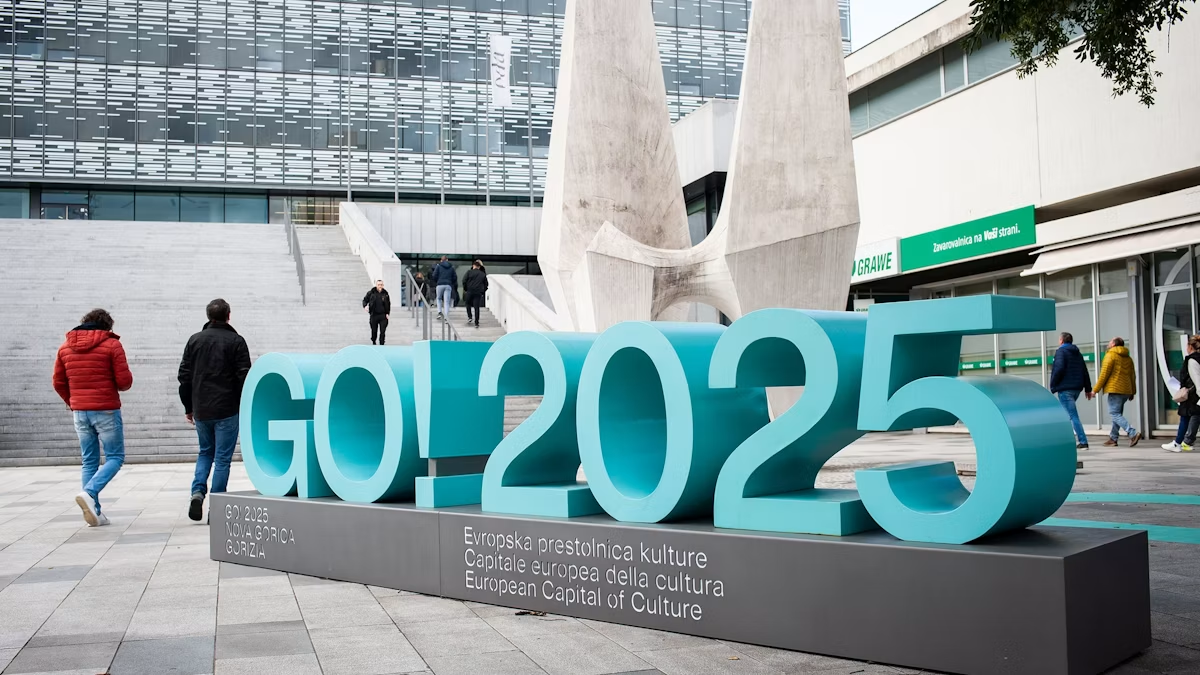
The GO! 2025 European Capital of Culture sign in Gorizia — the first cross-border European Capital of Culture uniting Nova Gorica and Gorizia
The 44th edition of the Lipizer Competition (September 2025) held special significance as it took place during GO! 2025 — the European Capital of Culture Nova Gorica–Gorizia, a historic first: the only cross-border European Capital of Culture in history, uniting Nova Gorica (Slovenia) and Gorizia (Italy). These twin cities, divided by the Iron Curtain for nearly six decades after World War II and separated by the infamous "Gorizia Wall," have transformed their border from a barrier into a bridge — making them a powerful symbol of European unity and cultural cooperation.
A City of Many Names
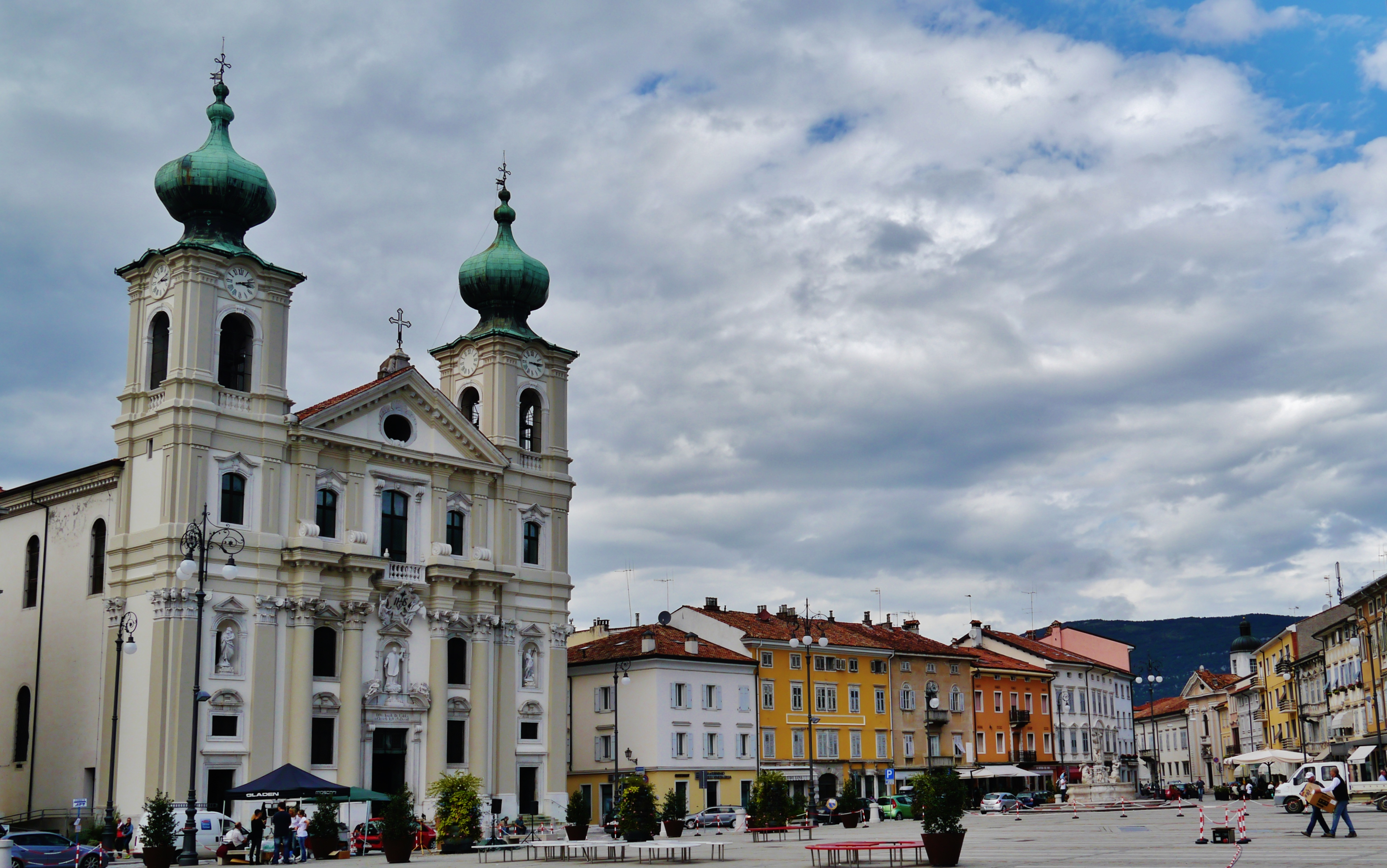
Piazza della Vittoria in Gorizia — the historic heart of the city where the Lipizer Competition takes place
Gorizia — where the Lipizer Competition has been held for 44 years — is a city of extraordinary historical layers. Known as "the Austrian Nice" for its favored status among Austro-Hungarian nobility, "the Sleeping Beauty" for its preserved Belle Époque charm, "the Cursed City" for its devastation in World War I, and even "the Italian Berlin" for its Cold War division, Gorizia embodies the complex history of 20th-century Europe. Today, visitors can stand in Piazza Transalpina / Trg Evrope with one foot in Italy and the other in Slovenia — an experience that captures the spirit of the GO! 2025 project.
The Lipizer Competition as Cultural Ambassador
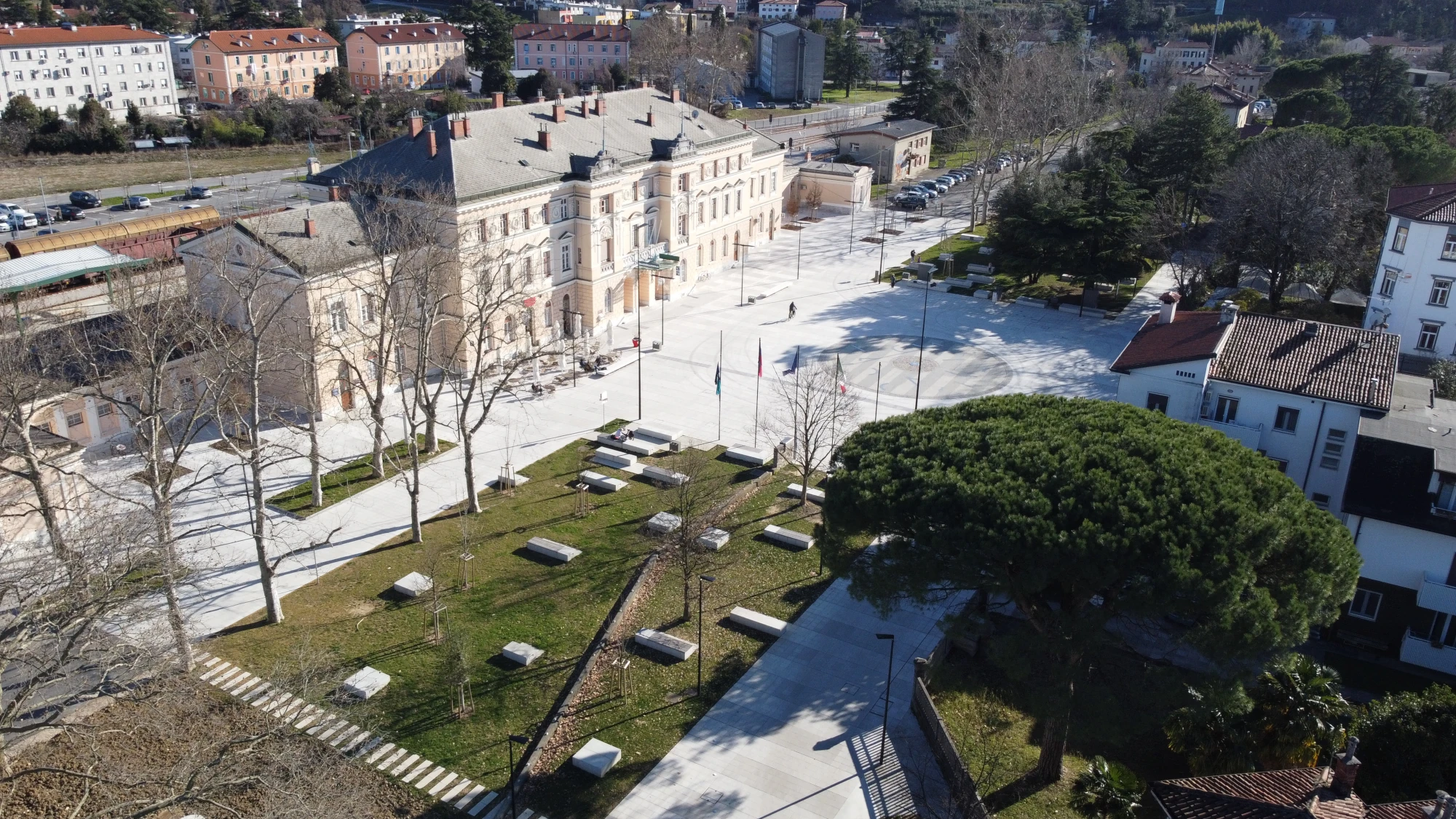
The panoramic view of the Gorizia-Nova Gorica border area — two cities united as one European Capital of Culture
The Rodolfo Lipizer International Violin Competition perfectly embodies the "borderless" spirit of GO! 2025. For over four decades, it has brought young musicians from every corner of the world to this border city, creating cultural connections that transcend political boundaries. The competition's jury consistently represents multiple nations, its repertoire spans centuries of European musical tradition, and its laureates carry the message of Gorizia's musical excellence to concert halls worldwide.
The competition's connection to the GO! 2025 program was formally recognized when the 44th edition was listed as an official event on the GO! 2025 website, introducing this venerable institution to the broader audience attracted by the European Capital of Culture celebrations. The parallel 24th International Violin Conference on "Mitteleuropa" further reinforced this connection, exploring the very cultural crossroads that define the Gorizia-Nova Gorica region.
The Competition's Unique Traditions
Playing on Lipizer's Violin
One of the most emotionally resonant traditions of the competition is the First Prize winner's performance on Rodolfo Lipizer's own violin at the closing ceremony of the Finalists' Concert. This creates a tangible link between the competition's namesake and each new generation of laureates — a moment when the past and future of violin artistry meet in a single performance.
The "Elena Lipizer" Concert Season
The Cultural Association "R. Lipizer" organizes an ongoing concert season named in honor of Elena Lipizer, Rodolfo's daughter, which provides performance opportunities for competition laureates. Second prize winners, in particular, are regularly engaged for concerts at the Lojze Bratuž Cultural Center and other venues in the Gorizia region, ensuring that competition success translates into sustained career development.
Free Accommodation for Competitors
Historically, the competition has offered free lodging and half-board to all admitted competitors during their official participation period, housed in student hostels arranged by the competition office. While recent editions (including 2025) have required competitors to arrange their own accommodation, the competition maintains relationships with local hotels and residences to facilitate participant stays. This tradition reflects the competition's commitment to supporting young musicians regardless of their financial circumstances.
International Violin Conferences
Since 1983, the competition has organized International Violin Conferences that bring together scholars, pedagogues, and performers for academic discourse on violin history, technique, and repertoire. These conferences have explored themes ranging from "The Italian School in the Development of International Violin Art" (1996) to "Tartini as Innovator and Precursor of Modern Violin Technique" (1992) to "The Rediscovery of Sivori's 12 Studi-Capricci" (2015). The 2025 conference on "Mitteleuropa" continued this tradition of scholarly excellence, with twelve speakers addressing the musical and cultural heritage of Central Europe — a theme perfectly suited to Gorizia's geographic and historical position.
Why the Lipizer Competition Matters
In an era of countless international music competitions, the Rodolfo Lipizer Prize distinguishes itself through several defining characteristics:
- Historical Authenticity — The competition's deep connection to Rodolfo Lipizer's pedagogical legacy, particularly the mandatory performance of his Study No. 18 Variations, grounds it in a specific tradition of violin excellence that stretches back to the Viennese and Italian schools of the early 20th century.
- Commitment to New Music — The annual commission of a new composition ensures that the competition contributes to the living repertoire of the violin, rather than merely recycling the canon.
- Geographic Significance — Held in a city that has been a cultural crossroads for centuries and that now symbolizes European unity, the competition carries a symbolic weight that transcends music.
- Rigorous Standards — The decision not to award the first prize in 2025, while disappointing for competitors, demonstrated the jury's absolute commitment to excellence — a stance that enhances the prestige of the prize when it is awarded.
- Proven Track Record — With winners including Baiba Skride, Sergej Krylov, Stefan Milenkovich, Kristóf Baráti, and Fedor Roudine, the competition has demonstrated an uncanny ability to identify and nurture genuine major careers.
- Institutional Support — The patronage of UNESCO, the Italian government, and the World Federation of International Music Competitions provides institutional validation that few competitions can match.
Practical Information for the 45th Edition
| Event | 45th International Violin Competition "Rodolfo Lipizer Prize" |
| Dates | 5–13 September 2026 |
| Venue | Kulturni center Lojze Bratuž theatre, Viale XX Settembre 85, 34170 Gorizia, Italy |
| Registration Deadline | 30 April 2026 |
| Eligibility | Violinists of all nationalities, age limit applies (typically max 32 years) |
| Format | Three rounds: Eliminatory, Semifinal, Final (with orchestra) |
| Admission | Free for all rounds except Gala Concert |
| Streaming | All performances broadcast on official Lipizer YouTube channel |
| TV/Radio | Finals broadcast on RAI Italian Radiotelevision Network |
| Patronage | UNESCO, Italian Ministry of Foreign Affairs, Italian Ministry of Culture |
| Member of | World Federation of International Music Competitions (WFIMC), Geneva |
| Organizer | Associazione Culturale "Maestro Rodolfo Lipizer" ONLUS |
| Contact | lipizer@lipizer.it |
| Website | www.lipizer.it |
| GO! 2025 | The competition is an official event of the European Capital of Culture |
Tags
Don't Miss This Event
Join us for 45th International Violin Competition RODOLFO LIPIZER PRIZE. Experience the vibrant culture and community of Nova Gorica.