45° Premio Sergio Amidei
Il filo invisibile delle idee
Jul 16 - Jul 22, 2026
Piazza della Vittoria, GORIZIA
About This Event
The 45th edition of the "Sergio Amidei" International Award for Best Screenplay returns to Gorizia from 16 to 22 July 2026, carrying forward a legacy that spans more than four decades of celebrating cinema's most fundamental art form: the screenplay. This year's theme, "Il filo invisibile delle idee" (The Invisible Thread of Ideas), invites reflection on the creative journey that transforms thought into images and cinema into an instrument of dialogue between culture, society, and memory.
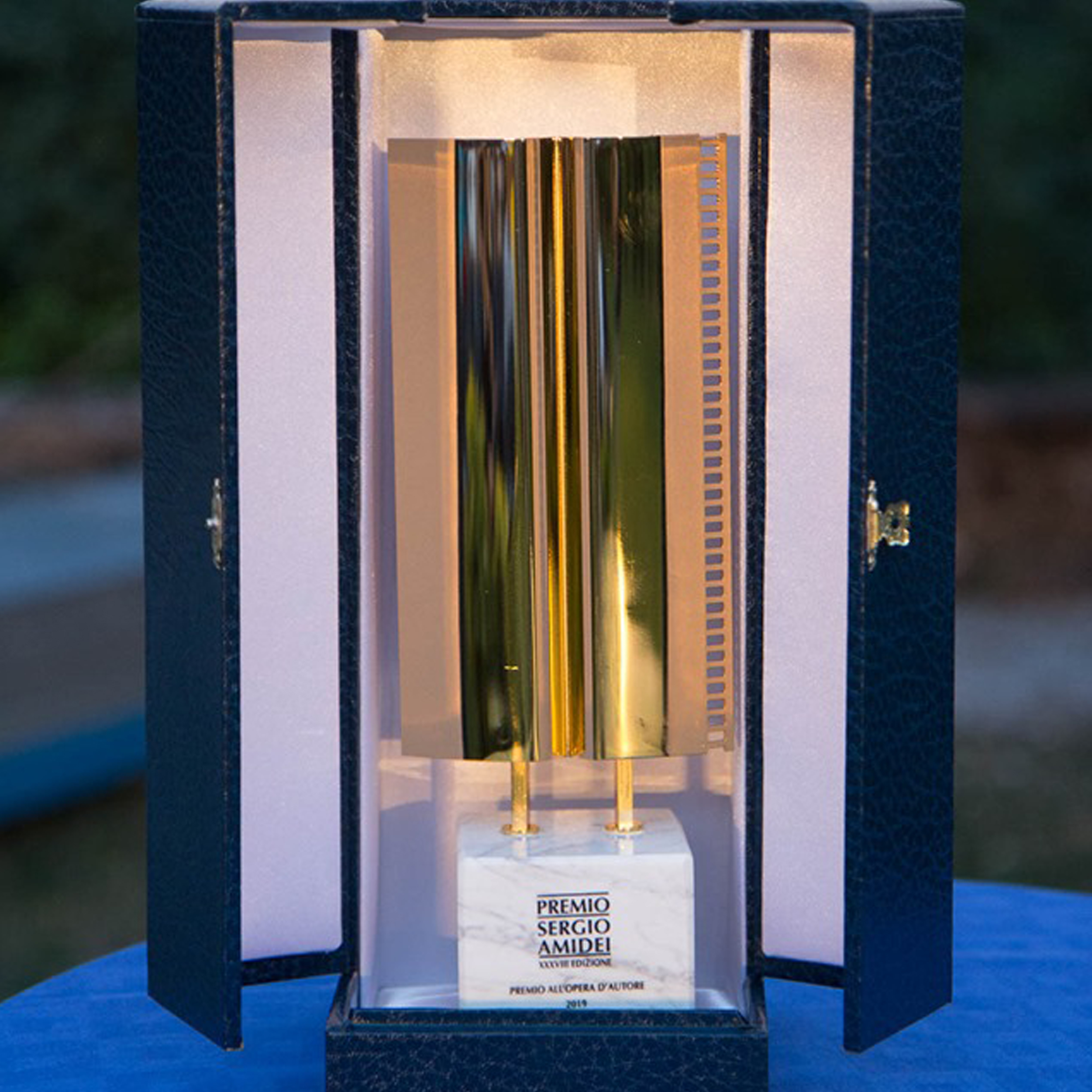
The prestigious Sergio Amidei Award trophy, symbolizing excellence in cinematic writing
Organized by the "Sergio Amidei" Cultural Association in partnership with DAMS – Audiovisual, Media and Entertainment Disciplines (an inter-university course run by the Universities of Udine and Trieste) and the Palazzo del Cinema – Hiša Filma Association, the festival is one of Europe's most prestigious awards dedicated to screenwriting. Seven days of celebrations transform Gorizia into an open-air cinema, where film writing is honoured as a creative, political, and cultural act.
Founded in 1981 and named after Sergio Amidei, one of the fathers of Italian neorealism, the Prize has grown from a modest local initiative into one of the most significant cultural events on the European cinema calendar. Over its 45-year history, it has celebrated the art of storytelling on screen, recognizing that behind every great image lies an even greater story waiting to be told.
Quick Facts
When: 16 – 22 July 2026
Where: Multiple venues across Gorizia (see Venues section)
Admission: Free to all events
Theme: "Il filo invisibile delle idee" (The Invisible Thread of Ideas)
Official website: www.amidei.com
The Man Behind the Name: Sergio Amidei (1904–1981)
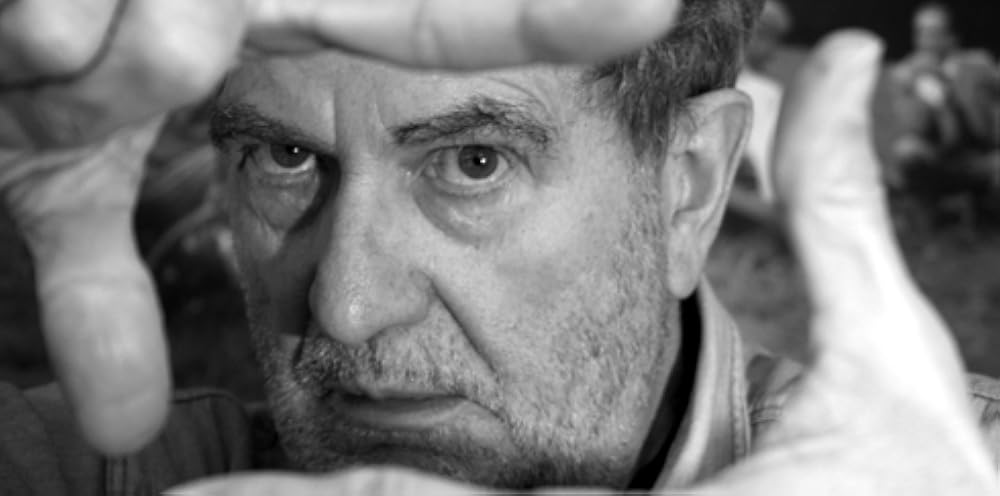
Sergio Amidei (1904–1981) — one of the most influential screenwriters in cinema history
Sergio Amidei was born on 30 October 1904 in Trieste, a city that at the time was a vibrant crossroads of cultures at the edge of the Austro-Hungarian Empire. His early exposure to diverse cultural influences would later shape his unique approach to storytelling — one that emphasized human dignity, social consciousness, and the power of authentic narratives drawn from real life.
Amidei entered the world of cinema at the age of 20, beginning his career at the Fert film studio in Turin. His first credited screenplay, Pietro Micca (1938), written with Ettore Maria Margadonna and director Aldo Vergano, marked the beginning of a career that would span nearly five decades and produce some of the most significant works in world cinema. However, it was in the immediate post-war period that Amidei truly came into his own as a defining voice of Italian neorealism.
The Neorealist Masterpieces
Amidei's collaboration with director Roberto Rossellini produced some of the most important films in cinema history. Their partnership began with Roma, città aperta (Rome, Open City, 1945), a film that many consider the birth of Italian neorealism. Shot in desperate conditions immediately after the Nazi occupation of Rome, with film stock scavenged from various sources and actors often unpaid, the film became an international sensation and established a new language for cinema: one rooted in reality, human suffering, and moral courage. It earned Amidei his first Academy Award nomination in 1946.
Roma, città aperta (1945)
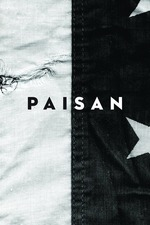
Paisà (1946)
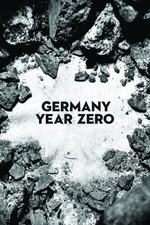
Germania anno zero (1948)
The collaboration between Amidei and Rossellini continued with Paisà (1946), a six-episode chronicle of the Allied advance through Italy that earned Amidei his second Oscar nomination in 1949, and Germania anno zero (Germany Year Zero, 1948), a harrowing portrait of post-war Berlin through the eyes of a child. These three films constitute Rossellini's celebrated "War Trilogy" and stand as central texts of the neorealist movement. Amidei also contributed to Stromboli, terra di Dio (1950), Il generale Della Rovere (General Della Rovere, 1959) — which brought him a fourth Oscar nomination in 1961 — and Era notte a Roma (1960), among many others.
Parallel to his work with Rossellini, Amidei collaborated with Vittorio De Sica on Sciuscià (Shoeshine, 1946), a devastating portrait of abandoned children in post-war Rome that won the Academy Honorary Award and earned Amidei his third Oscar nomination in 1947. He also contributed to De Sica's masterpiece Ladri di biciclette (Bicycle Thieves, 1948), though his name was not credited.
Beyond Neorealism
Amidei's creative evolution did not stop with neorealism. In the 1950s he demonstrated remarkable versatility, collaborating with Luciano Emmer on Domenica d'agosto (Sunday in August, 1950), a film that interwove fifty-six different stories — an invention of which Amidei was particularly proud. This multi-narrative structure would prove influential for generations of filmmakers. He worked with Mario Monicelli on Speriamo che sia femmina (Let's Hope It's a Girl, 1986) and with Alberto Sordi on Fumo di Londra (Smoke Over London, 1966) and Scusi, lei è favorevole o contrario? (1966).
In the later phase of his career, Amidei turned to more satirical and socially critical works, including collaborations with Luigi Zampa on Anni difficili (1948) and Anni facili (1953), as well as Il medico della mutua (1968) and Detenuto in attesa di giudizio (1971) with Nanni Loy. His final screenplay was for Un borghese piccolo piccolo (An Average Little Man, 1977), directed by Monicelli, a dark comedy that remains a landmark of Italian cinema.
Sergio Amidei passed away in Rome on 14 April 1981, leaving behind a filmography of more than 70 works and a legacy that fundamentally shaped the art of screenwriting. His four Academy Award nominations stand as testament to his international stature, while the award that bears his name ensures that his commitment to cinematic storytelling continues to inspire new generations.
The 45th Edition: "Il filo invisibile delle idee"
The 2026 edition of the Premio Sergio Amidei arrives at a particularly significant moment. In an era marked by unprecedented technological transformation, the expansion of artificial intelligence, the multiplication of audiovisual languages, and the increasingly rapid consumption of images, the centrality of writing takes on an even more decisive value. The screenplay becomes the place where cinema thinks about itself, where images acquire meaning, and where memory transforms into vision.
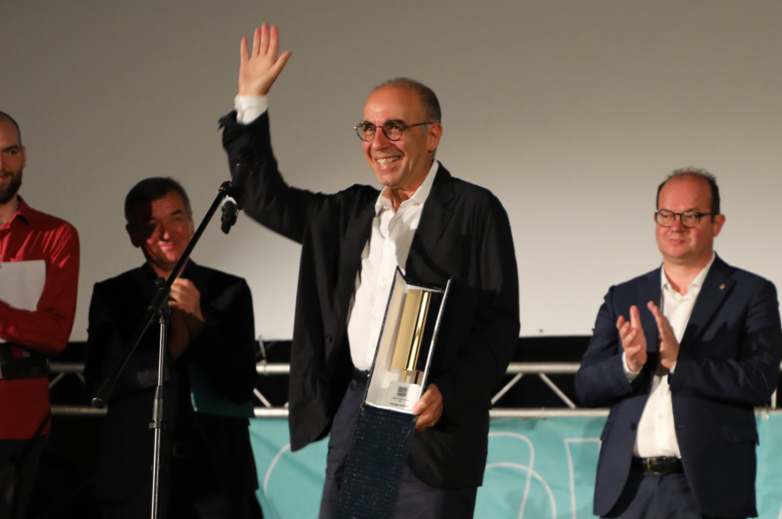
A moment from the award ceremony celebrating excellence in screenwriting
The 45th edition's theme, "Il filo invisibile delle idee" (The Invisible Thread of Ideas), is not merely a slogan but a genuine declaration of intent. Ideas remain invisible until they find a form, and writing is the gesture that renders visible what does not yet exist. It is the passage that transforms a private intuition into collective heritage, the bridge that connects past to future. The entire programming of this year's festival emerges from this awareness.
The Jury
The selection of finalists for the 45th edition was made by a prestigious jury composed of some of the most respected names in Italian and international cinema:
- Marco Risi — Director and screenwriter
- Francesco Munzi — Director and screenwriter
- Francesco Bruni — Director and screenwriter
- Massimo Gaudioso — Screenwriter
- Marco Pettenello — Screenwriter
- Doriana Leondeff — Screenwriter
- Giovanna Ralli — Actress (and former romantic partner of Sergio Amidei)
- Silvia D'Amico — Producer
The 2026 Finalists
The selection for the 45° Premio Amidei includes eight European films distributed during the 2025–2026 cinema season, chosen for their ability to weave together private and collective dimensions, experimenting with new narrative formulas and addressing emerging themes of the contemporary world:
| Film | Director |
|---|---|
| La grazia | Paolo Sorrentino |
| Il caso 137 | Dominik Moll |
| 40 secondi | Vincenzo Alfieri |
| Un anno di scuola | Laura Samani |
| Gioia mia | Margherita Spampinato |
| Le città di pianura | Francesco Sossai |
| Hamnet | Chloé Zhao |
| Il dio dell'amore | Francesco Lagi |
Special Awards 2026
Premio all'Opera d'Autore
Marco Tullio Giordana, an author who has narrated Italy like few other filmmakers of his generation. Giordana will be celebrated with a restored screening of his masterpiece I cento passi (The Hundred Steps, 2000), the story of Peppino Impastato's fight against the Mafia, starring Luigi Lo Cascio.
Premio alla Cultura Cinematografica
La rosa purpurea, the historic radio programme conceived and hosted by Franco Dassisti, recognized for its decades-long contribution to film criticism and cultural dissemination.
Omaggio (Tribute)
Pippo Delbono, an artist who has traversed the languages of contemporary theatre and cinema without ever ceasing to interrogate the human condition, will receive a special tribute.
Special Sections
Amidei Kids
Curated by Martina Pizzamiglio in collaboration with Alpe Adria Cinema — Trieste Film Festival, this section is dedicated to young audiences with screenings, themed workshops, and moments of in-depth exploration. It reflects the festival's commitment to nurturing the next generation of cinema lovers and storytellers.
Sguardi Indipendenti (Independent Visions)
This section continues its investigation into Italian independent cinema through works by representative filmmakers. For the 2026 edition, the featured author is Sara Fgaier, one of the most interesting figures in contemporary Italian cinema, known for her distinctive approach to visual storytelling.
Agorà
The Agorà section in this edition presents two significant works: "Amado Mio — Passione di un artista" by Matjaž Mrak and Robi Šabec, and "Common Pear" by director Gregor Božič, fostering dialogue between cinema and other artistic disciplines.
Featured Guests
The 45th edition welcomes numerous prominent figures from the world of cinema and culture:
- Marco Tullio Giordana — Recipient of the Premio all'Opera d'Autore
- Luigi Lo Cascio — Star of I cento passi, attending the restored screening tribute
- Pippo Delbono — Theatre and cinema artist receiving a special tribute
- Adriana Chiesa — Widow of cinematographer Carlo Di Palma
Approximately 60 screenings will take place over seven days, including meetings with authors, masterclasses, and open dialogues on the present and future of cinema.
The Venues: Cinema Throughout the City
One of the unique characteristics of the Premio Sergio Amidei is its diffusion throughout Gorizia's urban fabric. Rather than concentrating in a single location, the festival transforms multiple historic and cultural sites into cinema venues, creating a cinematic journey through the city's most evocative spaces. All venues offer free admission.

Kinemax Gorizia
Piazza Vittoria 41
The primary cinema venue of the festival, hosting the main screenings, meetings with authors, and the award ceremony. The Kinemax is the beating heart of the event, equipped with modern projection technology in a historic setting.
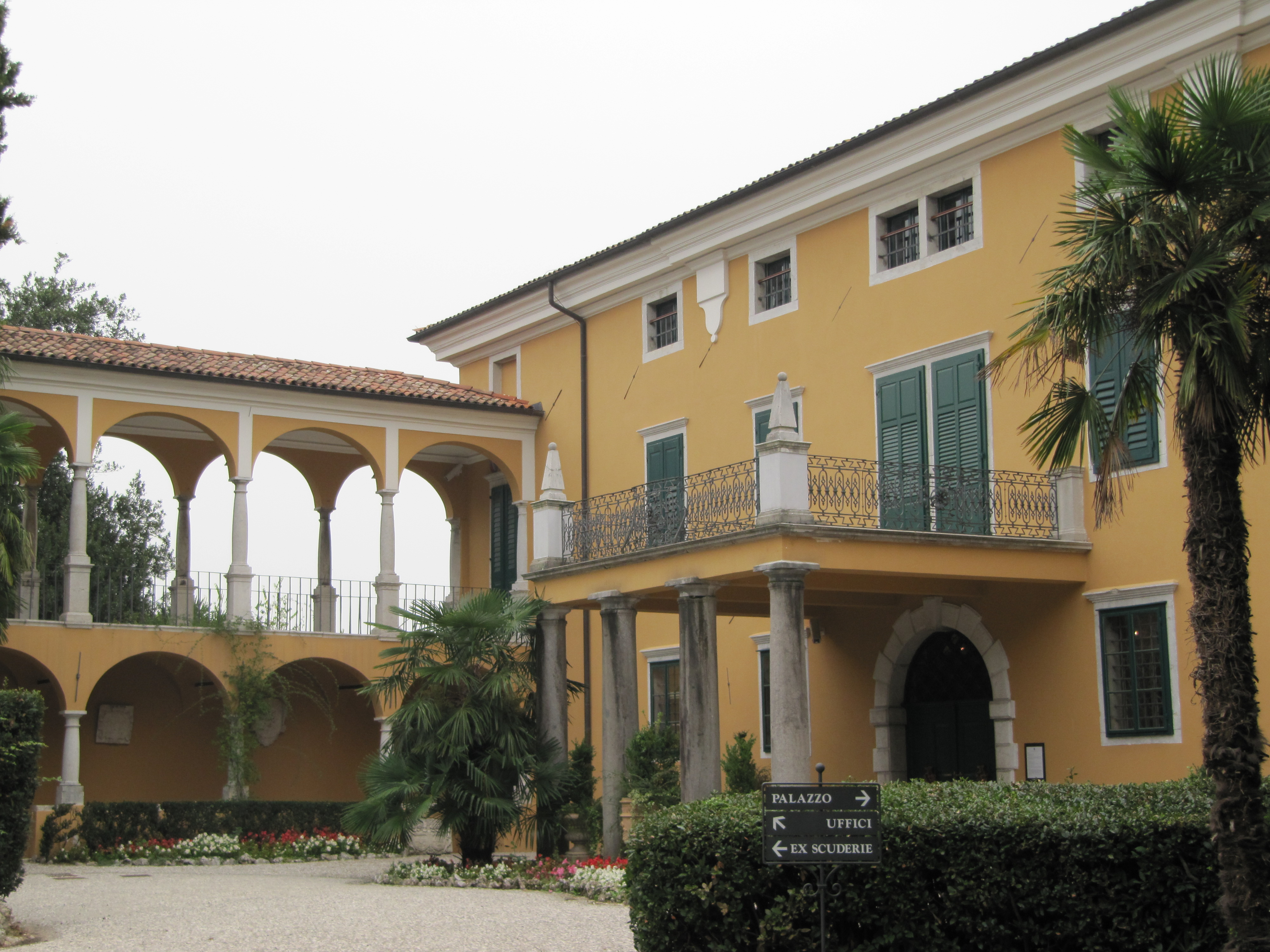
Parco Palazzo Coronini Cronberg
Viale XX Settembre 14
Since 2007, the park surrounding this magnificent historic palace has served as one of the festival's main venues. The outdoor screenings in the park create magical summer evenings under the stars, combining cinema with the beauty of Gorizia's green spaces.
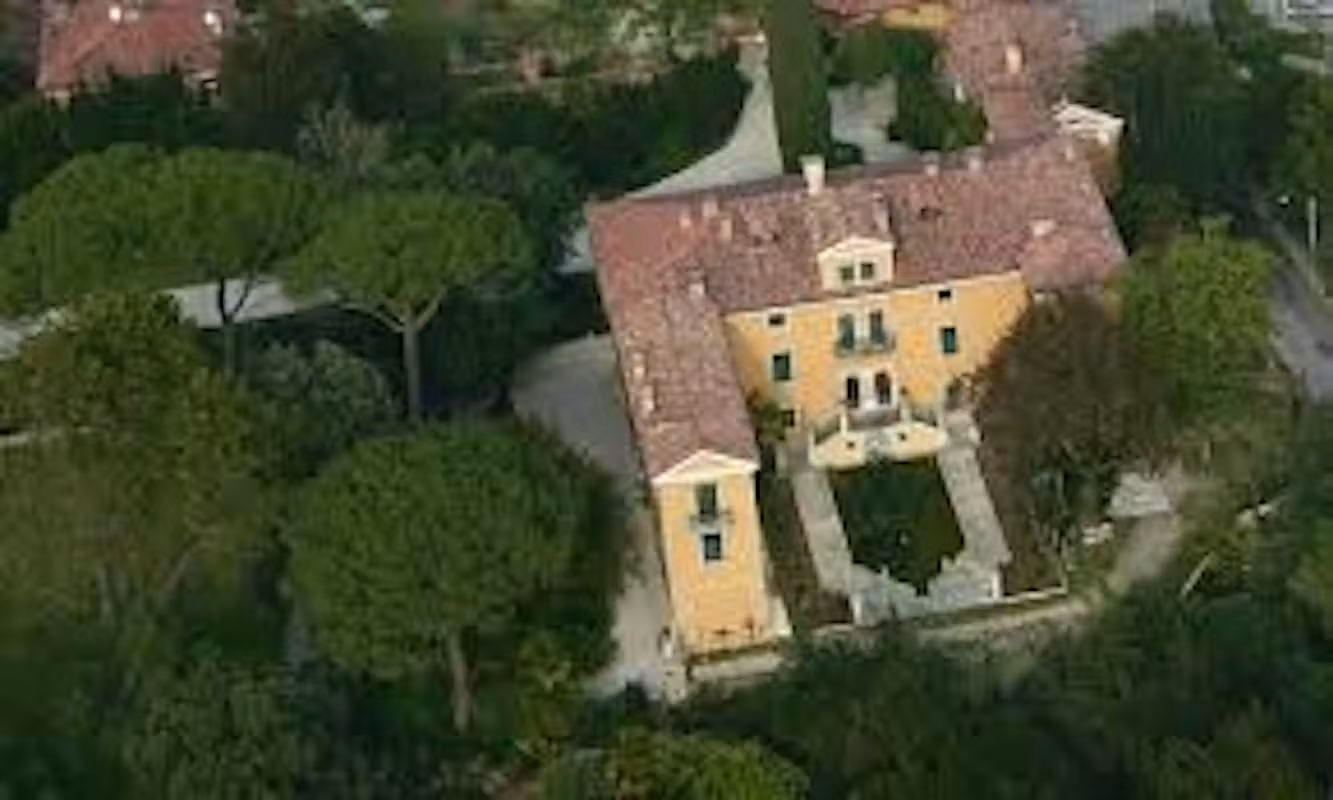
Mediateca.GO "Ugo Casiraghi"
Via Bombi 7
This media library and cultural centre hosts workshops, book presentations, and smaller screenings. Named after journalist and film critic Ugo Casiraghi, it serves as a vital resource for film education and preservation in the region.
BorGO Cinema / Casa Krainer
Via Rastello 43/57
Added to the festival's venues in 2024, BorGO Cinema is a cultural and creative hub contributing to the cultural regeneration of Gorizia's historic Borgo district. It hosts activities related to training, writing, production, and the diffusion of film culture.
Piazza Vittoria
Gorizia city centre
Since the 40th edition, Piazza Vittoria has hosted the festival's evening screenings, transforming the city's main square into an open-air cinema. This location choice reflects the festival's philosophy of making cinema accessible to everyone.
Over Four Decades of Celebrating Screenwriting
The story of the Premio Sergio Amidei is inseparable from the cultural and political history of Gorizia and the border region between Italy and Slovenia. What began as a modest film festival has evolved into one of Europe's most significant celebrations of cinematic writing.
Origins
The idea for an award dedicated to the best film screenplay was born in 1977, when Senator Darko Bratina met screenwriter Sergio Amidei at the Belgrade International Film Festival. Their conversation centred on creating a film festival that would place screenwriting at its heart, working around the concept of the screenplay as the foundational element of cinema.
A Legacy of Excellence: Notable Winners
Over its four-decade history, the Premio Sergio Amidei has recognized some of the most significant works in world cinema. The list of winners reads like a canon of modern cinematic excellence, spanning Italian neorealism, European art-house cinema, and contemporary masterpieces.
Premio alla Miglior Sceneggiatura (Selected Winners)
| Year | Film | Screenwriter(s) |
|---|---|---|
| 2025 | Vittoria | Alessandro Cassigoli, Casey Kauffman |
| 2024 | Anatomia di una caduta (Anatomy of a Fall) | Justine Triet, Arthur Harari |
| 2023 | Il signore delle formiche | Gianni Amelio |
| 2022 | I fratelli De Filippo | Mario Martone, Ippolita Di Majo |
| 2021 | Est - Dittatura Last Minute | Antonio Manzini |
| 2012 | Una separazione (A Separation) | Asghar Farhādi |
| 2008 | Le vite degli altri (The Lives of Others) | Florian Henckel von Donnersmarck |
| 2002 | Parla con lei (Talk to Her) | Pedro Almodóvar |
| 1998 | La vita è bella (Life is Beautiful) | Roberto Benigni, Vincenzo Cerami |
| 1983 | Io, Chiara e lo scuro | Francesco Nuti, Franco Ferrini, Enrico Oldoini, Maurizio Ponzi |
Premio all'Opera d'Autore (Selected Recipients)
This award honours directors or screenwriters who have built an original artistic journey throughout their careers:
| Year | Recipient | Notable Works |
|---|---|---|
| 2026 | Marco Tullio Giordana | I cento passi, La meglio gioventù |
| 2025 | Ferzan Özpetek & Céline Sciamma | La dea fortuna, Ritratto della giovane in fiamme |
| 2024 | Giuseppe Tornatore | Nuovo Cinema Paradiso |
| 2023 | Marco Bellocchio | I pugni in tasca, Buongiorno, notte |
| 2022 | Asghar Farhādi & Michel Hazanavicius | A Separation, The Artist |
| 2020 | Fratelli Dardenne | Rosetta, Le fils, L'enfant |
| 2012 | Paolo e Vittorio Taviani | Padre Padrone, La notte di San Lorenzo |
| 2004 | Ken Loach | Kes, The Wind That Shakes the Barley |
Last Year's Triumph: "Vittoria" (2025 Winner)
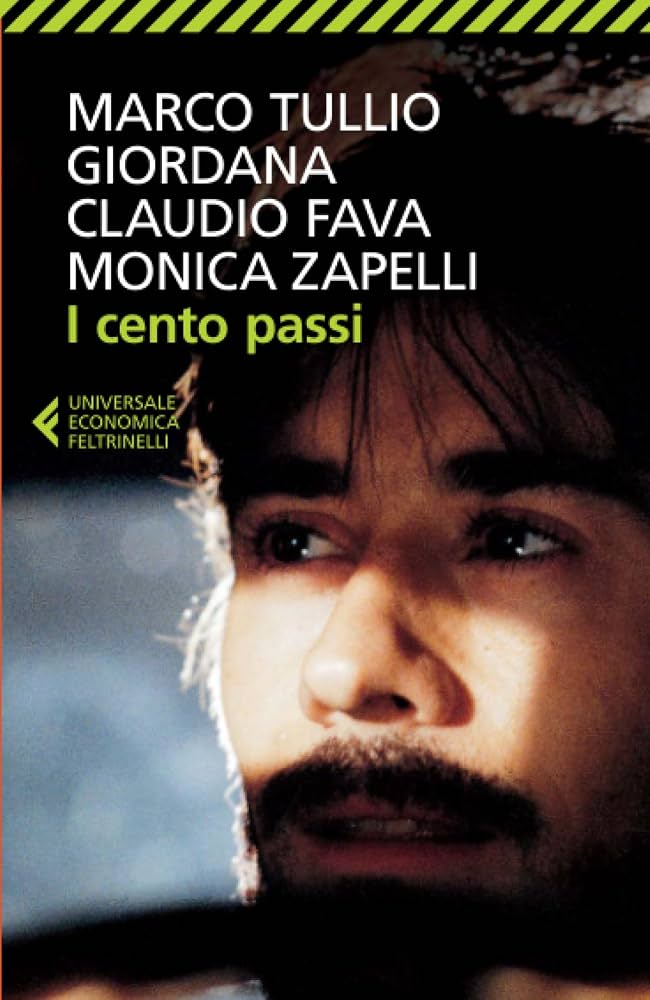
The 45th edition will feature a restored screening of Marco Tullio Giordana's masterpiece "I cento passi"
The 44th edition of the Premio Sergio Amidei, held from 17 to 23 July 2025 as part of the GO! 2025 European Capital of Culture programme, saw Vittoria by Alessandro Cassigoli and Casey Kauffman win the International Award for Best Screenplay.
Vittoria tells the true story of Jasmine, a hairdresser from Torre Annunziata near Naples, who is haunted by a recurring dream of a blonde little girl running into her arms. This vision becomes an all-consuming desire: she wants to adopt a daughter. Despite economic difficulties and initial resistance from her family, Jasmine pursues the complex path of international adoption, eventually travelling to an orphanage in Belarus where her dream can become reality.
What makes Vittoria particularly remarkable is that Cassigoli and Kauffman, both coming from documentary filmmaking and journalism backgrounds rather than traditional film schools, worked with the actual people who lived the story. The screenplay was gradually adapted to the real protagonists during filming, creating a unique blend of fiction and documentary that captures authentic emotion without ever seeking sentimental manipulation.
Casey Kauffman, who accepted the award (Cassigoli was absent, receiving another award for the same film in Naples), spoke about his journey from war journalism to cinema: "I worked for ten years in the Middle East for Al Jazeera. But this winning film is about something else — about international adoption. Telling the lives of others is like a bridge."
GO! 2025: A Year of Cultural Celebration
The 44th edition of the Premio Sergio Amidei in 2025 held particular significance as it was integrated into the programme of GO! 2025 — European Capital of Culture Nova Gorica – Gorizia. This designation marked the first time a cross-border city pair was named European Capital of Culture, celebrating the unique identity of a region that transcends national boundaries.
GO! 2025 — Nova Gorica / Gorizia
In 2025, Nova Gorica (Slovenia) and Gorizia (Italy) shared the title of European Capital of Culture, presenting a unified programme of events spanning theatre, music, visual arts, cinema, and cultural dialogue. The Premio Sergio Amidei was a highlight of this programme, bringing international cinema attention to the border region.
The 2025 edition featured seven finalist films from Italy, France, the United Kingdom, and the United States, exploring themes of family, dreams, power, and return. The programme included a special section titled "Neuropatie: il cinema e la cura dei traumi del corpo europeo" (Neuropathies: Cinema and the Care of the European Body's Traumas), curated by Eleonora de Majo and Simone Venturini, which offered a cinematic reflection on the fractures and contradictions of contemporary Europe.
The 45th edition in 2026 builds on this momentum, continuing to position Gorizia as a vital centre for European film culture and demonstrating that cinema, like culture itself, knows no borders.
What to Expect: Programme Highlights
The seven days of the 45° Premio Sergio Amidei offer a rich and varied programme designed to engage cinema enthusiasts, industry professionals, students, and casual viewers alike. With free admission to all events, the festival invites everyone to discover the art of screenwriting.
Screenings
Approximately 60 screenings take place across the festival's venues, featuring the finalist films competing for the Best Screenplay award, restored classics, independent productions, and children's films. The selection spans European cinema from Italy, France, the United Kingdom, and beyond.
Meetings with Authors
One of the festival's hallmarks is the direct dialogue between audiences and the creators of contemporary cinema. Meet directors, screenwriters, actors, and producers in intimate settings where the creative process is discussed openly. The 2026 edition welcomes Marco Tullio Giordana, Luigi Lo Cascio, Pippo Delbono, and Adriana Chiesa, among others.
Masterclasses
Led by established professionals, masterclasses offer in-depth instruction in various aspects of screenwriting and filmmaking. These sessions are particularly valuable for emerging writers and film students looking to refine their craft.
Dialogues on Screenwriting
Open dialogues explore the present and future of the stories that inhabit our screens. In an era of rapid technological change, these discussions examine how screenwriting adapts to new platforms, AI tools, and evolving audience expectations while maintaining its essential human core.
Book Presentations
The festival's literary component, hosted at the Mediateca "Ugo Casiraghi," presents new publications on cinema history, theory, and criticism, connecting the visual art of film with the written word.
Marco Tullio Giordana: Premio all'Opera d'Autore 2026
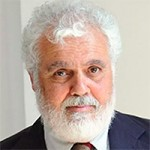
Marco Tullio Giordana, recipient of the 2026 Premio all'Opera d'Autore
Marco Tullio Giordana, born in Milan in 1950, stands as one of the most significant voices in contemporary Italian cinema. An auteur who has consistently used film as a tool for social and political inquiry, Giordana has narrated Italy with a depth and sensitivity matched by few filmmakers of his generation.
The centrepiece of the tribute to Giordana will be a restored screening of I cento passi (The Hundred Steps, 2000), his breakthrough masterpiece that won the Best Screenplay award at the Venice Film Festival and five David di Donatello awards. The film tells the true story of Peppino Impastato, a young communist militant who fought against the Mafia in his hometown of Cinisi, Sicily, using radio broadcasts to denounce organized crime. His house stood just one hundred steps from that of Mafia boss Gaetano Badalamenti — hence the film's title.
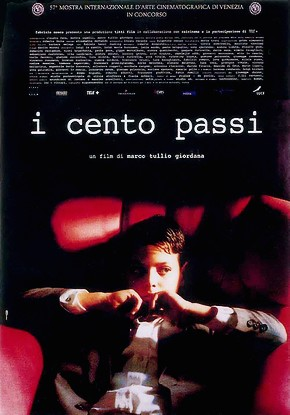
Original theatrical poster for "I cento passi" (2000)
The film stars Luigi Lo Cascio in a career-defining performance as Peppino Impastato. Lo Cascio, who will attend the screening in Gorizia, won a David di Donatello for his portrayal. Director Giordana discovered Lo Cascio just weeks before filming began, when the actor's uncle (also in the film) recommended his nephew. As Giordana recalled: "I saw Luigi Lo Cascio in the distance, even before exchanging two words with him, and he seemed exactly right. I thought: let's hope he's good. Then I did auditions with him, spoke with him, and realized his extraordinary intelligence and culture."
Beyond I cento passi, Giordana's filmography includes the monumental La meglio gioventù (The Best of Youth, 2003), a six-hour epic that follows two brothers through four decades of Italian history, and Pasolini, un delitto italiano (1995), among many other works of social commitment and artistic excellence.
Plan Your Visit
Festival Information
Dates: 16 – 22 July 2026
Location: Various venues throughout Gorizia, Italy
Admission: Free to all events
Official programme: Available for download at www.amidei.com
Address: Piazza della Vittoria, 41 — 34170 Gorizia (GO), Italy
Getting There
Gorizia is located in northeastern Italy, on the border with Slovenia. The nearest major city is Trieste (approximately 40 km), and the region is well connected by train and bus services. Nova Gorica (Slovenia) is directly adjacent to Gorizia, and visitors can easily walk between the two cities. The closest airport is Trieste Airport (TRS), with connections to major European cities.
Where to Stay
Gorizia and the surrounding area offer a range of accommodation options, from boutique hotels to bed & breakfasts. Consider staying in Nova Gorica (Slovenia) for a unique cross-border experience, as the two cities function as a single urban area.
Combined Visit
The Premio Sergio Amidei pairs beautifully with a visit to the GO! 2025 European Capital of Culture sites and events still ongoing in the region. Explore Nova Gorica's modernist architecture, visit the Solkan Bridge, hike Mount Sabotin, and enjoy the unique culinary traditions of this border region where Italian and Slovenian cultures intertwine.