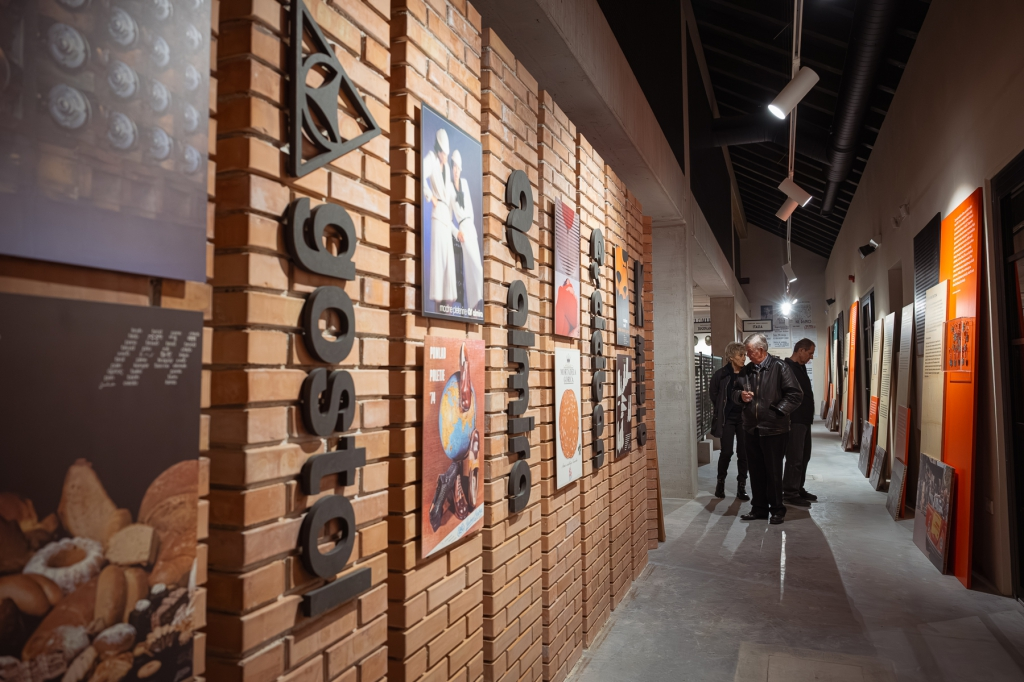
There are few places in Europe where a border runs straight through a railway station square — and fewer still where that same border has been turned into the subject of a museum. On the first Sunday of August, visitors to the EPICenter in Nova Gorica were reminded why this is exactly the point. Admission to City on the Border, the centre's permanent exhibition, was free all day, and two guided tours — in Italian at 10:00 and in Slovenian at 16:00 — walked locals and cross-border day-trippers alike through a century in which this single town was Austro-Hungarian Görz, Italian Gorizia, divided front line, and finally Nova Gorica–Gorizia: the first truly borderless European Capital of Culture.
The monthly free Sunday is now a fixture of the EPICenter's calendar, part of the legacy programme of GO! 2025, the European Capital of Culture year that Nova Gorica and its Italian twin city Gorizia shared in 2025. The formula is simple and deliberately welcoming: on the first Sunday of each month, entry costs nothing, and curator-led or guided visits anchor the morning and the late afternoon.
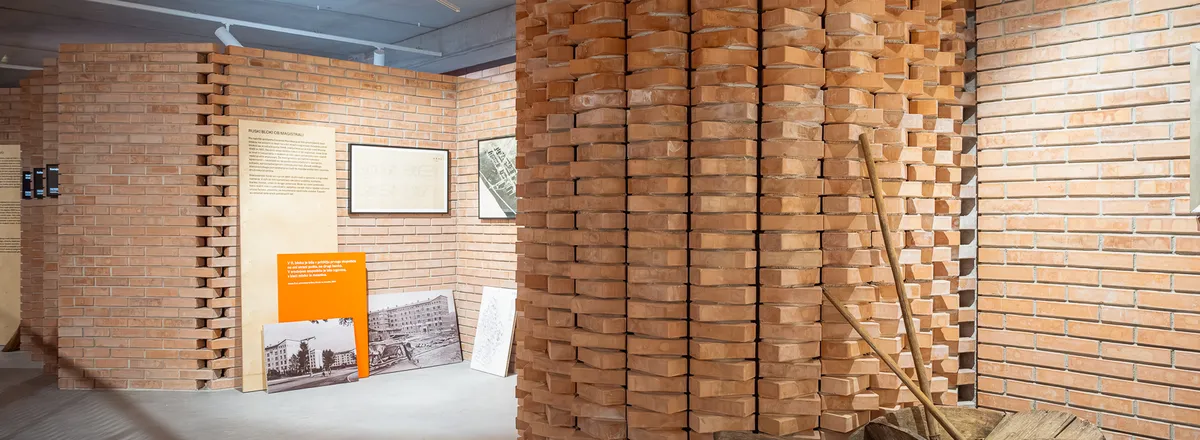
A warehouse of stories, not a hall of objects
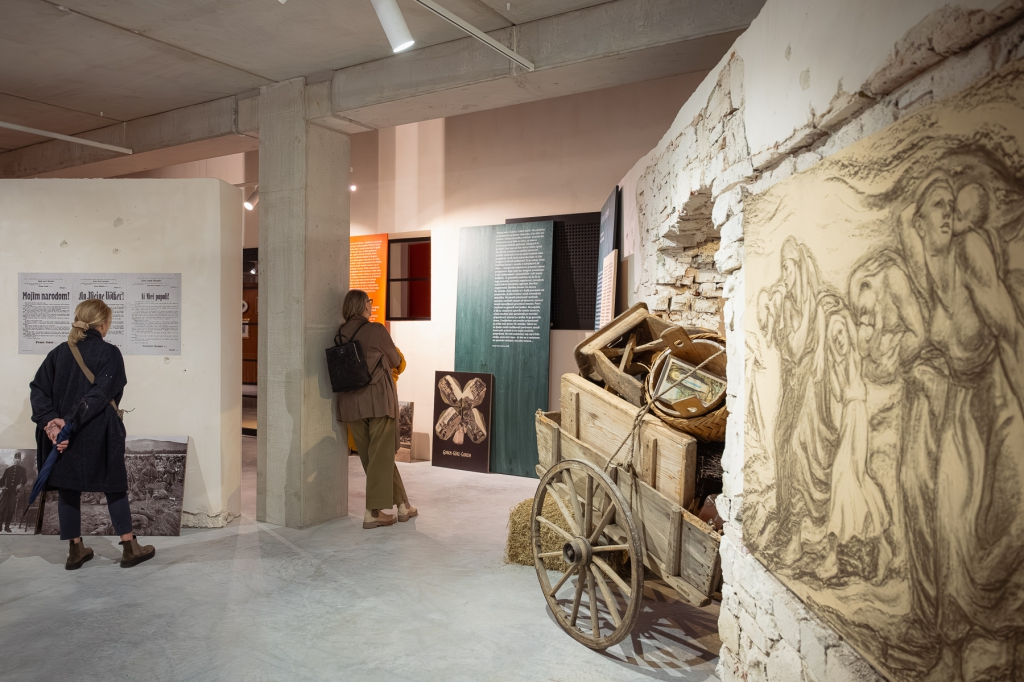
City on the Border was prepared by historian Dr Kaja Širok and opened in November 2025 as the centrepiece of EPIC — the European Platform for the Interpretation of the 20th Century, the flagship project of the entire Capital of Culture year. Rather than marching visitors through a textbook chronology, the exhibition tells the history of the Goriška region through personal and collective stories: letters, objects, photographs, film footage and oral memories of the people who lived along the border before, during and after the two world wars.
The 550 m² space, designed with Svet vmes, AA and Studio Kruh, is organised as a sequence of seven historical periods, each with its own spatial character — narrow passages, acoustic niches, projection rooms and "spaces within spaces" where visitors can slow down. The design draws on the building's past as a goods warehouse: what was once a store of merchandise has become a store of memory, open-ended by design so that new stories can keep being added.
"It moves beyond traditional national narratives to offer a human and emotional perspective on the events that shaped the region."
That participatory spirit is built into the final section of the exhibition, where visitors are invited to contribute their own objects, thoughts and memories — co-creating what the curators call a living cultural memory of Goriška. Sunday's guided tours made the most of this: in both languages, guides drew out individual testimonies — smugglers' tales from the hard-border decades, wartime displacement, the everyday strangeness of growing up with a fence at the end of the street — and placed them against the big historical frames of fascism, war and post-war reconstruction.
Why this Sunday mattered
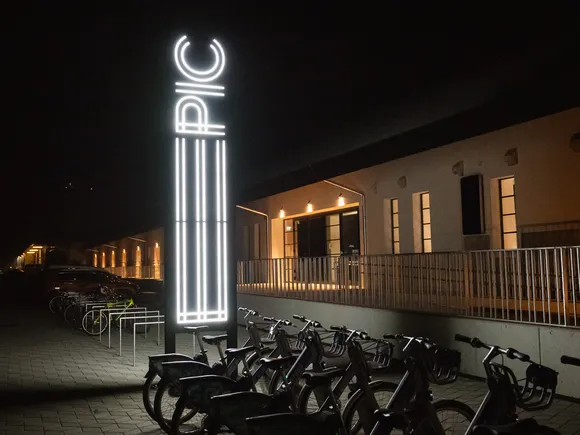
Free-admission days can feel like a marketing gesture; here they function more like a civic ritual. Nova Gorica and Gorizia lived their Capital of Culture year under the slogan "GO! Borderless", and the EPICenter is arguably its most durable monument — a cross-border participatory space dedicated to interpreting, studying and debating the 20th century, complete with a gallery for temporary exhibitions, a multipurpose hall and a café that stays open late on Thursdays and Fridays.
The bilingual tour schedule — Italian in the morning, Slovenian in the afternoon — quietly mirrors the exhibition's whole thesis: that this borderland has always been multicultural, and that its history can only be told properly in more than one language. Visitors on Sunday moved between the two communities just as the exhibition moves between perspectives, juxtaposing experiences that national histories long kept in separate rooms.
The timing also carries a symbolic charge. In 2025 the twin cities handed the Capital of Culture title on to Trenčín and Oulu after a programme of more than 800 events — but the EPICenter, housed in a building renovated for the occasion, was always meant to outlive the year itself. Recurring free Sundays, evening openings for Museum Night, an accompanying publication edited by Dr Širok and released in May 2026: the legacy is being built in plain sight, one first Sunday at a time.
If you missed it
Event Card
- Event
- City on the Border — free entrance & guided tours (first-Sunday open day)
- Date
- Sunday, 2 August 2026
- Venue
- EPICenter, Kolodvorska pot 10, Nova Gorica, Slovenia
- Programme
- 10:00 guided tour (Italian) · 16:00 guided tour (Slovenian)
- Admission
- Free
- Exhibition
- City on the Border. Goriška in the 20th Century, curated by Dr Kaja Širok
- Context
- EPIC — flagship legacy project of GO! 2025, European Capital of Culture Nova Gorica–Gorizia
- Next edition
- Sunday, 6 September 2026
For a region that spent much of the last century divided by a line on a map, there is something quietly radical about a Sunday afternoon in which the line is the exhibit — and crossing it costs nothing at all.
Sources: go2025.eu event listing · go-epic.eu · Vipava Valley Tourism · Culture.si. Programme details are subject to change by the organiser; tours with fewer than eight registered participants may be cancelled.