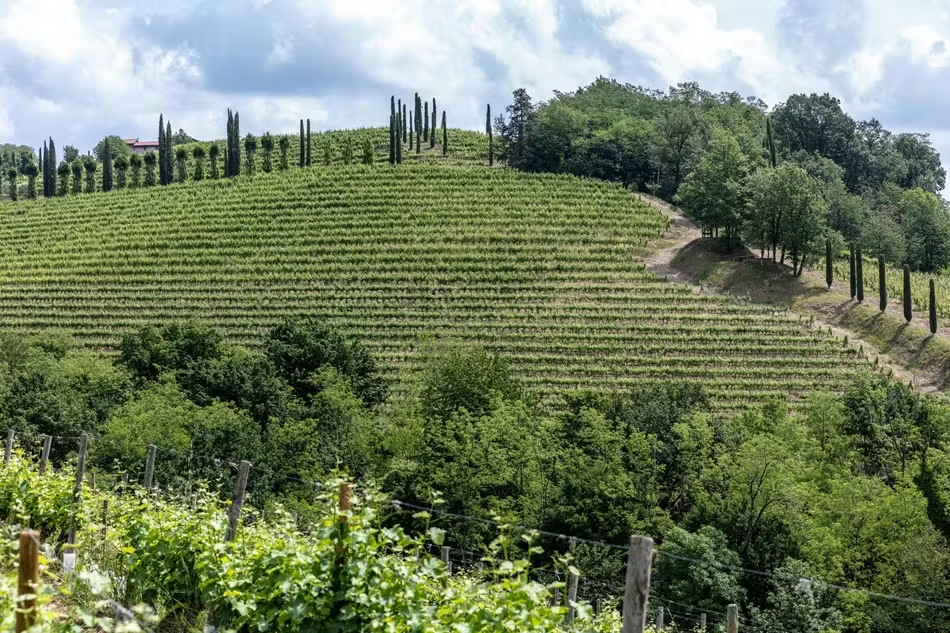
In the rolling wine country where Slovenia meets Italy — the same cross-border region that celebrated its year as GO! 2025 European Capital of Culture — a small municipality is proving that the most meaningful cultural borders left to dissolve are not the ones on maps. Now in its fourth edition, Art Without Borders treats disability not as a limitation to be accommodated, but as an open space for creative experimentation: a lens through which communication, listening and human relationships can be reimagined entirely.
This year's format was renewed through a public call for proposals co-designed with local partners, and the result is a rich calendar of free events organised around four thematic paths — Expressing, Perceiving, Observing and Encountering — staged in unconventional venues: a municipal gym, the celebrated Jermann Winery, Tenuta Borgo Conventi, Tenuta Villanova, and the Municipal Theatre of Cormòns.
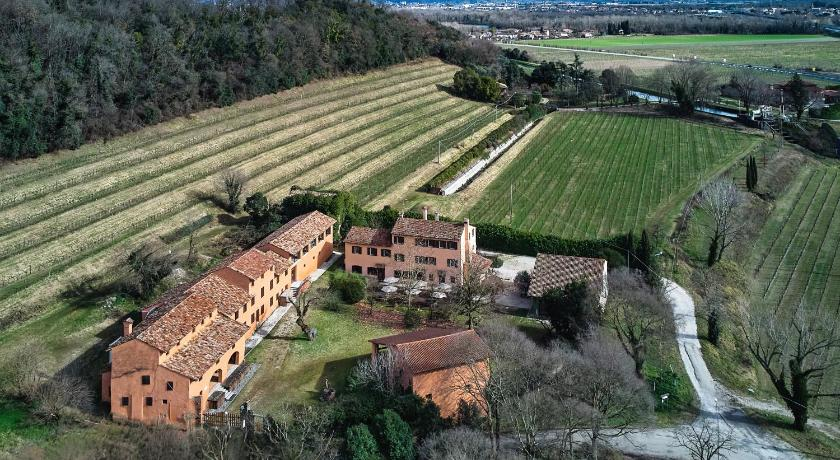 The Collio landscape around Farra d'Isonzo, home of the festival.
Expressing — Giving Shape to Who We Are
The festival opened in July with the body and the word. “Tutti siamo Carmen” (We Are All Carmen), a movement and rhythm workshop by ASD Viento Flamenco, filled the municipal gym and the Jermann Winery in Ruttars on 11, 25 and 26 July — culminating in a final public performance that brought flamenco's fierce, inclusive energy to the vineyards.
 Movement and rhythm workshops opened the festival's July programme.
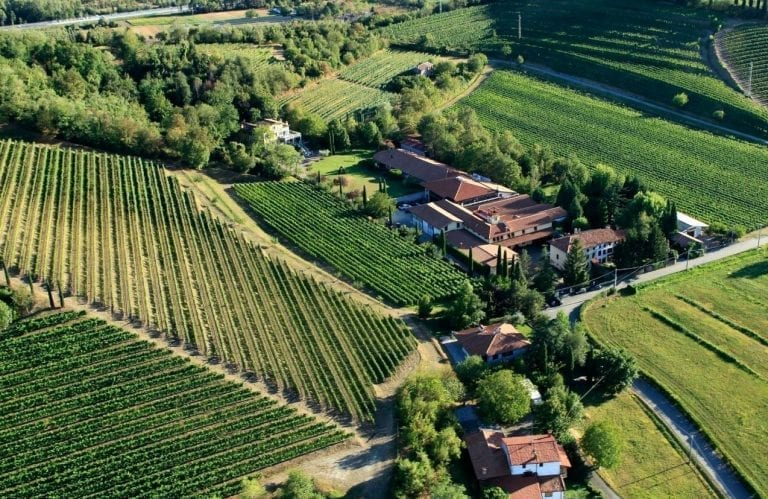 Historic wineries like Jermann doubled as festival venues.
July continued with “Parole, Identità e Confini” (Words, Identity and Boundaries), a youth theatre workshop held 17–20 July, and the contemporary theatre production “Piango in lingua originale” (I Cry in the Original Language), staged on 30 July at Tenuta Villanova — a fittingly poetic setting for a piece about the languages our bodies speak.
Perceiving — The World Through Other Senses
September and October shift the focus to experiences that deliberately dethrone sight. A tactile workshop, “Art Without Sight”, takes place at Tenuta Borgo Conventi on 5 September. Then comes one of the most anticipated evenings of the autumn: a Sensory Dinner in the Dark at Tenuta Villanova on 3 October, followed the next morning by “Camminare la Natura” (Walking Nature) — an inclusive walk along the local 10,000 Steps trail led by blind guides, inverting every assumption about who leads and who follows.
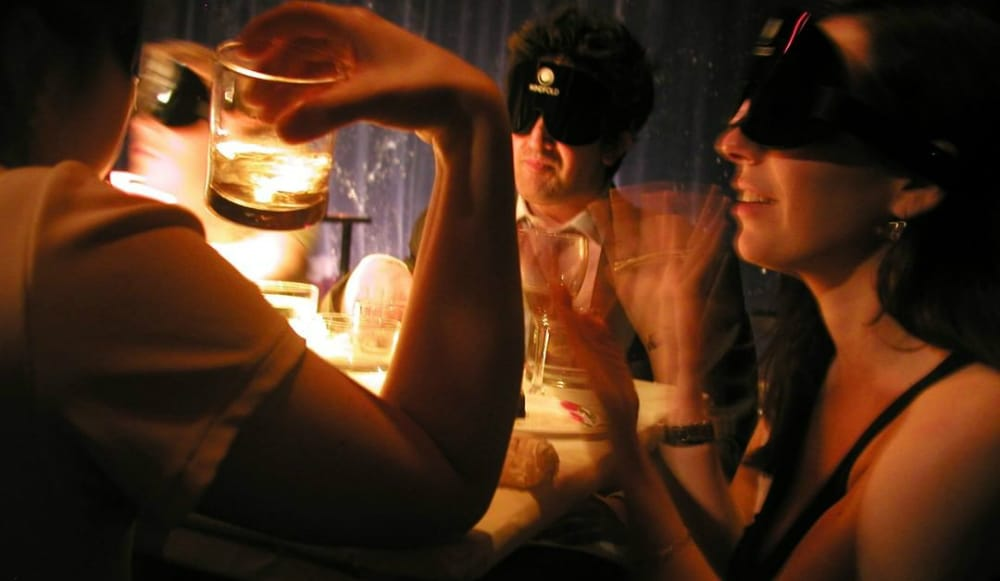 Dining in the dark: an immersive way to explore perception beyond sight.
Observing — Changing Perspective on the Body
September also brings social photography into the conversation. “Corpi Vivi” (Living Bodies), an accessible photography workshop against stereotypes, runs at Tenuta Borgo Conventi on 11 and 13 September. On 18 September the initiative culminates with the opening of a public exhibition in Piazza Vittorio Emanuele III and at the Town Hall, paired with the conference “The Role of Art in Cancer Awareness” in the Council Chamber — art as testimony, not decoration.
A deeply synesthetic approach that transcends traditional barriers, using live performance and photography as tangible tools for community engagement.
Encountering — Building a Shared Culture
October belongs to the community and to new generations. Throughout the month, meetings in local schools will draft a Manifesto of Empathy, written by the students themselves. The festival then closes on 20 October at the Cormòns Municipal Theatre with an inclusive concert by the Calicanto Band — an ensemble of young musicians with and without disabilities, playing together as the festival's final, wordless statement.
How to Take Part
All events are free of charge, but places must be reserved in advance on the Eventbrite.it platform. The September–October programme (Perceiving, Observing, Encountering) is still open for booking at the time of publication.
The festival is promoted by the Municipality of Farra d'Isonzo with the support of the Autonomous Region of Friuli Venezia Giulia and Io Sono Friuli Venezia Giulia, with special thanks to Jermann Winery, Tenuta Borgo Conventi and Tenuta Villanova.
Listed in the official GO! 2025 events programme.
Why It Matters
It is no coincidence that this festival thrives in the Gorizia borderlands. After a year in which Nova Gorica and Gorizia made “borderless” the watchword of their European Capital of Culture, Art Without Borders carries the same spirit inward — asking what borders remain once the geopolitical ones have faded. The answer it offers, across flamenco workshops, darkened dining rooms and school manifestos, is that the last frontiers are perceptual and social, and that art is still the best tool we have for crossing them.