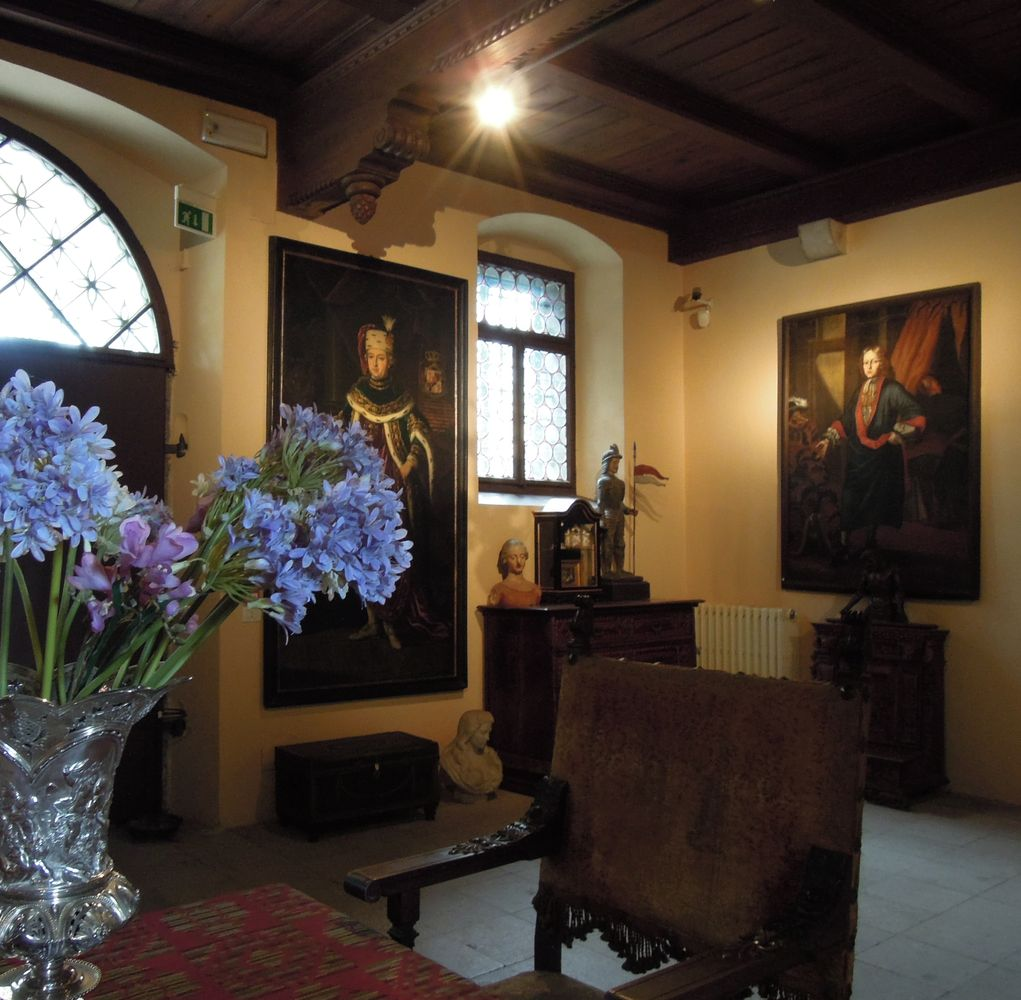
Throughout August, Palazzo Coronini Cronberg opened its doors wider than ever — inviting residents and visitors to rediscover one of Gorizia's most enchanting historic residences through a rich calendar of special openings, guided tours and immersive experiences.
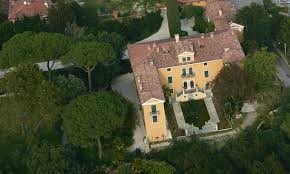 The palace and its centuries-old park, nestled in the heart of Gorizia
A Month of Open Doors
Every Monday and Tuesday morning, from 10:00 to 13:00, the palace welcomed guests for extraordinary openings beyond the usual visiting hours — a rare chance to wander the frescoed halls and period rooms in the quiet light of a summer morning.
Weekends brought the palace to life with guided tours every Saturday and Sunday at 10:00, 12:00, 17:00 and 18:00, included in the admission ticket with no reservation needed. Guides led visitors through the aristocratic apartments of the Coronini Cronberg family, where original furnishings, portraits, porcelain and silverware still tell the story of centuries of European history.
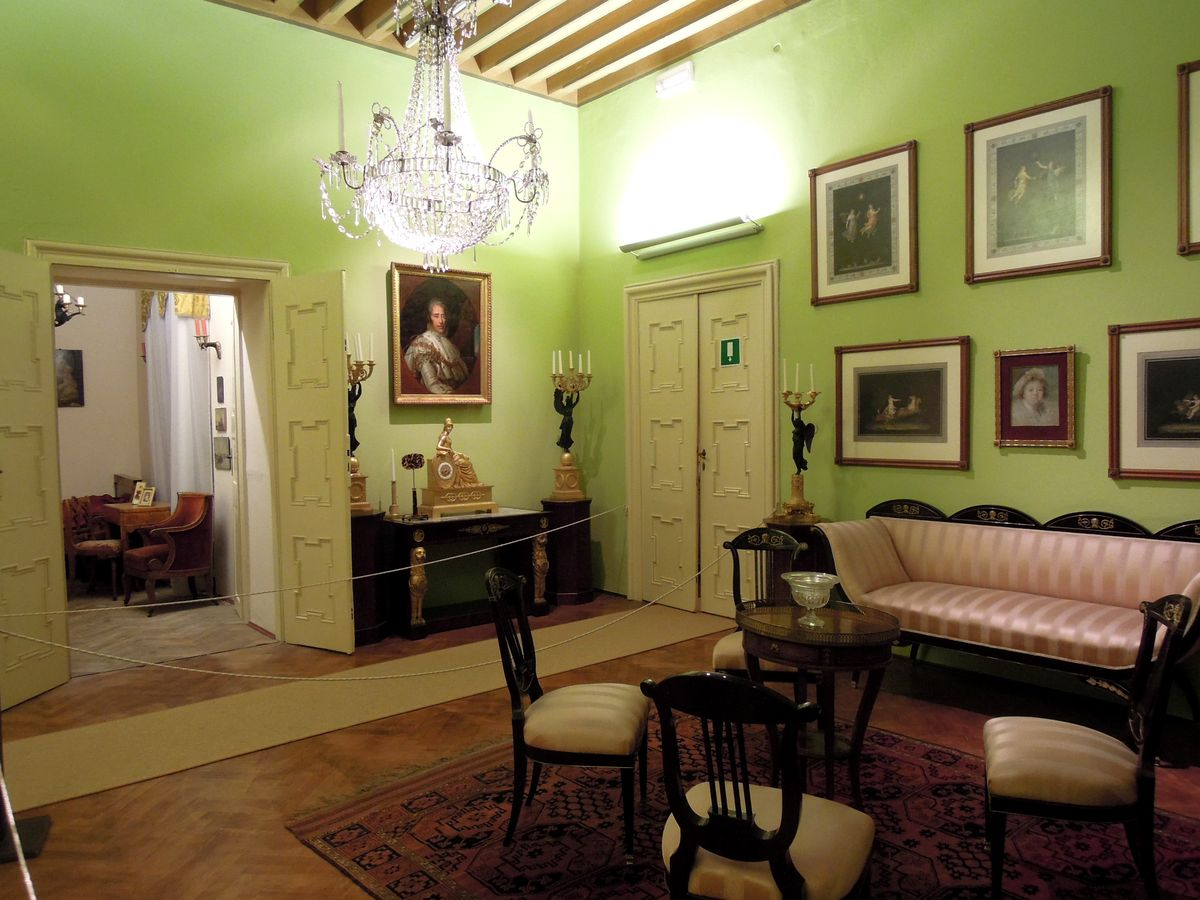 The green salon of Palazzo Coronini
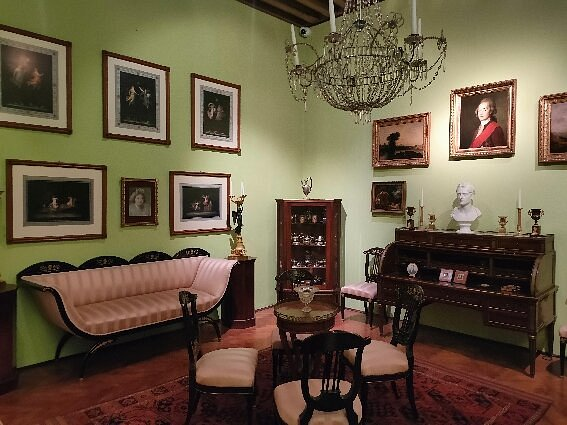 Period furniture and family portraits
Highlights of the Programme
Ferragosto at the Palace
On 15 August the palace stayed open all day — 10:00–13:00 and 15:00–19:00 — with guided tours departing every hour on the hour.
The Secret Drawers
A special evening tour on 27 August revealed hidden compartments, curiosities and untold stories tucked away in the palace's historic furniture.
Breakfast at the Palace
On 29 August, guests began the morning with breakfast at the palace, followed by a guided stroll through the lush historic park.
Augmented Experience Room
Every Friday, small groups of up to five stepped into the Augmented Experience Room for an immersive digital journey through the palace's past.
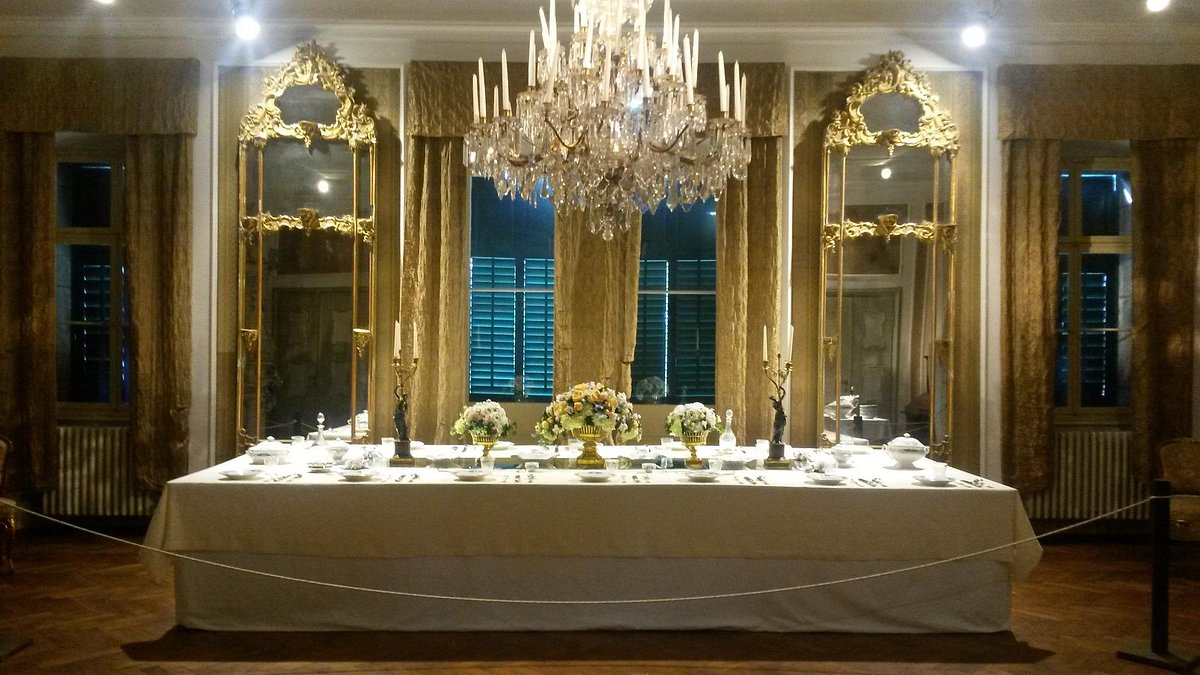 The grand dining room, set as it would have been in the palace's heyday
Between Art, History and Landscape
The calendar was designed to showcase the residence's historical, artistic and landscape heritage at the height of the visiting season. From the crystal chandeliers of the salons to the shaded paths of the park — with its exotic trees, stone stairways and hidden viewpoints — Agosto a Palazzo Coronini offered a different way to experience a place where the border between Italy and Slovenia has always been a bridge rather than a wall.
A calendar designed to showcase the residence's historical, artistic and landscape heritage.
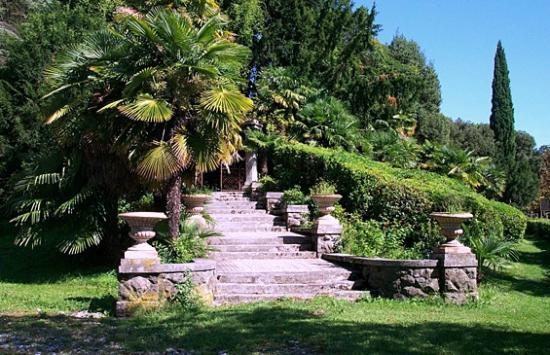 The romantic park, with its palms, cypresses and stone stairways
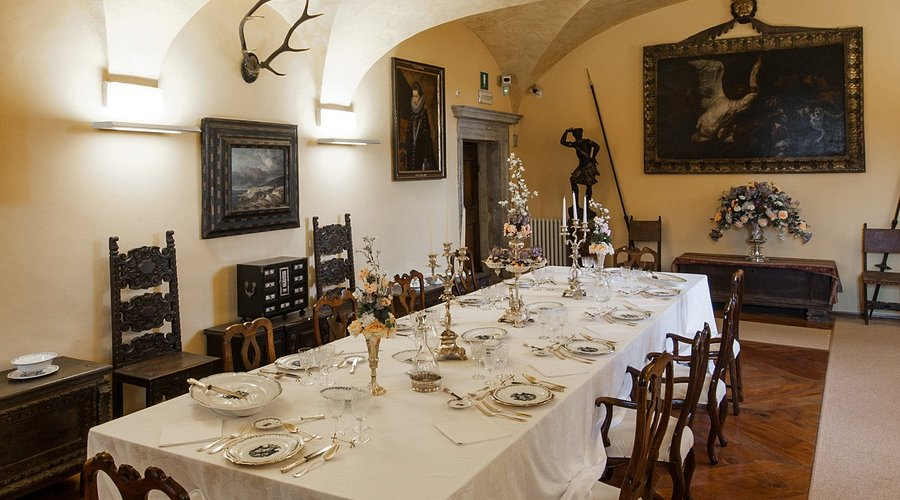 The vaulted dining hall
A sitting room with portraits
The vaulted dining hall
A sitting room with portraits
Four Centuries of History
Palazzo Coronini Cronberg is one of Gorizia's oldest and most storied residences. It was built between 1593 and 1598 for Carlo Zengraf, secretary of the Provincial States on behalf of the House of Austria — probably to a design by the military architect Giulio Baldigara — as an austere fortified house overlooking the northern edge of the city. After Zengraf's death, the property passed in 1614 to the noble Friulian Strassoldo family, who softened its military character, adding the family chapel dedicated to Saint Anne in 1643, the stables, and the chancellery that today houses the Foundation's offices.
Weakened by the Napoleonic wars, the Strassoldo were forced to auction the estate, and on 7 October 1820 it was purchased by Count Michele Coronini Cronberg, a diplomat at the Austrian embassy in Paris. From 1833 the Count undertook major renovations, adding a twenty-metre wing that housed the family's rich library — works finished just in time for the most famous guest in the palace's history.
Period rooms arranged as the Coronini family left them, with portraits spanning four centuries
The Last King of France
In October 1836, Charles X of Bourbon — the last king of France, forced to abdicate in the July Revolution of 1830 — left his exile near Prague and moved to Gorizia with his small court, drawn by the town's famously mild and healthy climate. He took up residence at Palazzo Coronini, while his family and entourage settled in the city centre at Palazzo Strassoldo. His stay was tragically brief: only about a month after his arrival, on 6 November 1836, the king died of cholera in one of the palace's rooms.
He was buried in the nearby Franciscan monastery of Castagnavizza — today Kostanjevica, in Nova Gorica, Slovenia — whose crypt became the "Little Saint-Denis" of the Bourbon exile, gathering the tombs of his son Louis-Antoine, Duke of Angoulême, of Marie-Thérèse-Charlotte (the only surviving child of Louis XVI and Marie Antoinette), and of Henri, Count of Chambord, the last of the French Bourbons. Until 1844 the Bourbons kept their small court in Gorizia, making the town a destination for French exiles and leaving a lasting mark on its cultural life — a cross-border story that resonates powerfully with the spirit of GO! 2025, the first European Capital of Culture shared by two cities in two countries.
The Romantic Park
The five-hectare park surrounding the palace owes its present form to Count Alfredo Coronini Cronberg (1846–1920). Around 1880, inspired by the great gardens he had admired on his travels — and by Maximilian of Habsburg's park at Miramare in Trieste — he transformed the original geometric Italian garden into a romantic English landscape garden. Taking advantage of the sloping, irregular terrain, he created a succession of picturesque scenes: sculptures, stone stairways, panoramic terraces, pergolas, fountains and pools emerging from evergreen groves, designed like theatrical stage sets.
The vegetation is almost exclusively Mediterranean and warm-climate evergreen — holm oaks, cork oaks, palms, Japanese medlars, bamboo and a venerable Ginkgo biloba — dotted with remarkable artworks: an 18th-century statue of Giovanni Battista Coronini by Marco Chiereghin, a Roman triform Hecate from the 2nd century AD, mythological statues by Orazio Marinali, and a small neoclassical temple designed in 1913 by Girolamo Luzzatto. Recently restored through a major PNRR-funded redevelopment project that reintroduced its original Mediterranean character, the park today is freely open to the public — the same green oasis where August's guests enjoyed breakfast and guided walks.
Stone staircase among palms in the park
Aerial view of the palace within its park
From Wars to a Gift to the City
The twentieth century was hard on the palace. Hit repeatedly by artillery fire during the First World War, it was rebuilt between 1919 and 1923; during the Second World War it housed in turn a German command, a Yugoslav partisan command and finally Allied troops, who remained until 1947. The Coronini family was only able to return in 1951. It was then that Count Guglielmo Coronini Cronberg (1905–1990) — the last of his line — began to plan a museum future for the family residence. On his death on 13 September 1990, his will established the Fondazione Palazzo Coronini Cronberg, leaving the entire family patrimony to the community. Today the museum itinerary unfolds through fifteen rooms furnished with furniture, objets d'art and works from the 16th to the 19th century, preserved exactly in the arrangement the Count himself designed.
A Timeline
Carlo Zengraf, secretary of the Provincial States of Gorizia, builds the palace as a fortified residence.
The Strassoldo family acquires the estate, later adding the chapel of Saint Anne (1643), stables and chancellery.
Count Michele Coronini Cronberg buys the property at auction and begins major renovations.
Charles X of Bourbon, last king of France, takes residence in exile — and dies of cholera just weeks later, on 6 November.
Count Alfredo Coronini transforms the garden into a romantic English landscape park inspired by Miramare.
Reconstruction after heavy First World War damage; in 1922 the palace is placed under heritage protection.
After wartime occupations, the Coronini family finally returns to live in the palace.
Count Guglielmo's will creates the Foundation, opening the palace and collections to the public.
Agosto a Palazzo Coronini — the palace opens its doors all August long with special openings, guided tours and immersive experiences.
Thank you to everyone who joined us this August — the palace and park look forward to welcoming you again soon.
Part of the programme of GO! 2025 — European Capital of Culture.
Historical sources: Fondazione Palazzo Coronini Cronberg (coronini.it) · Turismo FVG · Kostanjevica Monastery · GO! 2025