Archaeological Suggestions 2026: The Legacy of Giovanni Brusin
Suggestioni Archeologiche 2026
Jul 2 - Jul 30, 2026
17:15
National Archaeological Museum of Aquileia
Archaeological Suggestions 2026: The Legacy of Giovanni Brusin
July 2 – July 30, 2026 | National Archaeological Museum of Aquileia, Via Roma 1, Aquileia (UD), Italy
Every Thursday in July at 5:15 PM | Free admission with reservation
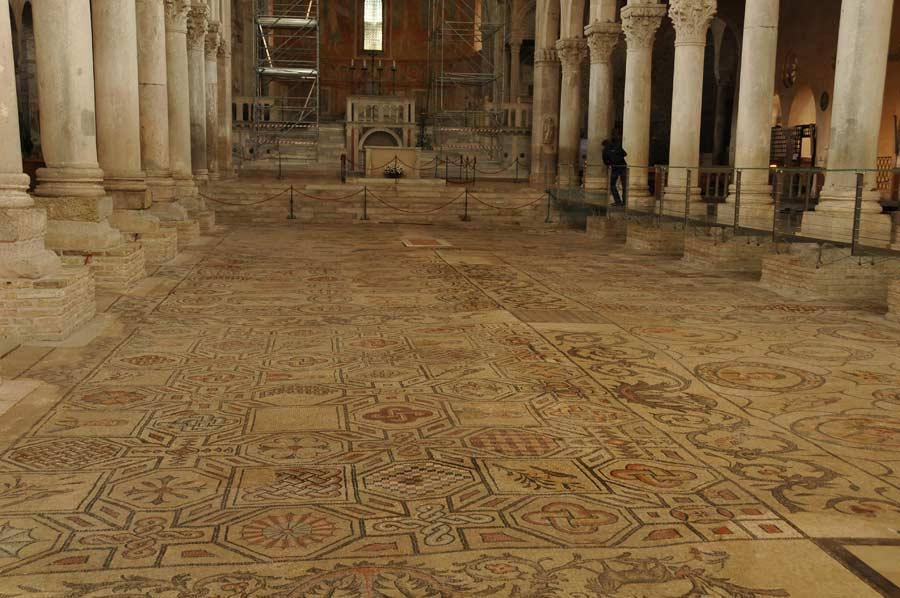
The magnificent 4th-century mosaic floor of Aquileia Basilica, spanning over 750 square meters — one of the largest and best-preserved in the Christian West. © Arte.it
About This Event
The traditional Archaeological Suggestions (Suggestioni Archeologiche) series returns in July 2026, a prestigious cycle of conferences organized annually by the National Archaeological Museum of Aquileia and the National Association for Aquileia to showcase the region's extraordinary archaeological heritage: discoveries, new research developments, scholarly insights, and stories of those who have dedicated their lives to the care, study, and promotion of Aquileia, one of Italy's most important UNESCO World Heritage Sites.
The 2026 edition is dedicated to one of the most prominent figures of Aquileian archaeology and the groundbreaking discoveries of his era: Giovanni Battista Brusin (1883–1976), who served as director of the National Archaeological Museum from 1922 to 1952. Fifty years after his passing, his discoveries remain the subject of active research thanks to the efforts of the many organizations committed to promoting the UNESCO World Heritage Site of Aquileia, which have embraced his enduring mission. Conference attendees will hear from leading experts about the latest developments, challenges, and open questions regarding some of the ancient city's most monumental sites — the very same sites that Brusin and the National Association for Aquileia brought to light through decades of painstaking excavation and research.

Giovanni Brusin's guidebook "Aquileia e Grado" (1955) — a testament to his lifelong dedication to the region's archaeology.
Who Was Giovanni Battista Brusin?
Giovanni Battista Brusin (Aquileia, 1883 – Aquileia, 1976) was a pioneering Italian archaeologist, historian, and archivist who profoundly shaped our understanding of Roman and early Christian Aquileia. Born in the very town he would spend his life studying, Brusin served as Director of the National Archaeological Museum of Aquileia for thirty years (1922–1952), a period of extraordinary discovery and scholarly advancement. His influence extended far beyond the museum walls — he was also appointed Archaeological Superintendent for the Tre Venezie (Three Venices) region, became a member of the prestigious German Archaeological Institute, and was elected to the Accademia dei Lincei, Italy's oldest scientific academy.
During his tenure, Brusin supervised some of the most important archaeological campaigns in Aquileia's modern history. His excavations at the Sepolcreto (Roman burial ground) in 1939–1940 uncovered five extraordinary funerary enclosures belonging to prominent Aquileian families — the Statius, Julius, Trebius, and Cestius families — revealing some of the best-preserved Roman burial monuments in Northern Italy. He directed investigations at the Grandi Terme (Great Baths), the River Port, and the Basilica of Monastero, each yielding remarkable finds that continue to generate scholarly debate today. During the difficult years of World War II, Brusin also served as a delegate of the Ministry of National Education with the critical responsibility of protecting Friulian artworks from the conflict, working to transfer precious cultural heritage to safe locations.
The National Association for Aquileia, founded in 1928, stood alongside Brusin throughout his career, promoting and financially supporting studies, excavations, and research in what remain among the city's most renowned and visited archaeological sites. The 2026 conference cycle celebrates this enduring partnership and the living legacy of Brusin's work.
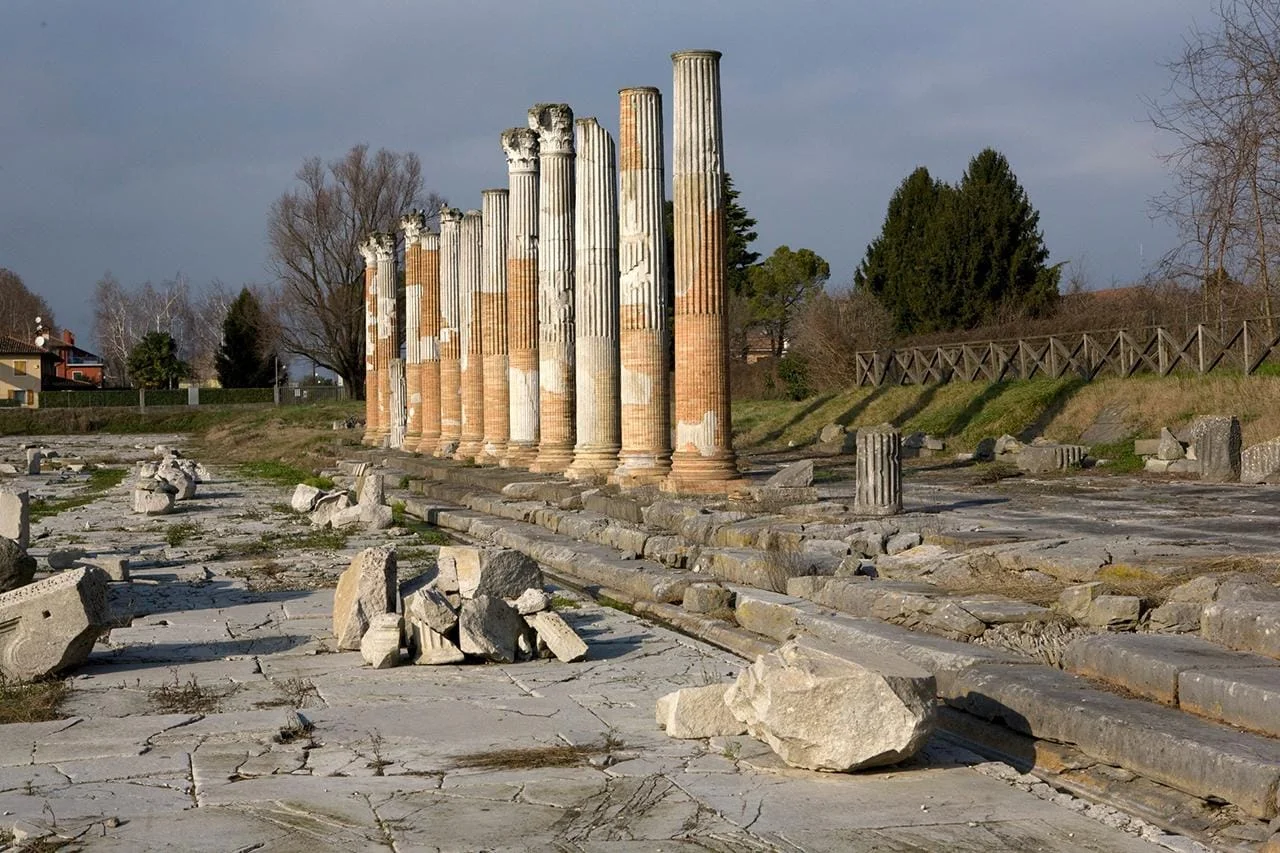
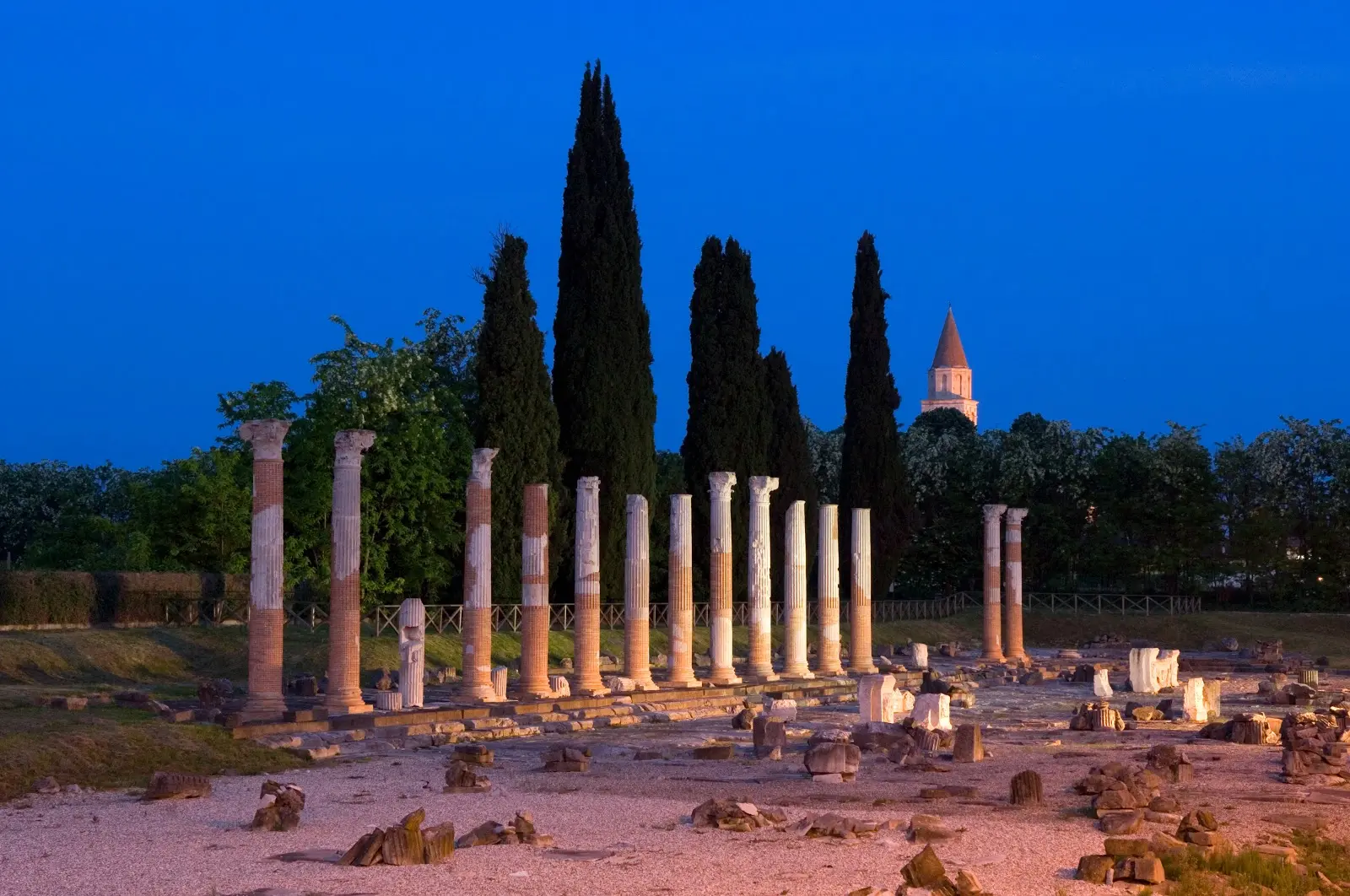
The Roman forum of Aquileia with its impressive colonnade and the medieval bell tower of the Basilica in the background. © Following Hadrian Photography
Aquileia: A UNESCO World Heritage Treasure
Aquileia was founded in 181 BC as a Roman military colony and rapidly grew into one of the largest and wealthiest cities of the early Roman Empire — the fourth most populous city on the Italian Peninsula and the ninth largest in the entire Empire, with approximately 50,000 inhabitants at its peak in the 4th century AD. Strategically positioned at the northern end of the Adriatic Sea on the Natissa River, Aquileia served as a vital trading center connecting the Mediterranean to Central Europe, which sat at the terminus of the famous Amber Road that brought precious Baltic amber to the Roman world.
The city's wealth and cosmopolitan character attracted peoples from across the Empire — Greeks, Latins, Balkans, North Africans, and Jews — creating a thriving multicultural center where the arts, particularly the art of mosaics, flourished. The grandeur of Roman Aquileia is still visible today in its spectacular remains: the theater, amphitheater, circus, forum, luxurious residential complexes (domus), the impressive river port with its long row of warehouses and quays, and the monumental Grandi Terme (Great Baths), officially known as the Thermae Felices Costantinianae, connected to Emperor Constantine the Great.
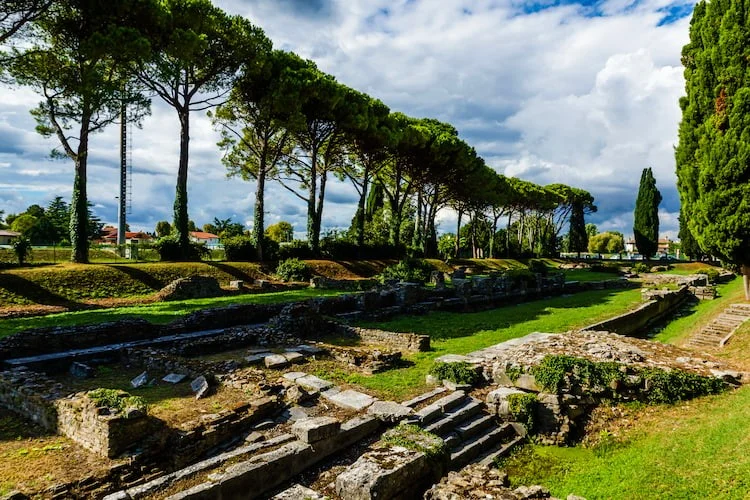
Panoramic view of the Aquileia archaeological area — most of the ancient city remains unexcavated beneath fields, constituting a unique archaeological reserve. © History Hit
Following the sack of Aquileia by Attila the Hun in 452 AD, the city transformed into one of the most important centers of early Christianity in the northern Adriatic. The Patriarchal Basilica of Santa Maria Assunta, with its extraordinary 4th-century mosaic floor covering 750 square meters — the largest in the Christian West — stands as a testament to this spiritual legacy. The basilica complex, with its 9th-century Crypt of Frescoes, Baptistery, Südhalle (South Hall) with its magnificent peacock mosaic, and the medieval bell tower rising 73 meters, was inscribed on the UNESCO World Heritage List in 1998 under criteria recognizing Aquileia as "the most complete example of an Early Roman city in the Mediterranean world."
Most remarkably, the majority of ancient Aquileia remains unexcavated beneath fields and the modern small town, making it probably the largest unexcavated Roman city in the entire Mediterranean world — an archaeological reserve of extraordinary potential for future research and discovery.
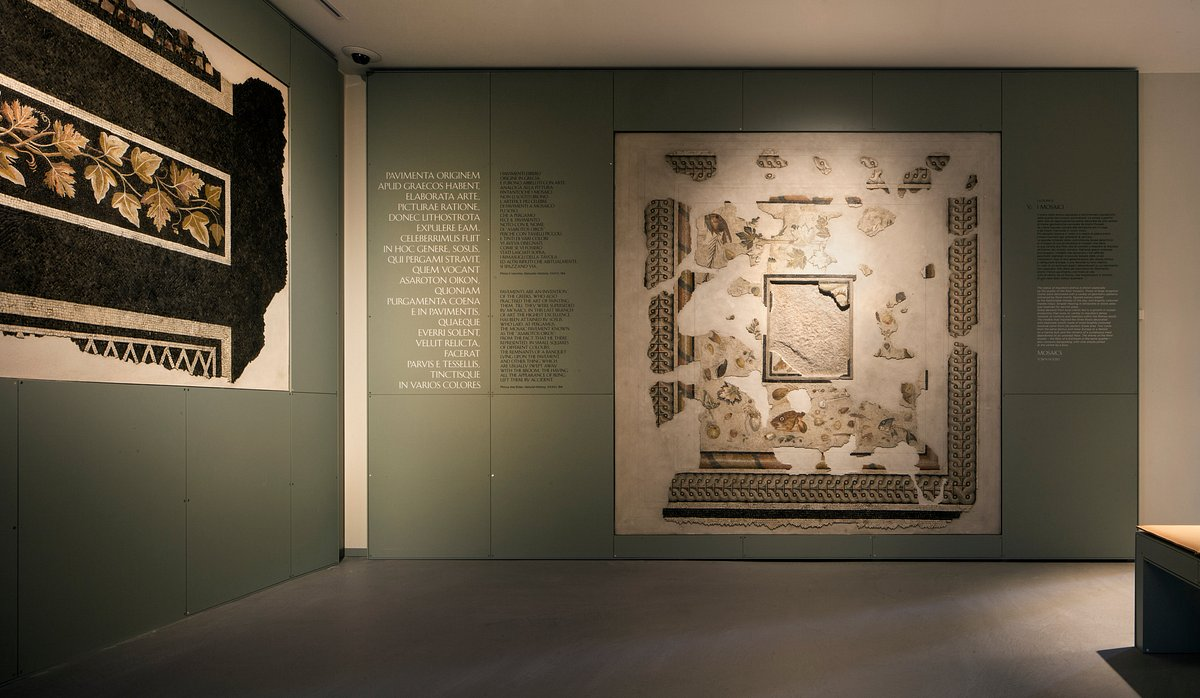
The National Archaeological Museum of Aquileia — recently refurbished galleries showcasing marble statues, frescoes, and mosaics. © TripAdvisor
The National Archaeological Museum of Aquileia
The National Archaeological Museum of Aquileia, housed in Villa Cassis Faraone on Via Roma, traces the city's millennia-long history from its foundation in 181 BC. Following extensive recent refurbishment, the museum now presents its remarkable collections across twelve rooms on three floors, featuring marble statues, frescoes, and mosaics of extraordinary beauty alongside furnishings, luxury objects, and everyday items, and a fascinating gallery of portraits of Aquileia's ancient inhabitants. The museum holds over 2,000 inscriptions, making it one of the richest epigraphic collections in Italy.
In 2024, the museum opened its new storage rooms to the public, displaying more than 5,000 additional artifacts previously kept in deposits — a groundbreaking initiative that allows visitors to explore the full depth of Aquileia's archaeological heritage. Visitors can also explore the outdoor exhibition behind the main building, where hundreds of stone inscriptions and burial monuments are displayed. The museum also participates in the #domenicalmuseo initiative, offering free admission on the first Sunday of each month.
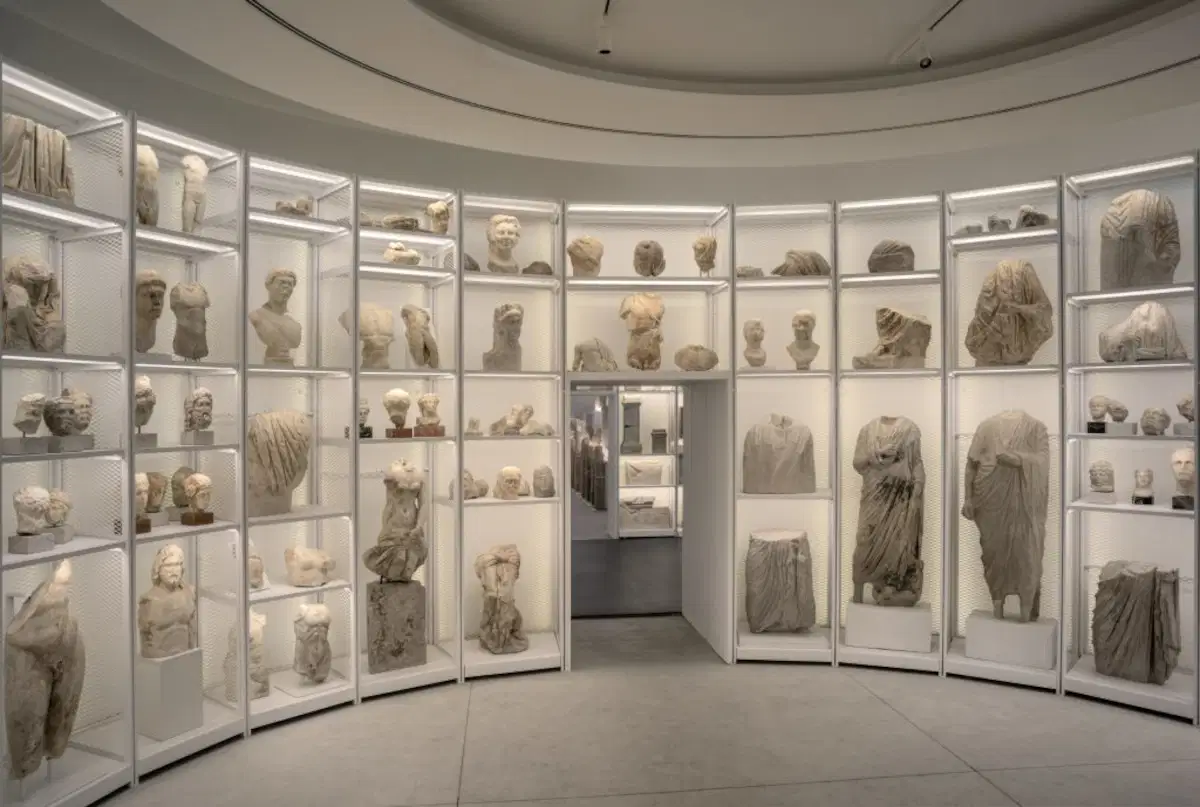
The museum's circular sculpture gallery displaying Roman busts and statues in illuminated glass cases — part of the new 2024 exhibition expansion. © Finestre sull'Arte
Conference Programme 2026
All conferences take place at the National Archaeological Museum of Aquileia every Thursday in July at 5:15 PM. Each session will be followed by a convivial social moment. Participation is free with mandatory reservation: call 0431 91016 or email museoaquileiaeventi@cultura.gov.it.
| Date | Topic & Speakers |
|---|---|
| July 2, 5:15 PM | Grandi Terme: The Mosaics of the North Hall. From the Discovery to the Most Recent Readings Matteo Cadario and Marina Rubinich — University of Udine |
| July 9, 5:15 PM | Giovanni Brusin and the Architectural Decoration of Aquileia Alessandro Mortera — University of Udine |
| July 16, 5:15 PM | Giovanni Brusin and the Excavations of the Basilica of Monastero Marta Novello — National Archaeological Museum of Aquileia |
| July 23, 5:15 PM | "A burial altar was discovered in a corner of the excavation." Giovanni Brusin and the Excavation of the Sepolcreto Cristiano Tiussi — Aquileia Foundation, Paola Ventura — Superintendency of Archaeology, Fine Arts and Landscape of Friuli Venezia Giulia |
| July 30, 5:15 PM | Giovanni Brusin: The Excavations of the River Port and the Origins of the National Association for Aquileia Luca Villa — National Association for Aquileia |
The Sepolcreto at twilight — five funerary enclosures excavated by Giovanni Brusin in 1939–1940, among the best-preserved Roman burial monuments in Northern Italy.
Highlights of the Conference Series
Grandi Terme: The Mosaics of the North Hall
The opening conference on July 2 focuses on one of the most spectacular yet least accessible sites of Roman Aquileia — the Grandi Terme or Great Baths. Officially known as the Thermae Felices Costantinianae, this enormous bath complex was connected to Emperor Constantine the Great and dates to the first half of the 4th century AD. Covering an estimated area of 2.5 hectares (approximately 25,000 square meters), the Grandi Terme were one of the largest spa complexes in Roman Italy.
The baths featured all the typical elements of imperial Roman thermae: a frigidarium (cold room) with opus sectile floors and six square pools, a natatio (open-air swimming pool), tepidarium and caldarium (warm and hot rooms) with underfloor heating systems, and two large symmetrical halls — the North Hall (Nordhalle) and South Hall (Südhalle) — adorned with sumptuous polychrome mosaic floors. Today, the entire complex lies concealed beneath cultivated fields, as the structure was systematically quarried for building materials during the Middle Ages. However, the mosaic floors that Brusin and subsequent archaeologists uncovered remain among the finest examples of late Roman decorative art in Northern Italy.
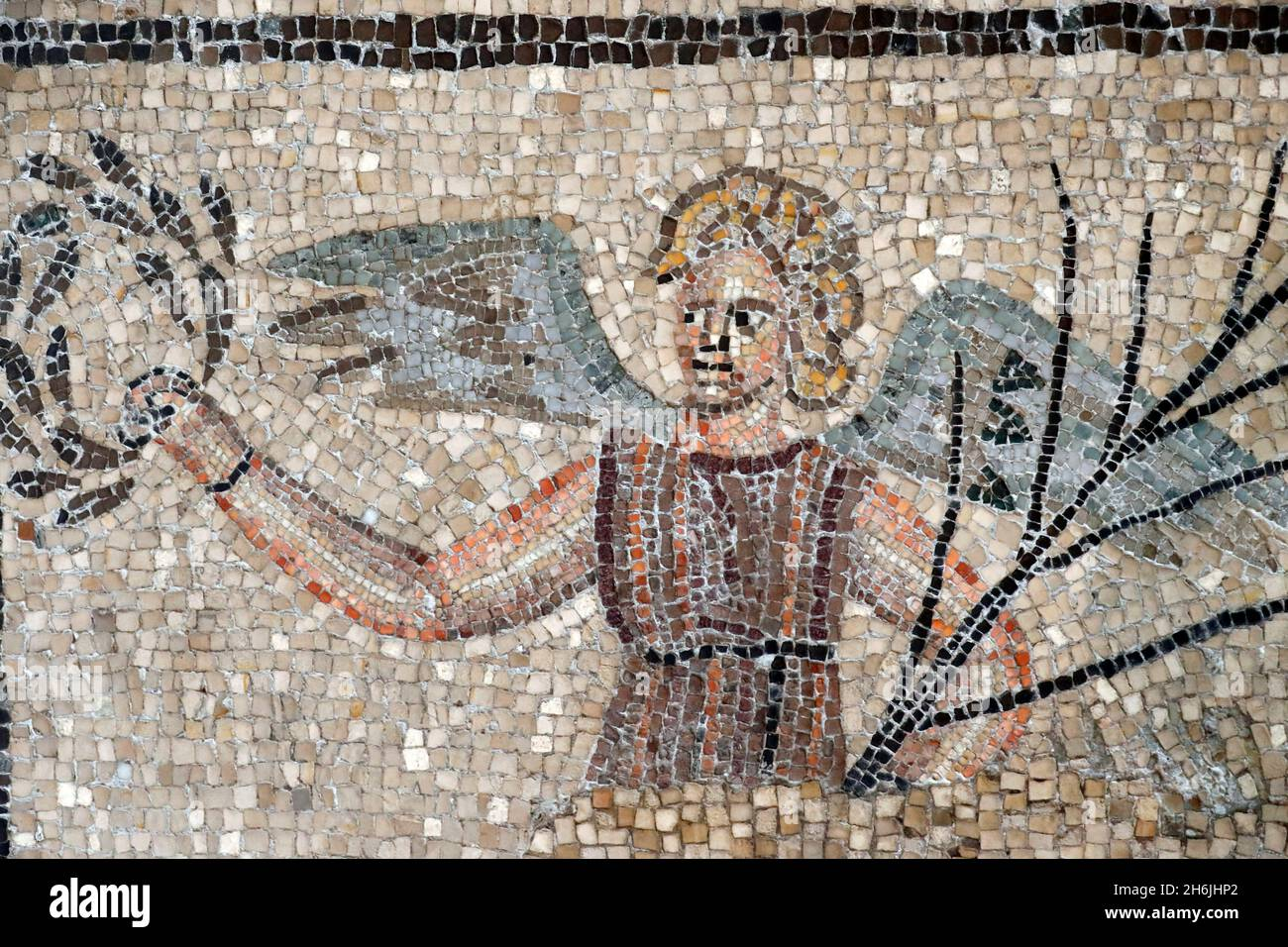
Detail of a 4th-century Christian mosaic — the artistry that made Aquileia famous throughout the Roman world. © Alamy
The Basilica of Monastero
The conference on July 16, presented by Marta Novello, Director of the National Archaeological Museum, examines Brusin's excavations at the Basilica of Monastero. Located in the Monastero fraction of Aquileia, this site preserves a 5th-century Christian basilica that later became a Benedictine monastery and now houses the Palaeo-Christian Museum. In 2024, Austrian archaeologists from the Academy of Sciences made a sensational discovery near this site — a previously unknown early Christian basilica in Byzantine style, expanded in the 6th century under Emperor Justinian I. This was the first newly discovered large building in decades of intensive archaeological research at Aquileia, with architecture showing striking parallels to the Eastern Roman Empire.
The Sepolcreto: Roman Burial Ground
The July 23 session explores one of Brusin's most significant excavations — the Sepolcreto, or Roman burial ground, which he excavated in 1939–1940. Composed of five funerary enclosures located just outside the Roman city walls, the Sepolcreto belonged to different prominent Aquileian families and represents one of the best-preserved necropolises in Northern Italy. Recent archaeological surveys have identified approximately ninety additional burials in the surrounding area. In 2017, the Sepolcreto was officially incorporated into the UNESCO World Heritage Site boundaries, strengthening the Outstanding Universal Value of the property by adding an essential dimension of Roman urban life — the relationship between the living city and its burial grounds.
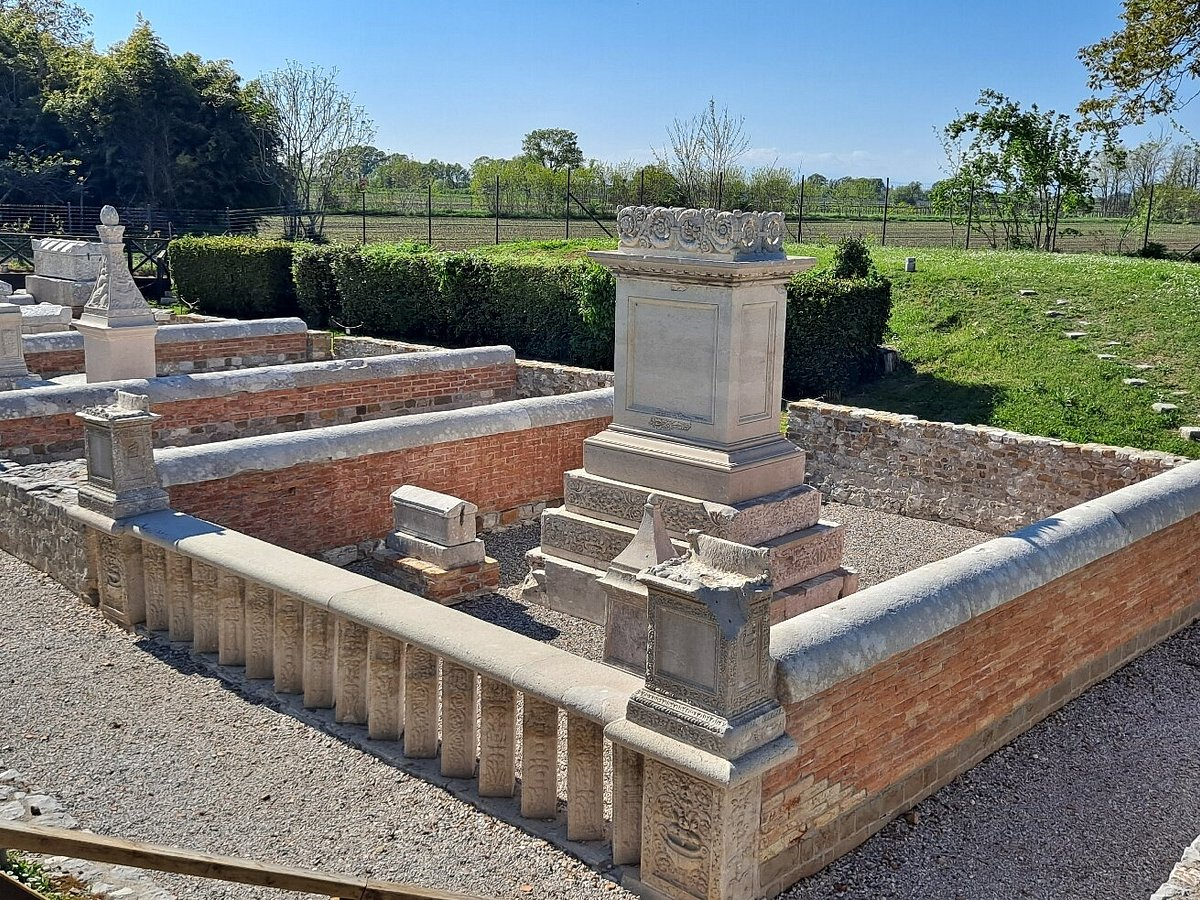
The Sepolcreto burial enclosures with ornate funerary altars and stone monuments belonging to prominent Aquileian families. © TripAdvisor
The River Port
The final conference on July 30 examines Brusin's work at the Ancient River Port of Aquileia, one of the best-preserved Roman port installations in the Mediterranean. Excavated in the 1930s under Brusin's direction, the port structures extended over 300 meters along the right bank of the Natissa River, featuring wharves, warehouses, and quays that connected Aquileia to trade networks spanning the entire Roman Empire. The discovery of the river port was instrumental in understanding Aquileia's role as a major commercial hub, where amber from the Baltic, olive oil from Spain, wine from across the Mediterranean, and goods from as far as the Near East flowed through the city's bustling harbor.
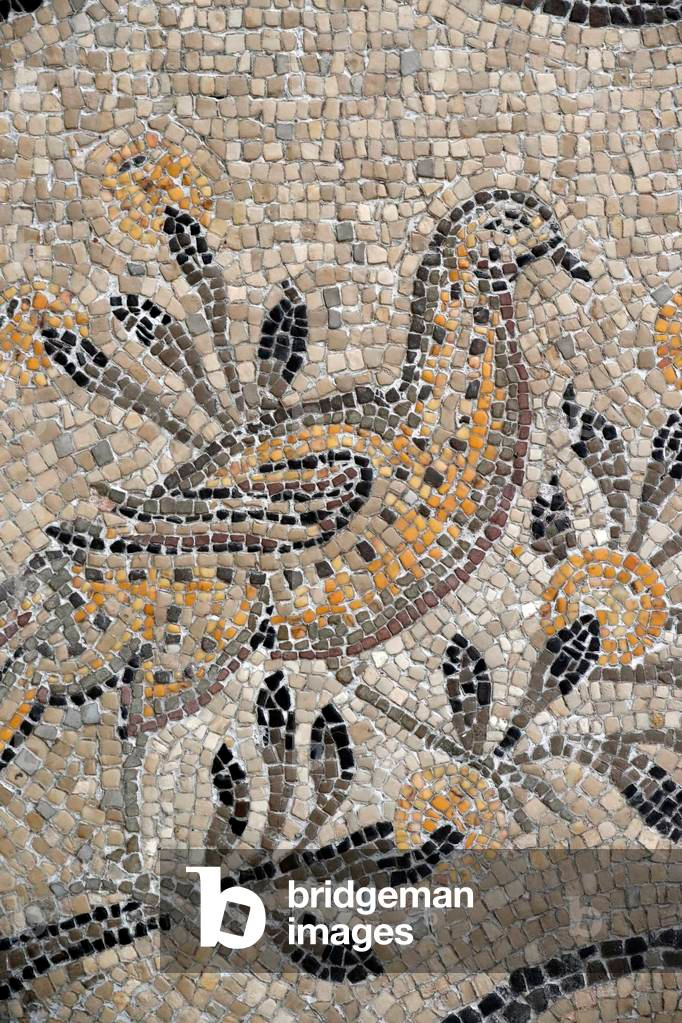
Detail of the Patriarchal Basilica mosaic floor with Christian symbolism — birds and floral motifs from the 4th century. © Bridgeman Images
Visiting Aquileia
Aquileia is located approximately 10 kilometers from the lagoon of Grado on the Gulf of Trieste, in the Friuli Venezia Giulia region of Northeastern Italy. The town is easily accessible by car from Nova Gorica (approximately 45 minutes), Trieste, Udine, and Venice. The archaeological sites and museums offer a comprehensive experience of Roman and early Christian history:
- Patriarchal Basilica Complex — The 4th-century mosaic floor (750 m²), Crypt of Frescoes, Baptistery, Südhalle, and medieval bell tower. Open daily, ticket €12.
- National Archaeological Museum — 12 rooms with statues, inscriptions, mosaics, and the new 2024 storage exhibition. Open daily.
- Early Christian Museum — 5th-century basilica turned Benedictine monastery with mosaic floors. Ticket €12.
- Domus of Tito Macro — One of the largest reconstructed Roman villas in Northern Italy (1,700 m²). Recently enhanced with augmented reality.
- River Port & Via Sacra — The evocative archaeological walk connecting the port to the basilica under cypress trees.
- Sepolcreto — Roman burial ground with five funerary enclosures. Free entrance.
- Decumanus of Aratria Galla — Ancient Roman road paved with trachyte stone connecting the river port to the forum. Free entrance.
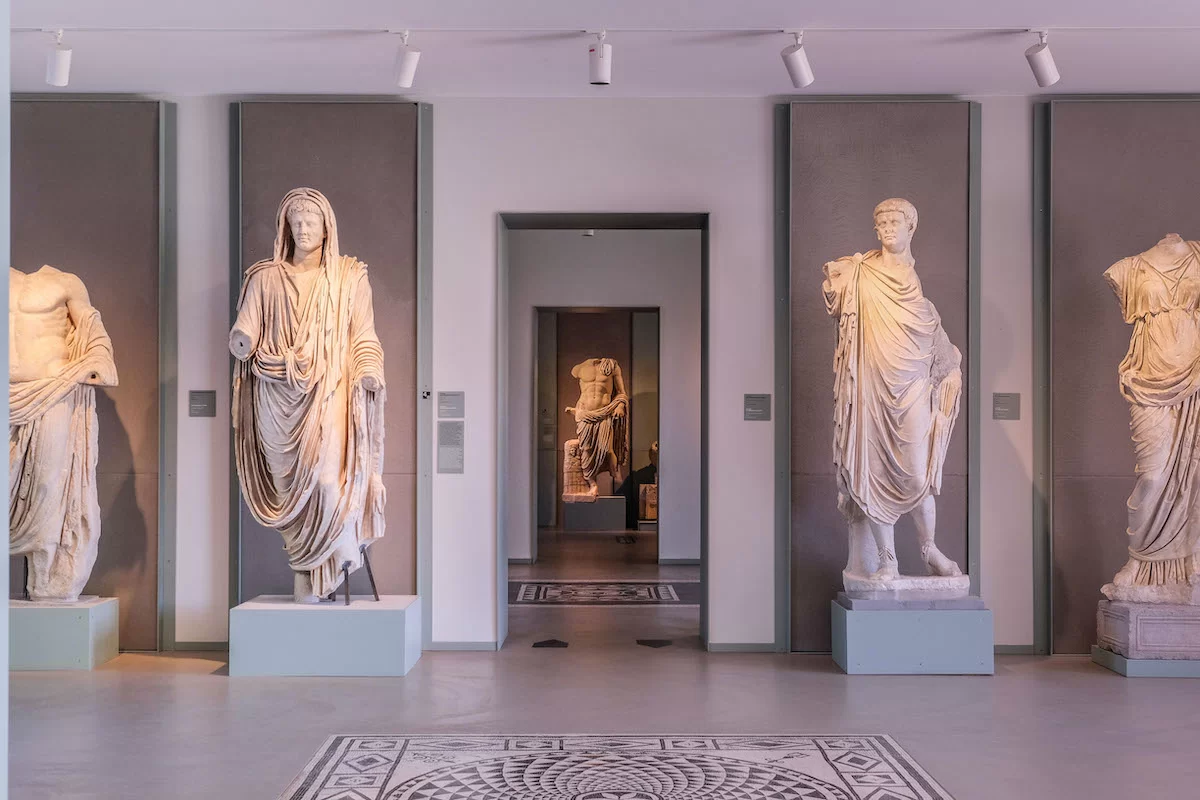
The museum's main gallery with life-size Roman statues — among the finest examples of Roman sculptural art in Northern Italy. © Friuli Venezia Giulia Secrets
GO! 2025 European Capital of Culture
This event is part of the GO! 2025 European Capital of Culture programme, a year-long celebration shared between Gorizia (Italy) and Nova Gorica (Slovenia) — the first-ever cross-border European Capital of Culture. The Archaeological Suggestions 2026 conference series embodies the spirit of GO! 2025 by fostering deeper understanding of the shared cultural heritage that connects communities across borders. Aquileia, as a key partner in the GO! 2025 programme, offers visitors an unparalleled journey through 2,200 years of history, from Roman grandeur to early Christian spirituality, in a landscape of timeless beauty.
Practical Information
| Detail | Information |
|---|---|
| Dates | July 2 – July 30, 2026 (every Thursday) |
| Time | 5:15 PM |
| Venue | National Archaeological Museum of Aquileia, Via Roma 1, 33051 Aquileia (UD), Italy |
| Admission | Free (reservation mandatory) |
| Reservations | Tel: 0431 91016 | Email: museoaquileiaeventi@cultura.gov.it |
| Organizers | National Archaeological Museum of Aquileia & National Association for Aquileia |
| Post-conference | Social moment after each session |
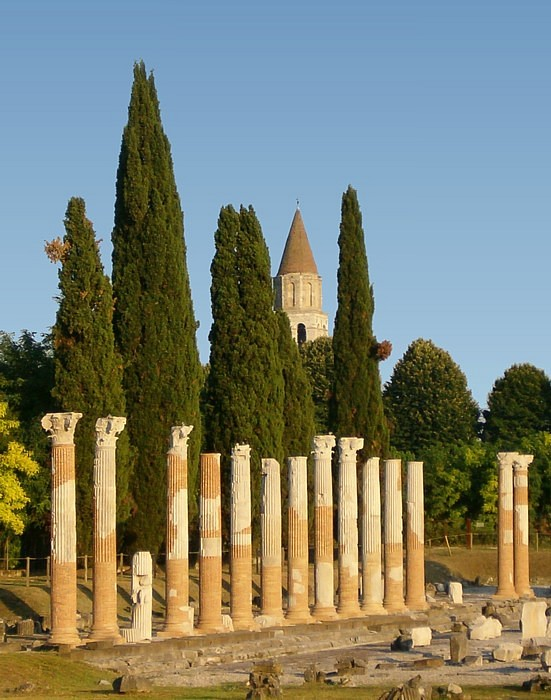
The Roman forum colonnade at Aquileia with the Basilica bell tower rising behind cypress trees — a view that has inspired visitors for centuries. © World History Encyclopedia
Sources & Further Reading
- National Archaeological Museum of Aquileia — Official Event Page (Italian)
- University of Udine — Department of Humanities and Cultural Heritage
- UNESCO World Heritage Centre — Archaeological Area and the Patriarchal Basilica of Aquileia
- Fondazione Aquileia — Official Website
- EX.PO AUS — Aquileia Archaeological Guide
- Time Travel Turtle — The Mosaic Masterpiece of the Aquileia Basilica
- Arte.it — Aquileia Art Guide
- Austrian Academy of Sciences — Discovery of Early Christian Basilica
- Dolmenweb — Biography of Giovanni Battista Brusin
- University of Udine — New Technologies for the 'Great Baths' of Aquileia (Research Paper)
«The legacy of Giovanni Battista Brusin lives on in every stone uncovered, every mosaic restored, and every visitor who walks the ancient streets of Aquileia.»